
In this article
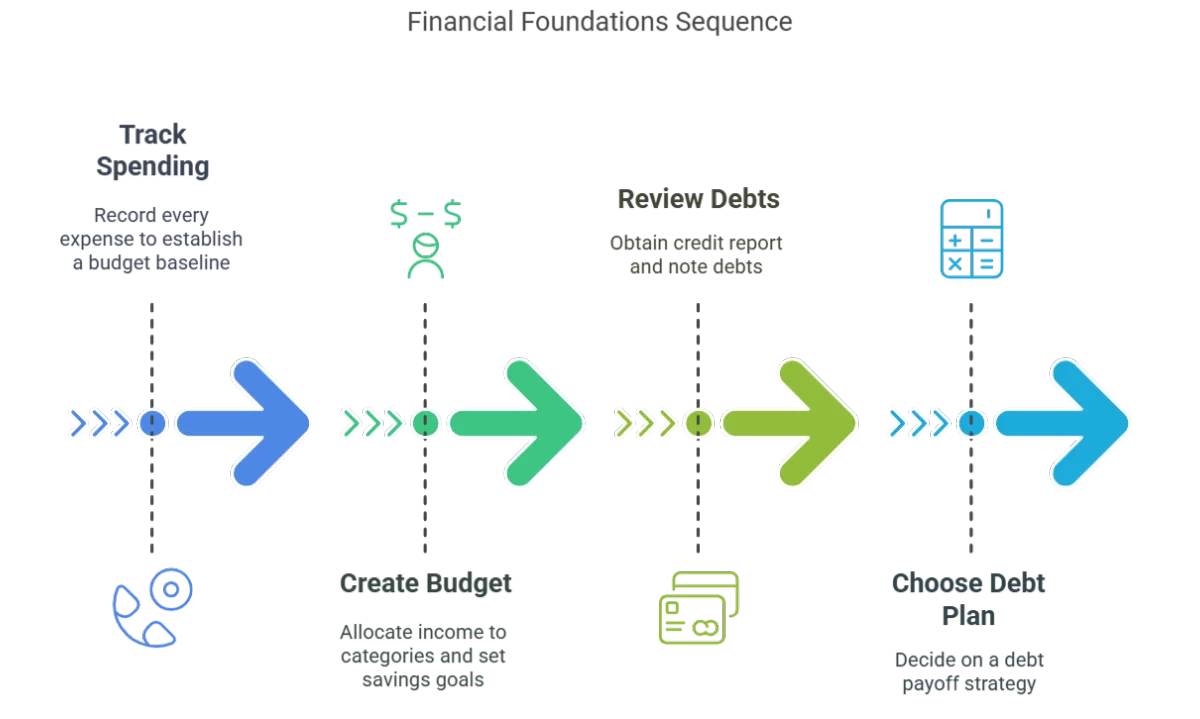
- TL;DR — The Fast Path to Financial Independence
- What Does Financial Independence Actually Mean?
- Step 1: Calculate Your FI Number
- Step 2: Write Down Clear, Written Financial Goals
- Step 3: Build a Realistic Budget (and Actually Stick to It)
- Step 4: Destroy High-Interest Debt First
- Step 5: Build a Bulletproof Emergency Fund
- Step 6: Automate Every Dollar You Save
- Step 7: Max Out Tax-Advantaged Accounts
- Step 8: Invest Simply — Index Funds Beat Almost Everyone
- Step 9: Grow Your Income Aggressively
- Step 10: Consider Real Estate — Carefully
- Step 11: Protect the Wealth You’re Building
- Step 12: Avoid Lifestyle Inflation
- Step 13: Track Progress and Review Quarterly
- Common Mistakes That Delay Financial Independence
- A Realistic 10-Year Roadmap
- Frequently Asked Questions
- Final Word: Freedom Is a Series of Boring Decisions
Financial independence means having enough investment income, savings, and passive cash flow to cover your living expenses without depending on a paycheck. In 2026, that goal feels harder than ever — the U.S. personal saving rate sits at just 3.0% as of July, and the average American with any debt owes $63,500, according to USA Facts. Yet ordinary earners still hit their “freedom number” every year using the same repeatable playbook.
This guide breaks that playbook down into 12 practical steps you can start this week. No hype, no “get rich quick” nonsense — just the math, mindset, and moves that actually work.
TL;DR — The Fast Path to Financial Independence
- Calculate your FI number: multiply your annual expenses by 25.
- Save 20–50% of your income: the higher the rate, the faster you retire.
- Kill high-interest debt first, especially credit cards averaging 20%+ APR.
- Build a 3–6 month emergency fund in a high-yield savings account.
- Max tax-advantaged accounts: $24,500 in a 401(k) and $7,500 in an IRA for 2026.
- Invest the rest in low-cost index funds that historically return ~10% per year.
- Boost income through salary negotiation and side hustles (median gig: $1,275/month).
- Automate everything and review quarterly.
What Does Financial Independence Actually Mean?
Financial independence (FI) is the point where your assets generate enough income to cover your lifestyle indefinitely. Work becomes optional, not mandatory. You can quit, start a business, travel, or keep working purely because you love it.
FI is different from being rich. A dentist earning $400,000 who spends $395,000 a year is not financially independent — she’s a high-earning renter of her lifestyle. A teacher who spends $30,000 and has $800,000 invested is. The magic ratio is investments-to-expenses, not income.
The FIRE (Financial Independence, Retire Early) movement popularized this idea in the 2010s. Vicki Robin, co-author of Your Money or Your Life, framed it perfectly: “Choice is the true heart of Financial Independence. It’s not about the money. It’s about the choice of where you direct your most precious resource — your life energy.”
The Five Flavors of FI
| Type | Definition | Typical Nest Egg (on $50k spend) |
|---|---|---|
| Lean FIRE | Minimalist lifestyle, low expenses | $625,000 |
| Regular FIRE | Middle-class lifestyle | $1.25 million |
| Fat FIRE | Comfortable-to-luxury lifestyle | $2.5 million+ |
| Barista FIRE | Part-time work covers extras | $500,000–$900,000 |
| Coast FIRE | Enough saved to coast to normal retirement | Varies by age |
Not sure which fits you? Run the numbers through a Coast FIRE calculator before setting a target.
Step 1: Calculate Your FI Number
Your FI number is the amount you need invested to safely fund your life. The math is refreshingly simple:
FI Number = Annual Expenses × 25
This is called the 25x Rule, and it comes from the “4% Rule” popularized by the Trinity Study. As Investopedia explains, withdrawing 4% of your portfolio in the first year — then adjusting for inflation — historically had a very high success rate over 30 years.
Real Example
If you spend $50,000 per year:
- FI number = $50,000 × 25 = $1,250,000
- Year 1 withdrawal: 4% = $50,000
- Year 2 withdrawal: $50,000 + inflation adjustment
Retiring earlier (say at 40 instead of 65) usually means using a slightly more conservative 3.5% withdrawal rate, because your money must last 50+ years. Forbes reports that most 2026 early retirees are now planning around this more cautious figure.
Step 2: Write Down Clear, Written Financial Goals
Written goals separate dreamers from finishers. Truist cites a Harvard study finding that only 3% of graduates wrote down clear goals, and ten years later that group earned ten times as much as the other 97% combined.
Effective FI goals share four traits — specific, measurable, time-bound, and emotionally meaningful:
- ❌ “I want to save more.”
- ✅ “I will save $22,000 in my 401(k) by December 31, 2026, and boost my brokerage contributions to $500/month.”
Break your master goal into layers:
- Big rock (10–30 years): hit your FI number.
- Milestones (1–3 years): debt-free date, $50k invested, six-month emergency fund.
- Habits (daily/weekly): track spending, automate transfers, review net worth on the first Sunday of every month.
Step 3: Build a Realistic Budget (and Actually Stick to It)
A budget is not a punishment — it’s a permission slip. It tells your dollars exactly where to go before they disappear into subscription creep and DoorDash orders.
The 50/30/20 Framework
The 50/30/20 rule, endorsed by Senator Elizabeth Warren in All Your Worth, remains the easiest starting point:
| Bucket | % of After-Tax Income | Examples |
|---|---|---|
| Needs | 50% | Rent, groceries, utilities, minimum debt payments |
| Wants | 30% | Dining out, streaming, hobbies, travel |
| Savings & Debt Payoff | 20% | Emergency fund, retirement, extra debt payments |
Aggressive FI seekers often flip this to 30/20/50 or even 20/10/70, achieving 40–70% savings rates. As Mr. Money Mustache explains in The Shockingly Simple Math Behind Early Retirement, your savings rate — not your income — is the single biggest lever on your timeline to freedom.
How Savings Rate Determines Your Timeline
| Savings Rate | Years to FI (from zero) |
|---|---|
| 10% | ~51 years |
| 20% | ~37 years |
| 30% | ~28 years |
| 50% | ~17 years |
| 65% | ~10.5 years |
| 75% | ~7 years |

Step 4: Destroy High-Interest Debt First
Debt is the anchor that keeps most people tethered to their jobs. According to Bankrate’s 2026 Credit Card Debt Report, 47% of American cardholders carry a balance, and roughly one in five doubt they’ll ever pay it off. The average card debt sits at $7,756 per person.
Truist offered a chilling example: a $1,000 credit card balance at 18% APR, paid at only the minimum, takes 20 years to pay off and costs more than triple the original amount.
Two Proven Payoff Methods
- Avalanche method (math-optimal): attack the highest interest rate first while paying minimums on everything else. Fastest way to save money.
- Snowball method (motivation-optimal): pay the smallest balance first, then roll that payment into the next. Best for people who need psychological wins.
If you have multiple accounts or unfair fees, understanding what a chargeback is and how card protections work can also save real money. For readers weighing consolidation, it helps to check whether debt consolidation is a good idea for your specific mix of balances and rates.
Step 5: Build a Bulletproof Emergency Fund
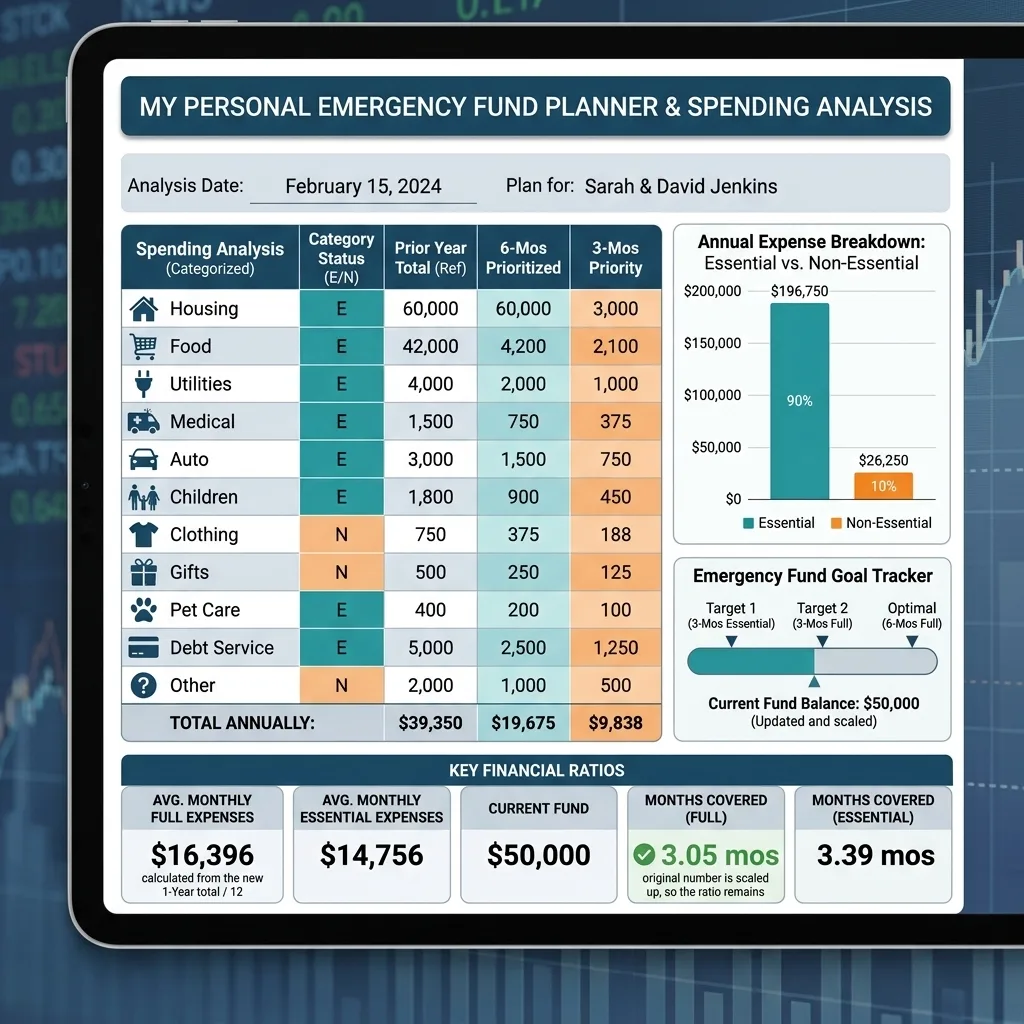
An emergency fund keeps a bad month from becoming a bad decade. Without it, one broken transmission or ER visit turns into another credit card balance — and derails your entire FI plan.
How much? Financial experts across Fidelity, Wells Fargo, and Bank of America agree:
- Beginner: save your first $1,000 fast to avoid small emergencies.
- Full fund: three to six months of essential living expenses.
- Freelancers, commissioned earners, or one-income households: six to twelve months.
Park the money in a high-yield savings account (HYSA), not a checking account. The FDIC national savings average is a paltry 0.38%, but the top HYSAs in September 2026 pay between 3.75% and 4.40% APY, according to Bankrate. On a $20,000 balance, that’s an extra $700–$800 per year for doing nothing.
Compare current options at our high-yield savings accounts roundup before you pick a bank.
Step 6: Automate Every Dollar You Save
Willpower is a terrible retirement plan. Automation is a great one.
Set up automatic transfers so money moves the moment your paycheck lands. As Investopedia puts it, “Pay yourself first.” Behavioral research confirms that when saving is invisible, spending shrinks to fit what’s left.
Practical Automation Checklist
- Direct deposit split: send a fixed percentage straight to savings or investments.
- Auto-increase 401(k) contribution by 1% every year until you hit the cap.
- Recurring monthly transfer to a brokerage account (e.g., Vanguard, Fidelity, Schwab).
- Auto-pay credit card statements in full each month to protect your credit.
- Round-up apps to funnel spare change into ETFs.
Automation removes the daily decision fatigue that quietly kills most financial plans.
Step 7: Max Out Tax-Advantaged Accounts
Uncle Sam gives you three of the most powerful wealth-building tools ever invented — and most people leave them half-empty. In 2026, the IRS raised the limits:
| Account | 2026 Limit | Catch-Up (age 50+) | Key Benefit |
|---|---|---|---|
| 401(k) / 403(b) | $24,500 | +$8,000 | Pre-tax growth, employer match |
| Traditional / Roth IRA | $7,500 | +$1,100 | Tax-free or tax-deferred |
| HSA (family) | $8,750 | +$1,000 | Triple tax advantage |
| SEP IRA / Solo 401(k) | Up to $70,000+ | Varies | Self-employed rocket fuel |
The Order of Operations
- Grab your 401(k) match first. Not doing so is refusing free salary. On a $50,000 salary with a 5% match, that’s $2,500 a year — before compounding.
- Fund an HSA if eligible. No other account is triple-tax-advantaged.
- Max a Roth IRA for tax-free retirement income.
- Return to your 401(k) and push toward the $24,500 cap.
- Overflow into a taxable brokerage for pre-retirement flexibility.
Run the numbers on your projected balance using a 401k calculator or a Roth IRA calculator to see the compounding magic for yourself.

Step 8: Invest Simply — Index Funds Beat Almost Everyone
You do not need to pick stocks. You do not need a hedge fund. You need boring, low-cost, broadly diversified index funds and time.
Since 1957, the S&P 500 has delivered an average annual return of 10.56%, according to Investopedia — roughly 6.7% after inflation. Very few active managers beat that over 20 years after fees.
A Simple Three-Fund Portfolio
- U.S. total stock market index (e.g., VTI or FSKAX) — 60%
- International stock market index (e.g., VXUS) — 25%
- Total bond market index (e.g., BND) — 15%
Adjust the bond percentage based on age and risk tolerance. Rebalance annually. That’s it.
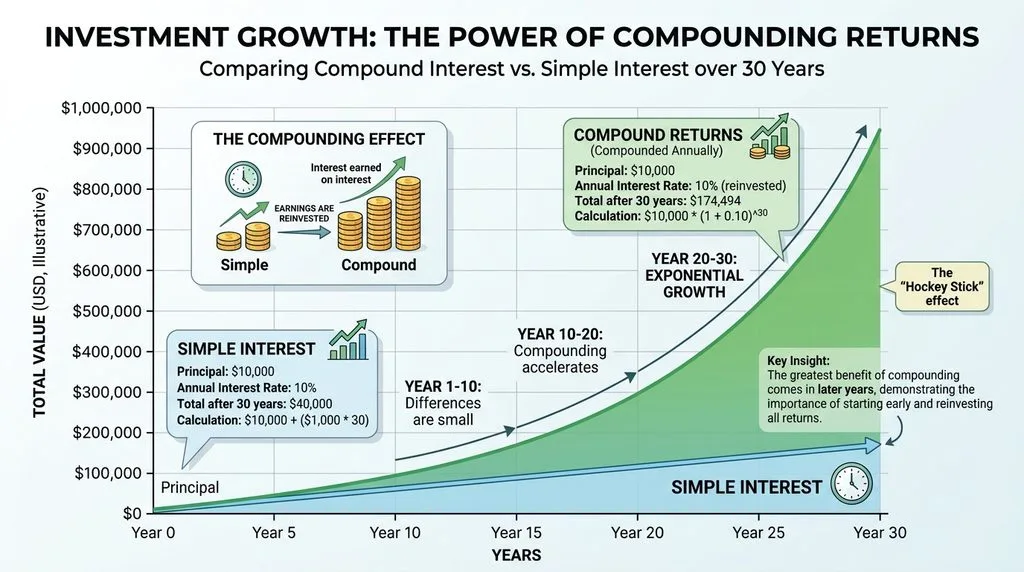
The Compound Interest Miracle
Warren Buffett is worth over $150 billion — and earned more than 99% of it after age 50. His secret isn’t stock-picking wizardry; it’s decades of compounding.
Truist illustrates it perfectly:
- Investor A saves $3,000/year from ages 19–26 ($24,000 total), then stops.
- Investor B waits until age 27 and saves $3,000/year until 65 ($102,000 total).
- Assuming 10% returns, Investor A still ends up with more money.
Time in the market crushes timing the market — every single time.
Step 9: Grow Your Income Aggressively
There is a hard floor to how much you can cut, but no ceiling to how much you can earn. Increasing income accelerates FI faster than any budget hack.
Negotiate Your Salary Every 12–24 Months
Payscale data shows 70% of workers who ask for raises get them, yet fewer than half ever try. A single successful negotiation compounds for the rest of your career. Come armed with market data from Glassdoor, Levels.fyi, or Payscale, quantified accomplishments, and a specific target number.
Not sure how to open the conversation? Our full guide on how to negotiate salary breaks the script down line by line.
Add a Side Hustle That Fits Your Life
According to Side Hustle Nation, the median American side hustler earns roughly $1,122–$1,275 per month — about $15,000 a year. Invested at 10% for 20 years, that becomes over $850,000.
Popular 2026 side hustles include:
- Freelance writing, design, or coding
- Bookkeeping and virtual assistant work
- Print-on-demand and Etsy shops
- Tutoring, coaching, and online course sales
- Delivery, rideshare, and pet-sitting via apps
If self-employment interests you, our step-by-step on how to become a freelancer covers pricing, contracts, and taxes.

Step 10: Consider Real Estate — Carefully
Rental property, house hacking, and REITs remain three of the most reliable wealth-builders in America. But the math has changed in 2026: with 30-year mortgage rates hovering near 6.5% and home prices projected to rise another 3% (per J.P. Morgan), the cash-flow math is far tighter than it was five years ago.
Options to explore:
- House hacking: buy a duplex, live in one unit, rent the other.
- BRRRR strategy: buy, rehab, rent, refinance, repeat.
- REITs & real estate ETFs: stock-like exposure with no toilets to fix.
- Short-term rentals: higher yields, higher management workload.
Before signing anything, understand the loan side too — from construction loan requirements if you’re building, to what a second mortgage actually costs.
Step 11: Protect the Wealth You’re Building
Insurance and estate planning aren’t sexy, but one uncovered lawsuit or medical crisis can erase a decade of saving.
The essentials for the FI-focused household:
- Health insurance: always. HDHPs pair beautifully with an HSA.
- Term life insurance (10–20 year term, 10x income) if anyone depends on you.
- Long-term disability: replaces income if you can’t work — statistically far likelier than dying young.
- Umbrella liability policy: $1–2 million of coverage often costs under $300/year.
- Estate documents: will, healthcare proxy, durable power of attorney, updated beneficiaries.
Coverage is cheapest when you’re young and healthy. Locking it in early is one of the highest-ROI moves in personal finance.
Step 12: Avoid Lifestyle Inflation
Lifestyle creep is the silent assassin of financial independence. Every raise gets absorbed by a nicer car, a bigger apartment, more DoorDash. Ten years later, your income has doubled and your net worth barely moved.
Practical anti-creep rules:
- Bank at least 50% of every raise or bonus.
- Wait 30 days before any purchase over $200 to let the impulse fade.
- Use a one-in-one-out rule for clothing, subscriptions, and gadgets.
- Automate lifestyle upgrades slowly so they feel earned, not compulsive.
- Track your monthly “burn rate” the way businesses do — flat or falling is a win.
Step 13: Track Progress and Review Quarterly
What gets measured gets managed. Update three numbers on a fixed schedule:
- Net worth (assets − liabilities) — monthly
- Savings rate (savings ÷ take-home) — monthly
- FI progress % (current investments ÷ FI number) — quarterly
Free tools like Empower, Monarch Money, Rocket Money, and Copilot can automate this. When your progress bar creeps from 8% to 12% to 20%, motivation takes care of itself.
If your situation gets complex — inheritance, business sale, early retirement modeling — consider hiring a professional. Our guide on how to find a good financial advisor explains what “fiduciary” really means and which fee structures to avoid.
Common Mistakes That Delay Financial Independence
- Waiting until “I earn more” to start investing. Time compounds, not intent.
- Chasing hot stocks or crypto with retirement money. Speculation is not a plan.
- Skipping the 401(k) match. Free money left on the table.
- Ignoring inflation. Cash under a mattress loses about 3% purchasing power per year.
- Underinsuring. One bad accident can wipe out ten years of saving.
- Comparing your Chapter 3 to someone else’s Chapter 20. Social media is a highlight reel.
A Realistic 10-Year Roadmap
| Year | Focus | Milestone |
|---|---|---|
| 1 | Track spending, kill CC debt | $1,000 starter emergency fund |
| 2 | Full budget, 401(k) match | 3-month emergency fund |
| 3 | Max Roth IRA | Debt-free (except mortgage) |
| 4–5 | Push savings rate to 25–40% | $100,000 invested |
| 6–7 | Add side income streams | $250,000 net worth |
| 8–9 | Optimize taxes, real estate? | $500,000+ invested |
| 10 | Coast or Barista FIRE optional | On track for full FI |
Frequently Asked Questions
How much money do I need to be financially independent?
Most people need 25 times their annual expenses invested. If you spend $60,000 a year, that’s $1.5 million. Adjust downward for early retirement (aim closer to 28–30x expenses) or for very low-cost lifestyles.
How long does it take to become financially independent?
It depends almost entirely on your savings rate. At 20% savings, expect roughly 35–40 years. At 50%, about 17 years. At 65–75%, financial independence is possible in 7–10 years.
Can I become financially independent on an average income?
Yes. Many FI success stories come from teachers, nurses, and municipal workers earning $50,000–$80,000. Consistent investing, keeping expenses low, and avoiding lifestyle creep matter more than a high salary.
Should I pay off debt or invest first?
Attack any debt above 6–7% interest before investing (credit cards, payday loans, personal loans). Below that threshold, you can typically invest and pay off simultaneously — especially to grab an employer 401(k) match.
What’s the difference between FIRE and traditional retirement?
Traditional retirement targets age 65 with Social Security and a modest nest egg. FIRE targets financial independence at any age — often 40s or 50s — and relies primarily on investment income rather than government benefits.
Do I need a financial advisor?
Not for the basics. Index funds, automation, and consistency handle 90% of the job. Once assets pass roughly $500,000, or your tax situation gets complex, a fee-only fiduciary advisor can add real value.
What if the 4% rule fails in the future?
It’s a guideline, not a guarantee. Common safeguards include using a 3.5% rate, adding a small cash buffer, staying flexible on spending during down markets, or keeping a part-time income stream in early retirement.
Is real estate necessary for financial independence?
No. Plenty of FI achievers own zero rental property and use only index funds. Real estate can accelerate the journey but adds complexity, leverage, and risk.
Final Word: Freedom Is a Series of Boring Decisions
Financial independence is not a lottery ticket. It’s the compound result of one thousand ordinary choices — packing lunch, running the numbers, saying “no” to lifestyle creep, and saying “yes” to the automatic transfer.
The people who reach FI aren’t smarter or luckier than you. They just started, stayed consistent, and let math do the heavy lifting. As J.L. Collins wrote in The Simple Path to Wealth: “If your goal is financial independence, it is also to hold as little debt as possible.”
The best day to start was 20 years ago. The second-best day is today.


Leave a Reply