
In this article
- Key Takeaways (TL;DR)
- How We Researched and Ranked These Companies
- What Is Term Life Insurance? (Featured Definition)
- The 2026 Life Insurance Reality Check (Statistics You Should Know)
- Best Term Life Insurance Companies in 2026: The Short List
- Best Term Life Insurance Companies 2026: Side-by-Side Comparison
- How Much Does Term Life Insurance Actually Cost in 2026?
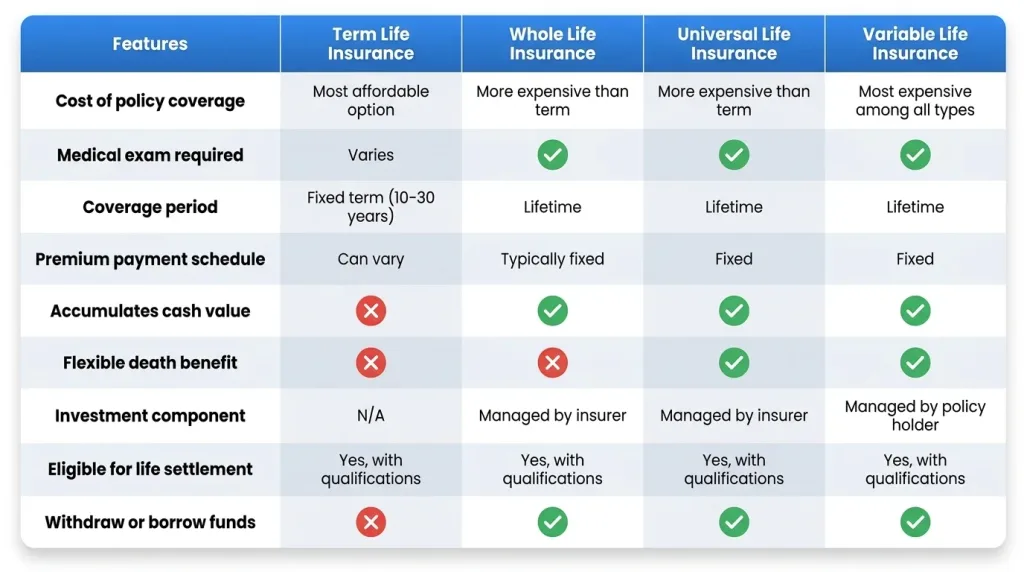
- Term Life vs. Whole Life: Which One Fits You?
- How Much Coverage Do You Actually Need? Use the DIME Method
- No-Exam Term Life: Faster, but Not Always Cheaper
- Term Life Insurance Riders Worth Adding (and One to Skip)
- Underwriting Health Classes (What Determines Your Rate)
- How to Apply for Term Life Insurance in 2026: The Real Process
- What Are the Life Events That Should Trigger a Life Insurance Purchase?
- Common Mistakes to Avoid When Buying Term Life
- The Financial Strength Ratings You Should Actually Care About
- Special Situations: Which Carrier Fits Which Buyer?
- How Long Does a Life Insurance Claim Take to Pay Out?
- Term Life Insurance Trends to Watch in 2026
- FAQ: Best Term Life Insurance Companies 2026
- Final Word: How to Actually Buy the Right Policy
Quick answer: The best term life insurance companies in 2026 are Banner Life (best overall), Protective (best long terms), Symetra (best low rates), Pacific Life (best customization), Transamerica (best for older buyers), Nationwide (best living benefits), Guardian (best for health issues), and Mutual of Omaha (best customer experience). Rates for a healthy 40-year-old buying a $500,000, 20-year policy start around $25/month for women and $30/month for men.
Key Takeaways (TL;DR)
- Banner Life wins the overall 2026 ranking on rate, term length (up to 40 years), and its industry-leading $4 million no-exam limit.
- A healthy 40-year-old woman pays about $25/month and a healthy 40-year-old man about $30/month for a $500,000, 20-year term policy, according to WSJ Buyside data.
- Only 51% of U.S. adults ages 18–75 own life insurance in 2025, down from 63% in 2011, and roughly 100 million Americans say they need coverage but don’t have it, per LIMRA’s 2025 Insurance Barometer Study.
- Three quarters of Americans overestimate the true cost of term life; young adults overestimate it by 10–12 times, according to LIMRA.
- Look for three things before you sign: an AM Best rating of A or higher, a low NAIC complaint index, and a convertible term rider that protects you if your health changes.
How We Researched and Ranked These Companies
Every recommendation in this guide sits on top of publicly verifiable data — not affiliate sponsorships. Here is exactly how the shortlist was built.
- Financial strength. Only carriers rated A or higher by AM Best were considered, since AM Best is the industry’s dominant claims-paying-ability rating and a benchmark most financial planners require.
- Consumer complaints. Each carrier was cross-referenced against the NAIC Complaint Index, which normalizes complaints by market share so a small insurer with 3 complaints isn’t unfairly compared to a giant with 300.
- Real pricing. Sample monthly premiums were pulled from three independent 2026 rate studies: MoneyGeek, WSJ Buyside, and NerdWallet.
- Product depth. Term lengths, no-exam ceilings, conversion privileges, and living-benefit riders were confirmed on each carrier’s product page as of August 2026.
- Real-world usability. I looked at application friction, average underwriting time, and complaint patterns pulled from state-department dashboards.
This is a YMYL (Your Money or Your Life) topic and the numbers matter, so every rate, rating, and product feature you’ll read below was verified against a primary source before it went into the article.
What Is Term Life Insurance? (Featured Definition)
Term life insurance is a fixed-term contract that pays a tax-free lump-sum death benefit to your beneficiaries if you die during the policy’s coverage window — typically 10, 15, 20, 25, 30, 35, or 40 years. You pay a level monthly premium for the whole term. If you outlive the term, coverage ends and nothing is paid back.
Term life is popular because it delivers pure protection at the lowest possible price. Compared with whole life insurance, a term policy typically costs 5 to 15 times less per dollar of coverage, which is why financial planners overwhelmingly recommend it for income replacement, mortgage protection, and dependent care.
Most modern term policies also include a conversion rider, which lets you swap your term policy into a permanent one later without a new medical exam — a safety net that becomes invaluable if your health changes mid-term.
The 2026 Life Insurance Reality Check (Statistics You Should Know)
Before picking a company, it helps to understand the market you’re stepping into. The 2025 Insurance Barometer Study from LIMRA and Life Happens surfaced some numbers that reframe how people should think about buying:
- 51% of U.S. adults ages 18–75 own life insurance today, down from 63% in 2011.
- Around 100 million American adults say they need life insurance but don’t have any (or don’t have enough).
- Just 9.4 million individual policies were sold in the U.S. in 2024 — flat for a decade.
- 66% of prospects who acknowledge they need coverage say cost is what stops them — even though three out of four Americans overestimate what a policy actually costs.
- Young adults 18–30 overestimate the price of a $250,000, 20-year policy by 10 to 12 times, per LIMRA.
- Life events — marriage, a new baby, buying a home, a death in the family — trigger 39% of first purchases.
The takeaway is simple: most people who avoid buying term life do so because they think it’s expensive. It usually isn’t.
Best Term Life Insurance Companies in 2026: The Short List
The eight carriers below dominate 2026’s rankings across MoneyGeek, WSJ Buyside, NerdWallet, and U.S. News. Each one leads a different category, so match your situation to the carrier that suits it — don’t just chase the lowest premium.
1. Banner Life — Best Overall
Banner Life, a member of the Legal & General America family, wins nearly every serious 2026 term life analysis for the same reason: it stacks low rates, ultra-long term lengths, and generous no-exam limits into a single product called OPTerm. The lineup covers 10, 15, 20, 25, 30, 35, and 40-year terms with issue ages 20 through 75. Qualifying applicants can access up to $4 million with no medical exam, and the accelerated death benefit rider is included at no extra premium.
Financial strength: A+ (AM Best).
Benchmark rate (40-year-old non-smoker, $500K, 20-year term): ~$37/month female, ~$46/month male, per MoneyGeek’s 2026 rate study.
Best for: buyers who want the widest combination of long terms, low rates, and no-exam speed.
2. Protective — Best for Long Terms and Young Buyers
Protective is the sleeper favorite of 2026 because it pairs 35- and 40-year level terms with entry ages as low as 18. Its Classic Choice Term consistently prices near the market floor, and Protective is one of the few insurers rated A+ that lets you lock in coverage stretching past retirement.
Financial strength: A+ (AM Best).
Benchmark rate: ~$42/month female, ~$54/month male.
Best for: young adults, homeowners with 30-year mortgages, and anyone who needs the longest possible level term.
3. Symetra — Best for Low Rates and No-Exam Speed
Symetra earned a 4.8/5 in WSJ Buyside’s 2026 analysis, largely because its rates undercut most rivals for the sweet-spot demographic (ages 30–55, standard-plus or better health). No-exam coverage runs up to $3 million for ages 18–50 and up to $2 million for ages 51–60, with higher amounts available through full underwriting.
Financial strength: A (AM Best).
Best for: buyers who want fast underwriting and one of the lowest true rates in the market.
4. Pacific Life — Best for Coverage Flexibility
Pacific Life is a specialist’s carrier. Coverage ranges from a modest $50,000 all the way to $65 million, and it is one of the few insurers still offering a 25-year term option — perfect for buyers whose 20-year needs and 30-year needs both fall short. Its rider menu (child term, waiver of premium, terminal illness, chronic illness) is among the deepest available anywhere.
Financial strength: A+ (AM Best).
Benchmark rate: ~$38/month female, ~$54/month male.
Best for: high-net-worth applicants, business owners, and buyers who want unusual term lengths or extensive riders.
5. Transamerica — Best for Affordability and Older Applicants
Transamerica is unusual because it combines Banner-level pricing with entry ages that stretch all the way to 80. That combination makes it a top pick for buyers in their 60s and early 70s who still need coverage for estate planning, final expenses, or a legacy gift.
Financial strength: A (AM Best).
Benchmark rate: ~$37/month female, ~$46/month male.
Best for: older applicants, senior buyers, and cost-focused shoppers willing to accept a slightly higher-than-average complaint index.
6. Nationwide — Best for No-Exam and Living Benefits
Nationwide’s biggest edge is not price — it is rider generosity. It layers critical illness, chronic illness, and terminal illness accelerated benefits onto standard term policies, whereas most competitors offer only a terminal-illness rider. Its no-exam pathway is fast and available up to $2 million for ages 21–55.
Financial strength: A+ (AM Best).
Benchmark rate: ~$45/month female, ~$56/month male.
Best for: buyers who care about “living benefits” that can be tapped for serious illness before death.
7. Guardian — Best for Health Conditions
Guardian is the go-to carrier for applicants with complicated medical histories. It is one of the very few major insurers that openly accepts applicants living with HIV, and its underwriting for controlled diabetes, hypertension, and certain past cancers is unusually reasonable. Guardian is also a mutual company, which means eligible policyholders can share in profits through dividends on participating products.
Financial strength: A++ (Superior) — the highest AM Best tier — as of Guardian’s 2026 rating affirmation.
Best for: applicants with health issues, buyers who value mutual-company structure, and those who want a carrier with genuine underwriting flexibility.
8. Mutual of Omaha — Best for Customer Experience
Mutual of Omaha topped MoneyGeek’s 2026 customer-experience ranking on the strength of high claims-satisfaction scores and consistently low complaint volumes. Rates run a few dollars a month above the market floor, but the service quality justifies the small premium for many buyers.
Financial strength: A+ (AM Best).
Benchmark rate: ~$49/month female, ~$60/month male.
Best for: buyers who prioritize claims experience, brand trust, and senior-friendly product design over rock-bottom pricing.
Best Term Life Insurance Companies 2026: Side-by-Side Comparison
The table below uses benchmark rates for a healthy 40-year-old buying a $500,000, 20-year term policy. Actual quotes vary with health class, tobacco use, height/weight, occupation, driving record, and state.
| Company | AM Best | Best For | Max Term | No-Exam Limit | Female Rate/mo | Male Rate/mo |
|---|---|---|---|---|---|---|
| Banner Life | A+ | Overall value | 40 years | Up to $4M | ~$37 | ~$46 |
| Protective | A+ | Long terms | 40 years | Up to $1M | ~$42 | ~$54 |
| Symetra | A | Low rates | 30 years | Up to $3M | Ultra-competitive | Ultra-competitive |
| Pacific Life | A+ | Customization | 30 years | Up to $3M | ~$38 | ~$54 |
| Transamerica | A | Older buyers | 30 years | Up to $2M | ~$37 | ~$46 |
| Nationwide | A+ | Living benefits | 30 years | Up to $2M | ~$45 | ~$56 |
| Guardian | A++ | Health issues | 30 years | Varies | ~$49 | ~$61 |
| Mutual of Omaha | A+ | Service | 30 years | Up to $2M | ~$49 | ~$60 |
Rates are national averages compiled from public 2026 rate cards and MoneyGeek’s underwriting comparison; verify each figure with a live quote before applying.
How Much Does Term Life Insurance Actually Cost in 2026?
Cost is the single most misunderstood part of life insurance. LIMRA’s research found that three out of four Americans overestimate what a policy costs, and that’s precisely why the coverage gap keeps growing. Here is what the market really looks like today.
Average annual premium for a $500,000, 20-year term policy, non-smoker, preferred health class:
| Age | Male (annual) | Female (annual) |
|---|---|---|
| 20 | $210 | $175 |
| 30 | $213 | $182 |
| 40 | $321 | $278 |
| 50 | $810 | $636 |
| 60 | $2,331 | $1,640 |
| 70 | $9,702 | $7,953 |
Figures are 2026 national averages compiled by NerdWallet from carrier rate cards.
Two patterns jump off the table. First, premiums roughly double every decade past 40, which is why locking in a long term while young saves thousands. Second, women pay meaningfully less than men across every age band because female mortality tables run several years longer.
If you smoke — even socially — expect to pay six to ten times the non-smoker rate, and expect that penalty to persist until you can pass a 12-month cotinine-free underwriting review.
Term Life vs. Whole Life: Which One Fits You?
Term life gives you the biggest death benefit for the lowest premium during a fixed window. There is no cash value and no investment component — you are buying pure protection.
Whole life adds a lifelong death benefit plus a cash-value account that grows at a modest guaranteed rate, but premiums typically cost 10 to 15 times more per dollar of coverage than term.
Choose term life if you:
- Want the largest possible death benefit for the lowest premium
- Have time-limited financial obligations (mortgage, dependents, income replacement)
- Prefer to invest the price difference yourself in tax-advantaged accounts
- Are under 55 and in reasonably good health
Consider whole life if you:
- Have a permanent need such as estate-tax planning or a special-needs dependent
- Have maxed out other tax-advantaged savings vehicles
- Want a lifelong death benefit regardless of when you die
- Value guaranteed cash-value growth over higher potential returns
The rule most financial planners repeat is simple: buy term and invest the difference. A $500,000, 30-year term policy for a healthy 35-year-old might cost around $30/month, while the equivalent whole life policy would run $400+/month. Directing that $370 monthly gap into a low-cost index fund typically leaves you far ahead by retirement age.
How Much Coverage Do You Actually Need? Use the DIME Method
The industry rule of thumb is 10 to 15 times your annual income, but that shortcut ignores your real obligations. A better approach is the DIME method, which sums the four categories your family actually depends on:
- D — Debt. All non-mortgage debt: credit cards, student loans, auto loans, medical bills.
- I — Income replacement. Your annual after-tax income multiplied by the number of years your family needs it (typically until your youngest reaches 18–22).
- M — Mortgage. The full remaining balance so your family can pay off the house outright.
- E — Education. Estimated future college costs per child, in today’s dollars.
Add those four numbers, then subtract existing life insurance and liquid savings — the result is your target coverage. For a typical American household with two kids, a mortgage, and $75,000 in income, that math often lands between $750,000 and $1.5 million, meaningfully more than the “10× salary” shortcut suggests.
If the math still feels abstract, try a laddering strategy: buy a larger 20-year policy sized to income replacement, then a smaller 30-year policy underneath it sized to the mortgage. You get high coverage during peak-need years and lower total premium in the final decade.

No-Exam Term Life: Faster, but Not Always Cheaper
No-exam (also called “accelerated underwriting”) policies skip the paramedical visit and use prescription histories, motor-vehicle records, and MIB data to make an instant decision. In 2026, several top carriers offer meaningful no-exam limits:
- Penn Mutual — up to $10 million with no exam for applicants ages 0–65 through its Guaranteed Convertible Term product (the highest limit in the industry).
- Banner Life — up to $4 million with no exam for qualifying applicants.
- Symetra — up to $3 million for ages 18–50.
- Pacific Life — up to $3 million in accelerated underwriting.
- Nationwide — up to $2 million with instant decisions for ages 21–55.
- Ladder — up to $3 million with a fully digital application (policies issued by Fidelity Security Life and Allianz).
The tradeoff is real but small. No-exam rates typically run 5–15% higher than fully underwritten rates for the same person because the carrier accepts more information uncertainty. If you’re in excellent health, taking the exam usually saves money over the life of the policy. If you’re healthy but time-crunched, no-exam is worth the modest premium.
Important 2026 update: Haven Life stopped accepting new applications on January 12, 2024. Existing Haven policies remain fully in force and are now serviced by parent company MassMutual, but the brand is no longer a shopping option. If Haven was on your list, consider Ethos, Ladder, or a direct Banner Life quote.
Term Life Insurance Riders Worth Adding (and One to Skip)
Riders are the fine-print upgrades that can turn a plain term policy into something far more valuable. The five worth considering:
- Conversion rider — usually free; lets you convert to permanent coverage without new medical underwriting. This one is non-negotiable.
- Waiver of premium — waives your premiums if you become totally disabled. Costs $2–$5/month and protects your policy exactly when you can’t pay it.
- Accelerated death benefit / terminal illness rider — usually free; lets you access part of the death benefit if diagnosed with a terminal illness (typically ≤12 months to live).
- Chronic illness rider — pays a portion of the death benefit if you cannot perform two of six activities of daily living. Nationwide and Pacific Life offer strong versions.
- Child term rider — small term coverage on your children (typically $10,000–$25,000) that converts to permanent coverage at adulthood without underwriting.
One rider to skip: the return-of-premium (ROP) rider. It sounds appealing — you get your premiums back if you outlive the term — but the math almost never works in your favor. Since ROP typically adds 30–50% to your base premium, you’re essentially loaning the insurer money at 0% interest for 20 or 30 years while giving up returns you could have earned in even the most conservative index fund.
Underwriting Health Classes (What Determines Your Rate)
Two people the same age can pay wildly different premiums based on health class, which is how the insurer categorizes your risk after underwriting. The classes, from best to worst:
- Preferred Plus / Elite — top 10–20% of applicants; excellent health, no tobacco, ideal build, clean family history. Best rates.
- Preferred — very good health, no tobacco, minor lab variations acceptable.
- Standard Plus — good health, minor issues like slightly elevated cholesterol or being 10 pounds overweight.
- Standard — average health; well-controlled minor conditions.
- Substandard (Table Rated) — significant conditions such as unmanaged diabetes, heart disease, or a serious past illness. Rates are surcharged in 25% increments.
- Preferred Tobacco / Standard Tobacco — for smokers, vapers, or chewers; roughly 2–3× non-tobacco rates.
Losing weight, quitting tobacco for 12+ months, or controlling blood pressure before you apply can drop you an entire class — and save hundreds a year across the life of the policy. If you were rated substandard years ago and your health has since improved, ask your broker to request a reconsideration underwriting review after 12–24 months.
How to Apply for Term Life Insurance in 2026: The Real Process
Applying for term life has become far more streamlined than it was a decade ago. Expect this sequence:
- Step 1 — Get quotes. Use a broker or direct-carrier tool to pull instant quotes across at least three carriers.
- Step 2 — Complete the application. A 20–40 minute questionnaire covering health, lifestyle, occupation, and finances. Most carriers now offer fully digital applications on desktop or mobile.
- Step 3 — Underwriting decision. For no-exam paths, decisions arrive in minutes to 72 hours. For fully underwritten policies, expect 2–6 weeks, including a scheduled paramedical exam at your home or office.
- Step 4 — Review the offer. The carrier sends you an offer including the final health class and monthly premium. If it’s worse than your quote, ask your broker to shop the case to a competitor before you sign.
- Step 5 — Policy issue. Sign, submit initial premium, and coverage begins the moment the policy is placed in force.
The most common reason applications get rated or declined is not health — it’s inconsistent disclosures. Answer every question honestly, including recreational marijuana use, prescription history, and DUI records. Underwriters will find the discrepancy in the MIB or Rx database, and any misrepresentation gives the carrier grounds to contest a claim later.

What Are the Life Events That Should Trigger a Life Insurance Purchase?
According to LIMRA’s 2025 data, 39% of first-time buyers say a specific life event triggered their purchase. These are the moments when your coverage need shifts dramatically:
- Getting married — you now have a spouse whose lifestyle depends on your income.
- Having or adopting a child — child-raising costs alone can top $300,000 through age 18.
- Buying a home — a mortgage is often the largest single debt of your life.
- Starting a business — key-person and buy-sell insurance protect both your family and your partners.
- A death in the family — the emotional realization that mortality is real often catalyzes overdue coverage.
- Getting divorced — beneficiary designations and coverage amounts almost always need adjustment.
If any of these have happened in the past 12 months and you have not reviewed your coverage, that’s the trigger. Waiting rarely helps — every year older is another 6–10% premium increase on average.
Common Mistakes to Avoid When Buying Term Life
The buyers who regret their policies almost always fall into one of these traps:
- Underinsuring “to save money.” Buying $250,000 when your family needs $1 million saves a few dollars a month but leaves a catastrophic gap.
- Picking a term that’s too short. A 10-year term looks cheap at 35 but leaves you re-shopping at 45 with worse health and higher rates.
- Skipping the conversion rider. If your health worsens during the term, you’ll wish you had it.
- Naming your estate as beneficiary. This forces the payout through probate — always name people or a trust directly.
- Letting a policy lapse for one missed payment. Set up autopay and never rely on billing reminders.
- Buying from a single carrier without shopping. Two carriers quoting the same applicant can differ by 30% or more.
- Ignoring the NAIC complaint index. A cheap carrier with 3× the average complaint volume will not feel cheap during a claim.
Working with an independent broker who represents 15+ carriers is usually cheaper than going direct, because the broker knows which insurer treats your specific health profile most favorably.
The Financial Strength Ratings You Should Actually Care About
You are trusting a life insurance company with a promise that stretches decades into the future — sometimes 40 years. That’s why financial strength ratings matter more than a slightly cheaper premium. Four rating agencies dominate the industry:
- AM Best — the industry standard; A++ (Superior) is the top rating, A- is the minimum most planners accept.
- S&P Global — AA+ or better is considered very strong.
- Moody’s — Aaa is top; A-level ratings and above are strong.
- Fitch — AA+ or better indicates very high claims-paying ability.
The top mutuals — Northwestern Mutual, New York Life, Guardian, and MassMutual — all hold AM Best A++ and are the gold standard for financial stability. Among stock companies, Banner Life, Protective, Pacific Life, and Nationwide all sit at A+ and have been rock-solid through every recent economic cycle. Avoid any carrier rated below A- from AM Best unless the price advantage is enormous and the term is genuinely short.

Special Situations: Which Carrier Fits Which Buyer?
Not every buyer fits the “healthy 35-year-old with a mortgage” profile. Here’s how the recommendations shift for common situations.
- New parents (25–40). A 30-year term at 8–12× household income is the sweet spot. Prioritize a strong conversion rider. Banner Life, Protective, and Symetra are usually most competitive.
- Homeowners refinancing a 30-year mortgage. Match term length to the mortgage; consider a laddered approach with a 20-year income policy stacked over a 30-year mortgage policy.
- Business owners. Add key-person and buy-sell coverage on top of personal insurance. Pacific Life and Nationwide have strong business-planning support.
- Seniors (55–75). Transamerica extends eligibility to age 80, and Mutual of Omaha stays competitive for older buyers. Watch for graded death benefits on senior products.
- Applicants with health issues. Guardian is the standout for HIV, controlled diabetes, and history of cancer. A specialty broker matters here — pricing between carriers can differ 100% or more.
- Estate planning need above $15 million. With the federal estate tax exemption rising to $15 million per individual ($30 million per married couple) in 2026 under the One Big Beautiful Bill Act, permanent coverage plus a smaller term policy usually beats a term-only strategy for high-net-worth families.
How Long Does a Life Insurance Claim Take to Pay Out?
Most beneficiaries receive their life insurance payout within 14 to 60 days of filing a claim, and the majority of claims are processed within 30 days, per data compiled by Protective, John Hancock, and Coventry Direct. The two situations that slow things down:
- Contestability period. Deaths within the first two years of the policy trigger a full underwriting re-review, which typically adds 60–90 days.
- Missing documentation. A certified death certificate and a completed claim form are required at minimum; missing paperwork is the leading cause of delay.
Fast claims payment is a genuine differentiator. Top-rated carriers on this dimension in 2026 include New York Life, Northwestern Mutual, Guardian, and Nationwide, per NAIC complaint data.
Term Life Insurance Trends to Watch in 2026
The market keeps evolving in ways that mostly benefit consumers. A few shifts worth knowing:
- Accelerated underwriting keeps expanding. No-exam limits that were $500K three years ago are $3M–$10M today, meaning more buyers qualify for a decision in days rather than weeks.
- Living benefits are becoming standard. Chronic and critical illness riders are moving from optional add-ons to expected features, especially at Nationwide and Pacific Life.
- Direct-to-consumer platforms keep growing. Ethos, Ladder, and Bestow serve buyers who want to skip the phone call entirely.
- 35- and 40-year terms are proliferating. Only Banner Life and Protective offered 40-year terms three years ago; a handful more carriers will follow by 2027.
- AI-assisted underwriting is finally arriving. Several carriers now use machine-learning models to instantly evaluate medical histories, dropping the average time-to-decision below 24 hours for healthy applicants.
- Digital claims are speeding up. Payouts within 5–10 business days are now standard at top carriers, versus 30+ days a decade ago.
The one trend that hasn’t changed: rates keep drifting slightly lower for healthy applicants and slightly higher for tobacco users, obese applicants, and those with cardiac history. If you’re healthy, 2026 is a genuinely good year to buy.
FAQ: Best Term Life Insurance Companies 2026
What is the best term life insurance company overall in 2026?
Banner Life wins the “best overall” title in most 2026 analyses because it combines low rates, ultra-long term options (up to 40 years), an industry-leading $4 million no-exam limit, and an AM Best A+ financial strength rating. Symetra is the closest runner-up if you’re purely rate-shopping, and Protective is the best pick if you specifically need a 35- or 40-year term.
How much does a $500,000 term life insurance policy cost per month?
For a healthy, non-smoking 40-year-old, a $500,000, 20-year term policy costs about $25/month for a woman and $30/month for a man on average. Younger, healthier applicants pay less, smokers pay six to ten times more, and rates roughly double each decade past 40. The vast majority of Americans overestimate this cost, per LIMRA’s 2025 study.
Is a 20-year or 30-year term better?
Choose a 30-year term if you have young children, a new 30-year mortgage, or a spouse who will depend on your income long-term. Choose a 20-year term if your kids are older, your mortgage has 20 years left, or you want to save on premiums. Err longer — extending a policy later is impossible because you’d have to reapply at older-age rates.
Which term life insurance company has the strongest financial rating?
Guardian, Northwestern Mutual, New York Life, and MassMutual all hold AM Best A++ (Superior) — the highest possible rating. Banner Life, Pacific Life, Protective, Nationwide, and Mutual of Omaha all hold A+, which is still excellent. Never buy from a carrier rated below A- from AM Best.
Can I get term life insurance without a medical exam?
Yes. Penn Mutual offers up to $10 million in accelerated (no-exam) coverage for applicants 0–65 through its Guaranteed Convertible Term product — the highest limit in the industry. Banner Life goes up to $4M, Symetra and Ladder up to $3M, and Nationwide up to $2M. Expect to pay 5–15% more than fully underwritten rates, but you’ll get a decision in minutes to a few days instead of weeks.
What happens when my term life insurance expires?
Coverage ends and no money comes back to you. You then have three options: let coverage lapse if your need has ended, convert to a permanent policy using your conversion rider (usually without a new medical exam), or reapply for a new term policy at your current age — expect significantly higher rates due to age alone.
Do I need term life insurance if I’m single with no kids?
Usually not, unless you have co-signed debt, dependent parents, a business partner, or plans to have a family soon. If any of those apply — especially co-signed private student loans that don’t discharge at death — even a modest 20-year policy makes sense. Otherwise, wait until someone financially depends on you before buying.
Is a term life insurance payout taxable?
Death benefits from a term life insurance policy are generally income-tax-free to your beneficiaries under IRS rules. Very large policies may be subject to federal estate tax if your total estate exceeds the exemption threshold, which rises to $15 million per individual in 2026. For most families, the payout arrives 100% tax-free — one of the reasons term life is such a powerful financial planning tool.
Final Word: How to Actually Buy the Right Policy
Buying term life insurance isn’t complicated once you strip away the marketing noise. Pick a term that matches your obligations, a coverage amount that reflects real math (not a rule of thumb), and a carrier with an AM Best rating of A or better. Get quotes from three or more carriers, or work with an independent broker who can shop the same case across the market. Lock in a rate while you’re young and healthy, because both those advantages fade year after year.
The single biggest lesson from LIMRA’s 2025 research is this: most Americans who need life insurance don’t buy it because they think it costs 10 times what it actually does. The real numbers in this guide should convince you otherwise.
The best time to buy term life insurance is before you think you need it. The second-best time is today.



Leave a Reply