

In this article
- Salary Negotiation in 2026: Why the Stakes Are Higher Than Ever
- What “Compensation” Actually Means (It’s Not Just Salary)
- Step 1: Do Market Research That Actually Holds Up in a Negotiation
- Step 2: Know Your Leverage (and Your BATNA)
- Step 3: Time the Conversation Correctly
- Step 4: Build a Value Story Recruiters Can’t Argue With
- Step 5: Deliver the Counter — Scripts That Actually Work
- Step 6: Handle Silence, Pushback, and Hard Questions
- Step 7: Negotiate Everything Beyond Base Salary
- Step 8: Negotiate a Raise or Promotion at Your Current Job
- The Psychology That Separates Great Negotiators From the Rest
- Industry-Specific Negotiation Notes for 2026
- Things You Should Never Say in a Salary Negotiation
- The Biggest Mistakes That Cost Candidates Money
- A 7-Day Prep Checklist Before You Negotiate
- Compensation Levers, Ranked by Employer Flexibility
- After You Accept: Protect and Grow the Win
- FAQs
- Final Word: Ask, Anchor, and Advocate
Most job seekers spend weeks polishing a résumé and days rehearsing interview answers — then decide whether to negotiate the offer in a single, sweaty five-minute phone call. That imbalance quietly steals hundreds of thousands of dollars over a career.
Here is the reality most people miss: a UCLA Anderson working paper tracking 3,858 tech candidates on levels.fyi found that people who countered their first offer walked away with an average 12.45% bump — roughly $27,000 more per year (UCLA Anderson Review). Yet more than half of workers still sign the first version of the offer they see.
This guide fixes that. You will learn exactly how to negotiate salary, when to speak, what to say, how to handle awkward silence, and — most importantly — how to negotiate compensation beyond base pay so you leave the conversation with a package that actually reflects your worth in 2026.
Salary Negotiation in 2026: Why the Stakes Are Higher Than Ever
Salary negotiation is the conversation where a candidate proposes changes to a job offer — pay, benefits, or working conditions — before signing. In plain English: it is the last five minutes of a hiring process that decides the next five years of your paycheck.
A few numbers make the case louder than any pep talk:
- 87% of Americans who countered on salary, benefits, or both received at least some of what they asked for, per Fidelity’s 2022 Career Assessment Study (Fidelity Investments).
- 73% of employers are willing to negotiate the initial offer, yet 55% of workers never ask.
- 88% of professionals now say they feel confident negotiating, according to the Robert Half 2026 Salary Guide.
- Not asking once can cost you close to $800,000 in lifetime earnings, according to Stanford research (Stanford News).
Add rising pay transparency laws in 16+ states plus D.C., an AI-reshaped labor market, and a wave of employers labeling offers “best and final,” and 2026 is the year negotiation stops being optional. It is the single highest-ROI conversation of your career.
What “Compensation” Actually Means (It’s Not Just Salary)
Base pay grabs the headline. The rest of the package quietly pays for your life.
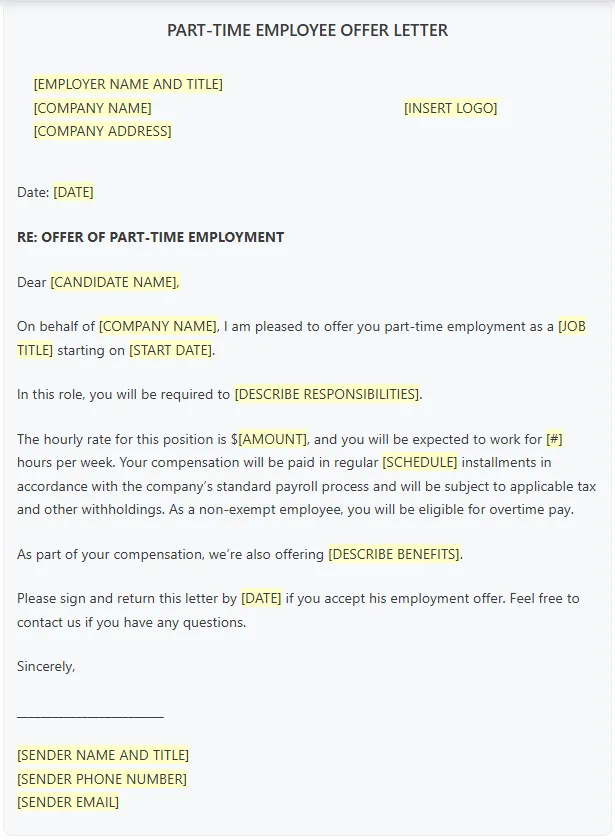
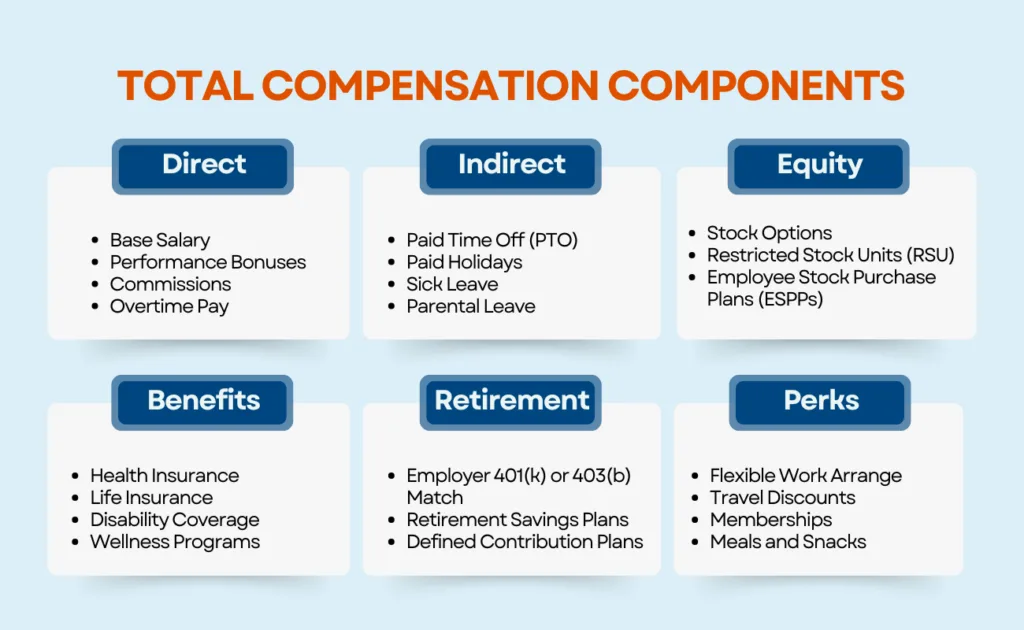
Total compensation typically includes:
- Base salary — the recurring paycheck every future raise multiplies from.
- Signing / sign-on bonus — one-time cash, sometimes with a 12- to 24-month clawback.
- Performance / annual bonus — a target percentage of base tied to results.
- Equity — RSUs, stock options, or profit-sharing units on a vesting schedule.
- Retirement — 401(k) match, pension, or profit-sharing contribution.
- Health, dental, vision insurance — premiums, deductibles, HSA seed funds.
- Paid time off (PTO) — vacation, sick, personal, and floating holidays.
- Flexibility — remote days, hybrid schedule, four-day weeks, start date.
- Growth budget — tuition reimbursement, certifications, conferences.
- Stipends — home-office, commuter, childcare, parking, wellness, relocation.
- Severance protection — a written safety net for senior or high-risk roles.
When base salary is locked, the perimeter usually isn’t. A better 401(k) match today compounds into serious money later — plug your numbers into a 401k calculator and you’ll see why smart negotiators refuse to ignore the fine print.
Step 1: Do Market Research That Actually Holds Up in a Negotiation
Every strong negotiation begins in a spreadsheet, not on a Zoom call. “I feel I deserve more” evaporates the moment a recruiter opens a compensation dashboard.
Build your case using at least three sources:
- Public salary databases — Glassdoor, Payscale, Salary.com, LinkedIn Salary Insights, and Levels.fyi (for tech).
- Government data — the U.S. Bureau of Labor Statistics OEWS publishes median wages by role and metro area.
- Live job postings — thanks to 2026 pay-transparency laws in California, Colorado, New York, Washington, Illinois, Maryland, Minnesota, and others, most listings now show real pay bands (Paycor).
- Network intel — quietly ask two or three peers in similar roles. Anonymous channels like Blind, Fishbowl, and Reddit’s r/salary help fill the gaps.
- Recruiter conversations — recruiters routinely share ranges when you ask them directly early in the process.
Turn research into three numbers
Convert your data into a clear range you can carry into the conversation:
- Walk-away number — the floor you refuse to cross.
- Target number — the realistic ask, well-supported by the market.
- Reach number — the top of your range, anchored slightly above target.
If your data clusters at $92k–$108k, your ask might read “$110k–$115k” — anchoring high but staying inside a defensible zone.
Step 2: Know Your Leverage (and Your BATNA)
BATNA — Best Alternative To a Negotiated Agreement — is the concept Harvard’s Program on Negotiation calls the single greatest source of bargaining power (Harvard PON). Translation: what happens if this offer disappears tomorrow?
Strong BATNA signals:
- A competing offer already in hand.
- A current job you’re happy to keep.
- Rare, in-demand skills the employer struggled to source.
- A specialized network, portfolio, or track record the company specifically wants.
Weak BATNA signals:
- Extended unemployment with runway running out.
- Only one active offer in a slow market.
- Visa or lease deadlines forcing your hand.
A weak BATNA does not mean you skip negotiation. It means you negotiate more gently, ask fewer things, and lean on non-cash items where employers flex faster.
An honest look at your finances shapes your patience. Knowing how many months your emergency fund and a solid high-yield savings cushion can carry you tells you exactly how long you can afford to hold out for the right number.
Step 3: Time the Conversation Correctly
Bring up numbers too early, and you weaken your leverage. Wait too long, and you look indecisive. Here is the timing map that works in 2026:
- In the application: if a required field asks for expected pay, write “negotiable” or list a wide range aligned to any posted band.
- In the first screen: deflect politely. Try: “I’d love to learn more about the role and the full range budgeted before I share a number.”
- After the written offer: this is the moment. You have maximum leverage the instant they say “we want you” and before you say “yes.”
- Before verbal commitment: always ask for the offer in writing before you negotiate. UCLA researchers noted that roughly 40% of tech offers are made verbally, letting employers quietly walk them back without a formal retraction.
Never negotiate compensation by text message — the New York State Department of Labor calls it disrespectful and unprofessional. Email or a scheduled phone/video call is the standard.
Step 4: Build a Value Story Recruiters Can’t Argue With
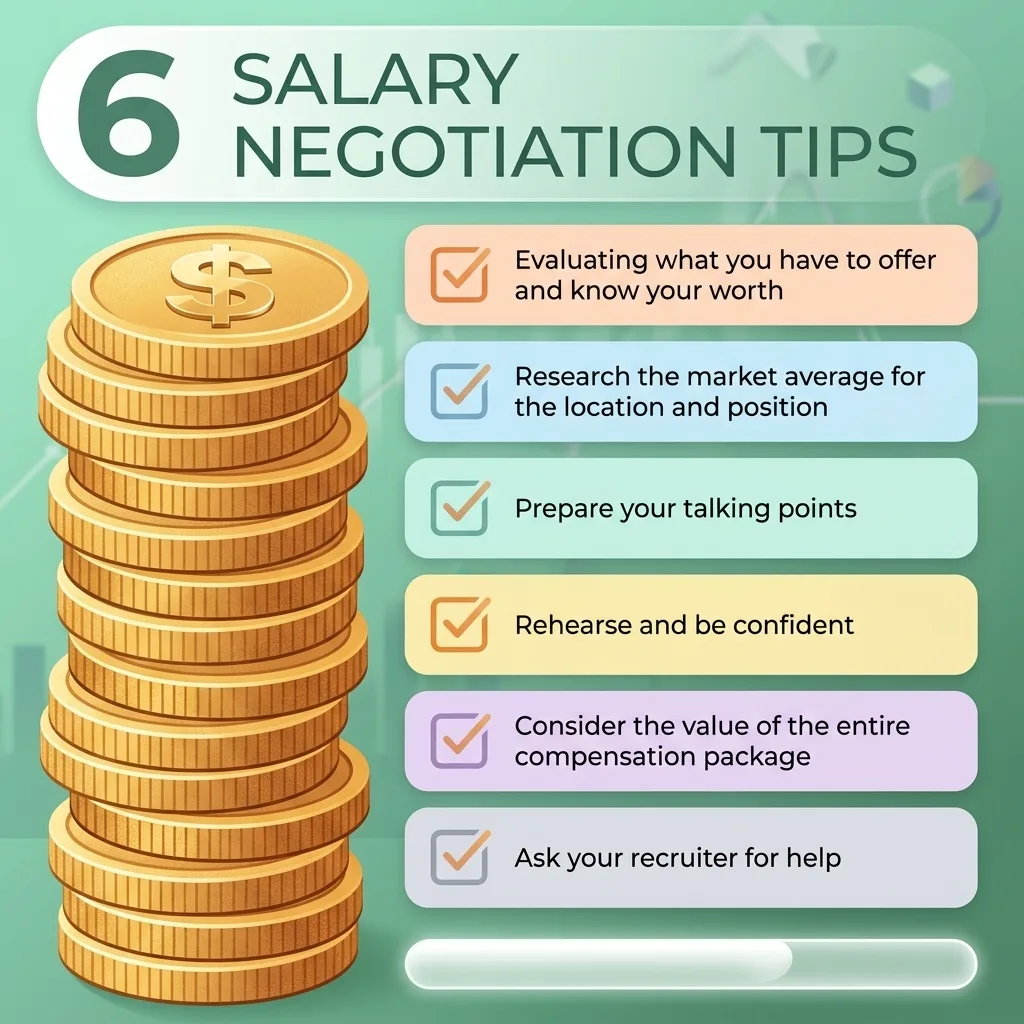
Recruiters compensate people for future value, not past effort. Your talking points should translate your résumé into outcomes the company already cares about.
Structure every point like this: Skill or experience → measurable result → why it matters here.
- “At my last company I redesigned onboarding and cut churn 22% in six months. Your JD lists retention as a top priority — that’s exactly where I’d apply the playbook.”
- “I hold two of the three certifications your role prefers, and I’ve led three cross-functional launches this year.”
- “Based on my market research, similar roles in this city pay $105k–$118k, and my track record puts me at the top of that band.”
Aim for three to five strong bullets and rehearse them out loud with a trusted friend. Indeed’s Career Guide highlights rehearsal as one of the single biggest predictors of a calm, confident delivery.
The Briefcase Technique (Ramit Sethi)
Best-selling author Ramit Sethi popularized a move that flips the script: instead of asking for more, arrive with a document showing exactly what you’ll deliver in the first 30, 60, and 90 days. He calls it the Briefcase Technique. Hand it over, walk through it, then let the employer connect the dots between your value and the number you’re asking for. It reframes the conversation from “please pay me more” to “here is what I’m bringing — is that worth $X?”
Step 5: Deliver the Counter — Scripts That Actually Work
These are field-tested scripts used by career coaches and negotiation authors. Keep the tone warm, specific, and unhurried.
The classic phone counter
“Thank you so much for the offer — I’m genuinely excited about this role and the team. Before I accept, I’d like to talk through the compensation. Based on my experience leading [specific project] and current market data for this role in [city], I was hoping we could land closer to $115,000. Is there flexibility to get there?”
The counter-offer email
Subject: Re: [Job Title] Offer — Quick Question on Compensation
Hi [Recruiter Name],
Thank you again for the offer to join [Company] as [Job Title]. I’m energized by the mission and the team, and I’d love to make this work.
Given my [X] years in [area], the results I delivered at [previous employer] (including [1–2 quick metrics]), and current market data for the role in [city], I was hoping we could revisit the base salary. Would you be open to $[counter number]?
I’m flexible on how we get there — base salary, signing bonus, or additional equity — and I’m ready to sign once we align.
Best,
[Your name]
The “how much should you counter?” rule
According to career coach Josh Doody, author of Fearless Salary Negotiation, a healthy counter usually lands 10%–20% above the initial offer, calibrated to your leverage and how far below market you are (Fearless Salary Negotiation).
- 10–12% — you already like the offer and want to nudge, not fight.
- 15% — the offer is fair but you have solid market data on your side.
- 18–20% — the offer is under market, you have leverage, or you’re a senior candidate.
When base is locked
“I appreciate you being straightforward. If base is fixed, could we look at a signing bonus, a six-month compensation review, an extra week of PTO, or a stronger equity grant to bridge the gap?”
Step 6: Handle Silence, Pushback, and Hard Questions
The five seconds after your ask feel like an hour. Do not fill the silence. Recruiters often go quiet on purpose to see whether you’ll backtrack. Let the pause do the work.
Here is a cheat sheet for the toughest recruiter responses:
| Recruiter says… | You reply… |
|---|---|
| “That’s the top of our band.” | “Understood. Where else is there flexibility — signing bonus, PTO, or an early review?” |
| “What’s the minimum you’ll accept?” | “I’d like to focus on what makes this a strong yes for both of us. My target is $X, based on market data and my track record.” |
| “We can’t match your other offer.” | “The role matters, but so does the offer. What can you do on total comp to close the gap?” |
| “We need an answer today.” | “I want to make a thoughtful decision. Could I have 48 hours to review the written offer?” |
| “Why do you deserve more?” | Reframe: value delivered, market rate, and the exact outcomes you’ll drive in the role. |
| “Is this really about the money?” | “Compensation is part of it. I’m also thinking about growth, scope, and title. Can we look at those together?” |
Avoid ultimatums and threats. Deepak Malhotra, professor of negotiation at Harvard Business School, puts it plainly in his classic HBR article 15 Rules for Negotiating a Job Offer: “How you negotiate matters as much as what you negotiate.” Aggression rarely closes deals — likable persistence does.
Step 7: Negotiate Everything Beyond Base Salary
When base pay is truly capped, the rest of the package almost never is. These are the items with the biggest real-dollar impact:
- Signing bonus — often paid within 30 days; ranges from $2k to $50k+ depending on level.
- Equity / RSUs — request a larger grant, faster vesting, or a scheduled refresher.
- Annual bonus target — push the on-target percentage up by 5–10 points.
- 401(k) match / retirement — ask for an earlier vesting date if there’s a cliff.
- PTO — an extra week is worth roughly 2% of your base salary.
- Remote or hybrid days — 71% of remote-capable workers say they would trade some pay to keep flexibility.
- Start date — buy yourself a real break between jobs.
- Job title — a stronger title accelerates your next promotion.
- Professional development budget — annual learning stipend, conference travel, tuition reimbursement.
- Severance protection — a written 3- to 6-month guarantee for senior or riskier roles.
- Relocation package — cash, temporary housing, or fully covered moving costs.
Before you accept, run the math. A $5,000 boost to your 401(k) contribution can outperform a $10,000 signing bonus over a decade once compounding kicks in — a quick retirement calculator makes the trade-off obvious.
Step 8: Negotiate a Raise or Promotion at Your Current Job
Everything above applies internally too, with two differences: you already know the culture, and the company already knows your work.
- Time it right. Aim for performance-review windows, budget cycles (usually Q4 or early Q1), or the two weeks after a big win.
- Bring a written case. A one-page brief with accomplishments, metrics, and market data gives your manager ammunition to advocate upward.
- Anchor on results, not tenure. “I’ve been here three years” is weaker than “I saved the team 400 hours a quarter with the new workflow.”
- Ask for a specific number, not ‘a raise.’
- Discuss the promotion track, not just pay — a title change often unlocks a bigger band.
- Keep a monthly brag file. Screenshots, thank-you emails, and metrics you can turn into review-ready proof.
Harvard Professional & Executive Development puts it well: internal negotiations are usually won weeks before the conversation, in the paper trail of impact you build all year.
The Psychology That Separates Great Negotiators From the Rest
Negotiation is as much emotional intelligence as it is math. A few principles change results dramatically:
- Anchor first, and anchor high but defensible. The first number introduced usually pulls the final agreement toward it.
- Frame requests as collaboration. “How can we get to $X?” outperforms “I need $X.”
- Use silence as a tool. Ask, then wait. Filler talk shrinks your ask.
- Practice tactical empathy. FBI negotiator Chris Voss’s book Never Split the Difference teaches labeling emotions (“It sounds like the budget is tight”) to soften resistance and open dialogue.
- Use calibrated questions. “How would we make this work?” invites problem-solving instead of a yes/no fight.
- Mind the flinch. If they wince at your number, do not retreat instantly.
- Manage your state. A short walk, water, and rehearsed lines fix most nerves. Voice tone leaks through email tone too — write, then wait 30 minutes, then send.
The gender-gap update
Old research said “women don’t ask.” Newer data tells a different story. Linda Babcock’s Women Don’t Ask research was foundational, but a 2018 paper in the Journal of Economic Behavior & Organization — and the 2024 HBS/UCLA study — found that women now negotiate as often as men, sometimes more, but often ask for less. Berkeley researchers observed a 22% pay gap that persisted even after controlling for role and experience. Fix: if you have historically undersold yourself, add 10–15% to your gut number and check it against market data.
Industry-Specific Negotiation Notes for 2026
Not every negotiation follows the corporate template. Adapt the playbook to your world.
Tech and FAANG
- Total comp is heavily weighted toward RSUs and bonuses.
- Base is often capped, but equity grants and signing bonuses have wide ceilings.
- Push for refresher grants every 12–24 months to protect against dilution.
- Ask for the exact vesting schedule, most recent 409A valuation, and share counts in writing.
Healthcare and clinical roles
- Base pay is often set by grid, but sign-on bonuses, loan-repayment programs, CME stipends, and shift differentials are negotiable.
- Ask for a written cap on on-call hours and a written schedule guarantee.
Nonprofit and mission-driven roles
- Budgets are tighter, but titles, PTO, remote flexibility, and professional-development budgets flex more than expected.
- Nonprofit compensation consultants recommend framing the ask around impact per dollar, not personal need.
Public sector and unionized roles
- Bands are usually fixed, but step placement is often negotiable. Ask to be placed higher on the grid based on prior experience.
- Hiring bonuses, telework days, and relocation help are quietly available in many agencies.
Freelance and contract work
- You’re negotiating a rate, not a salary — build in self-employment tax, health insurance, retirement, and PTO.
- Anyone learning how to become a freelancer should target a rate roughly 30–50% higher than an equivalent W-2 hourly to break even after benefits.
Creative and video-editing roles
- Portfolio-driven negotiations reward specific, quantified proof of craft.
- Editors and post-production professionals strengthen their case by pairing a polished reel with current craft standards — resources like this guide on video editing tips, tools, and techniques help you speak the language of retention, cut ratios, and platform metrics that clients care about.
- Bring turnaround times, retention lifts, and platform-specific results into the ask — those numbers move the anchor.
Remote-first and hybrid roles
- Ask for the actual remote policy in writing, not the aspirational one.
- Negotiate: number of required in-office days, home-office stipend ($500–$2,000), coworking budget, HQ-travel coverage, and time-zone flexibility.

Things You Should Never Say in a Salary Negotiation
The wrong sentence can cost you thousands. Avoid these phrases:
- “My current salary is…” — anchors you to your past pay, not your future value.
- “I need this because…” — employers pay for value, not personal circumstances.
- “Sorry to ask, but…” — apologies signal weakness before the ask.
- “I’m flexible / whatever works…” — invites a lowball.
- “Yes, I’ll accept.” — never accept on the spot; always take 24–72 hours.
- “That’s my final number.” — closes doors you may want later.
- “I have another offer” (when you don’t). — bluffs collapse under a single follow-up question.
- “Just meet me in the middle.” — you set your own ceiling by suggesting the split.
Use these instead:
- “Based on my research and experience, I was targeting $X.”
- “Can we explore how to get closer to $X?”
- “What flexibility exists in the total package?”
- “May I take 48 hours to review the written offer?”
The Biggest Mistakes That Cost Candidates Money
Even prepared candidates trip on avoidable errors:
- Naming a number first, without data. You anchor yourself down.
- Justifying based on personal need. Employers pay for value, not sympathy.
- Accepting on the spot. Take 24–48 hours with the written offer.
- Negotiating over text or DMs. Unprofessional and easy to misread.
- Making it about ego or “winning.” Collaboration beats combat.
- Bluffing a competing offer that doesn’t exist.
- Ignoring benefits. A stronger 401(k) match often beats a bigger raise.
- Failing to get it in writing. Verbal promises evaporate under new management.
- Threatening or issuing ultimatums.
- Skipping the ask entirely. The single most expensive mistake of all.
A 7-Day Prep Checklist Before You Negotiate
Give yourself one focused week and you’ll walk in twice as confident.
- Day 1 — Research. Pull salary data from three sources; save screenshots.
- Day 2 — Value story. Write 3–5 quantified wins.
- Day 3 — Set numbers. Walk-away, target, and reach.
- Day 4 — Draft the counter email. Keep it under 200 words.
- Day 5 — Rehearse. Read your phone script out loud twice.
- Day 6 — Line up leverage. References, competing conversations, timeline clarity.
- Day 7 — Send it. Sleep well, hit send, and let silence do its work.
Compensation Levers, Ranked by Employer Flexibility
| Lever | Typical Flexibility | Long-Term Impact on You |
|---|---|---|
| Base salary | Moderate — capped by band | Highest (all future raises compound off it) |
| Signing bonus | High | One-time cash, easiest to approve |
| Equity / RSUs | Moderate to high (senior roles) | Big upside if the company grows |
| Annual bonus target | Moderate | Multiplies with future raises |
| PTO / vacation days | High | Time is money |
| Remote / hybrid days | High | Massive quality-of-life value |
| 401(k) match | Low (policy-wide) | Compounds for decades |
| Title | High | Fuels the next negotiation |
| Start date | High | Buys recovery time |
| Learning & development budget | High | Boosts future earning power |
| Severance clause | Moderate (senior roles) | Financial safety net |
After You Accept: Protect and Grow the Win
You negotiated a great package — now make sure it sticks and grows.
- Get everything in writing. Base, bonus, equity, start date, remote policy, review date.
- Confirm review timelines. Ask when the next comp review happens so you can plan.
- Set salary calendar reminders. Start collecting wins six months before each review.
- Direct the extra dollars intentionally. Route slices into retirement, an emergency fund, and a taxable brokerage — don’t let lifestyle creep swallow the raise.
- Keep negotiating your growth. Every promotion, project, and year is another chance to reset your market rate.
If a chunk of the increase is heading toward a first home, run the numbers through a mortgage calculator before you commit — a bigger income only helps if the housing math works too.
Alt: Long-term career and financial growth planning
FAQs
Is it rude or risky to negotiate a salary offer?
No. 73% of employers expect it, and offer rescissions from a respectful counter are rare. A 2024 literature review cited by UCLA Anderson confirmed that job seekers vastly overestimate how often offers get pulled.
How much should I counter above the initial offer?
A safe range is 10%–20% higher than the initial number, calibrated to your leverage and how far below market you are. New grads and junior roles usually push 5%–10%; senior or specialized roles can push higher.
Should I share my current salary when asked?
Whenever possible, don’t. In many U.S. states it is now illegal for employers to ask. Try: “I’d rather focus on the value I’ll bring and the market rate for this role.”
Can I still negotiate if the job posting listed a fixed salary?
Yes — negotiate the rest. Signing bonus, PTO, start date, remote flexibility, equity, and title are almost always on the table even when base pay is fixed.
What if they say the offer is “final”?
Ask about non-salary levers, request an early performance review (six months instead of twelve), or get a written commitment on a target raise tied to specific goals.
Is it okay to negotiate by email instead of phone?
Yes. Email is professional and gives both sides time to think. Just avoid text messages and social DMs — those still read as unprofessional.
What if my BATNA is weak and I really need this job?
Negotiate gently, prioritize non-salary levers, and lock in a written performance-review date so you can renegotiate soon on stronger footing.
How long should I take to respond to an offer?
24–72 hours is standard. Ask for a specific deadline in writing — most employers expect and respect a short review window.
Does salary negotiation still work in a soft, AI-affected 2026 job market?
Yes, but with adjusted expectations. Anchor closer to 10% than 20%, prioritize written commitments over verbal ones, and lean harder on non-cash levers. Even a modest ask usually beats accepting the first number silently.
Final Word: Ask, Anchor, and Advocate
Salary negotiation is not a talent — it is a repeatable skill you can prep for in a single week. Do the research, anchor with data, ask with warmth, and stay silent long enough for the offer to grow.
Candidates who walk away with an extra 10%–20% aren’t luckier or more aggressive. They simply asked while everyone else assumed the first number was the last. Your future self — the one funding retirement, buying a home, and building real financial freedom — is quietly counting on the version of you that speaks up today.


Leave a Reply