

In this article
- Key Takeaways (Read This First)
- What Is Freelancing? A Clear Definition
- Is Freelancing Right for You? A 60-Second Reality Check
- The 3 Types of Freelancers (Pick Your Path Early)
- Step 1: Pick a Niche You Can Actually Sell
- Step 2: Build Real Skills (Even Without a Degree)
- Step 3: Build a Simple but Powerful Portfolio
- Step 4: Set Your Freelance Rates Without Undercharging
- Step 5: Choose the Right Freelance Platforms
- Step 6: Find Clients Without Waiting to Be Discovered
- Step 7: Write Proposals That Actually Win
- Step 8: Master Contracts, Invoicing, and Getting Paid
- Step 9: Handle Freelance Taxes Like a Pro
- Step 10: Plan Retirement and Health Insurance Early
- Step 11: Build Your Freelancer Tech Stack
- Step 12: Case Study — Why Video Editing Is a Standout Niche
- Step 13: Vet Every Client (Spot Red Flags Fast)
- Step 14: Deliver Excellent Work and Manage Clients Well
- Step 15: Plan for Slow Seasons and Build Long-Term Wealth
- Emerging Freelance Trends to Watch in 2026
- Common Mistakes New Freelancers Make (Avoid These)
- Your 30-Day Freelance Launch Plan
- Frequently Asked Questions
Quick answer: To become a freelancer, pick one marketable skill, build 3 sample projects, launch a simple portfolio, set a rate based on real market data, land your first client through outreach or a platform like Upwork, and treat your money, taxes, and contracts like a real business from day one. Everything else is refinement.
Freelancing has quietly become one of the largest labor movements of this decade. Around 1.57 billion people freelance worldwide, and in the U.S. alone, Upwork’s Freelance Forward research estimates freelancers generated roughly $1.5 trillion in earnings in 2024. Meanwhile, MBO Partners’ 2025 State of Independence report counted 72.9 million U.S. independent workers, with a record 5.6 million earning more than $100,000 a year.
Yet most beginner guides skip the real questions: How do I get my first client? What do I charge? How do I not get destroyed at tax time? This guide answers all of that — no fluff, no hype, just what actually works in 2026.
Key Takeaways (Read This First)
- Freelancing means selling a skill to multiple clients as an independent contractor — not one boss, one paycheck.
- Specialists earn 2–4× more than generalists in the same field, according to freelance skills-demand research.
- The average U.S. freelancer earns roughly $99,230 per year, and hourly rates cluster around $48/hour nationally.
- Set aside 25–30% of every payment for taxes, and pay the IRS quarterly.
- Your first ten clients will not come from a job board — they’ll come from your network, LinkedIn, cold outreach, and referrals.
- AI-augmented freelancers now earn 2–3× more than peers who ignore AI tools.
What Is Freelancing? A Clear Definition
A freelancer is a self-employed professional who sells a service — writing, design, coding, editing, consulting, marketing — to multiple clients on a project or contract basis. Freelancers set their own rates, hours, and workload, and they file taxes as independent contractors rather than as W-2 employees.
Freelancing gives you three things a traditional job usually can’t:
- Skill-based earning ceiling — better skills = higher rates, uncapped.
- Location freedom — work from a home office, café, or Bali villa.
- Portfolio ownership — every client relationship strengthens your leverage.
The trade-off is real: no employer benefits, no guaranteed paycheck, and you handle your own marketing, admin, and taxes. Know the deal before you sign up for it.
Is Freelancing Right for You? A 60-Second Reality Check
Ask yourself these five questions honestly:
- Can I go 3–6 months without a steady paycheck while building a pipeline?
- Am I willing to sell myself — cold emails, DMs, calls, proposals?
- Can I manage my own calendar, invoices, and taxes?
- Do I have (or can I quickly learn) a skill someone will pay for?
- Can I handle uncertainty without spiraling?
Three or more “yes” answers? You’re ready. Fewer than three? Start freelancing on the side while you build savings. A modest emergency fund in one of the best high-yield savings accounts dramatically reduces the emotional pressure of slow months and helps you say “no” to bad clients.
The 3 Types of Freelancers (Pick Your Path Early)
Most people picture one image when they hear “freelancer,” but the market has three distinct paths:
- Side-hustle freelancers — keep a day job, freelance nights and weekends. Low risk, slow growth.
- Full-time solo freelancers — the classic path: multiple clients, direct outreach, higher earnings.
- Fractional / retainer freelancers — senior specialists (fractional CMO, CFO, developer) working 10–20 hours a month per client at premium rates.
Pick the path that matches your current savings, family situation, and risk tolerance. You can move between them later as your income stabilizes.
Step 1: Pick a Niche You Can Actually Sell

The single biggest reason new freelancers stall is trying to be “everything for everyone.” Specialists get referrals faster, rank higher on marketplaces, and command 2–4× the rates of generalists.
Ask yourself three questions to find a profitable angle:
- What skills do I already have from school, hobbies, or past jobs?
- Which industries do I understand better than most people?
- Where is the money flowing? (SaaS, healthcare, finance, and e-commerce consistently pay premium rates.)
High-Demand Freelance Niches in 2026
| Freelance Niche | Typical Hourly Range (USD) | Skill Barrier | Demand Trend |
|---|---|---|---|
| AI Integration & Prompt Engineering | $50 – $150 | High | 🚀 Explosive |
| Full-Stack Web Development | $40 – $150 | High | Strong |
| UX / UI Design | $50 – $150 | Medium–High | Strong |
| Video Editing & Motion Graphics | $30 – $100 | Medium | Strong |
| SEO & Content Strategy | $35 – $120 | Medium | Growing |
| Copywriting & Ghostwriting | $30 – $150 | Low–Medium | Steady |
| Data Analytics & Visualization | $40 – $130 | High | Growing |
| Cybersecurity Consulting | $60 – $200 | High | 🚀 Explosive |
| Virtual Assistance | $15 – $45 | Low | Steady |
| Social Media Management | $25 – $80 | Low–Medium | Steady |
Ranges compiled from Upwork, ZipRecruiter, and Hubstaff freelance rate reports.
Turn Your Niche Into a One-Sentence Positioning Statement
Try this template: “I help [audience] achieve [result] through [service].”
Example: “I help SaaS founders grow organic traffic through SEO-driven blog content.”
Clear, specific, and instantly memorable — the exact kind of positioning that clients remember and AI answer engines love to quote.
Step 2: Build Real Skills (Even Without a Degree)
You don’t need a college diploma to freelance. You need proof you can deliver results. Learn a marketable skill deeply, then build public evidence.
Reliable places to learn in 2026:
- Coursera — university-backed certificates
- Udemy — one-time-fee courses, frequently discounted
- LinkedIn Learning — polished business and creative tracks
- YouTube — free tutorials for nearly every craft
- Free official docs — Google Skillshop, HubSpot Academy, Meta Blueprint
Turn Practice Into Portfolio Pieces
Every free project doubles as a client-winning case study. Try these:
- Redesign a real brand’s landing page as a concept project
- Write three blog posts targeting a real search keyword
- Edit a small YouTuber’s video in exchange for a testimonial
- Build a mini SaaS landing page and post it on GitHub
- Offer discounted work to a local nonprofit
Two or three strong samples are enough to start pitching paid clients. Perfection is not the goal — momentum is.
Step 3: Build a Simple but Powerful Portfolio
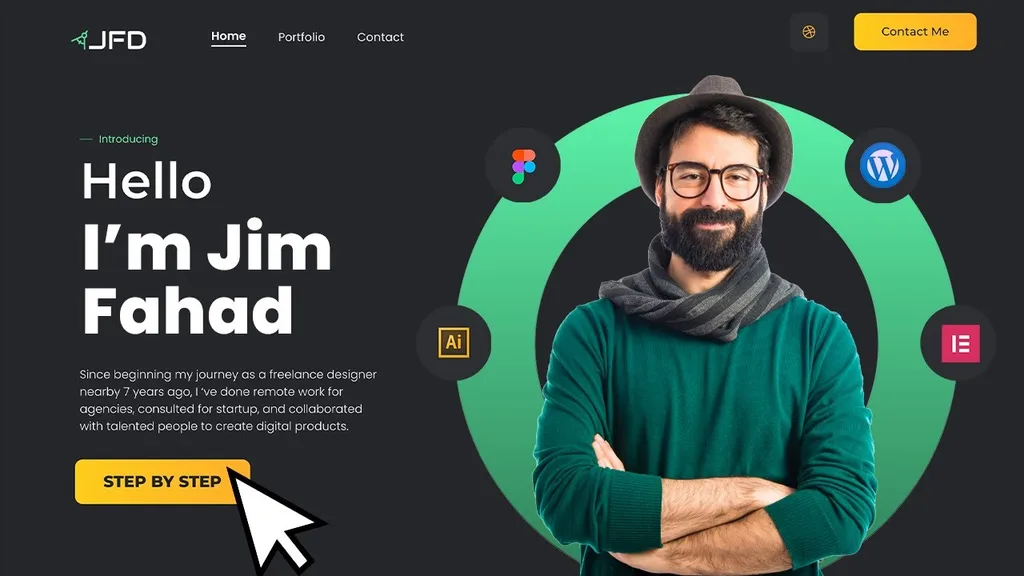
Your portfolio is your storefront. It doesn’t need to be fancy — it needs to be clear, credible, and skimmable in under 30 seconds.
What a Winning Freelance Portfolio Includes
- A one-line headline echoing your niche statement
- 3–6 sample projects with the problem, your process, and measurable results
- A short “About” section with a real photo (not a cartoon avatar)
- Client testimonials — even from unpaid work
- A visible contact button on every page
- Links to your LinkedIn, GitHub, Dribbble, or Behance
Build it on Carrd, Framer, Wix, Squarespace, or WordPress — any of these lets you launch in an afternoon.
Pro tip: Add FAQ blocks and clear service descriptions on your homepage. According to the Semrush guide to Generative Engine Optimization, pages with quotes, statistics, and structured Q&A see 30–40% higher visibility in AI-generated answers — which increasingly drive freelance discovery through ChatGPT, Perplexity, and Google AI Overviews.
Step 4: Set Your Freelance Rates Without Undercharging

Underpricing is the fastest way to burn out. According to Investopedia’s 2026 freelancer income analysis, the average U.S. freelancer earns around $99,230 per year, with most falling between $50,500 and $128,500. ZipRecruiter data pegs the U.S. average hourly rate near $47.71/hour in 2026.
Three Ways to Price Your Work
- Hourly — best for open-ended tasks or discovery-heavy consulting.
- Fixed project fee — best when scope is clear and repeatable.
- Value-based or retainer pricing — best for recurring, high-impact work with senior clients.
A Simple Freelance Rate Formula
- Take your target annual income (say, $80,000)
- Add 30% for taxes, benefits, software, and business expenses
- Divide by realistic billable hours per year (most solo freelancers bill ~1,000, not 2,080)
$80,000 × 1.3 ÷ 1,000 = $104/hour as your baseline.
Test this rate on your next three proposals. If nobody flinches, raise it. If everyone flinches, refine your pitch — not your price. Plan for irregular income from day one; tools like a 401k calculator help you project retirement goals despite variable monthly earnings.
Step 5: Choose the Right Freelance Platforms
You don’t need to be on every platform. Pick two — one high-volume, one high-value — and go deep.

Best Freelance Platforms in 2026
| Platform | Best For | Freelancer Fee |
|---|---|---|
| Upwork | Long-term contracts, most niches | Variable, 0–15% (typically 10%) |
| Fiverr | Packaged fixed-price gigs | Flat 20% |
| Toptal | Top-tier developers, designers, finance | 0% (client pays) |
| Contra | Designers, creators, commission-free | 0% |
| We Work Remotely | Full-time remote contracts | 0% (job board) |
| LinkedIn ProFinder / Jobs | Direct client outreach | 0% |
Per the Upwork vs. Fiverr comparison guide, Fiverr’s flat 20% cut is higher than Upwork’s typical 10%, but Fiverr often converts faster on productized gigs. For most beginners, start with one of these two, collect testimonials, then migrate premium work to your own website and LinkedIn.
Step 6: Find Clients Without Waiting to Be Discovered
The hardest part of freelancing isn’t the work — it’s landing consistent clients. You need both inbound (people find you) and outbound (you find them) channels running at all times.
Proven Client Acquisition Strategies
- Cold email small businesses in your niche with a specific, personalized pitch (never mass blasts)
- Post on LinkedIn 2–3 times a week showing your process and wins
- Answer questions on Reddit, Quora, and niche forums where your ideal clients spend time
- Ask for referrals after every completed project — this compounds faster than any other channel
- Guest post on blogs your target clients read
- Subcontract with agencies to smooth out gaps between direct clients
- Attend local meetups and coworking events — offline networking still converts
Redditors on r/freelance repeat this truth constantly: your first ten clients almost never come from job boards. They come from your existing network, LinkedIn engagement, and warm intros. Tell every friend, ex-coworker, and family member exactly what you do — you’d be shocked how many first gigs come from your own contacts.
The Anchor Client Strategy
Many established freelancers aim for one anchor client providing 40–60% of monthly income, then layer smaller clients on top. This stabilizes cash flow while you scale.
Step 7: Write Proposals That Actually Win
Most beginner proposals lose because they talk about the freelancer, not the client. Flip the script.
The 5-Part Winning Proposal Framework
- Open with the client’s problem — show you read their brief.
- Restate the desired outcome in one sentence.
- Propose your specific solution in 3–5 bullet points.
- Provide proof — one relevant sample or measurable result.
- Close with a clear next step — a call, a start date, a signed agreement.
Keep it under 300 words. According to PandaDoc’s proposal-writing guide, short, structured proposals outperform long, generic ones — because clients skim, they don’t read.
A quick opening line that works:
“Hi [Name] — you mentioned you’re getting traffic but not conversions. I’ve helped 3 SaaS founders solve exactly this. Here’s how I’d approach yours…”
Simple, specific, and immediately about them.
Step 8: Master Contracts, Invoicing, and Getting Paid
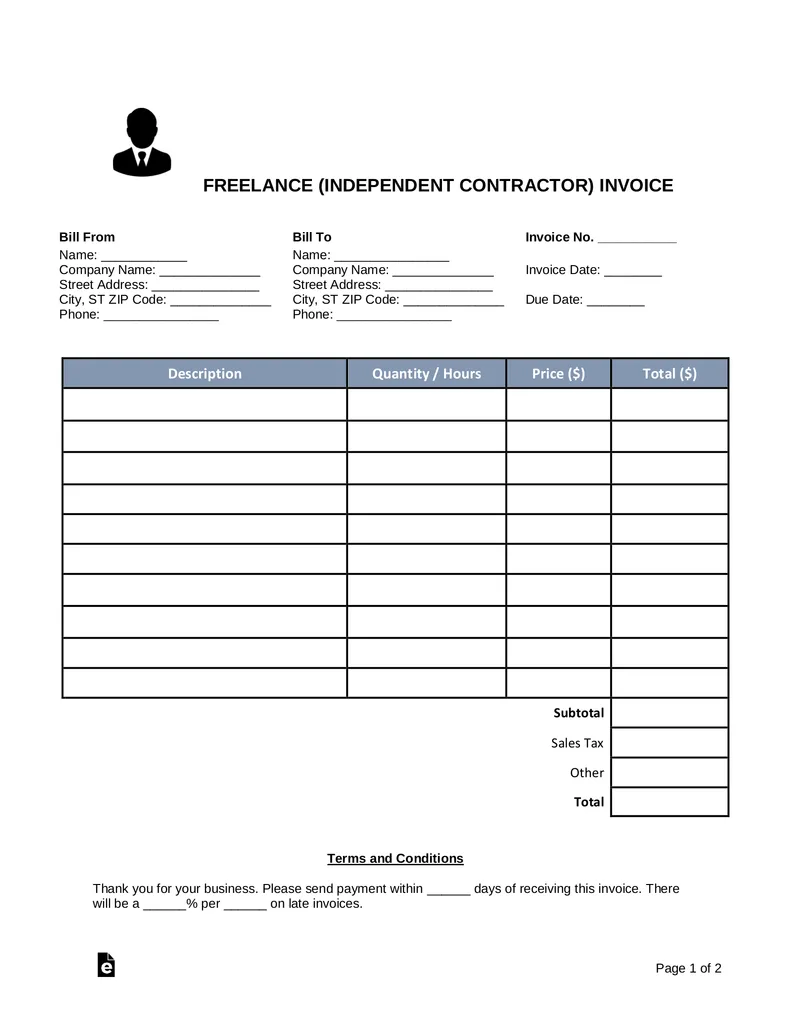
The moment money is involved, get everything in writing. A short, plain-English contract prevents 90% of freelance nightmares.
Every Contract Should Cover
- Scope of work — exactly what you deliver
- Timeline and milestones
- Payment amount, schedule, and method
- Revision limits (2–3 rounds is standard)
- Kill fee / cancellation terms
- Ownership and copyright transfer upon final payment
- Late-payment interest (typically 1.5% per month)
Invoicing and Getting Paid on Time
- Require 50% upfront for every new client
- Send invoices the same day you deliver
- Charge in USD or your local currency — never a client’s shakier currency
- Use Wise, Payoneer, or Deel to slash foreign-transfer fees
- Automate with Wave, FreshBooks, Bonsai, or QuickBooks Self-Employed
Never start work without a signed agreement and a deposit. This one rule alone will save you thousands of dollars a year.
Step 9: Handle Freelance Taxes Like a Pro
Freelance income is fully taxable, and it hits harder than most beginners expect. In the U.S., you’ll owe self-employment tax of 15.3% — 12.4% for Social Security and 2.9% for Medicare — on top of regular income tax, according to the IRS Self-Employment Tax page. SE tax is calculated on 92.35% of your net earnings, and for 2025 the Social Security portion caps at the first $176,100 of net income.
Freelancer Tax Essentials
- Set aside 25–30% of every payment for taxes — automate this to a separate account.
- Make quarterly estimated payments in April, June, September, and January.
- Track every business expense — software, home office, internet, courses, mileage.
- Consider an LLC or S-Corp once profits reliably exceed roughly $60K–$80K (can reduce SE tax exposure).
- Contribute to a SEP IRA or Solo 401(k) to shelter income (up to $70,000 in 2025 for either plan, subject to earnings).
If numbers make your eyes glaze over, hire a CPA who works with self-employed clients. It typically pays for itself in the first tax year alone.
Step 10: Plan Retirement and Health Insurance Early
Two things every freelancer underestimates: retirement savings and health coverage. Fix them early, sleep better forever.
Retirement Options for Freelancers
- Roth IRA — post-tax contributions, tax-free growth (great for lower-income years). A Roth IRA calculator can show you exactly how much a few years of consistent contributions become at retirement.
- SEP IRA — up to 25% of net self-employment earnings, capped at $70,000 in 2025.
- Solo 401(k) — same $70,000 cap, plus Roth option and easier catch-up contributions after 50.
Even $200 a month, compounded over 30 years, can grow into six figures. The habit matters more than the amount.
Health Insurance for Freelancers
You won’t get employer coverage anymore — so choose one of these routes:
- Healthcare.gov marketplace — the standard ACA option, with subsidies based on your income.
- Freelancers Union — group plans and benefits designed specifically for independents.
- Spouse’s plan — if available, often the cheapest option.
- Short-term or catastrophic plans — cheap but limited; use with caution.
Deduct your health insurance premiums as a self-employed business expense — it directly lowers your taxable income.
Step 11: Build Your Freelancer Tech Stack
Successful freelancers run their business like a small company. Automate everything that isn’t billable.
Essential Freelancer Toolkit
- Project management: Notion, Trello, ClickUp, Asana
- Communication: Slack, Loom, Zoom, Google Meet
- Time tracking: Toggl, Clockify, Harvest
- Invoicing & accounting: Wave, FreshBooks, QuickBooks, Bonsai
- AI productivity: ChatGPT, Claude, Perplexity, Grammarly, Midjourney
- File sharing: Google Drive, Dropbox, WeTransfer
- Contracts: DocuSign, HelloSign, PandaDoc
AI Is a Freelancer’s Superpower — Not a Threat
Freelancers who ignore AI risk being priced out. Those who master AI charge 2–3× more because they deliver faster with higher quality. Use AI to:
- Draft first versions of copy, code, or scripts
- Brainstorm angles and outlines
- Automate research and summarize interviews
- Generate mock-ups, storyboards, and voiceovers
- Repurpose long-form content into 20 short pieces
Video is one of the fastest-growing niches AI can supercharge — which brings us to a case study worth studying carefully.
Step 12: Case Study — Why Video Editing Is a Standout Niche
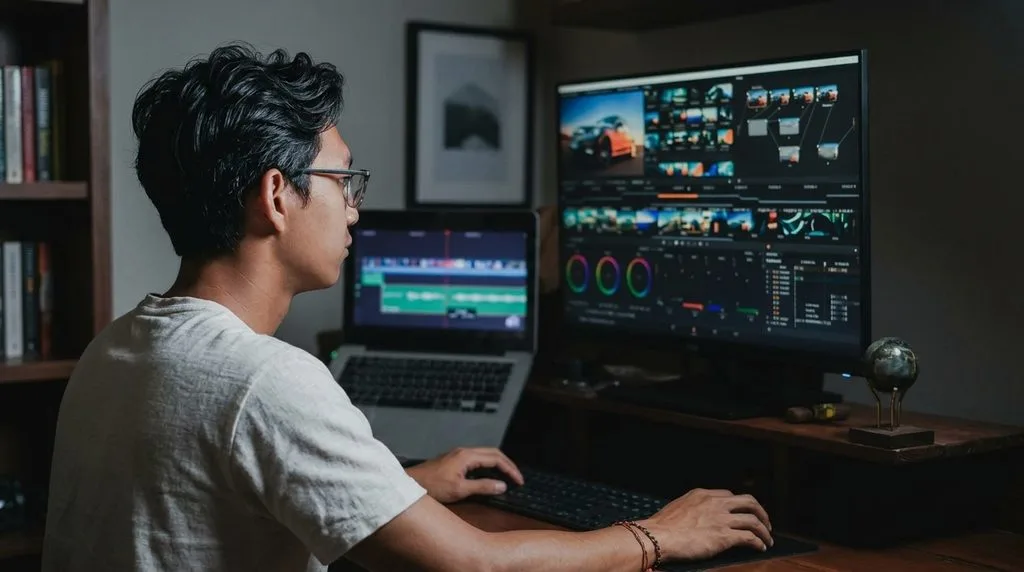
Reddit veterans of r/freelance say it plainly: video editing pays more than image editing and generates recurring monthly work through YouTubers, coaches, agencies, and course creators.
Why Freelance Video Editing Wins in 2026
- Creators post daily, so demand is constant
- Skilled editors bill $40–$100+ per hour
- Podcast, YouTube, and course clients often become monthly retainers
- Tools like DaVinci Resolve are free, so the barrier to entry is low
- AI tools now speed up cutting, captioning, and color grading dramatically
If you want to level up faster, this deep-dive on video editing tips is one of the most practical resources for beginners producing agency-grade work — covering cuts, color, transitions, audio cleanup, and delivery formats you’ll actually use with paying clients.
How to Break Into Freelance Video Editing
- Learn one editor cold: Premiere Pro, DaVinci Resolve, or Final Cut Pro
- Edit five sample videos in different styles (talking head, vlog, YouTube ad, Instagram reel)
- Post them on YouTube, LinkedIn, and Behance with clear before/after examples
- Cold-DM 20 creators offering one free edit
- Convert happy free clients into monthly retainers within 60 days
The same case-study logic — narrow, prove, retain — applies to almost any high-paying freelance niche.
Step 13: Vet Every Client (Spot Red Flags Fast)
Bad clients cost you time, money, and confidence. Learn to spot them before you sign.
Freelance Red Flags to Never Ignore
- Refuses to sign a contract or pay a deposit
- Vague scope that keeps expanding (classic scope creep)
- Wants to move off-platform immediately to avoid fees (often a scam signal)
- Pressures you to start “today” without discovery
- Complains about previous freelancers without accountability
- Asks for free “test work” beyond a small sample
- Delays or ghosts on the first invoice
Trust your gut. If a client feels off during discovery, they’ll feel worse mid-project. Politely decline and protect your calendar for the good ones.
Step 14: Deliver Excellent Work and Manage Clients Well
Great freelancers aren’t just skilled — they’re easy to work with. That’s how a one-off project becomes a five-year client relationship.
Client Management Non-Negotiables
- Respond within 24 hours, even just to acknowledge
- Send weekly updates on active projects (no client ever complained about too much clarity)
- Under-promise, over-deliver on timelines
- Ask for feedback early to avoid painful rework
- Set explicit working hours and stick to them
- Document everything in writing — no verbal-only agreements
- Fire toxic clients politely but firmly
Clients hire your skill once. They rehire your communication forever.
Step 15: Plan for Slow Seasons and Build Long-Term Wealth
Freelance income fluctuates. You’ll have $12K months and $3K months. The freelancers who thrive treat income like a business, not a paycheck.
Smart money habits every freelancer should adopt:
- Keep a 6-month emergency fund in a high-yield account
- Pay yourself a fixed monthly salary from your business account (smooths the roller coaster)
- Automate savings the same day a client payment lands
- Fund retirement every single year, not just “good” years
- Diversify income with courses, digital products, or affiliate revenue
- Buy health, disability, and liability insurance early — before you need them
- If credit card debt is dragging your cash flow, research whether debt consolidation makes sense before scaling your business
- Book an annual review with a specialist — this guide on finding a good financial advisor is a solid starting point
Freelancing gives you unmatched freedom — but only if your financial house is in order.
Emerging Freelance Trends to Watch in 2026
- AI-augmented freelancers are outpacing traditional ones in earnings and speed.
- Fractional roles (fractional CMO, CFO, designer) are exploding among senior specialists.
- Global talent equalization — clients now hire the best, regardless of geography.
- Vertical specialization — “I only work with dental clinics” pays more than “I do design.”
- Productized services — fixed packages replacing hourly work.
- Community-driven client acquisition — Slack, Discord, and Circle groups quietly out-converting cold outreach.
Freelancers who adapt to these shifts will earn more with fewer clients and less burnout.
Common Mistakes New Freelancers Make (Avoid These)
- Undercharging to “get experience” — you anchor low forever
- Starting work without contracts or deposits
- Skipping quarterly taxes and getting slammed in April
- Chasing every gig instead of specializing
- No emergency fund for the inevitable slow month
- Poor client vetting — accepting red flags out of desperation
- Killing marketing during busy months, causing the feast-and-famine cycle
- Ignoring AI tools and pricing yourself out of the future market
Every one of these is fixable. Awareness is 80% of the solution.
Your 30-Day Freelance Launch Plan
Week 1: Pick your niche. Write your one-sentence positioning statement. Set your minimum rate.
Week 2: Build 3 portfolio samples. Launch a simple website. Update LinkedIn and freelance platform profiles.
Week 3: Send 50 personalized outreach messages. Apply to 20 relevant gigs. Post 3 pieces of niche content.
Week 4: Follow up with everyone. Sign your first contract. Deliver excellent work. Ask for a testimonial and referral.
Repeat this cycle every month, and within six months you’ll have a real freelance business — not a hopeful side project.
Frequently Asked Questions
Can I become a freelancer with no experience?
Yes. Learn one marketable skill through free or affordable courses, build 2–3 sample projects, and pitch small businesses or nonprofits at a discounted rate. Every completed project becomes a portfolio piece. Most successful freelancers had zero paid experience in their first month.
How much money can I make as a freelancer?
It depends on niche, skill level, and geography. In the U.S., the average freelancer earns around $99,000 per year, and senior specialists routinely clear $150K+. Beginners typically start between $20 and $40 per hour, then scale as reviews and testimonials stack up.
Which freelance platform is best for beginners?
Upwork and Fiverr are the two easiest entry points. Upwork works better for long-term contracts and higher-value clients; Fiverr excels at packaged, repeatable services. After you have five to ten reviews, expand to LinkedIn and your own website for premium clients.
Do freelancers have to pay taxes?
Yes. Freelance income is fully taxable, and in the U.S. you owe self-employment tax (15.3%) plus regular income tax. Set aside 25–30% of every payment, pay quarterly estimated taxes, and track every deductible business expense year-round.
Do I need an LLC to start freelancing?
No — most freelancers start as sole proprietors. Once profits consistently exceed roughly $60K–$80K per year, an LLC or S-Corp can offer tax advantages and legal protection. Talk to a CPA before making the switch.
How long does it take to land the first client?
Focused beginners typically sign their first paid client within 4–8 weeks. Speed depends on niche demand, outreach volume, and portfolio quality. Sending 10–20 targeted messages a week is the difference between “waiting” and “winning.”
Is freelancing better than a 9-to-5 job?
It’s not “better” — it’s different. Freelancing offers flexibility, higher earning ceilings, and autonomy, but requires self-discipline, marketing, and financial planning. Many people freelance part-time first, then go full-time only after monthly income exceeds their salary for three straight months.
What are the fastest-growing freelance skills in 2026?
Fastest-growing categories include AI integration and prompt engineering, machine learning, cybersecurity, video editing, UX/UI design, full-stack development, SEO content strategy, and data analytics. AI-augmented freelancers command premium rates across nearly every niche.


Leave a Reply