
In this article
- Introduction: The $349 Charge You Never Made
- What Is a Chargeback? A Simple, Clear Definition
- What Does “Chargeback From a Bank” Really Mean?
- Chargeback vs Refund: Why the Difference Matters
- How a Chargeback Actually Works: Step-by-Step
- Common Reasons for Chargebacks
- Chargeback Reason Codes You’ll See on the Statement
- Chargeback Time Limits You Cannot Miss
- Chargebacks on Debit Cards: A Different Rulebook
- Do Chargebacks Hurt Your Credit Score?
- Chargebacks by Purchase Type: Real-World Scenarios
- Friendly Fraud: The Fastest-Growing Chargeback Category
- What It Costs Merchants: Fees, Ratios, and Penalties
- Chargeback Statistics You Should Know (2025–2026)
- How to File a Chargeback the Right Way
- What to Do If Your Chargeback Is Denied
- Chargeback Myths vs Facts
- Chargebacks Around the World: Section 75, PSD2, and More
- When You Should Not File a Chargeback
- How to Prevent Chargebacks in the First Place
- Chargeback Timeline at a Glance
- Key Takeaways
- Frequently Asked Questions (FAQs)
Quick answer: A chargeback is a forced payment reversal your bank triggers on your behalf when a credit or debit card charge is unauthorized, incorrect, or tied to goods and services you never received. Under the U.S. Fair Credit Billing Act (FCBA), cardholders generally have 60 days to dispute a billing error, and the issuer must resolve the case within 90 days. A chargeback protects your money, but it is not a shortcut refund — you still need a valid reason and evidence.
Introduction: The $349 Charge You Never Made
Picture this: you open your credit card app on a Tuesday morning, coffee in hand, and see a $349 charge from a store you have never heard of. Panic hits first, then confusion. Do you call the merchant? The bank? The police? Millions of Americans face this moment every year, and the tool that quietly saves them is called a chargeback.
A chargeback is not a favor from your bank. It is a legal right built into the U.S. payment system — one that pulls your money back from a merchant, forces an investigation, and often lands the funds in your account within days. It is also one of the most misunderstood terms in personal finance, which is why 72% of consumers who search “what is a chargeback?” still get the process wrong when they file one.
This guide walks you through everything: the exact chargeback meaning, how a chargeback from a bank actually works, the timelines, your legal rights, when to file, when not to, and the real numbers from Visa, Mastercard, the FTC, and the CFPB. Whether you are protecting yourself from fraud or running a business trying to fight friendly fraud, this is the plain-English 2026 breakdown you need.
What Is a Chargeback? A Simple, Clear Definition
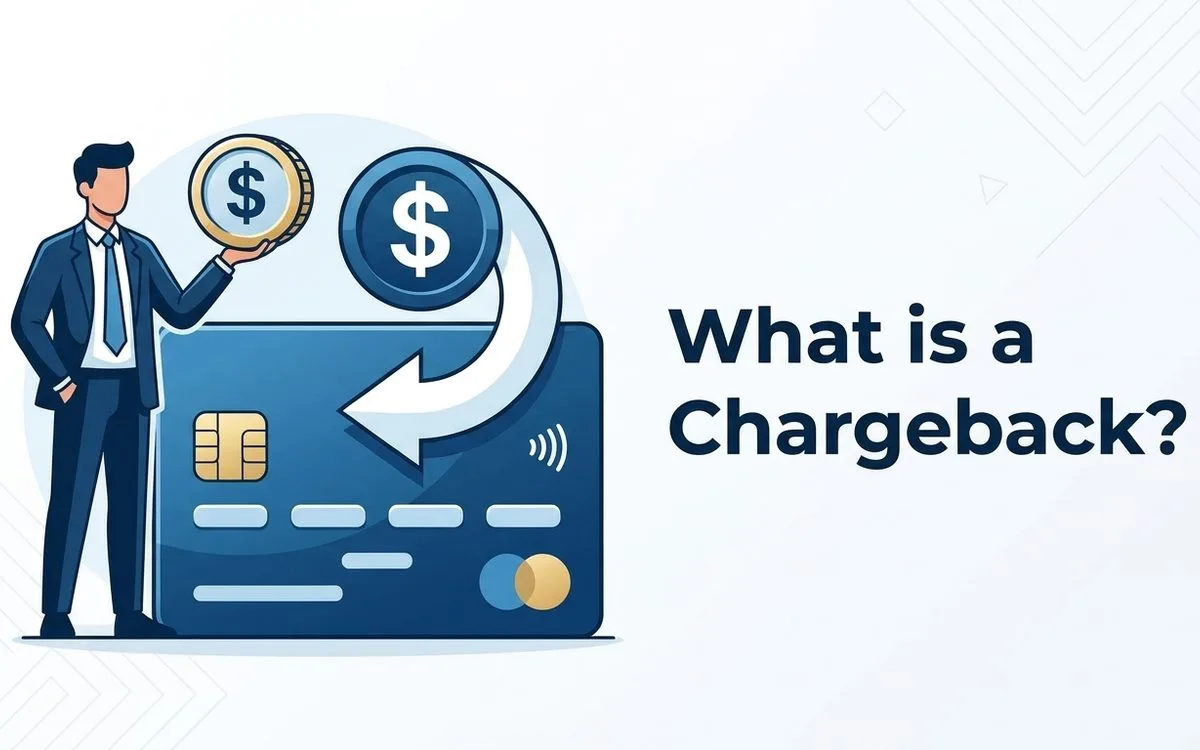
A chargeback is a transaction reversal issued by your card-issuing bank after you successfully dispute a charge on your credit or debit card. Instead of asking the merchant for a refund, you ask your bank to pull the money back through the card network (Visa, Mastercard, American Express, or Discover).
Think of a chargeback as a court order enforced by your bank. A refund is a handshake between you and the seller; a chargeback is the bank stepping in when that handshake never happened.
A chargeback typically:
- Reverses a charge you already paid — either fully or partially.
- Is initiated by your bank, not the merchant.
- Requires a valid legal reason such as fraud, billing error, or non-delivery.
- Comes with specific time limits (usually 60–120 days).
- May post as a temporary credit while the bank investigates.
- Costs the merchant $20–$100 in fees on top of the reversed sale.
That last point matters more than most consumers realize. Because chargebacks damage merchants financially and can trigger network penalties, honest sellers usually prefer to refund you directly before things escalate.

What Does “Chargeback From a Bank” Really Mean?
When people search what is a chargeback from a bank, they usually just spotted the phrase on a statement or inside a dispute confirmation letter. That letter simply means the bank has clawed the funds back from the merchant — you did not lose them.
Here is the flow in plain language:
- Your bank (the issuer) takes your dispute.
- It routes the reversal through the card network (Visa, Mastercard, Amex, or Discover).
- The network debits the acquiring bank — the merchant’s bank.
- The acquiring bank pulls the money from the merchant’s account.
- That money lands back in your account as a chargeback credit.
Banks do not fund chargebacks out of pocket. They enforce a system where the seller ultimately loses the payment when the dispute is valid. This is exactly why chargebacks carry real weight — and exactly why merchants sometimes fight them hard.
If your dispute involves a large sum and delayed cash flow worries you while you wait, keeping a cushion in a high-yield savings account is a smart hedge so bill payments never bounce during the investigation.
Chargeback vs Refund: Why the Difference Matters
Refunds and chargebacks both send money back to you, but they are financially and legally very different. Confusing them is the number-one reason consumers get their disputes denied.
| Feature | Refund | Chargeback |
|---|---|---|
| Who approves it? | The merchant | Your card issuer / bank |
| Speed | 3–10 business days | Up to 90 days for final resolution |
| Cost to merchant | Just the lost sale | $20–$100 fee + reputational risk |
| Trigger | Voluntary return or cancellation | Formal dispute after issues |
| Consumer effort | Low — contact seller | Higher — evidence, wait, follow up |
| Legal backing | Store policy | Federal law (FCBA / EFTA) |
| Impact on merchant metrics | Neutral | Counts toward chargeback ratio |
Golden rule: Always ask the merchant for a refund first. A chargeback is your backup plan, not your opening move. Filing one prematurely can get flagged as friendly fraud and may hurt future disputes with the same bank.
How a Chargeback Actually Works: Step-by-Step
The chargeback process involves five parties — you, your bank, the card network, the merchant’s acquiring bank, and the merchant. Here is what really happens after you tap “dispute this charge” inside your banking app.
Step 1 — A Suspicious or Incorrect Charge Appears
It might be a fraudulent transaction, a duplicate billing, a canceled subscription that keeps hitting your card, or an order that never arrived. Screenshot everything you see and lock the card if fraud is suspected.
Step 2 — Contact the Merchant First (Usually)
The FTC and every major issuer recommend giving the merchant a real chance to fix things. Email, live chat, or call the business, and keep every reply. That paper trail becomes your best evidence if a chargeback is later needed.
Step 3 — File the Chargeback With Your Bank
You can dispute a charge orally or in writing, but the FTC recommends putting it in writing within 60 days of the first statement that shows the error. Most major banks — Chase, Citi, Capital One, Amex, and Discover — now let you file directly from the app in under two minutes.
Step 4 — The Investigation Begins
Your issuer assigns a reason code, opens the dispute with the card network, and forwards it to the merchant’s acquiring bank. The merchant then has 20–45 days (depending on network and dispute type) to accept the loss or fight back with evidence such as receipts, delivery tracking, IP logs, or signed contracts.
Step 5 — A Decision Is Reached
If your case wins, the temporary credit becomes permanent. If the merchant produces compelling evidence — a “representment” — the charge may be reinstated. Federal law requires the issuer to acknowledge your dispute within 30 days and resolve it within 90 days, per Regulation Z of the Truth in Lending Act.

Common Reasons for Chargebacks
Not every unhappy purchase qualifies as a chargeback. Card networks group valid reasons into a handful of clear categories.
- Fraudulent or unauthorized charges — someone used your card without permission.
- Billing errors — duplicates, wrong amounts, incorrect tips, or currency mistakes.
- Non-delivery — you paid, but the product never arrived.
- Defective or “not-as-described” goods — you received something materially different from what was promised.
- Canceled subscriptions still being billed — auto-renew won’t stop.
- Credit or refund not processed — the merchant promised to refund and never followed through.
- Friendly fraud — a cardholder disputes a legitimate charge, sometimes accidentally.
Fraud disputes tend to win fastest because banks default to protecting the cardholder. Quality complaints and subscription disputes require more documentation and more patience.
Chargeback Reason Codes You’ll See on the Statement
Every dispute is tagged with a reason code that tells the merchant why the case was opened and what evidence to fight it with.
- Visa uses a four-category system: 10.xx Fraud, 11.xx Authorization, 12.xx Processing Errors, 13.xx Consumer Disputes.
- Mastercard groups codes under three buckets: Authorization-Related, Point of Interaction Error, and Cardholder Disputes.
- American Express and Discover use their own two-letter codes such as NA (No Authorization) or AA (Cardholder Does Not Recognize).
You will not usually see the code yourself, but if your dispute is denied, ask your bank which code was used. That single detail can help you appeal correctly.
Chargeback Time Limits You Cannot Miss
Timing is everything. Miss the window and you may lose the right to dispute.
| Party | Action | Typical Time Limit |
|---|---|---|
| Cardholder (billing error) | File written dispute | 60 days from first statement |
| Cardholder (goods/services) | File dispute | Up to 120 days from expected delivery |
| Amex / Discover cardholder | File dispute | 120 days from transaction |
| Issuer | Acknowledge dispute | 30 days |
| Issuer | Resolve dispute | 90 days |
| Merchant | Submit evidence | 20–45 days depending on network |
| Extended cases (prepaid travel) | Rare extended window | Up to 540 days |
Some issuers give cardholders more time than the legal minimum as a courtesy. If your issue is time-sensitive, call your bank the same day you notice it.
Chargebacks on Debit Cards: A Different Rulebook
Debit card protections come from Regulation E under the Electronic Fund Transfer Act, not the FCBA. Because debit disputes involve your actual cash — not a credit line — the liability caps are far stricter when you delay reporting fraud.
- Report within 2 business days → maximum liability is $50.
- Report between 3 and 60 days after your statement → liability jumps to $500.
- Report after 60 days → potentially unlimited liability for later unauthorized transfers.
This is precisely why personal finance experts (and most banks quietly) recommend using a credit card for online shopping, travel bookings, and any high-value purchase. Credit cards start you with $0 statutory liability for fraud. Debit cards can leave you exposed.
Do Chargebacks Hurt Your Credit Score?
No — filing a dispute itself does not lower your credit score. Your issuer investigates the transaction, and while the account may briefly appear as “in dispute,” FICO and VantageScore models do not penalize you for that status.
That said, three indirect problems can creep in:
- If you stop paying the disputed amount and it later turns out to be legitimate, the missed payments can show up on your credit report.
- Late fees and interest can accrue on the undisputed portion if you skip the entire bill during the investigation.
- Excessive disputes may cause your issuer to close your account, which affects credit utilization and account history.
The safest move: pay the undisputed part of your bill on time, and let the disputed portion sit as a temporary credit while the bank works.
Chargebacks by Purchase Type: Real-World Scenarios
Different purchases carry very different dispute risks and rules. Here is how chargebacks play out across the categories consumers dispute most.
Subscription and Recurring Billing Disputes
Subscriptions produce more chargebacks than almost any other category. Common triggers include forgotten free trials, unclear billing descriptors, and impossible-to-find cancel buttons. Under Visa and Mastercard rules, subscribers typically have 120 days from the original transaction to file a chargeback for continued charges after cancellation. Save your cancellation emails and screenshots — they’re gold.
Hotel, Flight, and Travel Chargebacks
Travel disputes are a special animal. If you no-showed a hotel with a valid no-show policy, that fee is usually not disputable, even if the amount stings. However, chargebacks are valid when:
- The hotel charged more than the reservation total.
- Amenities promised in the booking were unavailable.
- The property was materially different from the listing.
- You canceled inside the allowed window and were still charged.
Digital Goods, Streaming, and Software
Digital purchases have the highest chargeback risk because there is nothing physical to ship. Consumers dispute them for reasons ranging from “I didn’t authorize this” to “I did not use the product.” Merchants prevent losses by keeping login logs, usage data, IP records, and clear billing descriptors.
Freelancers accepting card payments should also learn the ropes on how to become a freelancer safely, invoice correctly, and prevent chargebacks that catch new self-employed workers off guard.
In-Store and Card-Present Purchases
Card-present fraud has dropped sharply thanks to EMV chips, but chargebacks still occur for tip alterations, unauthorized upgrades, and double-swipes at busy restaurants or salons. Save your itemized receipt whenever you tip on a card.
Friendly Fraud: The Fastest-Growing Chargeback Category
Not every chargeback is filed with clean intentions. Friendly fraud — the industry’s polite term for first-party misuse — happens when a legitimate cardholder disputes a real purchase, either by accident or on purpose. Visa’s official guidance on friendly fraud reports that this behavior accounts for roughly 20% of all fraudulent disputes globally and up to 30% for high-volume online sellers.
Common friendly fraud triggers include:
- A partner, teenager, or roommate used the card without telling the account owner.
- The billing descriptor did not match the actual store name.
- The buyer forgot about a subscription renewal.
- Buyer’s remorse after receiving a legitimate product.
- Trying to skirt a restocking fee.
Chargebacks911 data shows 83.4% of merchants saw an increase in friendly fraud during 2024, and it now represents 40%–80% of many merchants’ total fraud losses. Card networks have responded with tools like Visa’s Compelling Evidence 3.0 framework, which gives merchants better ways to prove a purchase was authentic.
Consumer takeaway: never dispute a charge you actually made. Doing so can trigger account closure, merchant blacklisting, and — in extreme cases — fraud investigations.
What It Costs Merchants: Fees, Ratios, and Penalties
For sellers, chargebacks are painful. On top of losing the sale, they pay $20–$100 per dispute in fees, and if their chargeback ratio climbs too high, they can be enrolled in network monitoring programs.
- Visa Acquirer Monitoring Program (VAMP) — replaced the older VDMP/VFMP in June 2025. Merchants with an “Above Standard” dispute ratio between 0.5%–0.7% start facing scrutiny; excessive ratios can trigger fines and restrictions.
- Mastercard Excessive Chargeback Merchant (ECM) Program — kicks in at 100+ chargebacks and a 1.5% ratio in one month. Fines range from $1,000 to $200,000.
- American Express and Discover run parallel programs that flag high-risk merchants above 1% chargeback ratios.
According to Mastercard’s 2025 insights, fraudulent chargebacks now account for roughly 45% of merchant chargeback volume globally, and each dollar lost to fraud costs U.S. merchants approximately $5.13 in downstream expenses like fees, lost inventory, and staff time.

Chargeback Statistics You Should Know (2025–2026)
The numbers paint a clear picture of just how big the chargeback economy has become.
- Consumers are projected to file $37.07 billion in disputes in 2026.
- Global chargeback volume is expected to reach 281 million transactions in 2026.
- U.S. cardholders filed an average of 5.1 chargebacks each in 2025, at $84 per dispute.
- Every $1 lost to fraud now costs merchants $4.61–$5.13 in ripple expenses.
- 72% of eCommerce merchants reported increased friendly fraud in 2024.
- Merchants win only about 12% of chargebacks they could have won with proper documentation.
- eCommerce fraud losses hit an estimated $48 billion globally in 2025.
These trends are driving new tools like AI-based dispute automation, biometric authentication, and stricter chargeback ratio caps from Visa and Mastercard.
How to File a Chargeback the Right Way
Filing a chargeback is more straightforward than most people expect. Follow this checklist and your odds jump dramatically.
- Gather every piece of evidence — receipts, order confirmations, screenshots, tracking numbers, and every merchant email.
- Contact the merchant first and give them a real chance to fix it. Save their response — refusal is often your strongest justification.
- Call your card issuer or open your bank’s app. Most major issuers have a “Dispute a Transaction” button under recent activity.
- Provide the transaction details — exact date, amount, merchant name, and a clean description of the issue.
- Submit a written dispute letter within 60 days. Even if you called, follow up in writing to preserve full FCBA rights.
- Watch for the temporary credit — most issuers apply it within a few business days.
- Respond quickly to any request for more information. Silence often means denial.
- Save the final decision letter. If denied, you may still be able to appeal, escalate to the CFPB, or file in small claims court.
What to Do If Your Chargeback Is Denied
A denied chargeback is not always the end of the road. Try this recovery path:
- Ask for the reason code and evidence the merchant submitted.
- File a rebuttal or appeal — many issuers allow one round.
- Submit a complaint to the Consumer Financial Protection Bureau, which routes it directly to the issuer.
- Contact your State Attorney General or state consumer protection agency.
- Consider small claims court for amounts under your state’s cap.
- Report identity theft at IdentityTheft.gov if the charge was fraudulent.
If the dispute drags on, revisiting your budget may help — options like debt consolidation can free up cash flow while you wait for the reversal.
Chargeback Myths vs Facts
Misinformation makes chargebacks scarier than they need to be. Here are the biggest myths — corrected.
| Myth | Reality |
|---|---|
| Filing a chargeback hurts my credit score | False. The dispute itself is invisible to FICO/VantageScore. |
| A refund and a chargeback are the same | False. Refunds are voluntary; chargebacks are forced by your bank. |
| Chargebacks always favor the customer | Merchants win 20%–54% of the cases they fight. |
| Once denied, my case is over | You can appeal, escalate to CFPB, or sue. |
| Chargebacks are free money | Filing false disputes is fraud and can close your account. |
| Small purchases can’t be disputed | Any charge over $1 can technically be disputed. |
| A chargeback removes my responsibility to contact the seller | Banks expect you to try the merchant first. |
Understanding these distinctions can save you from filing a losing case — or worse, being flagged for abuse.
Chargebacks Around the World: Section 75, PSD2, and More
Chargebacks are technically a U.S. card-network process, but similar consumer protections exist worldwide.
- United Kingdom — Section 75 of the Consumer Credit Act 1974 makes card issuers jointly liable with the merchant for purchases between £100 and £30,000.
- European Union — PSD2 gives consumers strong dispute rights for unauthorized transactions.
- Australia — The ePayments Code provides similar Regulation E-style protections.
- Canada — Card network rules mirror U.S. Visa/Mastercard chargeback frameworks.
If you shop abroad, understanding both your local law and the card network’s dispute policy can determine whether a chargeback, a legal claim, or an ombudsman filing is the right route.
When You Should Not File a Chargeback
Chargebacks are powerful — and easy to misuse. Skip filing when:
- You received the product and simply changed your mind.
- You forgot you signed up for a subscription.
- You want to avoid a legitimate restocking or cancellation fee.
- You never contacted the merchant first.
- You are trying to “try before you buy” without paying.
- You disagreed with a service outcome you approved (e.g., a haircut you asked for).
Some issuers now share disputed-customer records, and repeat abusers can be blacklisted from major platforms.
How to Prevent Chargebacks in the First Place
For consumers:
- Turn on transaction alerts for every purchase.
- Use a credit card, not debit, for online orders and travel.
- Keep receipts and confirmation emails in a dedicated folder.
- Read subscription terms before signing up.
- Recognize the billing descriptor on your statement — the name a merchant appears under can differ from the storefront.
Building broader financial resilience also helps — from choosing the right term life insurance to keeping a household emergency fund healthy so small disputes never spiral into cash-flow problems.
For merchants:
- Use clear, recognizable billing descriptors.
- Require 3-D Secure / two-factor authentication on transactions.
- Send shipping confirmations with tracking numbers.
- Offer easy, generous refunds before disputes escalate.
- Adopt Visa CE3.0, Order Insight, and Ethoca alerts.

Chargeback Timeline at a Glance
Here is the typical rhythm of a U.S. credit card chargeback so you know what to expect:
- Day 1–3: Dispute filed, provisional credit issued.
- Day 5–30: Bank notifies merchant; merchant reviews.
- Day 20–45: Merchant submits evidence or accepts loss.
- Day 30: Legal deadline for issuer to acknowledge dispute.
- Day 60–90: Final decision issued.
- Day 90: Legal deadline for resolution under Regulation Z.
Complex cases involving prepaid services, travel, or international merchants can stretch beyond 120 days.
Key Takeaways
- A chargeback is a bank-forced reversal of a card charge — not a merchant refund.
- Federal law (FCBA for credit, Reg E for debit) provides your legal backbone.
- Cardholders have 60 days for billing errors, up to 120 days for goods/services disputes.
- Chargebacks do not hurt your credit score directly.
- Merchants pay $20–$100 per dispute plus network penalties.
- Friendly fraud drives roughly 20–30% of chargebacks — never dispute a charge you actually made.
- Always contact the merchant first — chargebacks are a backup, not a shortcut.
Frequently Asked Questions (FAQs)
What is a chargeback in simple terms?
A chargeback is when your bank reverses a credit or debit card charge and returns the money to your account after a successful dispute. It is triggered by fraud, billing errors, or undelivered/defective goods and services.
How long does a chargeback take?
Federal law gives your credit card issuer up to 30 days to acknowledge your dispute and 90 days to resolve it. Most straightforward cases wrap up in 30–60 days.
Does filing a chargeback hurt my credit score?
No. A chargeback itself does not affect your credit score. However, unpaid balances or account closures caused by disputes can indirectly damage your credit.
What is the difference between a chargeback and a refund?
A refund is voluntary and comes from the merchant. A chargeback is enforced by your bank and card network, costs the merchant extra fees, and can trigger network penalties for high-dispute sellers.
Can I file a chargeback on a debit card?
Yes. Debit cards are covered by Regulation E under the Electronic Fund Transfer Act. But liability caps depend on how fast you report — from $50 within 2 business days to potentially unlimited after 60 days.
What happens if the merchant fights my chargeback and wins?
The temporary credit is reversed, and you become responsible for the original amount. You can typically appeal, escalate to the CFPB, or file a small-claims lawsuit if the amount is large enough.
How many chargebacks are too many?
Merchants generally get flagged above a 1% chargeback ratio. For consumers, filing more than a few disputes per year can trigger issuer scrutiny and, in some cases, account closure.
Can chargebacks be reversed?
Yes. If the merchant submits compelling evidence — proof of delivery, signed contracts, usage logs, or IP records — the chargeback can be overturned and the funds returned to the seller.
Leave a Reply