
In this article
- Key Takeaways (Quick Answer)
- What Is a Home Construction Loan?
- How Does a Home Construction Loan Actually Work?
- The 5 Main Types of Construction Loans
- Construction Loan Requirements in 2026
- Current Construction Loan Interest Rates (2026)
- How to Get a Construction Loan: The 7-Step Roadmap
- Construction Loan Approval Timeline (Week-by-Week)
- How Much Does It Cost to Build a House in 2026?
- The Draw Schedule Explained
- Government-Backed Construction Loan Programs
- What Lenders Actually Look For (Insider View)
- Construction Loan Closing Costs and Fees
- Pros and Cons of a Home Construction Loan
- 7 Common Construction Loan Mistakes to Avoid
- Red Flags That Can Sink Your Application
- How to Improve Your Chances of Approval
- Construction Loans vs. Traditional Mortgages (Side-by-Side)
- Alternatives to a Construction Loan
- 8 Questions to Ask Every Construction Lender
- Frequently Asked Questions (FAQ)
- Final Thoughts
Key Takeaways (Quick Answer)
A home construction loan is a short-term, higher-interest loan that funds a new build in staged “draws” instead of one lump sum. In 2026, here’s what most lenders want:
- Credit score: 680+ for conventional (as low as 500 for FHA, 620+ for VA)
- Down payment: 20%–25% for conventional; 0% for VA and USDA; 3.5% for FHA
- Debt-to-income ratio: Under 43%–45%
- Cash reserves: 3–12 months of estimated mortgage payments
- Average rate: ~8.4% (roughly 1–2 points above a 30-year mortgage)
- Approval timeline: 30–60 days for a clean file, 60–90 for complex builds
- Loan term: 6–18 months for the construction phase
The 2026 FHA construction loan limit now sits between $541,287 (baseline) and $1,249,125 (high-cost counties), following the Federal Housing Finance Agency’s 3.25% annual increase to conforming loan limits, per FHFA data.
What Is a Home Construction Loan?
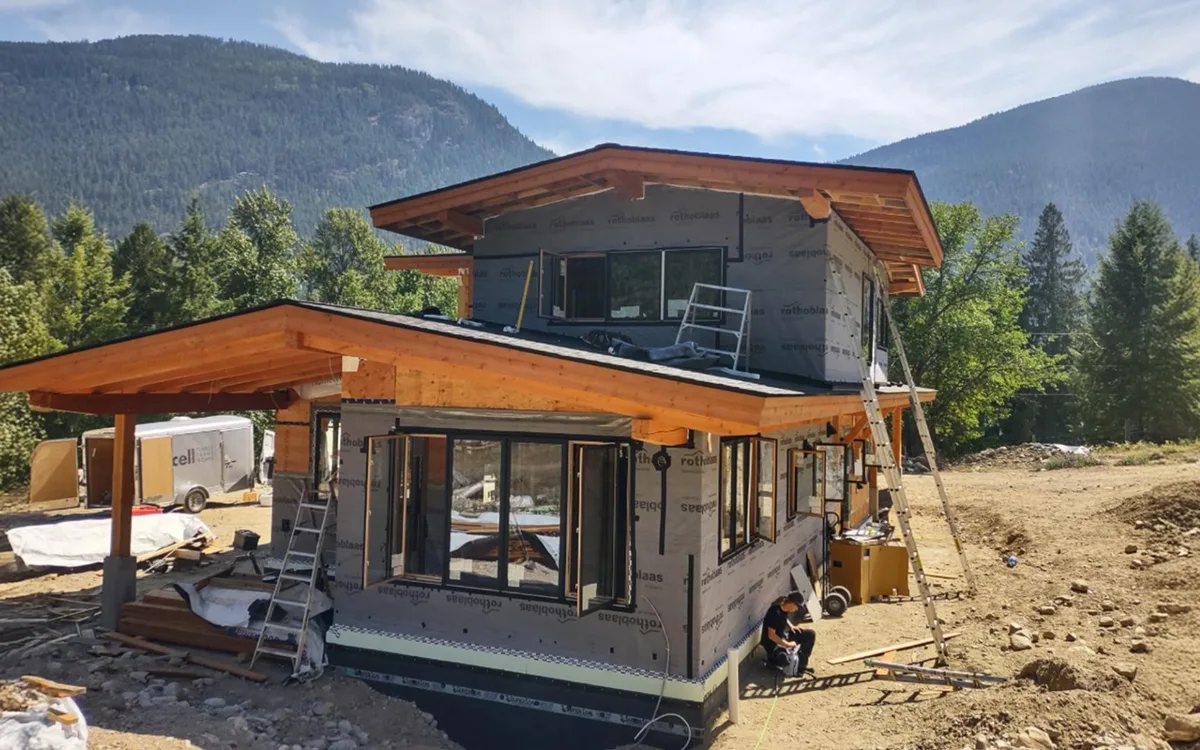
Think of a construction loan as the financial scaffolding around your future home. It’s a short-term product — usually 12 to 18 months — designed to pay for labor, materials, permits, and site work while your house is being built. Once you have a certificate of occupancy, that scaffolding comes down and either converts into a traditional mortgage or gets paid off in full.
The difference from a regular mortgage is subtle but important. A standard mortgage is secured by a house that already exists. A construction loan is secured by a house that only exists on paper, which is why lenders treat it as a riskier product and charge accordingly.
Because the collateral is being built in real time, lenders don’t hand over the full amount on day one. Instead, they wire funds directly to your builder in stages — a process called a draw — after an independent inspector verifies each construction milestone. That structure protects the lender from ghosted job sites and protects you from paying for work that never gets done.
How Does a Home Construction Loan Actually Work?
The mechanics feel unfamiliar the first time through, so here’s the flow in plain English.
- Your money goes in first. Most lenders require you to spend your down payment before touching the loan proceeds. On a $500,000 build with 20% down, the first $100,000 comes out of your pocket.
- The builder gets vetted before you do. Your general contractor must show licensing, insurance, references, tax returns, and often a track record of finished homes similar to yours.
- Funds release in draws. Expect 4 to 6 inspections across the project, tied to milestones like foundation, framing, mechanicals, drywall, and finish work.
- You pay interest only during construction. Payments are calculated on the drawn balance, not the full approved loan — so early payments are small and grow as work progresses.
- The loan converts or gets paid off at completion. With a construction-to-permanent product, you roll straight into a mortgage. With a stand-alone loan, you close a second time on a separate end loan.
According to Bankrate’s construction loan primer, most residential builds require four to six inspections during construction, and funds are wired directly to the contractor after each successful review — not to the borrower’s bank account.
The 5 Main Types of Construction Loans
Pick the wrong structure and you can pay two sets of closing costs, blow your rate lock, or end up scrambling for permanent financing at the worst possible moment. Here are the five options most homeowners will encounter.
1. Construction-to-Permanent Loan (One-Time Close)
This is the most popular option for owner-occupants. You close once, pay one set of closing costs, and the loan automatically converts into a traditional 15- or 30-year mortgage after the certificate of occupancy is issued. The big advantage is that you lock your long-term rate up front, which is a real hedge when rates are moving.
2. Stand-Alone (Two-Close) Construction Loan
A stand-alone loan finances only the build. When construction wraps up, you apply for a separate permanent mortgage — which means a second appraisal, second underwriting, and second set of closing costs. The upside is flexibility. If rates drop while you’re building, you can shop the permanent mortgage aggressively.
3. Owner-Builder Construction Loan
This one’s reserved for borrowers with professional building experience who plan to act as their own general contractor. Lenders enforce strict credit, licensing, and cash-reserve rules here because self-managed builds carry a higher risk of cost overruns and abandonment. If you’ve never swung a hammer for a paycheck, this isn’t your loan.
4. Renovation Loan
For upgrades to an existing property rather than a new build. Common programs include the FHA 203(k), Fannie Mae HomeStyle Renovation, and Freddie Mac CHOICE Renovation. These loans finance based on the post-improvement value of the home, which is why they can beat cash-out refis for major projects.
5. End Loan
Simply the permanent mortgage that pays off a construction-only loan after the build finishes. It goes through standard mortgage underwriting.
Comparison Snapshot
| Loan Type | Closings | Down Payment | Best For |
|---|---|---|---|
| Construction-to-Permanent | 1 | 20%–25% | Most owner-occupants |
| Stand-Alone Construction | 2 | 20%–30% | Buyers wanting rate flexibility |
| Owner-Builder | 1 or 2 | 25%–30%+ | Licensed pros only |
| FHA 203(k) Renovation | 1 | 3.5% | Fixer-uppers |
| VA One-Time Close | 1 | 0% | Eligible veterans |
Construction Loan Requirements in 2026
Lenders underwrite construction loans far more conservatively than standard mortgages. There’s more paperwork, more scrutiny, and less flexibility on borderline files. Here’s what banks and credit unions are actually looking for this year.
Credit Score Requirements by Loan Type
- Conventional: 680 minimum; many lenders prefer 720 or higher
- FHA: 500 with 10% down, 580 with 3.5% down, per Experian’s FHA guide
- VA: No VA-mandated minimum, but most participating lenders want 620–680+
- USDA: Typically 640+
Your score does two things — it unlocks approval and it sets your rate. On a $400,000 build, moving from a 680 to a 760 FICO can save tens of thousands in interest over the life of the permanent mortgage.
Down Payment Requirements
Yes, construction loans almost always require a down payment — and it’s usually bigger than a standard purchase mortgage.
- Conventional: 20%–25% (jumbo and complex builds sometimes push to 30%)
- FHA construction: 3.5% with a 580+ score
- VA construction: 0% down for eligible service members and veterans
- USDA construction: 0% down in eligible rural areas
If you already own the land, its appraised value can often count toward the down payment — which is a huge advantage for borrowers who inherited or previously purchased their lot. Ask your lender about “land equity credit” during pre-qualification.

Debt-to-Income (DTI) Ratio
- Most conventional lenders cap DTI at 43%–45%
- FHA allows up to 43%, with case-by-case exceptions to 50%
- USDA prefers DTI under 41%, with housing costs under 29% of monthly pretax income
- Include your future estimated mortgage payment — not just the interest-only construction payment — when you’re modeling this yourself
Cash Reserves
Lenders often want 3 to 12 months of mortgage payments in liquid reserves. Building triggers surprise costs, and the bank wants proof you can absorb them without abandoning the project. Parking that money in one of the best high-yield savings accounts keeps it liquid while still earning meaningful interest.
Documentation Checklist
Every construction lender wants roughly the same paperwork. Get ahead of it.
- Two years of tax returns, W-2s, or 1099s
- 60–90 days of bank statements
- Pay stubs from the last 30 days
- Full architectural plans and blueprints
- Line-item construction budget (down to fixtures and appliances)
- Signed builder’s contract, ideally with a guaranteed maximum price (GMP)
- Builder’s license, insurance certificates, and references
- Building permits or proof of permit application
- Land ownership documents (or the purchase contract if you’re still closing on the lot)
- “As-completed” appraisal of the finished home’s value
Current Construction Loan Interest Rates (2026)
Construction loan rates almost always sit higher than conventional 30-year mortgage rates because the collateral doesn’t fully exist yet. As of mid-2026, the Federal Reserve reports the bank prime loan rate at 6.75%, and construction loans typically price at prime + 1% to prime + 3%.
Here’s what the market looks like right now:
- Weighted average construction loan rate: ~8.4%, based on SOFR plus lender spreads
- Typical range for residential builds: 7.5% to 9%
- Construction-to-permanent (converted phase): Usually locks between 6.5% and 7.5%
- Standard 30-year mortgage benchmark: ~6.89%
Most construction loans carry a variable rate that adjusts with the prime rate, which is why a Fed cut can save you real money mid-build. Construction-to-permanent products, however, often let you lock the permanent rate at closing — a meaningful hedge in an uncertain rate environment.
Rate Lock Strategy Tip: Most one-time-close products offer extended rate locks of 6, 9, or 12 months. Extended locks cost 0.25%–1% of the loan amount up front, but they protect you from spikes if construction runs long. Weigh the lock fee against the potential rate move — if your builder is behind schedule and the Fed is signaling hikes, an extended lock usually pays for itself.
How to Get a Construction Loan: The 7-Step Roadmap
Here’s the practical playbook, distilled from what actually works with lenders in 2026.
- Pick your builder first. This surprises people, but lenders vet the builder before they vet the house. A GC without a track record can kill an application before it starts.
- Finalize plans and a line-item budget. Every fixture, every appliance, every permit — priced. Vague budgets get rejected.
- Shop 3–5 lenders. Community banks and credit unions often beat national banks on construction loans because they know local builders, appraisers, and inspectors.
- Submit a complete application package. Financial docs, plans, builder contract, permits, and land documentation, all in one clean file.
- Underwriting and appraisal. The appraiser values the home as if completed. Loan-to-value is calculated against that “as-completed” figure.
- Close and fund escrow. Pay closing costs (2%–5% of the loan) and your down payment.
- Break ground and manage draws. Sign each draw request, attend inspections when possible, and confirm subcontractors are being paid via lien waivers.
Timing matters. From application to first shovel typically takes 45 to 90 days on average. Build that runway into your planning so you don’t lose your dream lot or your rate lock.

Construction Loan Approval Timeline (Week-by-Week)
Most first-time builders underestimate how long the front end takes. Here’s a realistic breakdown.
| Phase | Typical Duration |
|---|---|
| Choosing a builder and finalizing plans | 4–12 weeks |
| Lender shopping and pre-qualification | 1–2 weeks |
| Application and full document submission | 1–2 weeks |
| Underwriting and as-completed appraisal | 3–6 weeks |
| Closing and funding | 1–2 weeks |
| Total (application to break ground) | 6–12 weeks |
Simple, well-documented applications close in about 30–45 days. Complex custom builds with owner-builder components or land purchases can stretch to 90 days or more.
How Much Does It Cost to Build a House in 2026?
Cost drives your loan size, which drives your approval odds and your DTI math — so this matters enormously.
- National average per square foot: $150–$250 for standard builds, $250–$450+ for custom
- Average total construction cost (2,500 sq ft home): ~$405,000
- NAHB 2024 average sales price of a new single-family home: $665,298
- Regulatory costs alone add ~$131,734 to the average new home price, per the National Association of Home Builders
Where you build changes everything. Coastal California, the Northeast, and Hawaii routinely top $400 per square foot. Rural Midwest and parts of the South still deliver solid builds at $130–$180 per square foot.
Regional Cost Snapshot (2026 estimates):
| Region | Cost per sq ft (standard builds) |
|---|---|
| California / Hawaii | $300–$500+ |
| Northeast | $250–$400 |
| Pacific Northwest | $220–$350 |
| Mountain West | $200–$300 |
| Florida & Texas | $170–$260 |
| Midwest | $150–$220 |
| Deep South | $130–$200 |
The Draw Schedule Explained
The draw process is where new borrowers get tripped up. A “draw” is a scheduled release of construction funds after work is verified by an inspector.
Typical residential draw schedule:
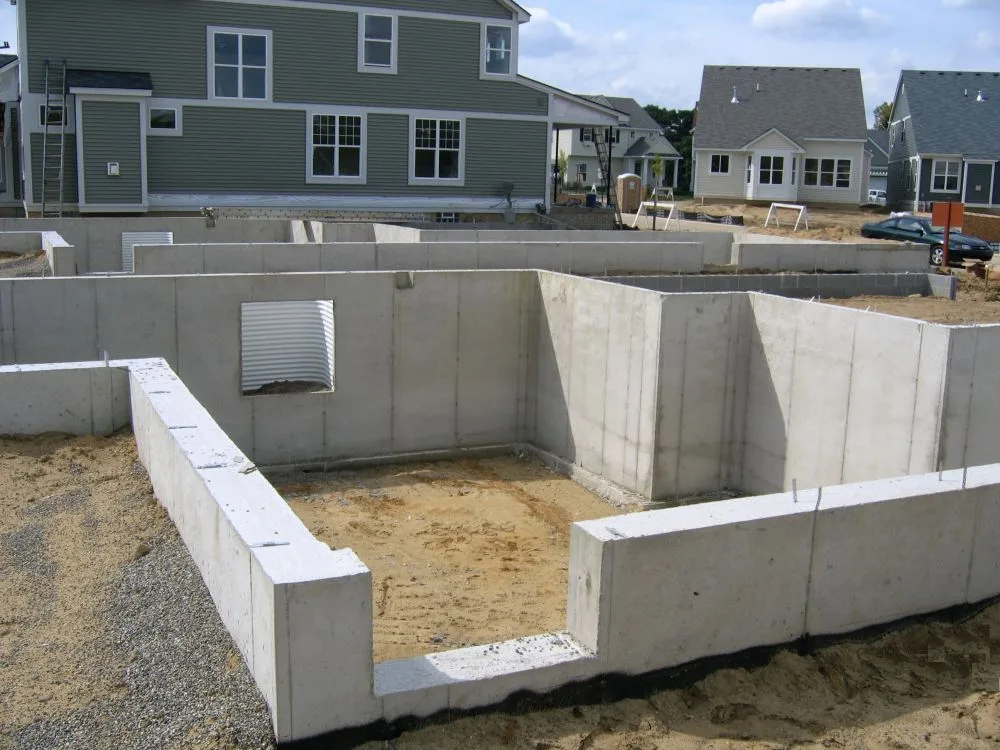
- Draw 1 (10%–15%): Site prep, excavation, foundation
- Draw 2 (15%–20%): Framing, roof sheathing, exterior walls
- Draw 3 (15%–20%): Rough plumbing, electrical, HVAC
- Draw 4 (15%–20%): Insulation, drywall, siding, roofing
- Draw 5 (10%–15%): Interior finishes — cabinets, flooring, paint
- Final Draw (10%–15%): Final inspections, certificate of occupancy, punch list
Before each draw is released, an inspector confirms the milestone. If any subcontractor hasn’t been paid, most lenders require lien waivers before releasing more funds. That single rule protects your title more than most homeowners realize.
Government-Backed Construction Loan Programs
Federal programs exist to help borrowers who can’t clear conventional hurdles. Each has its own quirks.
FHA One-Time Close Construction Loan
- Credit score: 500 minimum (580 for 3.5% down)
- Down payment: 3.5% with 580+ score, 10% for 500–579
- DTI: Up to 43%, exceptions to 50%
- 2026 loan limits: Range from $541,287 (baseline) to $1,249,125 (high-cost counties)
- Occupancy: Must be primary residence
- Full program guidelines are hosted at HUD.gov
VA One-Time Close Construction Loan
- Credit score: No VA minimum; most lenders want 620+
- Down payment: 0% for eligible service members
- Funding fee: Can be rolled into the loan
- Occupancy: Must be primary residence
- Update for 2026: The VA no longer requires a separate VA Builder ID for new construction, per VA Circular 26-25-01, meaning more builders now qualify. Details at VA.gov.
If you’re a veteran juggling a construction mortgage with other major financial commitments, our guide to the best term life insurance companies covers how to protect your family’s payments while you take on the build.
USDA Construction Loan
- Credit score: Typically 640+
- Down payment: 0% in eligible rural areas
- DTI: Below 41%, with housing costs under 29% of monthly pretax income
- Contractor requirements: Must carry $500,000+ in liability insurance and have at least two years of single-family building experience
- Income limits: Must be at or below the area median income (AMI) threshold
USDA loans reward borrowers who plan ahead. If you’re evaluating whether a construction commitment fits alongside retirement contributions, our primer on what a 401(k) is can help you balance both goals.
What Lenders Actually Look For (Insider View)
After a decade of watching construction files clear underwriting, three quiet signals consistently move applications from “maybe” to “yes”:
- Builder stability. Lenders quietly review builder financials, subcontractor payment history, and the number of homes finished in the past 24 months. A builder with a shaky vendor list is a red flag, even if your file is spotless.
- Realistic budgets. Underwriters know what construction costs in your ZIP code. If your budget looks 15% below market, expect the file to stall for questions.
- Documented reserves. Cash you can prove — parked in an account, not “coming from a sale” — carries weight. A recent large deposit without a paper trail triggers seasoning delays.
The takeaway is simple: strong borrowers with weak builders often get declined, while average borrowers with excellent builders sometimes get approved. Vet your GC like your loan depends on it, because it does.
Construction Loan Closing Costs and Fees
Closing costs typically run 2%–5% of the loan amount. Expect these line items:
- Loan origination fee (0.5%–1%)
- Appraisal fee ($500–$1,500 for as-completed appraisals — higher than standard)
- Inspection fees (per draw: $150–$300 each)
- Title insurance and title search
- Recording and attorney fees
- Builder’s risk insurance (required)
- Rate lock fees (for extended locks during 6–12 month builds)
Some one-time-close products let you roll closing costs into the permanent mortgage — a real cash-flow saver at closing. Ask specifically about that option before signing your loan estimate. When tax season rolls around, knowing which of these fees are deductible matters — our comparison of the standard deduction vs. itemized deduction can help frame the choice for your build year.
Pros and Cons of a Home Construction Loan
Pros:
- Finance a fully custom home from the ground up
- Interest-only payments during the build
- Lock permanent rates early with one-time-close products
- Draw structure limits contractor payment risk
- Government programs (FHA, VA, USDA) offer low or no down payment options
- Land equity can often offset your cash down payment
Cons:
- Higher interest rates than standard mortgages
- Larger down payments (typically 20%–25%)
- Strict documentation and vetting for both borrower and builder
- Variable rates can rise mid-build
- Cost overruns are common — plan a 10%–15% contingency
- Approval takes longer than a standard purchase
7 Common Construction Loan Mistakes to Avoid
These come up over and over in first-time builder files.
- Underestimating total project costs. Land, permits, utility hookups, and landscaping are routinely forgotten. Build in a 10%–15% contingency for new construction (15%–25% for renovations).
- Choosing the wrong loan type. A two-close loan makes no sense if you don’t want to shop rates again in a year.
- Skipping pre-approval. Sellers of raw land often require proof of financing before accepting an offer.
- Failing to vet contractors. Check the builder’s license, insurance, references, and lien history before signing.
- Ignoring the draw schedule. Misaligned draws create cash-flow gaps that stall projects.
- Overlooking loan terms and conditions. Extension fees, conversion terms, and prepayment penalties all deserve a careful read.
- Changing plans mid-construction. Every change order needs lender approval, more paperwork, and often a new appraisal.
If a construction budget is stretching your other finances thin, our guide on debt consolidation can help clean up higher-interest balances before you apply.
Red Flags That Can Sink Your Application
Before you submit, self-check for these deal-breakers. Any single one can derail underwriting.
- A builder with active mechanic’s liens on prior projects
- Recent large deposits that can’t be sourced with documentation
- Employment change within 30 days of application
- Under-market budget that appraisers won’t validate
- Missing permits or unaddressed zoning issues
- Vague scope of work — “TBD” line items get flagged
- Personal loans taken out for the down payment (most lenders forbid this)
- Prior foreclosure or bankruptcy within the seasoning window (typically 4–7 years)
How to Improve Your Chances of Approval
Small moves make a big difference in construction underwriting.
- Boost your credit before applying. Pay down revolving balances to under 30% utilization at least 60 days out.
- Season your down payment. Large deposits within 60 days of application trigger sourcing questions. Move money in early and let it settle.
- Get preapproved before shopping land. Preapproval clarifies your budget and gives sellers confidence.
- Choose a lender-friendly builder. Ask lenders which builders they’ve approved recently — that shortlist is gold.
- Bring a strong contingency plan. Cash reserves in a HYSA impress underwriters.
- Consult a fiduciary before you commit. Working with a good financial advisor helps you stress-test the payment against your retirement, taxes, and long-term goals.
Construction Loans vs. Traditional Mortgages (Side-by-Side)
| Feature | Construction Loan | Traditional Mortgage |
|---|---|---|
| Loan term (construction phase) | 6–18 months | 15–30 years |
| Interest rate (2026) | 7.5%–9% (typically variable) | ~6.5%–7% (fixed) |
| Payment structure | Interest-only during build | Principal + interest |
| Fund disbursement | Draws tied to milestones | One lump sum |
| Down payment | 20%–25% (0% VA/USDA) | 3%–20% |
| Credit score minimum | 680 conventional / 500 FHA | 620 conventional / 500 FHA |
| Collateral | Future/incomplete home | Existing home |
| Number of closings | 1 or 2 | 1 |
Alternatives to a Construction Loan
Not every builder needs a formal construction loan. Consider these alternatives.
- Home equity loan or HELOC — For homeowners funding a major renovation on a current property.
- Cash-out refinance — Pull equity from a current home to fund the next build.
- Personal loan — Only viable for very small projects; rates run higher than construction loans.
- Builder financing — Some large national builders offer in-house construction financing on their inventory.
- Land loan + separate construction financing — Splits the transaction into two loans; useful when timelines are long or land is unusual.
8 Questions to Ask Every Construction Lender
Before you sign anything, get direct answers to these questions.
- What is your minimum credit score and down payment for my scenario?
- Do you offer one-time close or require two closings?
- How fast do you turn around draw requests?
- What is my rate lock window, and what does an extension cost?
- Are inspection and appraisal fees paid per draw or bundled?
- Do you require lien waivers before each draw?
- Can I use land equity toward my down payment?
- What happens if construction runs past the loan term?
Frequently Asked Questions (FAQ)
What credit score do I need for a construction loan?
Most conventional lenders require a minimum 680 FICO, and many prefer 720 or higher. FHA construction loans go as low as 500 with 10% down, VA lenders usually accept 620, and USDA lenders typically want 640+.
Do construction loans require a down payment?
Yes — almost always. Conventional lenders want 20%–25% down. FHA needs just 3.5% with a 580+ score. VA and USDA construction loans allow 0% down for eligible borrowers, making them the most accessible zero-down building path.
Are construction loan rates higher than mortgage rates?
Yes. Construction loans price roughly 1 to 2 percentage points above standard 30-year mortgages, largely because the collateral (an unfinished house) carries more risk. The 2026 average sits near 8.4%.
How long does a construction loan last?
The construction phase typically runs 12 months, extending to 18 or 24 months for complex custom builds. Construction-to-permanent loans then roll into a 15- or 30-year mortgage automatically.
Can I use land I already own as my down payment?
Yes. Most lenders let you apply the appraised equity in your land toward the down payment requirement. If you own the lot outright and it has real value, that equity can sometimes cover the full down payment.
What happens if the build goes over budget?
You’ll cover overages out of pocket unless you have a contingency built into the loan. That’s why lenders like to see cash reserves and why smart borrowers negotiate a guaranteed maximum price (GMP) contract with their builder.
Can I be my own general contractor?
Only with an owner-builder construction loan, and only if you have documented building experience or licensure. Underwriting is stricter because self-managed builds have historically higher default and abandonment rates.
Do I make payments during construction?
Yes — but only interest-only payments on the amount drawn, not the full loan. Payments grow as more funds are released, so cash-flow planning during the build is critical.
What happens if I can’t finish construction on time?
Most lenders offer one extension of 90–180 days for a fee (usually 0.25%–1% of the loan). Missing the extension deadline can trigger a balloon payment or default, so communicate with your lender the moment your builder signals delays.
Are construction loan closing costs tax deductible?
Some are. Loan origination points, mortgage interest during construction (limited to 24 months), and property taxes are generally deductible for a primary residence. Talk to a tax professional about your specific situation.
Final Thoughts
Building a home is one of the most rewarding financial moves you’ll ever make — and easily one of the most complex. A construction loan is the bridge between blueprints and move-in day, and the borrowers who succeed treat it like a project, not just a mortgage. Line up strong credit, a bigger-than-you-think down payment, a lender-approved builder, and a realistic contingency, and you’ll clear the underwriting hurdles that stop most first-time builders in their tracks.
Before you break ground, take a clear-eyed look at the full financial picture. Cash reserves matter more than you think. Insurance premiums will climb. Your permanent-mortgage payment will land in the same budget as retirement savings, taxes, and everyday living costs. But if your homework is thorough, your builder is solid, and your reserves are real, a home construction loan can turn a raw plot of land into the exact house you’ve been sketching in your head for years.
The next step is simple. Sharpen your credit, price your build honestly, and interview three lenders this week. The house that fits your life is closer than you think.

Leave a Reply