

In this article
- Quick answer: how to set up electricity for an apartment
- 1. What "setting up electricity for an apartment" actually means
- 2. First step: check the lease and ask who pays for power
- 3. How to set up electricity for an apartment: eight practical steps
- 4. How to set up electricity for an apartment online
- 5. Move-in countdown: when to start each step
- 6. How much does electricity for an apartment cost each month?
- 7. Deposits, credit checks, and no-deposit options
- 8. Choosing the right electricity plan for your apartment
- 9. How to read your first electric bill
- 10. Lowering your apartment electric bill without landlord approval
- 11. Sharing electricity with roommates
- 12. When you move out: cancel, transfer, or switch suppliers
- 13. Common mistakes that leave renters without power
- Frequently Asked Questions
- Final takeaways
Moving into a new apartment means a long checklist, and electricity usually sits at the top of it. You cannot keep groceries cold, charge your laptop, or even read by lamplight until an electric account exists in your name. The good news is that you do not need an electrician for this job. Most renters open an account, pay any required deposit, and schedule a start date in under an hour of actual paperwork — provided you know whom to call, what to bring, and when to start.
This guide walks through the process in plain language: finding the company that serves your unit, comparing plans without teaser-rate traps, handling the credit check and deposit, applying online, budgeting a realistic monthly bill, and avoiding the mistakes that leave renters in the dark on move-in night.
Quick answer: how to set up electricity for an apartment
- Identify the supplier or utility that serves your exact address. Ask the leasing office first, then check your state’s utility website or a ZIP-code rate comparison tool.
- Gather your documents: photo ID, Social Security number or alternate ID, full address with unit number, requested start date, lease or landlord confirmation, and a payment method.
- Apply one to two weeks before move-in. Expect a credit check and, for first-time renters, a refundable deposit of roughly $100–$300.
- Choose a plan that fits your lease length: fixed-rate for a year-long lease, month-to-month for short stays, prepaid if your credit history is thin.
- Pick a start date for move-in day (or the evening before), save the account number and confirmation email, and test the lights, outlets, and HVAC once you get the keys.
- Review the first bill, pay on time, and track the deposit refund clock. Most states return the deposit — often with interest — after about 12 consecutive on-time payments.
1. What “setting up electricity for an apartment” actually means
The phrase sounds like wiring a new unit, but it rarely involves any electrical work. The building already has power lines, a meter, and breaker circuits. Your job is to open or transfer a billing account so the provider records usage under your name instead of the previous tenant’s.
Three scenarios apply to apartments:
- Transfer of existing service. The prior tenant canceled, or the account must move from their name to yours. The meter usually stays live; the provider simply changes the account holder.
- New account at an active address. The unit has power but no active account. You open one, pick a start date, and the meter begins billing you.
- Reconnection after disconnection. Less common in apartment buildings, this applies when the provider cut service after a long vacancy. A technician may need to restore the meter, which adds several days of lead time.
Utility company versus electricity provider
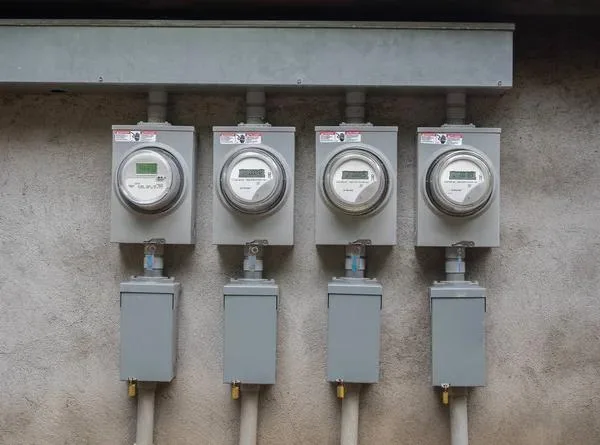
This distinction matters most in deregulated states. A utility (also called a distributor, TDU, or TDSP) owns the power lines, reads the meter, and restores outages. A retail supplier (often called an energy provider or REP) sells you the electrons and sends the bill. In regulated states, one company performs both roles and charges state-approved rates. In competitive markets such as Texas, Ohio, Pennsylvania, Illinois, Connecticut, and Maryland, you shop among suppliers while the same utility delivers the power. You can see which states allow retail electricity choice on this deregulated energy market map.
Basic terms you will see on every bill
- kWh (kilowatt-hour): the unit of electricity used. A 1,000-watt space heater running for one hour consumes 1 kWh.
- Customer charge (or monthly service charge): a fixed fee covering metering, billing, and grid access; due even in a light-use month.
- Supply charge: the price per kWh for the energy itself; in deregulated states the supplier sets it and the utility adds a delivery charge.
- Meter reading: the number on your meter at the start and end of a billing period; the difference equals your usage.
2. First step: check the lease and ask who pays for power
Before you compare a single rate, confirm what your landlord already covers. Some buildings include water, trash, gas, or even electricity in rent (often called “all-bills-paid” or utilities-included units), while others cover only common-area lighting and bill each tenant separately.
Ask the property manager these questions in writing:
- Is electricity included in the rent, or do tenants open their own accounts?
- Which company or supplier serves this specific unit and meter number?
- Does the building use shared or master meters, and who divides usage among tenants?
- Does the leasing office require proof of active service before it releases the keys?
- Are any sub-metering or service fees added to tenant bills each month?
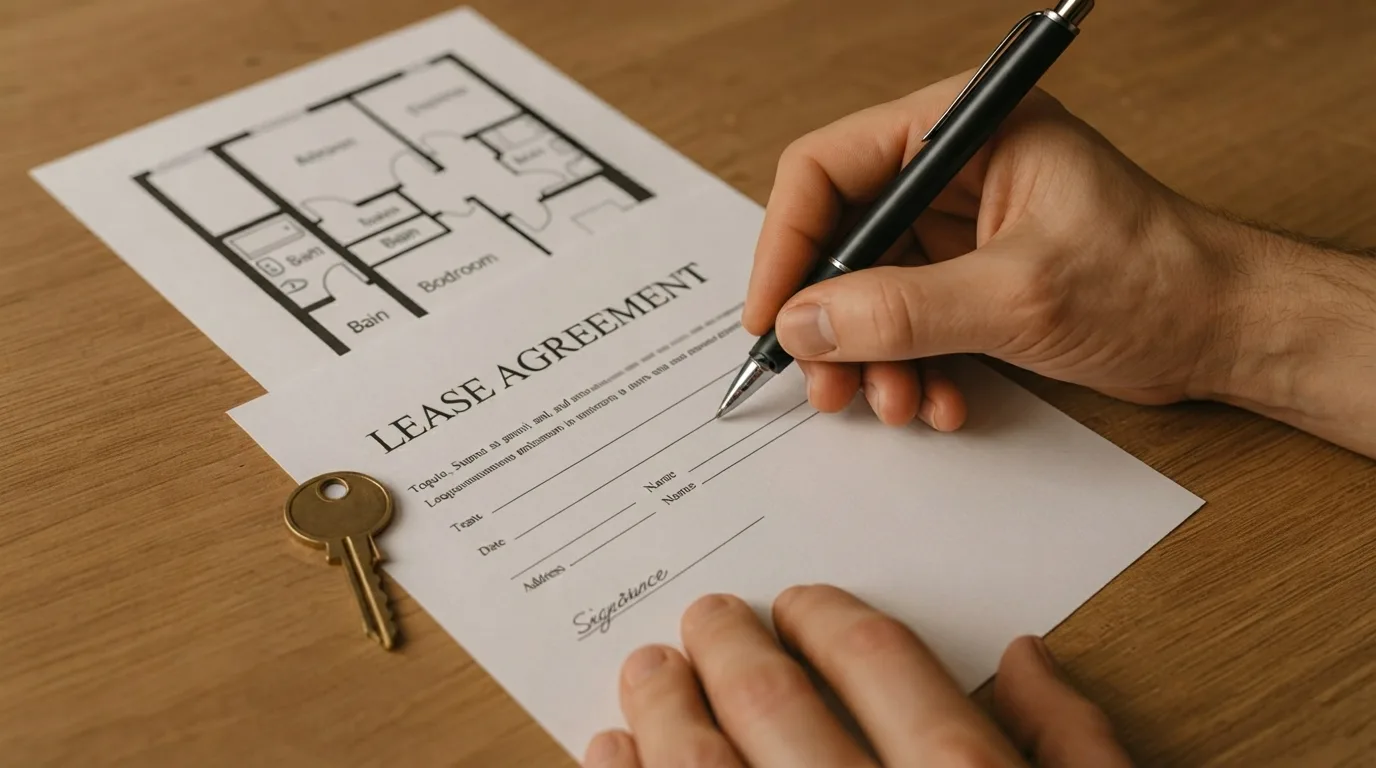
Your lease should state which utilities you must pay. Keep a copy of that clause with your records; if the building later bills you for a utility the lease says is included, that clause becomes your evidence. While you review the paperwork, also sort out renters insurance, which most landlords require alongside an active utility account.
3. How to set up electricity for an apartment: eight practical steps
Step 1: Identify the company serving your address
Start with the landlord or leasing office. They deal with these providers daily and can name the exact utility or supplier for your unit. If they do not know, search the state public utility commission website, call directory assistance, or enter the ZIP code on a rate-comparison site. In regulated areas, one name will come up; in deregulated areas, you will see the delivery utility plus a list of competing suppliers.
Step 2: Compare plans and match one to your lease
Match plan length to your rental term: a 12-month fixed-rate plan suits a 12-month lease; month-to-month suits a short sublet. Check early-termination fees, bill-credit rules, and renewable options before enrolling.
Step 3: Complete the credit check and handle any deposit
The provider reviews your credit to decide whether you need a security deposit. Good credit or a clean payment history with a previous utility often waives it. Weak credit, no credit history, or a prior unpaid utility bill usually means a deposit — commonly $100–$300 for an apartment, often capped by state rules near two months of estimated usage. If a deposit strains your budget, ask about alternatives: a reference letter from your old utility, a guarantor on a lease, or a prepaid plan that skips the credit check.
Step 4: Assemble your documents
Having these ready before you open the online application prevents frustrating save-and-exit loops.
| Document or detail | Why providers ask for it |
|---|---|
| Full legal name and date of birth | Identity verification on the account |
| Social Security number (or ITIN/passport alternative) | Credit check; some utilities accept alternate ID |
| Government-issued photo ID | Driver’s license, passport, or state ID |
| Full service address with unit number | Matches the specific meter in the building |
| Requested service start date | Schedules activation before your move-in day |
| Lease agreement or landlord confirmation | Proves you live at the address |
| Prior utility account address | Used for a payment-history reference or deposit waiver |
| Bank account, debit, or card payment details | Pays any deposit, first bill, or initial balance |
Step 5: Submit the application
Apply on the provider’s website, app, or phone line. Enter the address exactly as it appears on the lease, including the unit number; mismatched units commonly delay applications. Match your name spelling to your ID, since the credit report must match it.
Step 6: Confirm the start date and any technician appointment
Most apartment meters switch over remotely with no technician visit. If the unit sat vacant and disconnected, a worker may need access to the meter or breaker panel. Schedule that visit for move-in week, and keep the panel area clear so the worker can reach it.
Step 7: Activate service and test on move-in day
At move-in, test the lights, outlets, and HVAC fan, and locate the breaker panel with its main switch and labeled circuits. If nothing powers up, call the provider immediately; many call centers close early on weekends.
Step 8: Set up billing, autopay, and your first bill review
Create the online account, enroll in paperless billing, and save the account number. Set a reminder for the due date, and read the first statement for the correct address, billing period, and kWh usage. On-time payments build the history that releases your deposit.
4. How to set up electricity for an apartment online
Most utilities and retail suppliers fully support online enrollment, and the process usually takes 10–20 minutes. It answers the common question of how to set up electricity for apartment online: you open the account from a phone or laptop instead of visiting an office. Expect to move through these screens:
- Address entry: Type the street address, unit, and ZIP code; the system returns the available utility or suppliers for that meter.
- Plan selection: Choose a fixed, variable, month-to-month, prepaid, or green plan, and review the rate, term length, fees, and cancellation terms.
- Identity and credit check: Enter your name, date of birth, and SSN; the provider runs the check and instantly shows any required deposit.
- Document upload: Attach a photo of your ID and, if requested, the first page of your lease.
- Service schedule: Pick the activation date — choose move-in day or the evening before so power waits for you at the door.
- Payment setup: Pay the deposit or initial balance, link a payment method, and confirm autopay preferences.
- Confirmation: Save the email with the account number, start date, and customer-service phone number.
If you do not have an SSN (for example, as an international student or recent arrival), call the provider rather than abandoning the form. Many accept a passport, ITIN, or alternate verification, and public-utility rules in some states require a non-SSN application option.
5. Move-in countdown: when to start each step
Timing prevents two common failures: applying too late and moving in with no power, or switching off service at the old address too early and paying for two places at once. Use this countdown once you know your move-in date.
| Timing before move-in | What to do |
|---|---|
| 4 weeks | Identify the provider, compare plans, confirm the lease clause, and gather documents |
| 3 weeks | Submit the application, complete the credit check, and pay any required deposit |
| 2 weeks | Lock in the start date, book any technician visit, and create the online account |
| 1 week | Reconfirm the activation date in writing and save the account number |
| Move-in day | Test lights, outlets, and HVAC; photograph the meter reading for your records |
| After move-in | Review the first bill, set autopay, and mark the deposit-review date on your calendar |
Standard activation in most regulated areas takes one to five business days. A transfer at an active meter can happen the same day, but month-end moving season and weekends slow processing, so start two weeks early. Many leasing offices withhold keys until an account is active, and vacant-service fees accrue if power runs in the building’s name after your lease starts. Plan the deposit plus the first bill in a small emergency fund so activation never waits on a cash crunch.
6. How much does electricity for an apartment cost each month?
The U.S. Energy Information Administration reports that the average residential customer used about 874 kWh per month in 2025 at 17.23¢ per kWh, for an average bill near $151. That figure blends houses and apartments; apartments usually draw less thanks to smaller floor plans, shared walls, and compact appliances. The ranges below use recent national residential rates of roughly 17–18¢ per kWh:
| Apartment size | Typical monthly usage | Estimated monthly electric bill |
|---|---|---|
| Studio (300–500 sq ft) | 300–450 kWh | $55–$90 |
| One bedroom (500–750 sq ft) | 400–650 kWh | $75–$120 |
| Two bedrooms (800–1,100 sq ft) | 550–900 kWh | $100–$165 |
| Three bedrooms or shared group | 750–1,100+ kWh | $135–$210 |
Location moves these numbers more than square footage does. State residential rates run from roughly 12–13¢ per kWh in parts of the Mountain West and the upper Midwest to over 30¢ in California, Massachusetts, and Rhode Island, and around 40¢ in Hawaii. Check current state averages in the EIA average price of electricity table; renters in hot Sun Belt states also use far more kWh on air conditioning than renters in mild coastal climates.
Five factors drive the bill up or down:
- Climate and seasons: Air conditioning in hot states and electric heat in cold states dominate summer and winter bills; shoulder months drop sharply.
- Unit size and layout: Top-floor, south-facing, or end units absorb more heat and lose more warmth.
- Number of occupants: More people mean more hot showers, cooking, devices, and refrigerator openings.
- Appliance age and efficiency: Old window ACs, electric water heaters, and space heaters consume far more than efficient, ENERGY STAR-rated equipment.
- Rate structure: Fixed-rate plans protect you from summer spikes; variable-rate and prepaid plans can swing month to month.
Build the electric estimate into your rent budget before signing the lease, alongside water, internet, and renter’s insurance. A simple system to manage your monthly money makes seasonal bill swings easier to absorb.
7. Deposits, credit checks, and no-deposit options
Providers hold a security deposit as insurance against missed payments, especially when you have no local payment history. State public utility commissions cap the amount providers may charge and set refund timelines.
- Typical amount: Roughly $100–$300 for a typical apartment, sometimes $150–$400 or more with thin credit. Regulators often cap deposits near two months of estimated bills; Texas, for example, limits it to the greater of one-fifth of estimated annual billing or the next two months’ estimated bills.
- Credit check basis: The provider reviews your credit history and sometimes a specialty utility database such as NCTUE, which tracks payment behavior across telecom and utility accounts. A denial or credit-triggered deposit usually arrives with an adverse-action notice naming the source, so you can request a free report and correct errors.
- Refund rules: Many states require the utility to review the account annually and refund the deposit, often with interest, after around 12 consecutive on-time payments without a disconnection for nonpayment.
- Waivers and alternatives: Ask whether a prior-utility reference letter, a co-signer or letter of guarantee, automatic payment, or a low-income exemption removes the deposit. Qualifying low-income households may pay no deposit and may qualify for bill assistance through LIHEAP, the federal Low Income Home Energy Assistance Program.
The deposit comes back later, so paying it from a card only adds interest on money you eventually recover; ask whether the provider lets you split it across the first two bills.
Prepaid and no-deposit plans
Prepaid electricity works like a prepaid phone plan: you load a starting balance, the smart meter subtracts daily usage, and low-balance alerts arrive by text. There is usually no credit check and no traditional deposit, though an initial payment around $20–$75 starts service. These plans are common in competitive markets such as Texas and Ohio. Tradeoffs matter: top up before the balance hits zero, some assistance programs exclude prepaid accounts, and rates can run higher than the best fixed-rate offers.
8. Choosing the right electricity plan for your apartment
Compare plans side by side before you enroll, and read the plan’s facts label (called the Electricity Facts Label in Texas) for the real rate, fees, and terms.
| Plan type | Best fit | Advantages | Watch out for |
|---|---|---|---|
| Fixed-rate (6–36 months) | Standard 12-month leases | Stable rate, predictable bills | Early-termination fee if you move early |
| Variable-rate month-to-month | Short leases, sublets | No contract, easy cancellation | Rate rises in summer/winter peaks |
| Prepaid / no-deposit | Thin or weak credit, fast start | No credit check, daily spending visibility | Balance can hit zero; reconnection fees |
| Renewable / green plan | Environment-focused renters | Supports certified clean-energy supply | Slight premium; verify certification terms |
Three rules keep you from overpaying:
- Match the contract length to the lease. Breaking a 12-month electricity contract six months early can cost a $100–$200 termination fee.
- Check bill-credit plans carefully. A “$100 credit if you use 1,000 kWh” plan can raise your effective rate if a studio only draws 400 kWh — you never reach the threshold.
- Compare total monthly cost, not just cents per kWh. Add the customer charge, delivery fees, and any monthly minimum before deciding.
9. How to read your first electric bill
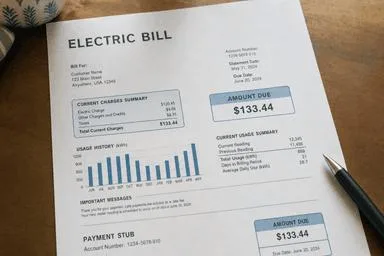
A first bill can look dense, but it follows a standard layout. Scan these sections in order:
- Account and service address: Confirm your name, unit number, and billing period.
- Meter readings: Previous reading, current reading, and the kWh difference between them.
- Charges breakdown: Fixed customer charge, energy (supply) charge, delivery charge in deregulated states, taxes, and riders such as fuel-cost adjustments.
- Total due and due date: Pay by the due date to avoid late fees and collection notices; many states require advance written notice before disconnection.
Photograph the meter on move-in day and again near the first billing date; estimated readings are common in the first cycle, and a dated photo keeps you from paying the prior tenant’s usage. This ohm’s law calculator explains the amps, volts, and watts behind those appliance loads — no engineering degree required.
10. Lowering your apartment electric bill without landlord approval
Most high-impact energy fixes are renter-friendly and need no renovation. Heating and cooling account for roughly half of a typical household’s annual energy spend, so small HVAC habits return the biggest savings.
- Program the thermostat: Set summer temperatures a few degrees higher when you are out and winter settings a few degrees lower when you sleep or leave. Turning the thermostat back 7–10°F for 8 hours a day can save up to 10% a year on heating and cooling, and an ENERGY STAR certified smart thermostat saves about 8% on average, roughly $50 a year.
- Seal drafts cheaply: Use door draft stoppers, weatherstripping, and window film around leaky frames; most fixes need no renovation or landlord approval.
- Swap bulbs to LED: LED bulbs use up to 80% less energy than incandescents and last far longer; replace the bulbs you use most and take them when you move.
- Kill standby power: TVs, game consoles, chargers, and small appliances draw phantom power on idle; plug them into power strips and switch the strips off when unused.
- Block summer heat: Close blinds and curtains on sunny windows during the day; run ceiling fans counterclockwise to feel cooler without dropping the thermostat.
- Use appliances wisely: Wash clothes in cold water, run full dishwasher and laundry loads, and keep refrigerator coils dust-free.
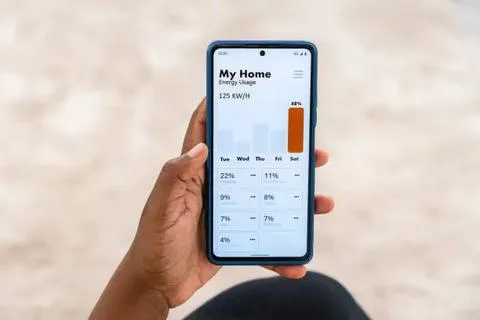
- Compare usage monthly: Watch the kWh number on each bill; a sudden jump usually points to an appliance issue, a new space heater, or a billing error.
Pair these habits with a broader plan to reduce your monthly expenses; the combination usually frees up more cash than any single device purchase.

11. Sharing electricity with roommates
When two or more tenants share one unit, decide the billing setup before move-in. Two models work: one account in one roommate’s name with everyone paying a share, or separate contribution arrangements tracked through a shared expense app. The account holder remains legally responsible for the full bill, so pick someone reliable and put the split rule in writing.
Cover these details early:
- Who owns the utility account and receives the bill.
- How costs divide — equal shares, by bedroom size, or by estimated usage.
- Who covers missed payments before the account holder absorbs them.
- What happens to the balance if one roommate moves out mid-cycle.
- How large seasonal bills (summer AC, winter heat) get split.
This checklist of questions to ask potential roommates covers utility habits, guest schedules, and spending boundaries before anyone signs a lease together.

12. When you move out: cancel, transfer, or switch suppliers
Setting up service at the next place starts with closing the old account cleanly. Follow these steps two to four weeks before the lease ends:
- Submit a stop-service request with your final move-out date and a forwarding address for the last bill and deposit refund.
- Read the meter on the final day and photograph the display; compare it with the final bill to catch estimated readings.
- Pay the final balance in full so the account closes in good standing and the deposit refund process begins.
- Request written confirmation of cancellation or transfer, including the account close date and any refund amount.
- Transfer service when possible: If you stay within the same utility’s territory, ask to move the account to the new address; this preserves your payment history and may waive a new deposit.
Unclosed accounts generate vacant-service charges, and unpaid balances can reach collections, which damages the credit score needed for your next apartment’s deposit check.
13. Common mistakes that leave renters without power
- Waiting until move-in week: Weekend and month-end crews get booked fast; active meters can transfer quickly, but disconnected units need several business days.
- Ignoring the lease utility clause: Assuming electricity is included (or not included) without checking the contract leads to surprise double payments or shutoffs.
- Underestimating the deposit: Budget for a deposit plus the first bill when planning moving costs; providers usually require payment before activation.
- Choosing a plan without reading the facts label: Hidden delivery fees, bill-credit minimums, and termination fees show up only in the plan details.
- Skipping the first-bill review: Estimated readings, wrong unit numbers, and leftover balances from the prior tenant occasionally appear; dispute them early.
- Forgetting to cancel at the old address: You remain liable for charges after move-out if the account stays in your name.
- Ignoring shutoff warnings: Most utilities send a formal disconnection notice before cutting power, and many states block winter shutoffs for heat-dependent households. The LIHEAP Clearinghouse lists state contacts; call 211 or the National Energy Assistance Referral at 1-866-674-6327 before a cutoff. The DOE’s energy-saving tips for renters covers draft stoppers, lighting, and appliance habits that trim the next bill.
Frequently Asked Questions
How long does it take to set up electricity for an apartment?
A transfer at an active meter often completes the same day or within one to two business days. A new account with a credit check and deposit usually takes three to five business days, and a disconnected meter may need a technician booked a week or more out during busy moving seasons. Book the start date for move-in day or the evening before.
Do I need a deposit if I have never had utilities in my name?
First-time renters without a credit or utility history commonly pay a deposit, often $100–$300 and regulated by state rules. You may avoid it with strong credit, a good payment reference from a previous utility, a co-signer or letter of guarantee, or a prepaid no-deposit plan that skips the credit check entirely.
Can I set up apartment electricity completely online?
Yes. Most suppliers let you enter your address, compare plans, verify identity, pay the deposit, and schedule activation on their website or app in about 10–20 minutes. Most renters search how to get electricity for apartment online: start at the provider’s enrollment page, keep your ID, SSN or alternate ID, lease, and payment method ready, and call support if the address or identity section rejects your information.
Am I liable for the electric bill if my roommate’s name is on the account?
Legally, the person named on the account owes the provider, regardless of any private roommate split agreement. The provider pursues the account holder for unpaid balances, which can damage that person’s credit and trigger collection. Document your share payments and keep the account holder informed, because guarantors may also be reached under lease terms.
Why is my first apartment electric bill higher than expected?
The first bill often covers a longer period (sometimes five to six weeks), includes prorated usage from the start date, and may bundle the deposit, connection fee, or old-account adjustments. Compare the kWh usage, not just the dollar amount, against later bills; a high kWh figure can also reveal an inefficient appliance or a thermostat left at a cold setting.
Should I enroll in budget or average billing as a renter?
Budget billing smooths seasonal bills into a level monthly amount, but it never discounts usage — you still pay for every kWh used, and a true-up balance can come due when you move or switch plans. It works best for long-term residents with stable usage; short-term renters usually prefer actual billing so no deferred balance waits at move-out.
What should I do if the power is off when I get the keys?
First check the breaker panel for a tripped main switch, then confirm the provider’s activation date and account number. Call the provider immediately, because same-day restoration depends on how early they receive the ticket. If you scheduled a technician visit, verify access to the meter or panel, and keep your confirmation email ready for the leasing office.
Can I choose my own electricity company in any state?
No. Regulated states assign one utility that both delivers and bills power. Deregulated states — including Texas, Ohio, Pennsylvania, Illinois, Connecticut, Maryland, New Jersey, New York, Massachusetts, and Rhode Island — let you shop retail suppliers while the utility still owns the lines and handles outages. Your state’s public utility commission website can confirm which model applies to your address.
Final takeaways
Setting up apartment electricity comes down to five habits: identify the right provider before you need power, prepare the documents, match the plan to your lease, budget the typical monthly kWh cost, and pay on time to release the deposit and build a clean record. Treat the electric account like any other recurring bill in your monthly plan — the 50/30/20 budget rule gives a simple framework for fitting utilities, rent, and savings into one paycheck cycle. Start two weeks early, keep your confirmation email handy, and you will walk into a lit, cool, calm apartment on move-in night.



Leave a Reply