
In this article
- 1. The National Average — and What It Actually Means
- 2. Average Wedding Cost by State (2026)
- 3. City-Level Costs: Where the Real Sticker Shock Lives
- 4. Average Wedding Cost by Guest Count
- 5. Where the Money Actually Goes (Budget Breakdown)
- 6. Hometown vs. Destination, Season, and Day of Week
- 7. How to Save Thousands Without Ruining the Day
- 8. How to Build Your Own Wedding Budget in 4 Steps
- Final Thought
- Frequently Asked Questions
Quick answer: The average US wedding costs $34,200 in 2026 (not including the engagement ring or honeymoon). But that number hides a huge range: from $17,000 in Wyoming to $57,000 in New Jersey. By guest count, expect roughly $12,000–$25,000 for 50 guests, $25,000–$45,000 for 100 guests, and $50,000–$90,000+ for 200 guests. Your state, your city, and your guest list drive the number more than anything else.
Let me be honest with you. When my friends started getting engaged, every single one of them told me the same thing: “We want something small, maybe $15,000, nothing fancy.” And every single one of them ended up somewhere north of $30,000. Not because they were reckless — because they had no idea what things actually cost. A venue quote that sounds reasonable suddenly doesn’t include chairs. The caterer’s per-head price doesn’t include the bar. The photographer you love is $4,000, not $1,500. It adds up faster than you can say “open bar.”
This guide is the thing I wish someone had handed me before I signed a single vendor contract. We will look at real 2026 data: the national average, what it includes and excludes, what weddings cost in every region and major city, how the bill scales with guest count, where the money actually goes, and — most importantly — the levers you can pull to save thousands without sacrificing the day you want. Grab a notebook. Let’s get into it.
1. The National Average — and What It Actually Means
According to The Knot’s 2026 Real Weddings Study, which surveyed more than 10,000 couples, the average US wedding rings in at $34,200. Zola’s 2026 data lands in a similar ballpark, with most couples landing between $25,000 and $45,000 depending on location. Before you panic, two things you must know about that number.
First, it excludes the engagement ring and the honeymoon. Add those and you are often looking at another $5,000–$15,000. Second, an “average” is pulled upward by luxury weddings. The median wedding — the one where half of couples spend more and half spend less — is meaningfully lower, usually in the low-to-mid $20,000s. So if your budget is $20,000, you are not weird or cheap; you are completely normal.
What the average usually does include:
- Ceremony and reception venue
- Catering and bar service
- Photography and videography
- Flowers and decor
- Music (DJ or band)
- Wedding attire, hair, and makeup
- Stationery and invitations
- Wedding planner or day-of coordinator
- Cake, favors, and transportation
A good wedding cost breakdown will show you that venue and catering alone eat up nearly half the budget. That single fact is the key to everything else in this guide.
2. Average Wedding Cost by State (2026)
Where you get married matters more than almost any other decision. The same 100-guest wedding that costs $20,000 in one state can cost $50,000 in another. The Northeast dominates the expensive end; the Mountain West and parts of the South are the most affordable.
Most expensive states (2026 averages):
| Rank | State | Average cost | vs. national |
|---|---|---|---|
| 1 | New Jersey | $57,000 | +67% |
| 2 | Rhode Island | $51,000 | +49% |
| 3 | New York | $49,000 | +43% |
| 4 | Vermont | $47,000 | +37% |
| 5 | Massachusetts | $45,000 | +32% |
| 6 | Connecticut | $42,000 | +23% |
| 7 | California | $39,000 | +14% |
| 8 | Delaware | $39,000 | +14% |
| 9 | Illinois | $38,000 | +11% |
| 10 | Maryland | $38,000 | +11% |
Most affordable states (2026 averages):
| Rank | State | Average cost | vs. national |
|---|---|---|---|
| 1 | Wyoming | $17,000 | −50% |
| 2 | Idaho | $18,000 | −47% |
| 3 | Utah | $18,000 | −47% |
| 4 | Alaska | $19,000 | −44% |
| 5 | Arkansas | $19,000 | −44% |
| 6 | Oklahoma | $19,000 | −44% |
| 7 | West Virginia | $19,000 | −44% |
| 8 | Mississippi | $21,000 | −39% |
| 9 | Montana | $21,000 | −39% |
| 10 | South Dakota | $21,000 | −39% |
By region, the Mid-Atlantic is priciest at about $48,400, followed by New England and the Northeast at $46,600. The South and West both sit around $31,000, and the Midwest is the most affordable major region at roughly $29,000. Detailed state averages confirm that cost-of-living and venue demand drive almost all of the gap.
The takeaway? If you have family in an expensive state but can host just across a border or in a smaller metro, you might cut your bill by a third without changing a single other thing.
3. City-Level Costs: Where the Real Sticker Shock Lives
State averages smooth over a lot. The real story is at the city level, where a single metro can cost three times as much as another. New York City tops the list at a staggering $88,000 — more than double the national average.
| City | Average wedding cost (2026) |
|---|---|
| New York City | $88,000 |
| Chicago | $54,000 |
| San Francisco | $51,000 |
| Boston | $51,000 |
| Los Angeles | $45,000 |
| Washington, DC | $42,000 |
| Philadelphia | $40,000 |
| San Diego | $38,000 |
| Austin | $37,000 |
| Houston | $33,000 |
| Dallas | $32,000 |
| Seattle | $31,000 |
| Denver | $31,000 |
| Nashville | $29,000 |
| Phoenix | $27,000 |
| Las Vegas | $22,000 |
| Oklahoma City | $21,000 |
| El Paso | $20,000 |
These city averages show why “average wedding cost” is such a tricky phrase. A couple in El Paso and a couple in Manhattan are not planning the same economy. If you are in a pricey city, consider a venue 30–60 minutes outside the core — the savings can be enormous, and most guests will not mind the short drive.
4. Average Wedding Cost by Guest Count
Here is the number that actually controls your budget: your guest count. Every additional guest costs roughly $150–$260 once you add food, bar, service charge, tax, a seat, and a favor. Cutting your list from 200 to 150 people can save $7,500–$15,000 — more than almost any other single decision.
| Guest count | Typical total budget (mid-tier, average market) | Cost per guest | Vibe |
|---|---|---|---|
| 50 (micro/intimate) | $12,000 – $25,000 | $240 – $500 | Intimate celebration |
| 75 | $18,000 – $35,000 | $240 – $470 | Small-medium |
| 100 | $25,000 – $45,000 | $250 – $450 | Traditional benchmark |
| 150 | $35,000 – $65,000 | $230 – $430 | Large celebration |
| 200 | $50,000 – $90,000+ | $250 – $450 | Grand affair, ballroom territory |
Notice something interesting: the cost per guest goes down as the list grows, at least up to a point. That is because fixed costs — photographer, DJ, officiant, venue fee — get spread across more people. A 50-person wedding can feel expensive per head because those fixed costs do not shrink. The sweet spot for value is usually around 120–180 guests, where you get scale advantages without hitting premium venue minimums.
These guest count ranges assume mid-tier vendors in an average-cost market. Add 30–50% if you are in NYC, San Francisco, or Miami. And remember: the per-head quote a caterer gives you is never the final per-head number. Add service charge (often 20–25%), tax, and the bar, and the real number is usually 40–60% higher.
5. Where the Money Actually Goes (Budget Breakdown)
If you want to stay sane, build your budget from the percentages up, not from a total number down. Here is the typical split for a $35,000 wedding:
| Category | % of budget | Typical $ amount | Notes |
|---|---|---|---|
| Venue + catering + bar | 45–50% | $15,000 – $17,500 | The big one; scales with guests |
| Photography + videography | 10–13% | $3,500 – $4,500 | Fixed cost, does not scale |
| Flowers + decor | 7–10% | $2,500 – $3,500 | In-season flowers save 20–35% |
| Music (DJ/band) | 4–7% | $1,400 – $2,500 | DJ ~$1,200–2,800; band $3,500+ |
| Attire + hair/makeup | 6–8% | $2,100 – $2,800 | Dress median ~$1,800 + alterations |
| Planner/coordinator | 3–8% | $1,000 – $2,800 | Day-of coordinator ~$800–1,800 |
| Wedding rings | 3–9% | $1,000 – $3,000 | Bands only; engagement ring separate |
| Stationery + postage | 2–3% | $700 – $1,050 | Digital invites save most of this |
| Cake + desserts | 2–3% | $700 – $1,050 | Serves guests, scales |
| Transportation + favors | 2–4% | $700 – $1,400 | Optional, often cut |
| Contingency buffer | 5–10% | $1,750 – $3,500 | Mandatory — something always comes up |
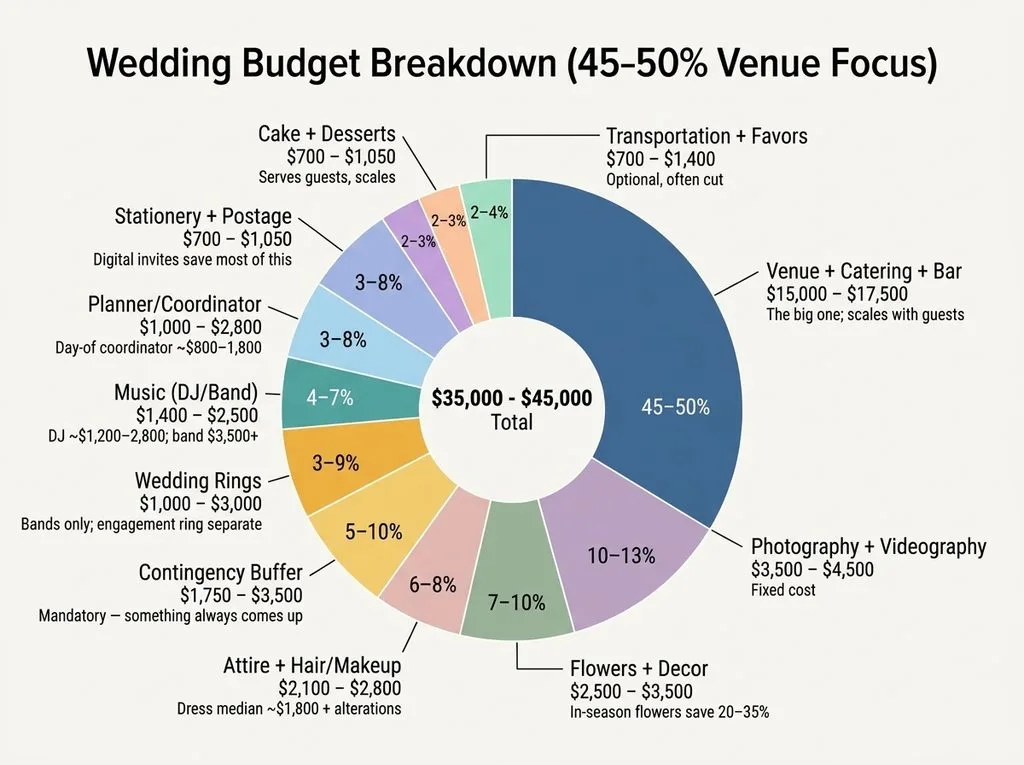
The 5–10% contingency line is the one most couples skip, and it is the one that causes the most stress. Last-minute alterations, extra chairs, a rainy-day tent — something always pops up. Build it in from day one. If you want help tracking it all, good budgeting apps can keep your wedding spending separate from your everyday money so you never accidentally overdraw.
6. Hometown vs. Destination, Season, and Day of Week
Three more levers move your number more than you would guess.
- Hometown vs. destination: A hometown wedding averages about $32,600. A US destination wedding jumps to roughly $41,700, and an international destination can go far higher once you add travel, lodging, and events across multiple days. Beautiful, yes — but budget accordingly.
- Season: Peak season (May–October, especially September and October) commands premium venue rates. A January, February, or March wedding can save you 10–25% on the venue alone.
- Day of the week: Saturday is the most expensive and most competitive. A Friday or Sunday wedding often saves 10–20%, and a weekday wedding can save even more. Your photographer and DJ usually charge less on off-days too.
If you are saving up over 12–18 months, parking the money in a high-yield savings account instead of a regular checking account can earn you a few hundred dollars in interest — enough to cover the cake, basically.
7. How to Save Thousands Without Ruining the Day
You do not have to spend the average. Plenty of beautiful weddings happen at $15,000 or less. Here is what actually moves the needle, in order of impact:
- Cut the guest list. Every 10 guests you remove saves $1,500–$2,600. This is the single biggest lever.
- Change the location. A cheaper state, city, or suburb can cut 20–40%.
- Pick an off-peak date. Friday, Sunday, or a winter month saves on venue and vendors.
- Skip the full bar. Beer and wine only saves 30–40% on the bar bill.
- Go digital with invitations. Saves $500–$1,500 and is more eco-friendly.
- Use in-season, local flowers. Saves 20–35% on florals.
- Hire a day-of coordinator, not a full planner. Saves $2,000–$5,000 while still keeping your day stress-free.
- Skip the favors. Most guests leave them behind anyway.
If the numbers still feel overwhelming and you are combining finances with your partner, a good financial advisor can help you decide how much to spend on the wedding versus how much to keep for a house down payment — a tradeoff most couples never explicitly talk through.
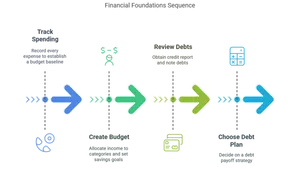
8. How to Build Your Own Wedding Budget in 4 Steps
You have the data. Now turn it into a plan.
- Pick your total number first. Based on your savings and what you can comfortably afford — not based on the average.
- Estimate your guest count. This drives 45–50% of the budget, so nail it early.
- Allocate by percentages. Use the table in Section 5. Put 5–10% in contingency.
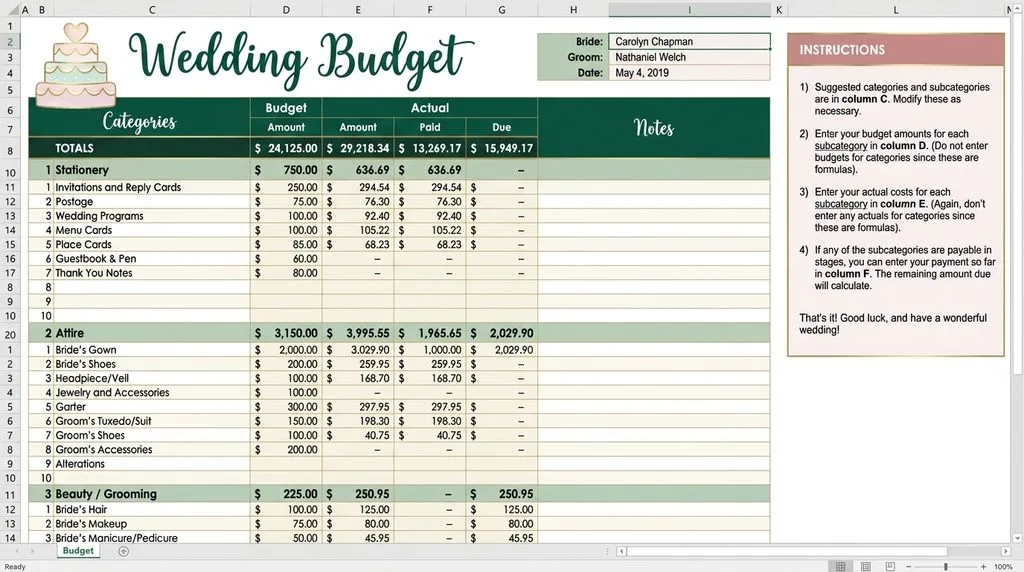
- Track actuals vs. estimates. Update a spreadsheet after every deposit and payment. If one category runs over, cut from another before you spend.
The average is just a data point. Your number is the one you can afford without going into debt. That is the only number that actually matters.
Final Thought
Here is the secret nobody tells you: the couples I know who are happiest years later are not the ones who spent the most. They are the ones who decided early what mattered to them — great food, amazing photos, a killer band — and spent generously on those two or three things while ruthlessly cutting everything else. A $20,000 wedding with a clear vision will feel more luxurious than a $60,000 wedding planned by default. Use the averages in this guide as a starting point, not a target. Your wedding should cost what you choose, not what a study says it should.
Frequently Asked Questions
What is the average cost of a wedding in 2026?
The average US wedding costs about $34,200 in 2026, according to The Knot’s Real Weddings Study. This excludes the engagement ring and honeymoon. The median is lower — typically in the low-to-mid $20,000s — because luxury weddings pull the average upward.
Which state has the most expensive weddings?
New Jersey is the most expensive state, with an average wedding cost of $57,000 in 2026. Rhode Island ($51,000), New York ($49,000), Vermont ($47,000), and Massachusetts ($45,000) round out the top five.
Which state has the cheapest weddings?
Wyoming is the most affordable state, averaging $17,000 in 2026. Idaho and Utah follow at about $18,000, and Alaska, Arkansas, Oklahoma, and West Virginia all average around $19,000.
How much does a wedding cost per guest?
Each guest typically adds $150–$260 to the total bill once you include food, bar, service charge, tax, seating, and favors. Overall cost per guest ranges from about $230 to $500 depending on market and service level. Per-guest cost tends to fall as guest count rises because fixed costs (photographer, DJ, venue fee) get spread across more people.
How much does a 100-person wedding cost?
A 100-guest wedding typically costs $25,000–$45,000 in an average-cost market with mid-tier vendors. In expensive cities like New York or San Francisco, add 30–50%. The biggest line items are venue and catering, which together take about 45–50% of the budget.
How can I save money on my wedding?
The biggest savings come from cutting the guest list (every 10 guests saves $1,500–$2,600), choosing a cheaper location or off-peak date, offering beer and wine instead of a full open bar, sending digital invitations, and using in-season flowers. A Friday or Sunday wedding can also save 10–20% on venue and vendors.
Does the average wedding cost include the engagement ring and honeymoon?
No. Most studies, including The Knot’s, exclude the engagement ring and honeymoon from the wedding cost average. Budget an additional $5,000–$15,000+ for those two items depending on your preferences.


Leave a Reply