

In this article
- TL;DR: Our Quick Picks
- Can AI Do My Taxes? The Honest Answer
- How We Evaluated These AI Tax Tools
- The Best AI Tax Tools at a Glance
- What AI Tax Tools Actually Do
- Before You File: Three Legal Ways to Lower Your Tax Bill
- Best Consumer AI Tax Software: TurboTax vs. H&R Block
- Best AI Tax Deduction Finders for Freelancers & the Self-Employed
- Best for Crypto and Small Business
- Enterprise & Professional AI Tax Automation
- Honorable Mentions and Free Filing Options
- How to Choose the Right AI Tax Tool
- Stay Safe: Accuracy Guarantees, Audits, and Who's Liable
- Frequently Asked Questions
- Final Verdict
TL;DR: Our Quick Picks
- Best overall AI tax software: TurboTax (Intuit Assist AI) — most polished, strongest deduction finder, priciest.
- Best value: H&R Block AI Tax Assist — strong free tier, hybrid in-person help, lower prices.
- Best AI deduction finder for freelancers: Keeper — scans every transaction; average user saves $1,249.
- Best AI-first freelancer tax: FlyFin — AI plus CPA filing; quarterly tax estimates.
- Best for crypto: CoinTracker — imports crypto/NFT trades straight into your return.
- Best done-for-you small business: Bench — AI plus human bookkeepers; year-end tax package.
- Best enterprise/pro: Thomson Reuters ONESOURCE + CoCounsel; Avalara for sales tax.
The short answer to “can AI do my taxes?” is: AI can prepare and file your taxes inside regulated tax software, but a general-purpose chatbot like ChatGPT cannot — and you remain legally responsible for every number on the return. In 2026, every major tax platform uses AI to import forms, find deductions, answer questions, and review your return. The leading AI tax automation companies fall into three buckets: consumer tax software (TurboTax, H&R Block), AI deduction finders for freelancers (Keeper, FlyFin), and enterprise/professional tax automation (Thomson Reuters, Avalara). This guide breaks all of them down, with verified pricing, honest pros and cons, and the safety rules you must know before you let AI touch your return.
Can AI Do My Taxes? The Honest Answer
Yes — but only inside dedicated tax software. Here is the critical distinction. Regulated tax platforms like TurboTax and H&R Block run AI on top of validated calculation engines, so the math is checked against current tax law before you e-file. A general-purpose chatbot, by contrast, has no calculation engine and no e-file capability. OpenAI itself states that ChatGPT “cannot replace a tax professional and cannot file your taxes for you.”
The IRS agrees. In its 2026 Introductory Guidelines for Responsible AI Use in Federal Tax Practice, the agency warns that generative AI produces hallucinations, bias, and outdated information, and requires every AI-created document to be reviewed by a human before filing. The numbers back up the caution. In independent testing, general-purpose chatbots miscalculated refunds by an average of more than $2,000, and one test found Gemini cited outdated tax figures 28% of the time, ChatGPT 22%, and Claude 17% — a structural limit of models with training-cutoff dates. So use AI inside tax software to speed up and improve your return, but never paste your W-2 into a free chatbot and trust the result.
How We Evaluated These AI Tax Tools
We scored every tool on five concrete criteria: genuine AI depth (not just a marketing label), calculation accuracy and guarantees, pricing transparency, deduction-finding performance, and support/audit protection. We cross-checked pricing directly on company websites as of September 2026, because tax software prices rise as April approaches. Prices below are typical early-season ranges; always confirm at checkout.
The Best AI Tax Tools at a Glance
| Tool | Best For | Typical Price | AI Highlight |
|---|---|---|---|
| TurboTax | Overall guided filing | Free – $129+ federal | Intuit Assist deduction finder + AI review |
| H&R Block | Value + free tier | Free – $110 federal | AI Tax Assist, 24/7 in paid tiers |
| Keeper | Freelancer deduction finder | $20/mo or $199/yr | Scans transactions; avg $1,249 saved |
| FlyFin | AI-first freelancer + CPA | $7–$29/mo | AI scans 200+ categories; CPA files |
| CoinTracker | Crypto/NFT taxes | Free tracking; $59+ for tax forms | Auto-imports exchanges/wallets |
| Bench | Small business done-for-you | $199–599/mo | AI + human bookkeepers, tax-ready books |
What AI Tax Tools Actually Do
The AI in these platforms handles five concrete jobs. Knowing what they are helps you pick the right tool:
- Document import & data extraction. Snap a photo of your W-2 or 1099, and AI reads the numbers and fills in the forms.
- Deduction & credit finding. AI scans your bank and credit-card transactions for write-offs you would never find manually — home-office portions, software subscriptions, mileage, business meals.
- Guided interview & Q&A. A tax AI assistant answers plain-English questions and explains forms in real time as you go.
- Error & audit-risk review. AI checks your return against thousands of diagnostic rules before filing and flags anything likely to draw IRS attention.
- Quarterly & year-round planning. For freelancers, AI estimates quarterly taxes and tracks write-offs all year, not just in April.
Before You File: Three Legal Ways to Lower Your Tax Bill
Filing software maximizes your refund, but the biggest savings happen before the year ends. Do these while you still can:
- Max out tax-advantaged accounts. Contribute to a Roth IRA or traditional IRA up to the limit, and claim your full employer 401(k) match. These reduce taxable income or grow tax-free.
- Use a high-yield savings account for your refund. It earns interest, though remember that interest is taxable — a high-yield savings account will send you a 1099-INT.
- Track business expenses year-round. If you’re self-employed, every legitimate write-off cuts your taxable income dollar for dollar — which is exactly what the deduction finders below automate.
Best Consumer AI Tax Software: TurboTax vs. H&R Block
For most W-2 employees and standard returns, the choice comes down to the two giants. Both now ship with built-in AI.
TurboTax — Best Overall AI Tax Software
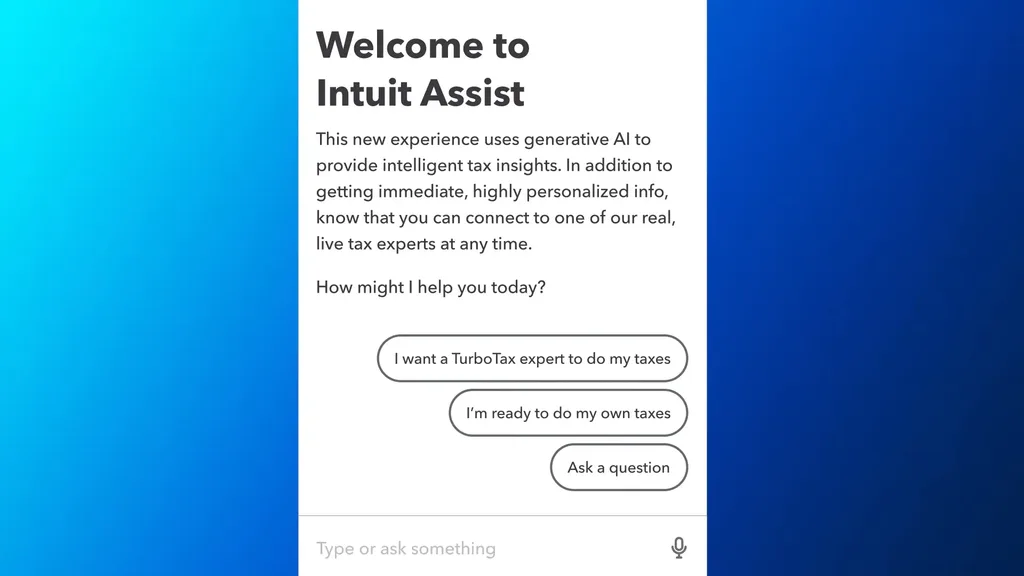
TurboTax, by Intuit, is the most widely used tax software in the U.S., and its Intuit Assist AI powers a deduction finder that scans your financial data, a Smart Navigation system that adapts the interview to your situation, and an AI-powered review that checks the return before filing. It imports from over a million financial institutions and offers TurboTax Live, where a CPA or enrolled agent reviews or even does the return for you. Intuit projects TurboTax Live revenue at nearly $2.8 billion in fiscal 2026 — about 53% of the division — so assisted, AI-plus-human filing is clearly the future.
Pricing runs from free (simple returns) through Deluxe $129–139 federal), with state filing around $39–59, and early-season promos often knock prices down. Live Assisted runs roughly $249 and Live Full Service (a pro does everything) starts around $429. The tradeoff is price: TurboTax is consistently the most expensive option. Choose it if you want the most polished experience and the widest expert support.
H&R Block — Best Value with AI Tax Assist
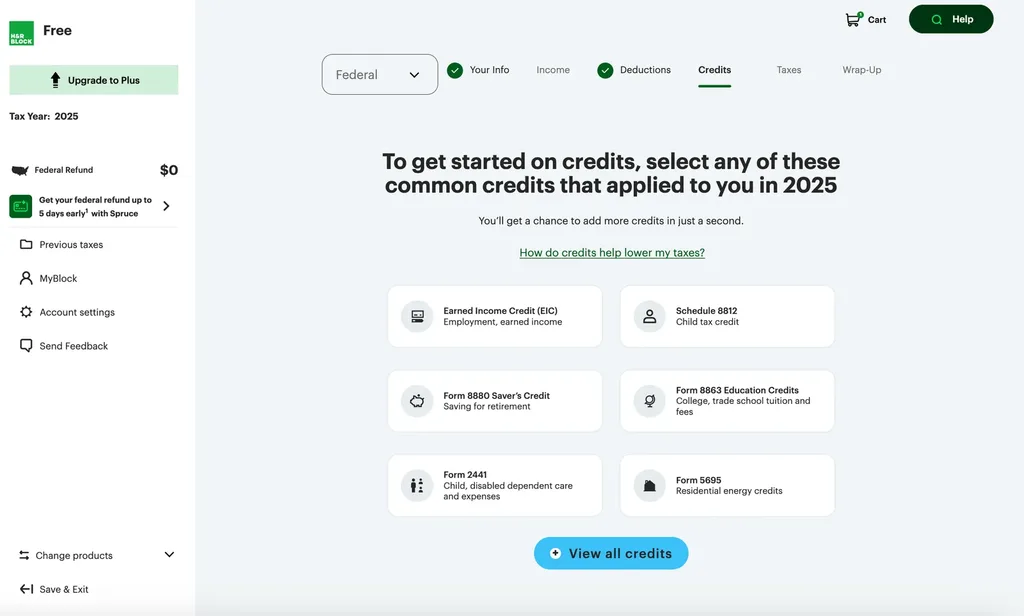
H&R Block’s AI Tax Assist, built on Microsoft Azure and OpenAI with H&R Block’s Tax Institute knowledge base, provides unlimited, contextual tax help 24/7 in paid tiers and expanded to desktop software in 2026. Its free tier is notably generous — it covers Form 1040 plus Schedules 1, 2, and 3, letting roughly 40% of filers complete federal and state returns at no cost. Paid tiers run Deluxe ($35–55), Premium ($60–75), and Self-Employed ($85–110), with states $37–49. New DIY clients got a free Tax Pro Review through mid-February 2026. You can read more about the feature in H&R Block’s AI Tax Assist media kit.
The big advantage: thousands of physical offices mean you can hand off to a human locally if things get complicated. The interface is slightly less polished than TurboTax, but you typically pay $20–60 less for the same complexity.
Best AI Tax Deduction Finders for Freelancers & the Self-Employed
If you’re a freelancer, gig worker, or 1099 contractor, you leave the most money on the table through missed write-offs. That’s the exact problem AI deduction finders solve. Industry coverage of AI for tax deductions confirms these tools pay for themselves many times over — and they pair naturally with AI budgeting apps that already categorize your spending.
Keeper — Best AI Deduction Finder Overall
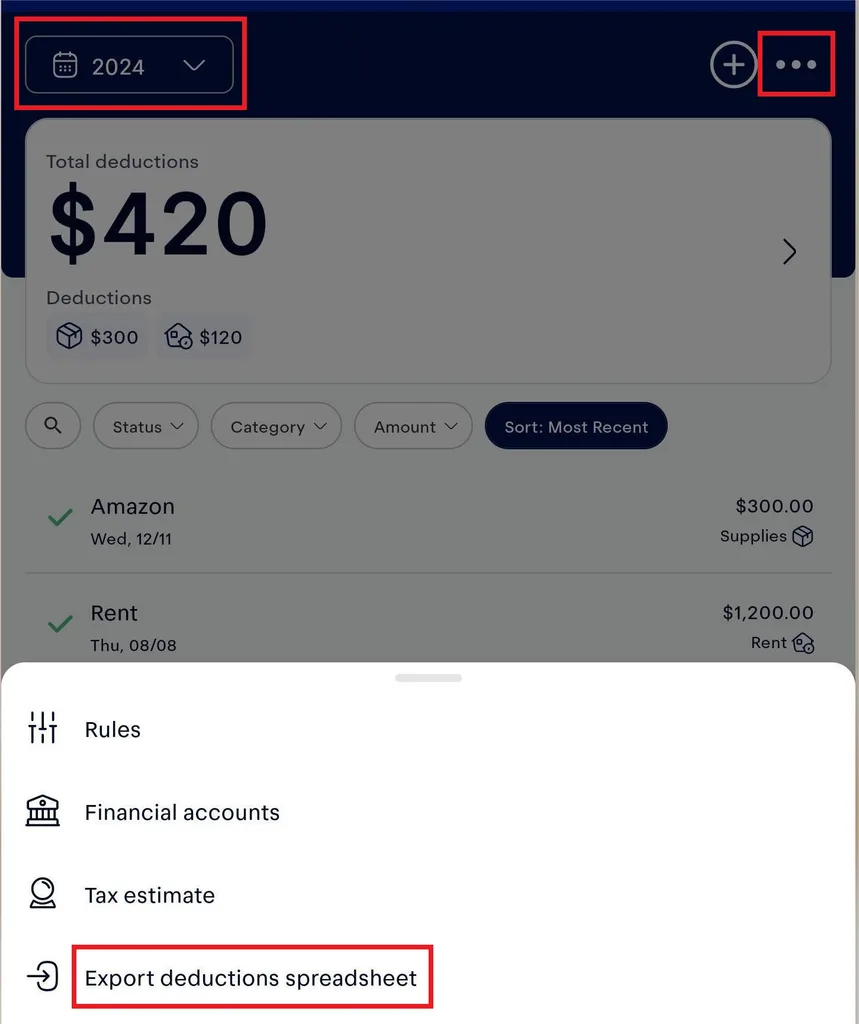
Keeper links directly to your bank and credit cards and scans every transaction for write-offs, surfacing them in a friendly text-message-style interface. In-house tax experts verify the AI’s picks, and Keeper will file your federal and state return for you. It costs $20 per month or $199 per year with a 14-day free trial, and the company says the average user saves $1,249 — meaning the subscription pays for itself on one missed deduction. It also helps with quarterly estimated taxes. Choose Keeper if you want a mostly hands-off write-off engine that also files your return.
FlyFin — Best AI-First Freelancer Tax Platform
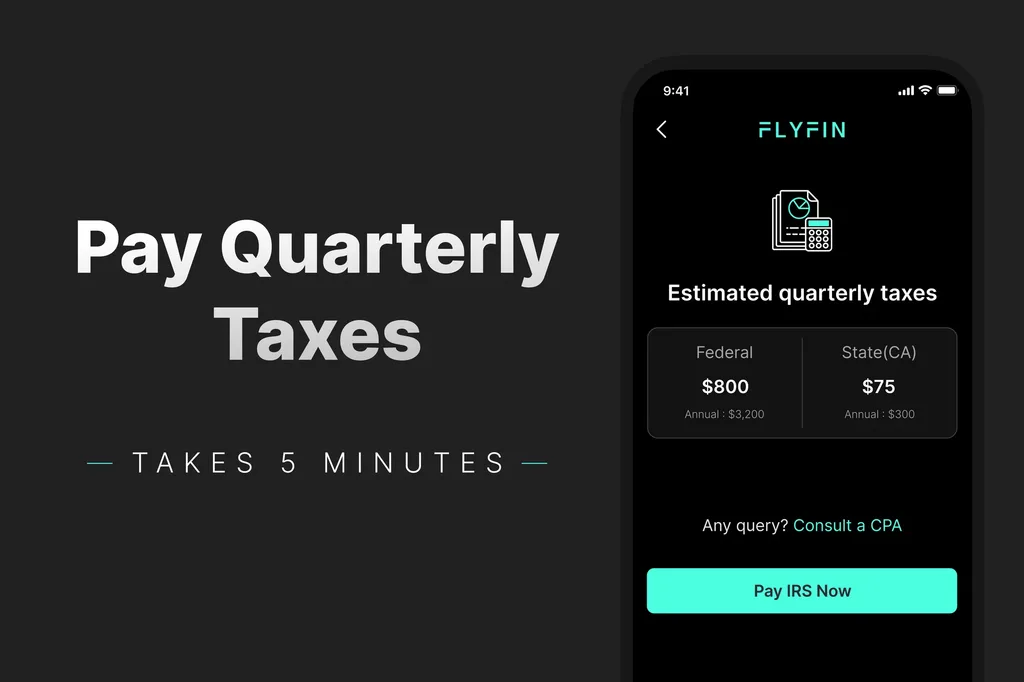
FlyFin is built AI-first for the self-employed. It serves 250,000+ users, and its engine scans every expense in the background against 200+ deduction categories, then a CPA reviews and files your federal and state returns. It also estimates quarterly taxes so you avoid underpayment penalties. Pricing starts around $7/month for AI deduction tracking plus CPA chat; the Standard plan (about $16/month, $192/year) adds full CPA filing, and Premium (about $29/month, $348/year) covers LLC and S-Corp returns with a dedicated CPA. Note that FlyFin’s pricing has shifted multiple times, so check flyfin.tax on the day you sign up. User reviews on Trustpilot and the BBB flag occasional billing issues, so cancel in writing if you trial it. Choose FlyFin if you want the most aggressive AI deduction hunting plus a real CPA in the loop.
Best for Crypto and Small Business
CoinTracker — Best AI Crypto Tax Tool
If you trade crypto or NFTs, you know the IRS treats every trade as a taxable event — and tracking cost basis across wallets manually is nearly impossible. CoinTracker connects your exchanges and wallets, calculates capital gains and losses, and generates tax reports that import directly into TurboTax and H&R Block. Portfolio tracking is free; tax reports start at about $59/year for up to 100 transactions and scale to $199 (1,000 transactions) and $599 (10,000). Even if you use consumer tax software, add CoinTracker if you touched crypto this year — it’s the single most common source of filing errors.

Bench — Best Done-for-You Small Business Taxes
Bench pairs AI categorization with human bookkeepers. Plans run from about $199–599 per month depending on your revenue and whether you add tax filing; the Essential plan starts at $249/month billed annually and includes accurate monthly books plus a year-end tax-ready package. Premium adds tax advisory and income tax filing. If you’re a small-business owner drowning in receipts, Bench removes the bookkeeping bottleneck that makes tax season painful. It is more expensive than DIY tools but far cheaper than a part-time bookkeeper.
Enterprise & Professional AI Tax Automation
For accounting firms and corporate tax departments, AI tax automation is a different scale. The leading names here are not consumer apps. Thomson Reuters combines its Checkpoint research corpus with CoCounsel, an agentic AI that identifies tax issues, retrieves and validates authorities, and drafts memoranda — the company’s own guide on how to choose an AI tax research tool lays out the evaluation criteria. Its ONESOURCE suite automates corporate indirect and direct tax.
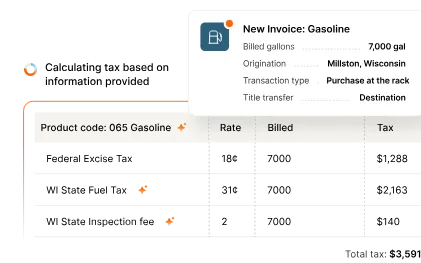
For sales tax, Avalara embeds AI agents directly into ERPs, ecommerce platforms, and POS systems, serving 41,000+ customers across 190+ countries and processing 12 billion transactions a year. Anrok is the startup favorite for SaaS companies with subscription and usage-based billing, integrating natively with Stripe and Chargebee. On the infrastructure side, april — an embedded AI tax platform that raised $78 million and became the first new firm in 15 years authorized to e-file in all 50 states — now powers free DIY filing for PayPal debit-card customers, with Column Tax as a similar embedded player. These are the companies whose AI will quietly power the tax features inside your bank or fintech app.
Honorable Mentions and Free Filing Options
You don’t always need to pay. Consider these:
- TaxAct — strong live support (Xpert Assist) and lower prices; 24/7 phone and chat.
- TaxSlayer — budget pick with self-employed support; less AI polish.
- FreeTaxUSA — free federal for most situations, low-cost state; minimal AI.
- Hurdlr — mileage and expense tracking that feeds deductions into your return.
- IRS Free File — if your adjusted gross income is $89,000 or less, you can use brand-name guided software free via the IRS Free File program; Free File Fillable Forms has no income limit. Important update: the IRS’s own Direct File tool, which ran in 25 states during the 2025 filing season with 94% user satisfaction, was discontinued for the 2026 filing season, and no relaunch date has been announced — so do not count on it.
How to Choose the Right AI Tax Tool
Match your situation to the tool:
- Simple W-2 return, want it free. Use H&R Block Free or IRS Free File.
- Want the most polished, guided experience. Pay for TurboTax.
- Freelancer or gig worker with messy deductions. Use Keeper or FlyFin year-round — they pay for themselves.
- Crypto or NFT trader. Add CoinTracker on top of whatever you use.
- Small business with books behind. Use Bench to catch up, then file.
- Want a human in the loop. Pick TurboTax Live or H&R Block (physical offices).
- Also want year-round financial planning. Pair your tax tool with an AI financial advisor that handles investing and goals alongside tax.
Stay Safe: Accuracy Guarantees, Audits, and Who’s Liable
Every major platform offers an accuracy guarantee — if its calculation error causes IRS penalties, the company pays. But that guarantee covers software errors, not errors from information you entered wrong or from an AI hallucination you accepted. You remain legally responsible for your return. Three rules keep you safe:
- Verify AI-found deductions. If a tool flags a write-off, make sure it’s legitimate and you have the receipt. The IRS can ask for proof for three years.
- Never use a general chatbot to calculate or file. Use it only to explain concepts; do the math in validated tax software.
- Check the provider’s audit support. Paid tiers often include audit guidance or representation. Free tiers usually do not.
Frequently Asked Questions
Can AI do my taxes for me?
Inside regulated tax software like TurboTax or H&R Block, AI can import your forms, find deductions, and prepare a return you review and e-file. A general chatbot like ChatGPT cannot file your taxes and regularly makes costly errors — OpenAI itself says it cannot replace a tax professional.
What is the best AI tax software in 2026?
TurboTax with Intuit Assist is the most polished and best overall. H&R Block AI Tax Assist is the best value with a strong free tier. For freelancers, Keeper and FlyFin find the most deductions.
What is an AI tax deduction finder?
It’s a tool that connects to your bank and credit cards and uses machine learning to scan every transaction for tax-deductible expenses — home office, software, mileage, meals — that you would otherwise miss. Keeper says its average user saves $1,249.
Are AI tax tools accurate?
Inside validated tax software, calculations are highly accurate, and providers back them with accuracy guarantees. AI-generated advice from chatbots is not reliable — independent tests found refund miscalculations averaging over $2,000 and frequent citations of outdated tax figures.
Who are the leading AI tax automation companies?
For consumers: Intuit (TurboTax), H&R Block, Keeper, FlyFin, CoinTracker. For enterprises: Thomson Reuters (ONESOURCE, CoCounsel), Avalara, Vertex, Sovos, Anrok. Embedded infrastructure: april, Column Tax.
Is it cheaper to use AI tax software or a CPA?
AI software costs $0–250; a CPA typically charges $250–500+ for a simple return and more for business returns. Use AI software for simple to moderately complex returns, and a CPA for small businesses, multi-state filing, or audit situations.
Does the IRS allow AI-prepared returns?
Yes, as long as the return is accurate and filed through authorized e-file software. The IRS’s 2026 guidelines require tax professionals to review all AI output before filing — a good rule for individual filers too.
Can AI find deductions I missed?
Yes — that is its strongest use case. AI scans thousands of transactions against hundreds of deduction categories and flags write-offs humans routinely miss, especially for freelancers and the self-employed. Always verify the flagged expense is legitimate before claiming it.
Final Verdict
AI has genuinely changed tax filing for the better. It turns a weekend of receipts into an evening of guided questions, and for freelancers it finds hundreds or thousands in missed deductions. The best setup for most people: H&R Block Free or TurboTax for the return itself, plus Keeper or FlyFin if you have 1099 income, plus CoinTracker if you trade crypto. Use AI to do the scanning and the math, but keep a human — you — in the review loop. File accurately, claim every deduction you’re entitled to, and let the refund fuel your path to financial independence.



Leave a Reply