
In this article
- The Short Answer (If You're in a Hurry)
- What Is Afterpay, Exactly?
- How Afterpay Works: Pay in 4, Step by Step
- Afterpay's Other Products: Pay Monthly, Afterpay Plus, and the Afterpay Card
- How Does Cash App Afterpay Work? (The 2026 Game Changer)
- Can You Use Afterpay Anywhere? The Three Tiers
- Is Afterpay Safe? Two Different Answers
- What Afterpay Actually Costs (Fees and Limits)
- Afterpay vs. the Alternatives
- Returns, Disputes, and Chargebacks
- The 2026 Regulatory Picture (Why It Matters)
- How to Use Afterpay Without Getting Trapped
- Frequently Asked Questions
- Final Thought
The Short Answer (If You’re in a Hurry)
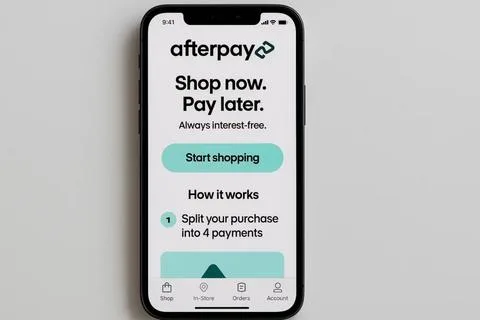
Afterpay is a buy-now-pay-later (BNPL) service that splits your purchase into four equal, interest-free payments. You pay 25% at checkout and the rest every two weeks over six weeks. If you pay on time, it costs you nothing — no interest, no annual fee, no origination charge. The catch: late fees cap at 25% of the purchase price or $68 (whichever is less), missing payments can freeze your account and get your debt sent to collections, and it doesn’t help build credit. In 2026, two big things changed: Afterpay launched a $9.99/month “Plus” subscription that lets you use it almost anywhere via a virtual Visa card, and its parent company Block rolled out Afterpay on the Cash App Card — meaning you can now pay over time for groceries, gas, and literally any purchase where Visa is accepted, not just at partner stores. This guide covers how all of it works, what it really costs, and whether it’s safe.
What Is Afterpay, Exactly?
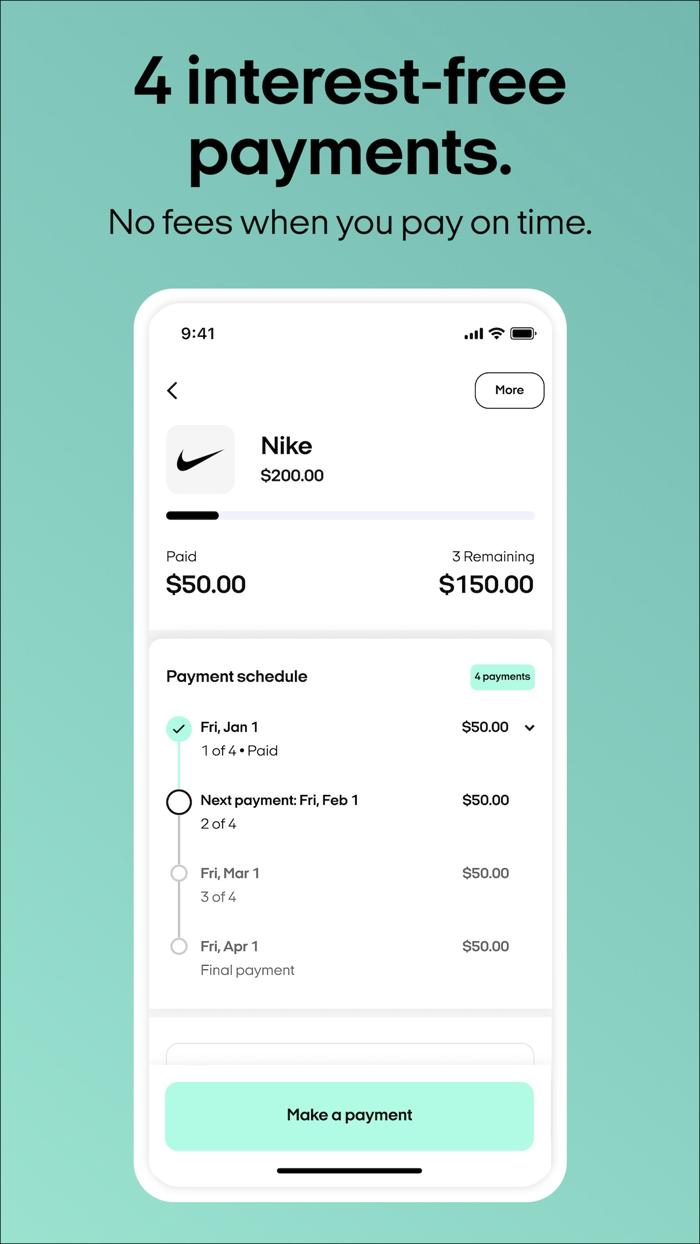
Afterpay started in Australia in 2014, founded by Nick Molnar and Anthony Eisen, with a simple pitch: instead of paying $200 for a jacket all at once, pay $50 today and $50 every two weeks for six weeks — no interest, no credit check. It exploded in popularity among Gen Z and millennial shoppers, went public in 2016, and in January 2022 was acquired by Block (the company formerly known as Square, run by Jack Dorsey) for roughly $29 billion. Today it sits inside Block’s ecosystem alongside Cash App and Square’s merchant tools.
It’s not a credit card, and it’s not a traditional loan — at least, not the classic Pay-in-4 product. You don’t get a revolving line of credit, you don’t get charged interest, and approval happens in seconds at checkout. The merchant gets paid in full upfront (minus a fee of about 30 cents plus 4–6% of the purchase price), and Afterpay collects the four payments from you over time. That merchant fee is how Afterpay makes most of its money, not from your interest.
The average Afterpay purchase is around $150, which tells you what the product is really built for: clothes, beauty, sneakers, small electronics — impulse and lifestyle purchases, not a new fridge or a vacation.
How Afterpay Works: Pay in 4, Step by Step
The core product is dead simple. Here’s exactly what happens:
- You shop at a store that offers Afterpay at checkout — online or in-store.
- You choose Afterpay as your payment method. If it’s your first time, you create an account in about a minute (email, phone, DOB, and a debit or credit card).
- You pay 25% today. That first installment is charged immediately to your linked card.
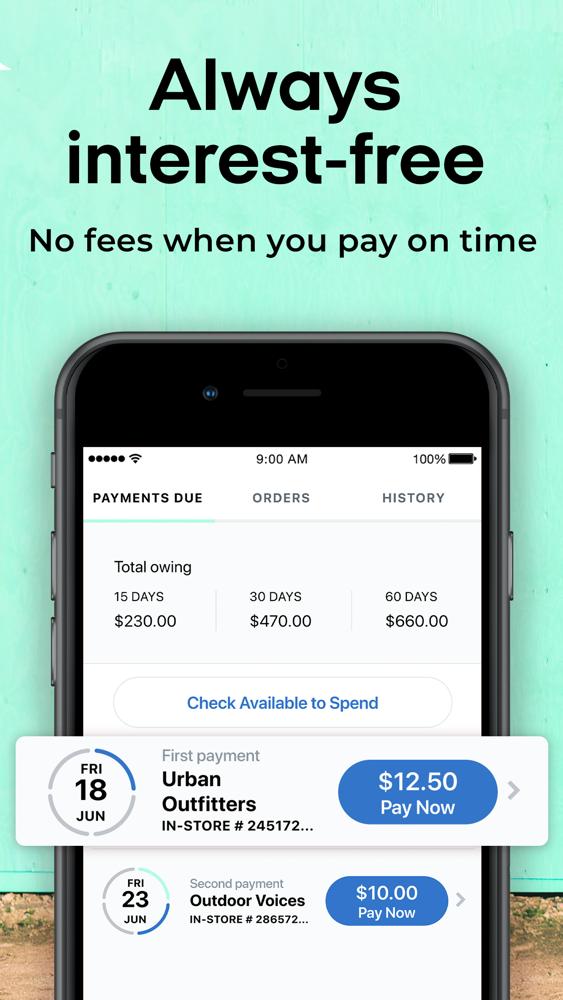
- The remaining 75% is split into three payments, automatically charged to your card every two weeks. So a $200 purchase becomes $50 today, $50 in two weeks, $50 in four weeks, and $50 in six weeks.
- You get your order right away. The merchant ships it just like any other purchase.
- If you pay on time, you pay exactly $200 — no extra cost. If a payment fails, Afterpay typically gives a 10-day grace period before charging a late fee, and it only ever charges one late fee per installment.
There’s no hard credit check to sign up for Pay in 4. Afterpay runs a soft assessment that doesn’t hit your credit score, and it approves (or declines) each individual purchase based on how long you’ve been a customer, your repayment history, and how much you already owe. New customers start with low limits — often $100–$500 — and those limits rise as you prove you pay on time.
Afterpay’s Other Products: Pay Monthly, Afterpay Plus, and the Afterpay Card
Pay in 4 gets all the attention, but Afterpay has quietly built three more products that work very differently. This is where most articles stop — and where the real decisions get made.
Pay Monthly is an actual installment loan, not the interest-free product. It covers purchases from $100 up to $20,000 at participating merchants, with repayment terms stretching up to 24 months. Unlike Pay in 4, it charges simple interest (rates vary based on your credit profile, payment history, and the merchant), requires a soft credit check that doesn’t hurt your score, and has no late fees or origination fees. It’s not available in Nevada, West Virginia, Hawaii, or New Mexico. If you’re financing something big — furniture, a laptop, dental work — this is the product to compare against a personal loan or a 0% APR credit card, because the interest can add up fast over two years.
Afterpay Plus is a $9.99/month subscription that unlocks a virtual Visa card you can use at almost any retailer, even ones that don’t officially partner with Afterpay. You load the card into Apple Pay or Google Pay, tap to pay, and split the purchase into four payments just like normal. It also comes with perks like rewards on every purchase and higher spending limits. If you regularly shop at stores that don’t take Afterpay directly, the math is simple: if you’d pay more than $9.99 a month in avoided interest or late fees elsewhere, it pays for itself.
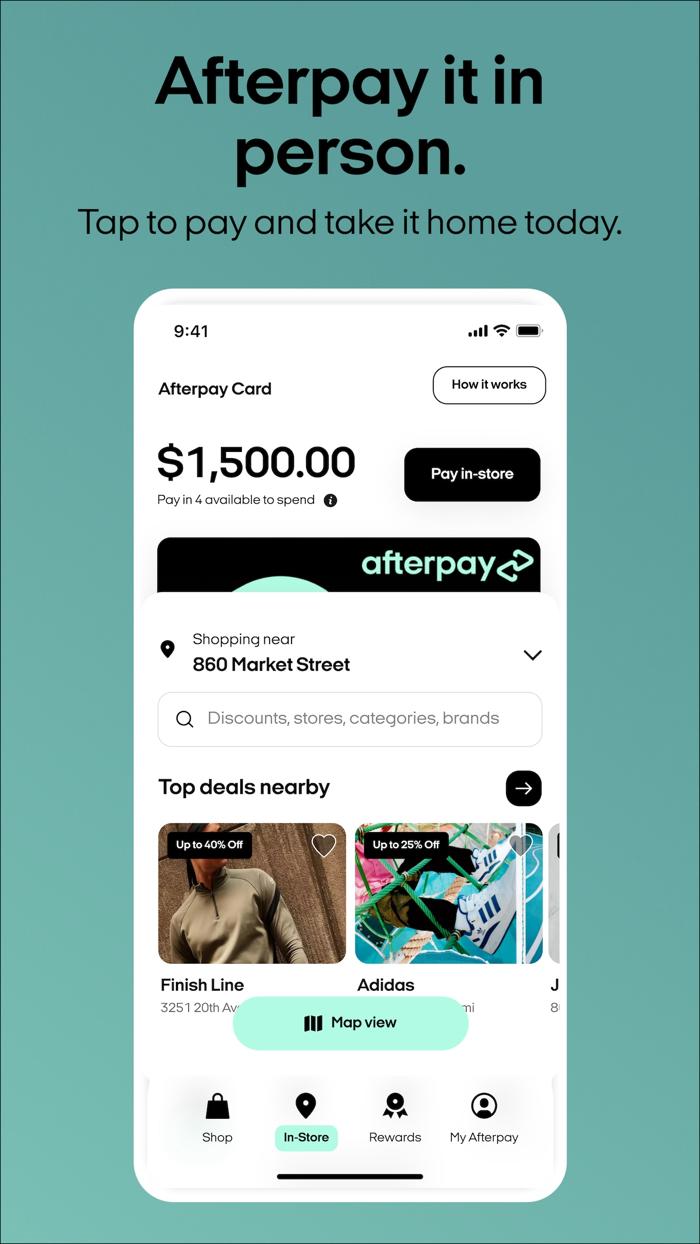
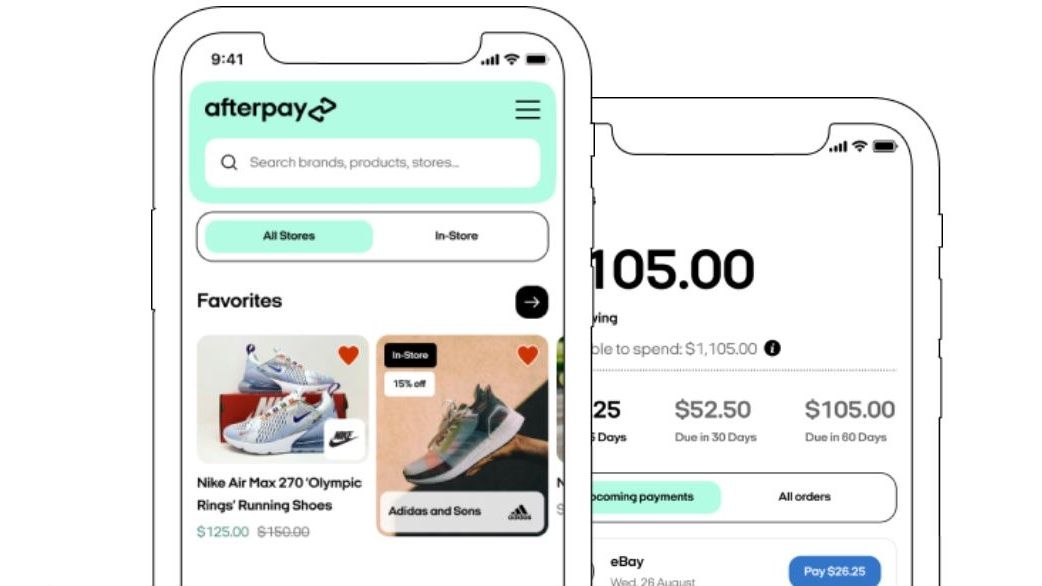
The Afterpay Card (included in the app without Plus) is a virtual card for in-store shopping at partner retailers. You generate it in the app, add it to your mobile wallet, and tap to pay — the 25% down payment is charged immediately, and the rest follows the usual two-week schedule.
How Does Cash App Afterpay Work? (The 2026 Game Changer)
This is the newest and least-understood piece. On June 2, 2026, Block announced the general availability of Afterpay on the Cash App Card — and it’s a bigger deal than it sounds.
Here’s the old model: you could only use Afterpay at merchants that had signed up to accept it. With Cash App Afterpay, that wall is gone. If you have a Cash App Card and you’re eligible, any purchase you make with that card — groceries, gas, restaurants, utility bills, your barber — can be split into four interest-free payments. It works everywhere Visa is accepted, because from the merchant’s perspective it’s just a regular Visa transaction. Afterpay handles the pay-over-time part behind the scenes.
You opt in through the Cash App, choose which purchases to split, and the repayment schedule matches the standard Afterpay cadence: 25% down, then three payments every two weeks. The target audience is gig workers, creators, and hourly employees whose income doesn’t arrive on a fixed monthly schedule — people who get paid irregularly and want their payment schedule to match their cash flow.
The catch: it’s still debt. Splitting a $60 grocery bill into four payments of $15 feels harmless, but if you do it every week, you’re always carrying four weeks of past purchases into the present. It’s a powerful tool for smoothing variable income, and a dangerous one if it becomes the default way you pay for essentials.
Can You Use Afterpay Anywhere? The Three Tiers
This is the question people search most, and the answer depends on which Afterpay product you’re using:
| Tier | Where It Works | Cost | Best For |
|---|---|---|---|
| Standard Afterpay (free) | Only at partner merchants — 100,000+ retailers online and in-store | $0 if paid on time | Shopping at stores that already accept it |
| Afterpay Card (in-app, free) | In-store partner retailers via Apple/Google Pay | $0 if paid on time | Physical retail at partner stores |
| Afterpay Plus ($9.99/mo) | Almost anywhere Visa is accepted, via virtual card | $9.99/month + $0 if paid on time | Regular shoppers at non-partner stores |
| Cash App Card + Afterpay (2026) | Anywhere Visa is accepted — groceries, gas, bills | $0 if paid on time (requires Cash App Card) | Everyday spend with variable income |
So yes — you can use Afterpay almost anywhere, but only if you pay for Plus or have a Cash App Card. Without either, you’re limited to Afterpay’s partner directory, which includes big names like Ulta Beauty, Adidas, Anthropologie, lululemon, American Eagle, and thousands of smaller online shops. You can browse the full list in Afterpay’s official retailer directory.
Is Afterpay Safe? Two Different Answers
“Is Afterpay safe?” actually means two different things, and they have different answers.
Security-wise, yes. Afterpay uses bank-level encryption, never shares your full card number with merchants (the card is tokenized), and the Afterpay Card generates a one-time number for each in-store purchase so your real details never touch the retailer. There’s been no major data breach at Afterpay to date. Linking a debit card is safer than a credit card in one sense (no credit line to drain) and riskier in another (if Afterpay debits your account and you’re short, you overdraft). Use a credit card if you want the extra chargeback protection — but know that if you carry a balance on that card, you’re paying credit card interest on top of your Afterpay payments, which defeats the whole point.
Financially, it depends on you. The risks aren’t from Afterpay stealing your money — they’re from what the product encourages. Three specific things to watch:
- Stacking. You can have multiple Afterpay orders running at once, each with its own payment schedule. It’s easy to lose track of how much is coming out of your account each week. A good AI budgeting app can show you all your BNPL payments in one place before they hit.
- Late fees and account freezes. Miss a payment and Afterpay freezes your account until you catch up. Fall further behind and the debt can go to a collections agency, which will hit your credit score.
- It doesn’t build credit. On-time payments are never reported to the credit bureaus, so using Afterpay responsibly does nothing for your credit history. If building credit is your goal, a secured credit card or a credit-builder loan is a better tool.
If you’re already juggling multiple BNPL balances and credit cards, debt consolidation may be cheaper than keeping them all separate.
What Afterpay Actually Costs (Fees and Limits)
| Fee / Limit | Amount | Notes |
|---|---|---|
| Interest (Pay in 4) | $0 | Never charged |
| Annual fee | $0 | For standard Pay in 4 |
| Late fee | Capped at 25% of purchase or $68, whichever is less | One per installment; ~10-day grace period |
| Afterpay Plus subscription | $9.99/month | Unlocks virtual card for use anywhere |
| Pay Monthly interest | Variable, simple interest | Based on credit profile; no late fees, no origination fee |
| Starting spending limit | ~$100–$500 for new users | Increases with on-time payments |
| Maximum (Pay in 4) | Typically $2,000 for established users | Varies by customer and merchant |
| Pay Monthly maximum | Up to $20,000 | At participating merchants only |
The most important number on that table is the late fee cap. Afterpay can never charge you more than 25% of what you bought in late fees, total. That’s a legal and self-imposed cap, and it’s what separates it from a payday loan — but a $68 late fee on a $100 purchase is still a 68% penalty, so autopay on a debit card with enough money in it is non-negotiable.
Afterpay vs. the Alternatives
Afterpay isn’t the only way to split a payment. Here’s how it stacks up against the other options in your wallet:
| Option | Typical Cost | Credit Check? | Builds Credit? | Best For |
|---|---|---|---|---|
| Afterpay Pay in 4 | $0 if on time; late fee up to 25% | No (soft) | No | Small purchases at partner stores |
| Klarna | $0 if on time; late fees up to $7 | No | No | Similar to Afterpay, wider merchant base |
| Affirm | 0–36% APR depending on plan | Soft check | Yes (some loans) | Larger purchases, longer terms |
| PayPal Pay in 4 | $0 if on time; late fees vary | No | No | Existing PayPal users |
| 0% APR credit card | $0 if paid within promo period | Yes (hard) | Yes | Larger purchases you can pay off in 12–18 months |
| Personal loan | 6–36% APR | Yes (hard) | Yes | Debt consolidation, $1,000+ |
For a $150 purchase you’ll pay off in six weeks, Afterpay (or Klarna) beats everything else on cost. For a $2,000 laptop, a 0% APR credit card or a personal loan is almost always cheaper and builds credit at the same time. If you have the cash to pay upfront, the cheapest option is always just paying in full — and parking the money you would have spent in a high-yield savings account earns you interest instead of costing you anything.
Returns, Disputes, and Chargebacks
If you return something bought with Afterpay, the merchant refunds Afterpay, not you directly. Afterpay then applies the refund to your remaining payments and cancels what’s left. If you’ve already paid more than the refund covers, Afterpay issues you a credit or refund to your card. The key point: returns go through the merchant, not Afterpay, so keep your order confirmation and return tracking. If the merchant refuses a refund you believe you’re owed, and you paid with a credit card linked to Afterpay, you can still file a chargeback through your card issuer — the same consumer protections apply.
The 2026 Regulatory Picture (Why It Matters)
BNPL used to be the Wild West — no standardized disclosures, no APR calculations, no federal oversight. That’s changing fast. The CFPB has been investigating the industry since 2021 and published a report flagging repeated borrowing, stacked loans, and inconsistent dispute protections. A proposed rule would treat BNPL loans like credit cards under the Truth in Lending Act, requiring clear cost disclosures and standardized dispute rights. Several states (California among them) already require BNPL companies to hold lending licenses. What this means for you: the product you use today may look different in a year or two — clearer fee disclosures, possibly lower caps, and more of your payment history reported to credit bureaus (which could help or hurt your score depending on your habits). For now, assume the old rules apply: read every fee screen, don’t rely on it to build credit, and never borrow more than you can cover from your next two paychecks.
How to Use Afterpay Without Getting Trapped
- Link a debit card, not a credit card — unless you pay your credit card in full every month. Otherwise you’re paying interest on an interest-free loan.
- Turn on autopay and push notifications. Never miss a due date because you forgot.
- Keep total BNPL payments under 5% of your monthly take-home pay. If four Afterpay orders plus a Klarna and an Affirm are eating more than that, you’re overextended.
- One active order at a time, ideally. If you can’t track them all, you can’t afford them all.
- Never use it for essentials as a habit. Groceries and gas on Afterpay (via Cash App Card) is fine for a tight week. If it’s every week, your income and expenses don’t match — fix the budget, not the checkout.
- Check your limit before you shop. Afterpay approves each purchase individually, so a high displayed limit doesn’t guarantee approval at checkout.
Frequently Asked Questions
Does Afterpay check your credit?
For the standard Pay-in-4 product, no hard credit check is required. Afterpay runs a soft assessment that doesn’t affect your credit score. Pay Monthly requires a soft credit check to set your interest rate. In some countries (like Australia), Afterpay does run a credit check on signup — but in the U.S., Pay in 4 approval is based on your account history and the individual purchase.
Does Afterpay build credit?
No. Afterpay doesn’t report on-time payments to the three major credit bureaus, so using it responsibly won’t improve your credit score. However, if you default and the debt goes to collections, that will appear on your credit report and hurt your score. If building credit is your goal, use a secured credit card or credit-builder loan instead.
What happens if I miss an Afterpay payment?
Afterpay typically gives a grace period (about 10 days) before charging a late fee. Late fees are capped at 25% of the purchase price or $68, whichever is less, and you’re charged only one late fee per installment. Your account is frozen until you catch up. If you fall seriously behind, the debt can be sent to collections.
Can I use Afterpay anywhere?
Only at partner merchants with the free version — over 100,000 retailers. To use it almost anywhere Visa is accepted, you need Afterpay Plus ($9.99/month, virtual card) or the Cash App Card with Afterpay enabled (2026, works on any Visa purchase including groceries and gas).
How does Cash App Afterpay work?
If you have a Cash App Card and opt in, any Visa purchase can be split into four interest-free payments — 25% down, then three payments every two weeks. It works at every merchant that accepts Visa, because the merchant sees a regular Visa transaction and Afterpay handles the installment plan behind the scenes. It launched generally in June 2026.
Is Afterpay safe to use?
Security-wise, yes — it uses bank-level encryption and tokenized card numbers, and there’s been no major breach. Financially, it’s safe if you pay on time and don’t stack multiple orders. The risks are late fees, account freezes, overspending, and (in default) collections. It won’t help or hurt your credit unless you default.
What’s the difference between Afterpay and a credit card?
A credit card gives you a revolving line of credit, charges interest on carried balances (typically 20–30% APR), and reports to credit bureaus. Afterpay Pay in 4 is a fixed four-payment plan with zero interest, no revolving balance, and no credit reporting. Credit cards build credit; Afterpay doesn’t. Credit cards also offer rewards and stronger chargeback protection.
Does Afterpay charge interest?
Never on the Pay-in-4 product — that’s the whole pitch. Afterpay Plus and the standard Afterpay Card also use the interest-free four-payment structure. Pay Monthly is the exception: it’s an actual installment loan that charges simple interest, with rates based on your credit profile, for purchases of $100 to $20,000 repaid over up to 24 months.
Final Thought
Afterpay is a genuinely useful tool for one specific job: splitting a small, planned purchase into four payments so it doesn’t slam your bank account all at once. Used that way, it’s free, it’s fast, and it’s safer than a credit card cash advance or a payday loan. The danger starts when “one purchase” becomes a lifestyle — when you’re splitting groceries and gas because your paycheck doesn’t cover the week, when you’ve got five active orders you can’t track, when the 25% down payment feels like “getting a discount” instead of “going into debt.” The 2026 changes — Afterpay Plus and Cash App integration — make it more convenient than ever to use everywhere. That convenience is exactly why it pays to set your own limits before the app sets them for you.
Leave a Reply