
In this article
- Key Takeaways
- 1. Make a Complete List of Your Debts
- 2. Create a Budget Before Paying Extra
- 3. Choose Between the Debt Avalanche and Snowball
- 4. Pay More Than the Minimum
- 5. Reduce Unnecessary Expenses
- 6. Increase Your Income
- 7. Use Extra Money Strategically
- 8. Consider Debt Consolidation Carefully
- 9. Contact Creditors if Payments Become Difficult
- 10. Build a Small Emergency Fund
- 11. Stop Adding Unnecessary Debt
- 12. Track Your Progress Every Month
- 13. Avoid Debt Relief Scams
- 14. Create a Simple Monthly Debt Plan
- Best Ways to Reduce Debt Without Feeling Overwhelmed
- Common Mistakes to Avoid When Paying Off Debt
- How Long Does It Take to Reduce Debt?
- Final Thoughts
Key Takeaways
- List all your debts, balances, interest rates, and minimum payments.
- Create a realistic budget before deciding how much extra you can pay.
- Choose a debt repayment method that fits your financial habits.
- Pay more than the minimum whenever your budget allows.
- Reduce unnecessary expenses and use the savings to pay down debt.
- Look for ways to increase your income and direct extra money toward debt.
- Consider debt consolidation only after comparing the total cost.
- Build a small emergency fund to avoid relying on new credit.
- Stop adding unnecessary debt while working toward repayment.
- Track your progress every month and adjust your plan when needed.
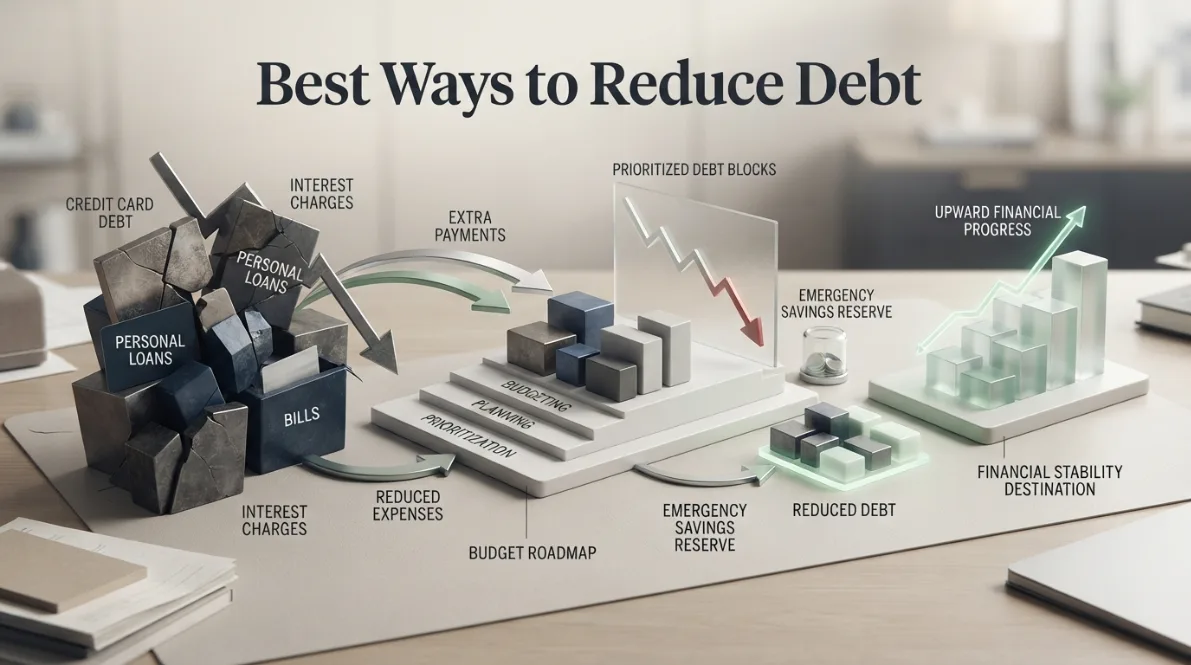
Debt can make it difficult to save, invest, or plan for the future. When interest charges and monthly payments take up a large part of your income, even normal expenses can become stressful.
The good news is that you can reduce debt with a structured plan. You do not need to solve everything at once. Start by understanding what you owe, organize your payments, control unnecessary spending, and consistently put extra money toward your balances.
This guide explains the best ways to reduce debt and provides practical steps you can use to build a more manageable financial plan.
1. Make a Complete List of Your Debts
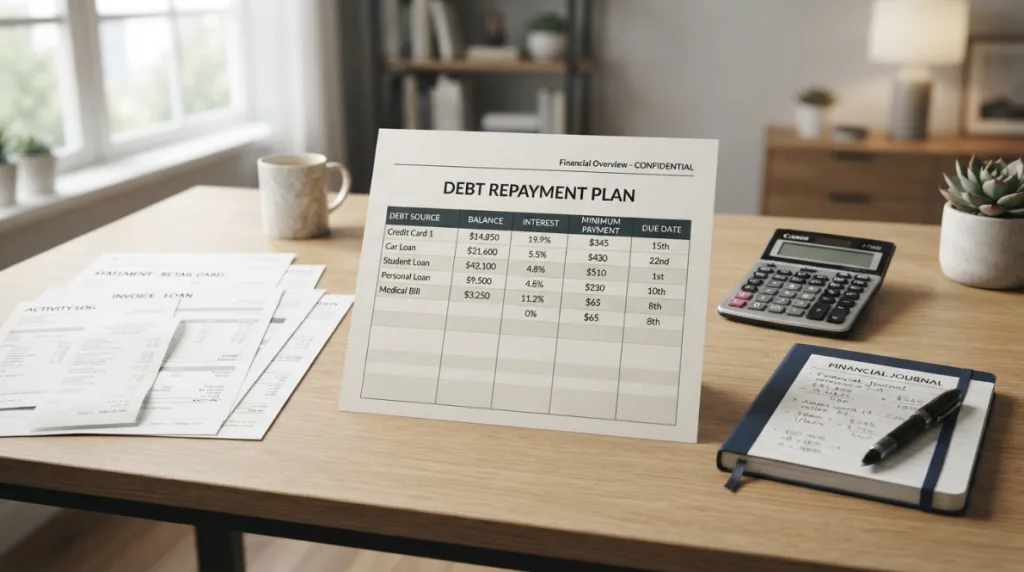
Before paying off debt, you need to know exactly what you owe.
Create a list of every outstanding balance, including credit cards, personal loans, auto loans, student loans, medical bills, and other forms of debt.
For each account, record:
- Current balance
- Interest rate
- Minimum monthly payment
- Due date
- Loan or account type
Having everything in one place makes your financial situation easier to understand.
It also helps you identify which debts are costing you the most in interest.
2. Create a Budget Before Paying Extra
A debt repayment plan should fit your actual income and expenses.
Start by calculating your monthly take-home income. Then list essential expenses such as:
- Housing
- Food
- Utilities
- Transportation
- Insurance
- Minimum debt payments
- Essential household costs
After covering your necessities, review your discretionary spending.
Look for expenses that you can reduce without creating unnecessary hardship. You might find savings by cutting unused subscriptions, reducing restaurant spending, limiting impulse purchases, or choosing lower-cost alternatives.
Use the money you save to increase your debt payments.
A realistic budget is more useful than an extremely strict budget that you cannot maintain.
3. Choose Between the Debt Avalanche and Snowball

One of the most important decisions is choosing how you will prioritize your debts.
Two common approaches are the debt avalanche and debt snowball methods.
Debt Avalanche
The debt avalanche method prioritizes the debt with the highest interest rate.
You continue making the minimum payment on every account. Then you put any extra money toward the debt with the highest interest rate.
After paying it off, you move to the debt with the next-highest rate.
This strategy can help reduce the amount of interest you pay over time.
Debt Snowball
The debt snowball method prioritizes your smallest balance.
You make minimum payments on all debts but put extra money toward the smallest balance first.
After paying off that balance, you use the money that was going toward it to attack the next-smallest balance.
This approach can create quick wins and may help people stay motivated.
Which Method Should You Use?
Choose the method you are most likely to follow consistently.
The avalanche method may be better if your priority is minimizing interest. The snowball method may be useful if seeing debts disappear quickly keeps you motivated.
There is no need to switch between methods constantly. Choose a strategy and give it time to work.
4. Pay More Than the Minimum
Minimum payments are designed to keep your account current, but they may not reduce your balance quickly.
If your budget allows, make additional payments toward your priority debt.
For example, instead of spending an extra amount on non-essential purchases each month, you could direct that money toward your highest-priority balance.
Before making large additional payments, check your loan terms for any applicable prepayment restrictions or fees.
Even small additional payments can become meaningful when you make them consistently.
5. Reduce Unnecessary Expenses
Cutting expenses is one of the simplest ways to create extra money for debt repayment.
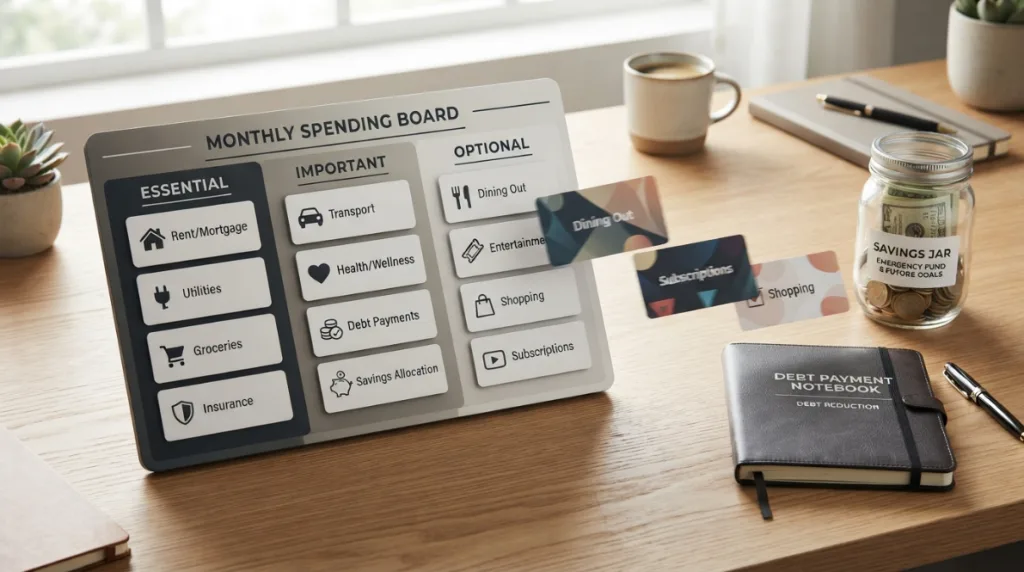
Review your spending and separate your expenses into three categories:
Essential: Expenses you need for basic living.
Important: Expenses that are useful but may have cheaper alternatives.
Optional: Expenses you can reduce or temporarily eliminate.
You might find opportunities in areas such as:
- Streaming subscriptions
- Takeout and restaurant meals
- Entertainment
- Online shopping
- Unused memberships
- Expensive phone or internet plans
You do not have to eliminate every enjoyable expense.
Instead, focus on reducing spending that provides less value than the financial benefit of paying down your debt.
6. Increase Your Income
Reducing expenses can help, but increasing income can give you another way to accelerate repayment.
Depending on your skills and available time, you could consider:
- Freelancing
- Part-time work
- Selling unused belongings
- Taking additional shifts
- Tutoring
- Online services
- Temporary side work
The key is to avoid automatically increasing your lifestyle when your income rises.
Consider directing at least part of any additional income toward debt.
A larger income can make repayment faster without requiring you to cut every discretionary expense.
7. Use Extra Money Strategically
Unexpected money can provide an opportunity to reduce debt faster.
Examples may include:
- Work bonuses
- Tax refunds
- Cash gifts
- Freelance income
- Money from selling unused items
You do not necessarily need to put every extra dollar toward debt.
However, using a portion of unexpected income for repayment can significantly improve your progress.
Decide how you will handle windfalls before you receive them. This reduces the chance of spending the money impulsively.
8. Consider Debt Consolidation Carefully
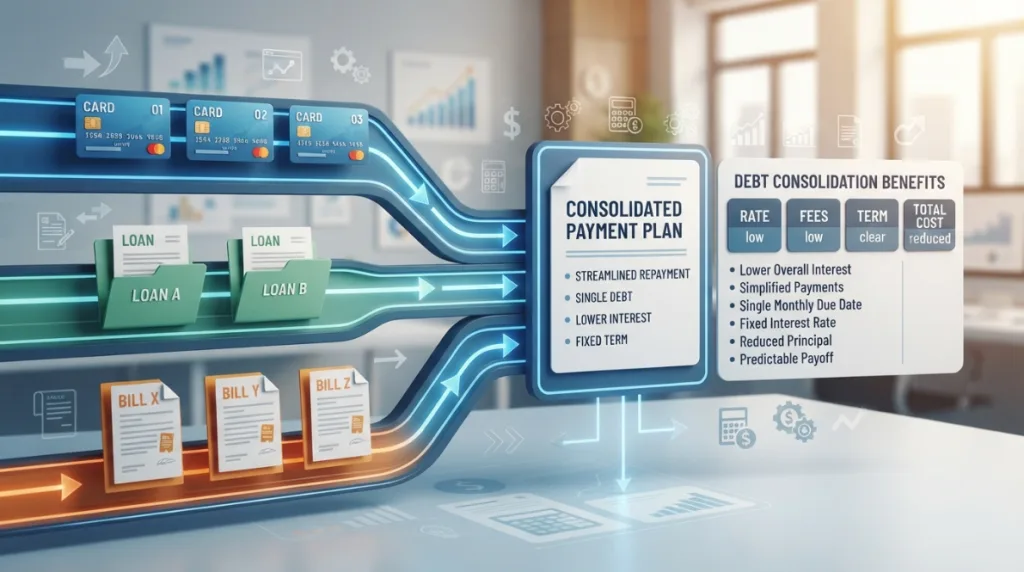
Debt consolidation combines multiple debts into one payment, usually through a new loan or another financial product.
It can make repayment simpler and may reduce interest costs if you qualify for better terms.
However, consolidation is not automatically a good deal.
Before choosing a consolidation option, compare:
- Interest rate
- Fees
- Repayment period
- Monthly payment
- Total repayment amount
A lower monthly payment does not always mean a lower overall cost. A longer repayment period may result in more interest paid over the life of the loan.
Focus on the total cost rather than looking only at the monthly payment.
9. Contact Creditors if Payments Become Difficult
If you are struggling to make payments, do not simply ignore the problem.
Contact your lender or creditor and ask what options may be available.
Depending on the account and your circumstances, you may be offered options such as a temporary hardship arrangement, modified payment terms, or other assistance.
Get the terms in writing and understand how any change could affect your total repayment cost, interest, or credit history.
Acting early can be better than waiting until missed payments become a larger problem.
10. Build a Small Emergency Fund
Aggressively paying down debt is important, but having no savings can create another problem.
An unexpected car repair, medical bill, or temporary loss of income could force you to use a credit card or take out another loan.
A small emergency fund can provide a buffer against these situations.
You do not need to build a large emergency fund before making debt payments. Start with an amount that fits your budget and financial situation.
Once your high-interest debt is under control, you can focus on building a larger emergency reserve.
11. Stop Adding Unnecessary Debt
Paying off debt becomes much harder if you continue borrowing.
If credit cards are contributing to your balances, consider changing how you pay for everyday purchases while you work on repayment.
For example, you could use a debit card or cash for planned expenses and avoid unnecessary purchases on credit.
The goal is not necessarily to avoid credit forever. Instead, focus on preventing new balances from undoing your repayment progress.
12. Track Your Progress Every Month

Debt repayment can take time, so tracking your progress can keep you focused.
At the end of each month, record:
- Total debt at the beginning of the month
- Payments made
- Interest charged
- Current balances
- Total debt reduction
You can track this information using a spreadsheet, budgeting app, or simple notebook.
Seeing your balances decline can make a long-term goal feel more manageable.
If your income or expenses change, update your repayment plan instead of abandoning it.
13. Avoid Debt Relief Scams
People struggling with debt can become targets for misleading financial offers.
Be cautious if a company:
- Guarantees that it can eliminate all your debt
- Demands large upfront fees
- Pressures you to make an immediate decision
- Tells you to stop communicating with your creditors
- Makes promises that sound too good to be true
Research any debt-relief provider carefully before sharing financial information or signing an agreement.
Understand the costs, risks, and possible consequences before making a decision.
14. Create a Simple Monthly Debt Plan
You can turn these strategies into a simple routine.
At the beginning of each month:
1. Check your income.
Know how much money you expect to receive.
2. Cover essential expenses.
Prioritize housing, food, utilities, transportation, insurance, and other necessities.
3. Make minimum debt payments.
Keep every account current according to its terms.
4. Choose one target debt.
Use either the avalanche or snowball approach.
5. Send extra money to that debt.
Use savings from reduced spending or additional income.
6. Track the new balances.
Compare them with the previous month.
7. Repeat the process.
Consistency is what turns a repayment plan into real progress.
Best Ways to Reduce Debt Without Feeling Overwhelmed
Trying to change everything at once can make debt repayment difficult to sustain.
Instead, focus on a few high-impact actions.
Start by organizing your debts. Then create a realistic budget and choose one repayment method.
After that, look for one or two expenses you can reduce and identify one practical way to increase your income.
As your finances improve, gradually increase your debt payments.
Small improvements can compound over time.
Common Mistakes to Avoid When Paying Off Debt
Even a good debt repayment plan can fail if you make avoidable mistakes.
Paying Only the Minimum
Minimum payments may keep accounts current, but they can leave balances outstanding for a long time.
Ignoring High Interest Rates
A high-interest balance can become more expensive over time. Consider prioritizing high-interest debt if using the avalanche strategy.
Closing Accounts Without Considering the Consequences
Closing a credit account may have implications for your credit profile. Consider the broader effects before making account changes.
Using Savings to Pay Every Dollar of Debt
Keeping no emergency cash can leave you vulnerable to unexpected expenses.
Taking on New Debt
New borrowing can cancel out the progress you make on existing balances.
Choosing a Strategy You Cannot Maintain
A theoretically perfect strategy is not useful if you cannot stick with it.
How Long Does It Take to Reduce Debt?
There is no single timeline for becoming debt-free.
The time depends on factors such as:
- Total debt
- Interest rates
- Monthly income
- Essential expenses
- Minimum payments
- Extra payments
- New borrowing
Someone with a small balance and a large amount of available income may repay debt relatively quickly. Someone with large balances and limited income may need considerably more time.
Instead of focusing only on a specific deadline, focus on consistently reducing your total balance.
Final Thoughts
The best ways to reduce debt involve more than simply making larger payments.
Start by understanding exactly what you owe. Build a realistic budget, choose a repayment strategy, reduce unnecessary expenses, and look for opportunities to increase your income.
If appropriate, consider debt consolidation, but compare the total cost before making a decision. Keep a small emergency fund so unexpected expenses do not immediately create new debt.
Most importantly, stay consistent.
Debt reduction is a process rather than a one-time financial decision. Each payment lowers your outstanding balance and gives you greater control over your future finances.


Leave a Reply