
In this article
- Key Takeaways
- What Is a Money Serial Number Lookup?
- How Do You Read a Dollar Bill Serial Number?
- Which Federal Reserve Bank Printed My Bill?
- What Is a Star Note and Why Are They Valuable?
- What Are Fancy Serial Numbers?
- How Do I Look Up a Serial Number for Free?
- What Are the Categories of US Paper Money?
- 2026 Fancy Serial Number Value Chart
- How Much Do Printing Errors Add to a Bill’s Value?
- How Does Condition Affect a Bill’s Value?
- Where Can I Sell a Rare Dollar Bill?
- How Should I Protect a Valuable Note?
- What Are Common Money Serial Number Myths?
- How Can I Build a Serial Number Checking Habit?
- Frequently Asked Questions
- Final Thoughts
Key Takeaways
- A money serial number lookup checks whether your dollar bill carries a rare pattern that collectors will pay extra for.
- Star notes, fancy serials (ladders, radars, solids, low numbers), and printing errors are the three biggest value drivers.
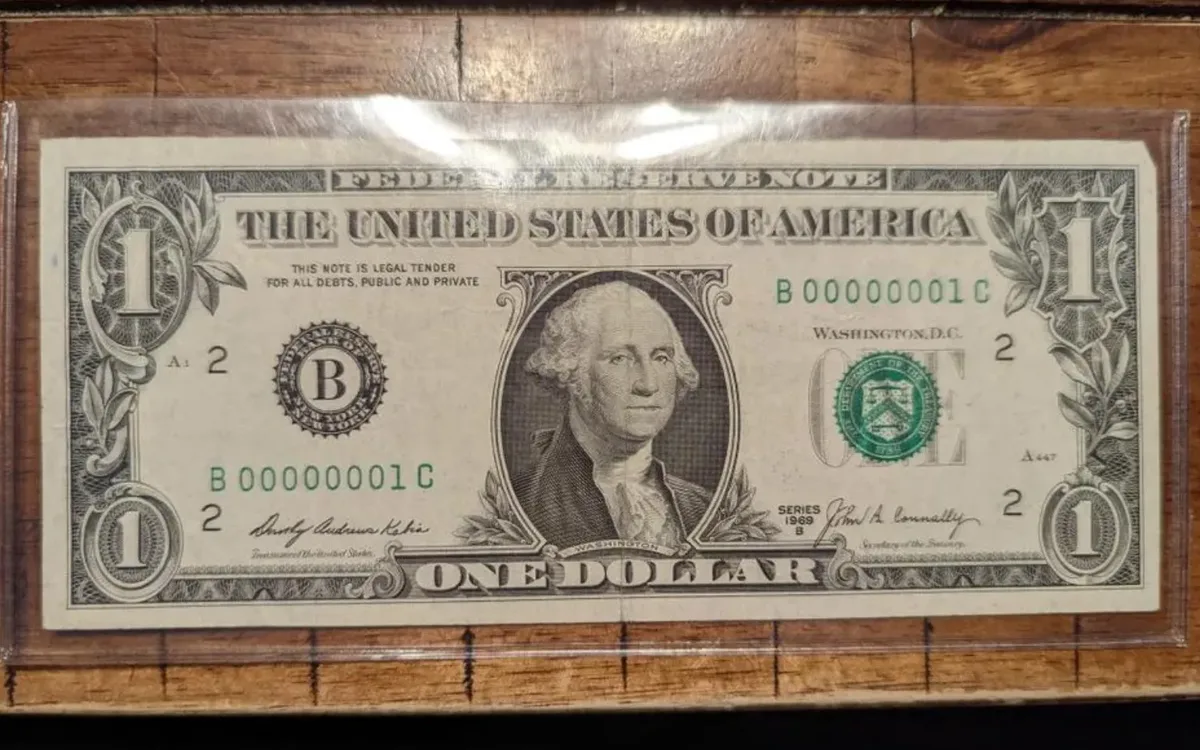
- Bills can range from face value to $15,000 or more — a $1 note with serial
00000001recently made headlines from a vending machine. - The most valuable US error note ever, the 1996 Del Monte $20, sold for $396,000 at Heritage Auctions in January 2021.
- Use free tools like MyCurrencyCollection, U.S. Currency Auctions, and eBay sold listings to confirm value before you spend a suspect bill.
Below, I unpack exactly how to read a serial number, which patterns matter, what they’re worth in 2026, and where to sell if you find one.
What Is a Money Serial Number Lookup?
A money serial number lookup is the process of checking a bill’s eight-digit serial number against collector databases to see whether it belongs to a rare pattern, a small print run, or a printing error worth more than face value.
Every US bill carries a unique serial number, printed twice on the front — top-right and bottom-left. That number encodes the series year, the issuing Federal Reserve Bank, and the note’s place in a specific print run. Collectors treat certain patterns like lottery tickets.
Three types of bills consistently sell above face value:
- Star notes — replacement bills printed after a defective note was destroyed
- Fancy serial numbers — patterns like
12345678,88888888, or07041776 - Error notes — bills with visible printing mistakes
The tools you’ll use are free, and the check takes under a minute per bill.
How Do You Read a Dollar Bill Serial Number?
You read a US dollar bill serial number by breaking it into three parts: a prefix letter (or letters), eight digits, and a suffix letter (or a star). Each part tells you something specific about when, where, and how the note was printed.
Here is what each element means, based on official guidance from the Bureau of Engraving and Printing:
- Prefix letter(s): On $1 and $2 notes, this letter matches the issuing Federal Reserve Bank. On $5 and higher notes, the first letter identifies the series year, and the second letter identifies the issuing bank.
- Eight digits: The unique number of the note within its block, ranging from
00000001to99999999. - Suffix letter: Rolls over each time the printer reaches the top of a block.
- Star (★): Replaces the suffix letter when the note is a replacement for a destroyed defective bill.
The prefix and suffix together are called the “block,” and each block runs from 1 to about 96 million notes on modern presses.
Which Federal Reserve Bank Printed My Bill?
Your Federal Reserve Bank is identified by a single letter — either in the circular seal on $1 and $2 notes, or in the serial-number prefix on $5 and higher notes. Twelve banks share the workload nationwide.
| Letter | Number | Federal Reserve Bank |
|---|---|---|
| A | 1 | Boston |
| B | 2 | New York |
| C | 3 | Philadelphia |
| D | 4 | Cleveland |
| E | 5 | Richmond |
| F | 6 | Atlanta |
| G | 7 | Chicago |
| H | 8 | St. Louis |
| I | 9 | Minneapolis |
| J | 10 | Kansas City |
| K | 11 | Dallas |
| L | 12 | San Francisco |
Knowing your bank matters because some districts print smaller runs of certain series, which makes their notes scarcer and more valuable. Full identifier definitions live on the U.S. Currency Education Program site.
What Is a Star Note and Why Are They Valuable?
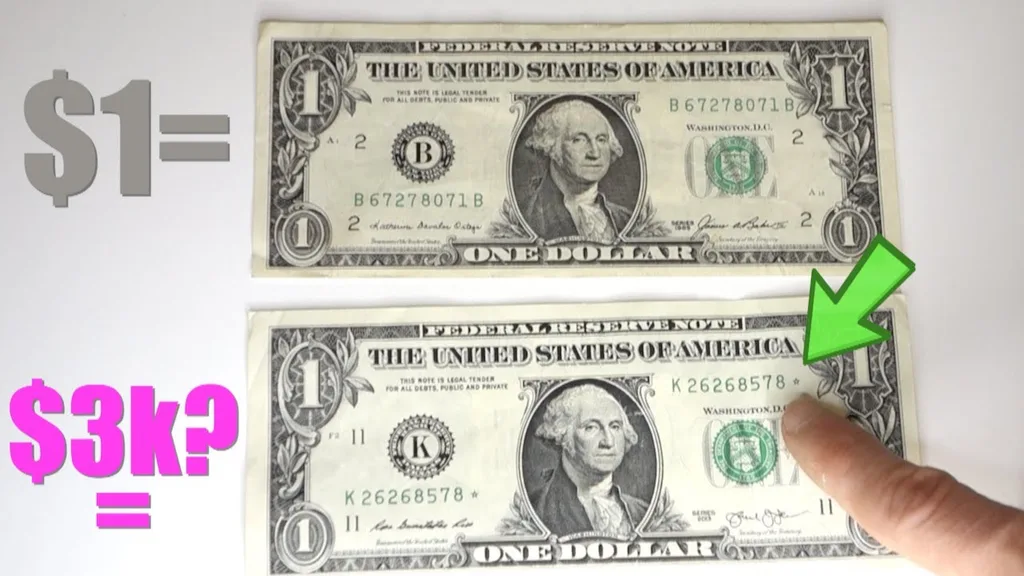
A star note is a replacement bill printed by the Bureau of Engraving and Printing after a defective note is destroyed during quality control. Instead of duplicating the destroyed note’s serial number, the BEP prints a fresh number and adds a small star at the end to flag it as a replacement.
Star notes are scarcer than regular notes because they only print in special batches. The industry-standard rarity thresholds are:
- Under 640,000 notes — considered rare and collectible
- 160,000 or fewer — highly scarce
- 16,000 or fewer — extremely rare, often auction-worthy
Historically, a standard BEP press run was 20,000 sheets of 18 notes each, for a total of 360,000 notes per run. Modern runs can climb as high as 3.2 million notes, which pulls value down significantly.
The 2013 Duplicate Star Note Case
The most famous modern star-note story involves a documented BEP error. In 2013, the bureau accidentally reused identical star serial numbers across two different facilities — one in Washington, D.C. and one in Fort Worth. A collector who owns a matched pair from both facilities holds a set that has sold for $25,000 to $150,000 at auction, depending on grade and provenance.
The affected series is Series 2013 $1 notes from the New York Fed within these ranges:
B00000001★throughB00250000★(Washington, D.C.)B03200001★throughB09600000★(Fort Worth)
If you have a Series 2013 $1 star note from the New York Fed, check the serial number before spending it.
What Are Fancy Serial Numbers?
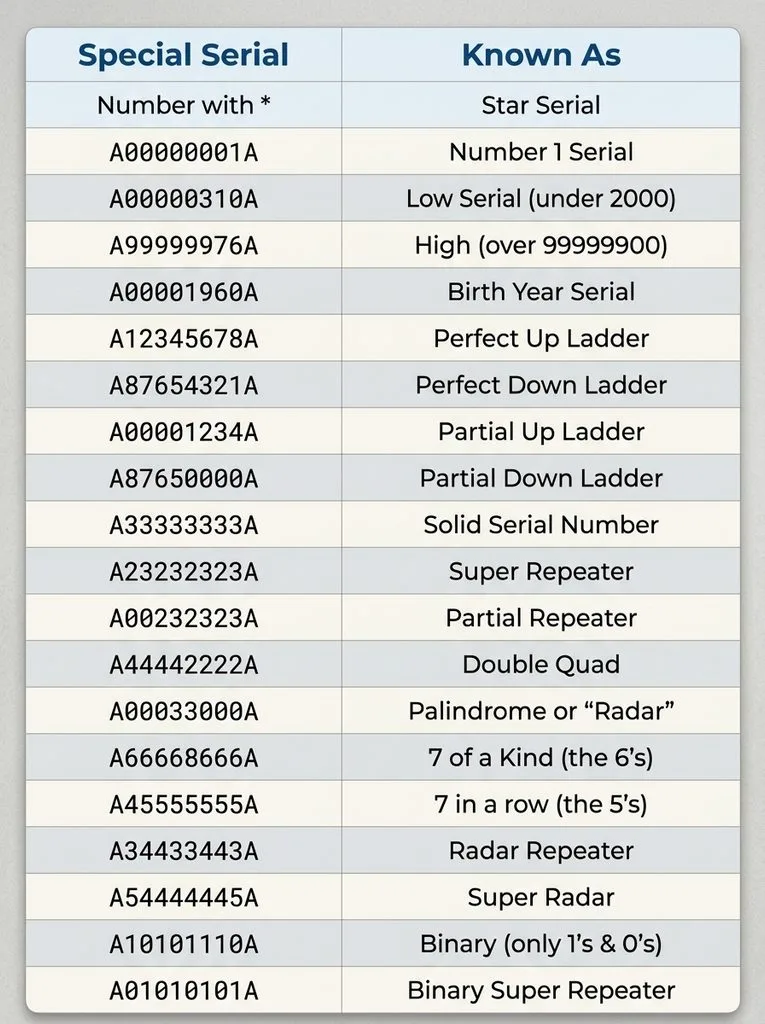
A fancy serial number is any eight-digit pattern that stands out from a random sequence. Collectors chase them because true patterns appear on just a handful of bills out of millions printed.
There are roughly 15 recognized fancy categories. Each one carries a different market range. Values below reflect uncirculated $1 notes and pull from live pricing on U.S. Currency Auctions, MyCurrencyCollection, and completed eBay sales as of 2026.
1. Low Serial Numbers
Any note whose serial number starts with five or more zeros qualifies as “fancy low.” The more leading zeros, the higher the premium.
0000XXXX— slightly over face value00000XXX— $30 to $75000000XX— $100 to $3000000000X— $500 to $1,000+00000001— legendary status; can bring $15,000
Real story: A man in Parkersburg, West Virginia recently pulled a $1 bill with serial number G00000001I from a vending machine. Numismatic experts valued the note at up to $15,000 because it was the first bill printed in its Chicago Fed series.
2. High Serial Numbers
Numbers near the top of a print block also carry a premium, especially since modern blocks now roll over at 96,000,000 rather than the full 99,999,999.
99999XXX— $50 to $75999999XX— $100 to $3009999999X— $500+
3. Solid Serial Numbers
Every single digit is identical — 77777777, 88888888, 33333333. Only one in roughly 11 million notes qualifies. Values from U.S. Currency Auctions:
- $1 solid: $600–$1,200 circulated, $1,400+ uncirculated
- $2 solid: $1,500–$4,600 circulated, $5,000+ uncirculated
- $5–$20 solid: $600–$1,200 circulated, $1,400+ uncirculated
- $50–$100 solid: $800–$1,800 circulated, $2,400+ uncirculated
Solid 88888888 bills carry an extra premium in Asian collector markets, where the number 8 symbolizes prosperity.
4. Ladder Serial Numbers
A true ladder counts in perfect sequence — 12345678 or 87654321. Only 96 true ladders exist per block, which is why they command:
- $1 ladder: $500–$1,300 circulated, $1,600+ uncirculated
- $2 ladder: $1,600–$2,400 circulated, $3,000+ uncirculated
- $100 ladder: $1,000–$1,800 circulated, $2,200+ uncirculated
Broken ladders like 12345876 don’t hit the same ceiling but still sell in the $50–$200 range.
5. Radar (Palindrome) Serial Numbers
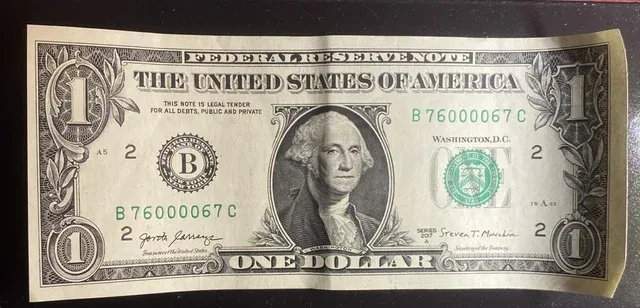
A radar reads identically forwards and backwards — 06288260, 35888853. The name comes from the palindrome “r-a-d-a-r.”
- Basic radar: $25–$50 on $1 bills
- Super radar (pattern
AXXXXXXAwith seven identical middle digits): $45 circulated, up to $220+ uncirculated on a $100 note - Binary radar or repeater radar: commands higher premiums because it combines two fancy traits
6. Repeaters and Super Repeaters
- Repeater: the first four digits equal the last four —
74627462. Sells for $25–$50. - Super repeater: the first two digits repeat four times —
39393939. Sells for $100–$300.
7. Binary and Trinary Serial Numbers
- Binary: only two distinct digits —
74477477. Value: $20–$75. - True binary: only zeros and ones —
01011010. Value: $40–$150. - Trinary: only three distinct digits —
79557977. Small premium over face.
8. Bookends
The first and last digits match — 83445783. A $1 bookend sells for around $3 over face, but combined with another fancy trait it multiplies quickly.
9. Birthday Notes
A birthday note reads as a real calendar date in MMDDYYYY format — 07041776, 12251999. Sales data from Reddit and eBay confirms:
- Generic date: $5 to $15 above face
- Match to a buyer’s actual birthday: $30 to $50
- Historic date like the signing of the Declaration of Independence: significantly higher
If you’re saving proceeds from a currency find, consider parking the money in one of the best savings accounts rather than letting it sit in checking.
10. Consecutives, Doubles, and Quad Doubles
- Consecutives: two notes numbered one digit apart, sold as a set for 15–25% over face each
- Quad doubles: first four digits repeat, last four digits repeat —
55553333 - Doubles: repeating pairs like
11223344
How Do I Look Up a Serial Number for Free?
You look up a serial number for free by entering it into an online fancy-serial checker or star-note database, then cross-referencing the flagged pattern against real auction and eBay sold prices. The whole process takes under two minutes per bill.
Follow this simple workflow:
- Find the serial number. It appears twice — upper right and lower left on the front of the bill.
- Check for a star. A ★ at the end means star note; skip to a star-note tool.
- Note the series year. Printed near the portrait.
- Identify the Federal Reserve Bank. From the seal or the prefix letter.
- Run the number through a fancy serial checker. Free tools flag every pattern instantly.
- Cross-reference with a price guide. Match the flagged pattern to a market range.
- Filter eBay for sold listings. Ignore asking prices; only look at completed sales.
Best Free Money Serial Number Lookup Tools
- MyCurrencyCollection Fancy Serial Checker — instant pattern detection
- MyCurrencyCollection Star Note Lookup — pulls run sizes from BEP data
- U.S. Currency Auctions Price Guide — verified market ranges
- SerialWorth — combines run sizes with eBay sold-price history
- Banknote Serial Checker — good for birthday note verification
Not every identifier people type into search is currency-related. For example, a CPN number is a personal-finance identifier that gets confused with paper-money serials in Google results — different world entirely.
What Are the Categories of US Paper Money?
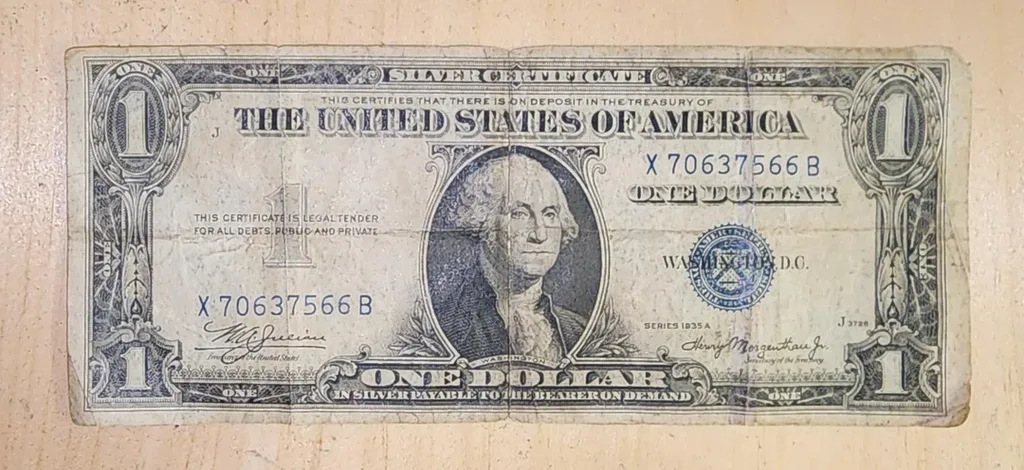
US paper money falls into five main historical categories, and the seal color on the front is the fastest visual filter for value. Any non-green seal is worth a closer look, regardless of the serial number.
- Federal Reserve Notes (green seal): current bills; base value is face value
- Silver Certificates (blue seal): issued 1928–1957; $1 blue seal $2–$20, $10 blue seal $30–$5,000
- United States Notes (red seal): issued through 1971; $2 and $5 red seals $10–$2,500
- Gold Certificates (gold seal): issued 1928; hundreds to thousands
- National Bank Notes: local pre-1935 issues; often four-figure collectibles
2026 Fancy Serial Number Value Chart
Here is a consolidated 2026 value table for uncirculated notes, drawing from U.S. Currency Auctions, MyCurrencyCollection, and recent eBay sold data.
| Serial Type | $1 | $2 | $5–$20 | $50–$100 |
|---|---|---|---|---|
| Ladder (true) | $1,600+ | $3,000+ | $1,600+ | $2,200+ |
| Solid (77777777) | $1,400+ | $5,000+ | $1,400+ | $2,400+ |
| Super Radar | $120+ | $180+ | $130+ | $180–$220+ |
| Super Repeater | $100–$300 | $200–$500 | $100–$300 | $200–$500 |
| Low (0000000X) | $500–$1,000 | $700–$1,500 | $500–$1,000 | $700–$1,500 |
| Radar (basic) | $25–$50 | $50–$100 | $30–$75 | $75–$150 |
| Repeater | $25–$50 | $50–$100 | $25–$75 | $75–$150 |
| Binary | $20–$75 | $50–$150 | $25–$100 | $100–$250 |
| Small-run star note | $10–$500 | $50–$2,500 | $20–$800 | $100–$1,800+ |
| Birthday note | $5–$50 | $10–$75 | $10–$100 | $50–$200 |
Values collapse quickly for circulated notes. A crisp, uncirculated bill can command 5× to 10× the price of the same note with folds or stains.
How Much Do Printing Errors Add to a Bill’s Value?
Printing errors can turn an ordinary bill into a five- or even six-figure collectible, and they don’t depend on the serial number at all. The most valuable US error notes trade in the tens of thousands routinely.
Famous Error Note Sales
- The Del Monte Note — a 1996 $20 Federal Reserve Note with a Del Monte banana sticker accidentally printed into the bill — sold for $396,000 in January 2021, the highest US error-note price on record at the time
- 2013 Duplicate Star Note Pair — matched pair sold for $25,000 in October 2022; an earlier reported pair fetched $150,000
- Double Denomination Errors — a $50/$100 combo National Bank Note sold for $70,500 in 2023
Common error types to watch for:
- Misaligned serial numbers printed off-center or overlapping the seal
- Missing overprints — black serial number or Treasury seal never applied
- Inverted overprints — serials printed upside down
- Ink smears and offset transfers — ghost-images on the wrong side
- Cutting errors — extra margin from an adjacent note
- Obstructed printing — a foreign object (like a Del Monte sticker) blocked the press
Error notes typically sell for $100 to several thousand dollars, depending on how dramatic and rare the mistake is.
How Does Condition Affect a Bill’s Value?
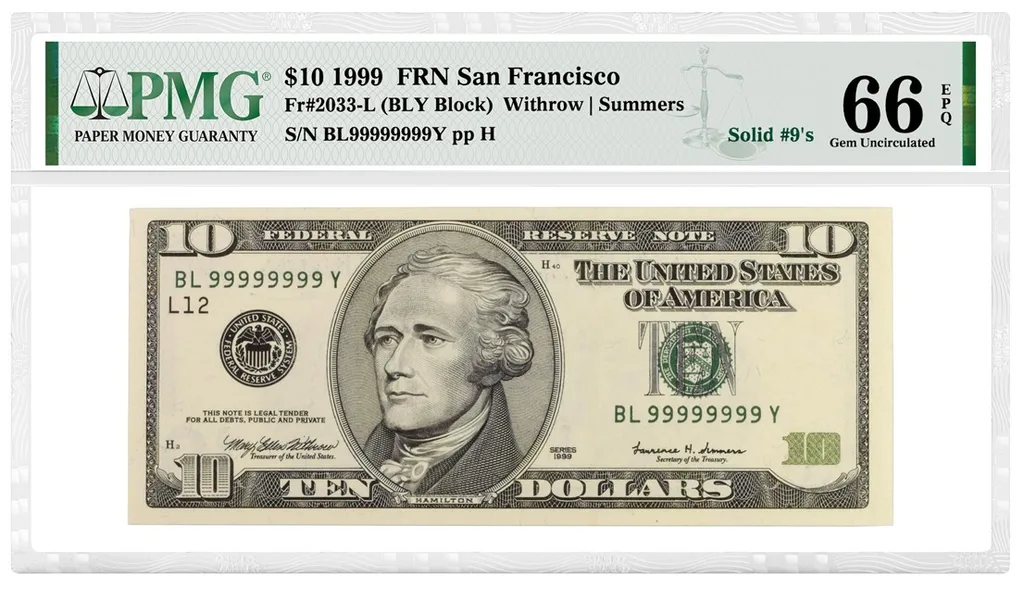
Condition drives paper-money value more than almost any other factor. A note graded PMG 70 EPQ can sell for 3× to 5× the same note graded 55.
Paper Money Guaranty (PMG) and PCGS Banknote both use a 1-to-70 scale adapted from the Sheldon coin grading system. Here is what each grade tier means:
- 1–15 (Poor to Fine): heavy circulation; usually face value plus a small premium
- 20–45 (Very Fine to Extremely Fine): moderate handling; solid collector notes
- 50–58 (About Uncirculated): minor handling; 60–80% of Uncirculated value
- 60–66 (Uncirculated): no wear; the sweet spot for most collectors
- 67–70 (Superb Gem Uncirculated): museum-grade; top-dollar territory
- EPQ (Exceptional Paper Quality): original paper crispness with no restoration
Is Professional Grading Worth It?
Professional grading is worth it when your expected sale price clears roughly $200 or more. As of 2026, PMG’s tier pricing runs:
- Standard tier: $65 per note
- Express tier: $145 per note
- WalkThrough tier: $350 per note
Add a $10 handling fee per submission plus shipping and insurance. A slabbed Gem Uncirculated note typically sells for 2–4× the value of the same note raw.
Where Can I Sell a Rare Dollar Bill?
You can sell a rare dollar bill through auction houses, online marketplaces, coin shops, or collector forums. The sale channel you choose depends mainly on the note’s estimated value.
Here are the best options ranked by price bracket:
- Heritage Auctions and Stack’s Bowers — the two biggest currency auction houses; best for notes worth $500+
- GreatCollections — strong for radar and fancy serial specialists
- eBay — best for $10 to $500 finds; use “sold listings” to price accurately
- Local coin and currency dealers — quick cash but expect 40–70% of retail
- PaperMoneyForum and r/papermoney — free evaluations plus private-treaty sales
- Executive Currency and specialty dealers — good for high-grade fancy serials
If unexpected debt is pushing you toward a quick sale, weigh whether debt consolidation is a smarter play than liquidating a collectible below market.
How Should I Protect a Valuable Note?
Protect a valuable note the moment you identify it. A single fold or fingerprint can slash market value by 50% or more, so treat any suspect bill like a fragile document.
Follow these seven habits collectors use daily:
- Handle by the edges only — skin oils degrade paper over time
- Slip it into a Mylar sleeve immediately — avoid PVC, which leaches chemicals
- Store flat in a climate-controlled space — target 45–55% humidity
- Never staple, tape, or write on the note — any alteration destroys collector value
- Photograph both sides in high resolution — documentation matters at sale time
- Use a safe deposit box for anything over $1,000 — homeowner’s insurance rarely covers currency at collector value
- Keep the note flat, not folded, in a rigid holder — creases can never be reversed
What Are Common Money Serial Number Myths?
Three myths regularly cost people money on both ends of the trade. Sort them out before you buy, sell, or spend a suspect bill.
- Myth 1: “Every old bill is worth a fortune.” False. Most circulated $1 and $5 notes from the 1970s onward are worth face value unless they carry a fancy serial, star, or printing error.
- Myth 2: “Consecutive serial numbers are always valuable.” Not really. Two random consecutives bring roughly 20% over face; only consecutives with an additional fancy trait command real premium.
- Myth 3: “Any star note is worth hundreds.” Only star notes from small print runs (under 640,000) in strong condition earn meaningful premium.
Cross-reference every lookup result against two independent sources before you celebrate.
How Can I Build a Serial Number Checking Habit?
You build a serial number habit the same way you build any small routine — automation, low friction, and a fixed reward loop. Experienced collectors scan every bill that passes through their hands, and the process takes three seconds.
Three practical tips to make it stick:
- Set a phone shortcut to your favorite fancy serial checker
- Photograph interesting numbers immediately so you don’t accidentally spend them
- Request “star notes only” straps at the bank — some tellers will indulge you
- Join r/papermoney or PaperMoneyForum to sanity-check finds before selling
Currency collecting also complements broader wealth-building. For the retirement side of that equation, our overview of what a 401(k) is puts small collectible gains in the context of long-horizon savings.
Frequently Asked Questions
Which dollar bill serial numbers are actually worth money?
Notes with fancy patterns — low serials, star notes, solids, ladders, radars, super repeaters, and birthday notes — are the ones collectors pay premiums for. A generic serial on a modern bill is worth face value.
How do I look up a serial number for free?
Use the MyCurrencyCollection Fancy Serial Checker for pattern detection and the Star Note Lookup for replacement bills. Both are free and pull from BEP production data. Cross-reference on eBay’s completed listings to confirm real sale prices.
Is a $1 bill starting in multiple zeros valuable?
Yes, usually. A $1 with five leading zeros sells for $30–$75. Six leading zeros push to $100–$300. Seven zeros — meaning a serial from 1 to 9 — can bring $500–$1,000, and the legendary 00000001 can hit $15,000.
What makes one star note more valuable than another?
Print-run size, series year, denomination, and condition. Star notes from runs under 640,000 are considered rare. Anything under 160,000 is highly scarce, and runs under 16,000 are extremely rare. Older series and higher denominations in uncirculated grade command the biggest premiums.
Where can I sell a rare dollar bill for the best price?
Heritage Auctions and Stack’s Bowers deliver the best price for notes above $500. eBay works well in the $10–$500 range. Local coin dealers pay 40–70% of retail for instant cash. PaperMoneyForum and specialty dealers like Executive Currency handle private sales cleanly.
Should I get my bill professionally graded by PMG or PCGS?
Only grade notes you expect to sell for $200 or more. PMG’s 2026 standard tier costs $65 per note plus fees. A slabbed Gem Uncirculated note typically sells for 2–4× the value of the same note raw, so grading pays off on high-grade finds.
Are older bills always worth more than newer ones?
Not automatically. Age helps only when combined with scarcity. A 1928 $2 red seal is worth $50–$500, but a 1976 $2 is usually face value unless it has a star or fancy serial. Read the seal color and series year alongside the serial pattern.
Can a printing error be worth more than a fancy serial number?
Absolutely. The 1996 Del Monte $20 error sold for $396,000 in 2021 — more than almost any fancy serial in history. Dramatic errors like missing overprints, mismatched serials, and inverted seals routinely bring $100 to several thousand dollars.
Final Thoughts
A money serial number lookup takes less time than checking the weather and can turn a forgotten dollar into a genuine collectible. The habits are simple: glance at the serial before you spend anything, sleeve suspect notes until you’ve cross-referenced two lookup tools, and grade the ones that clearly clear the $200 threshold.
Ordinary paper occasionally hides extraordinary numbers, and 2026 is a strong year for collector demand across star notes, fancy serials, and error notes. Next time you break a $20, look at the numbers first — then decide whether to spend it or slip it into a sleeve.


Leave a Reply