
In this article
- Quick Answer: What Is a CPN?
- What Is a CPN Number? A Plain-English Definition
- Where Did This “Credit Privacy Number” Myth Come From?
- Is a CPN Legal in 2026? The Direct Answer
- Federal Laws a CPN Actually Violates
- CPN vs SSN vs ITIN vs EIN: Which Numbers Are Real?
- How Are CPNs Actually Manufactured? The Ugly Truth
- Synthetic Identity Fraud: The Bigger Crime Wave
- The Anatomy of a CPN Sales Pitch
- 10 Red Flags That Scream “CPN Scam”
- What Happens When You Actually Use a CPN?
- CPN Fraud in Real Life: What Enforcement Looks Like
- Why CPNs Are Booming on Rental Applications
- “How Do I Get a CPN Number?” — The Honest Answer
- Legitimate Ways to Rebuild Credit That Actually Work
- Credit-Rebuilding Options at a Glance
- What Lenders Actually See When You Submit a Fake SSN
- What to Do If You Already Bought a CPN
- How to Protect Your Real SSN Going Forward
- A Realistic 12-Month Credit Rebuild Plan
- The Bottom Line on CPNs
- Frequently Asked Questions About CPN Numbers
Scroll TikTok for five minutes and you’ll bump into it: a slick promise that a mystery nine-digit number can wipe your credit history clean, hand you a fresh 700 score, and get you approved for cars, apartments, and cards you’d otherwise be denied. That number goes by three names — Credit Privacy Number, Credit Profile Number, Credit Protection Number — but the pitch is always the same: pay a few hundred dollars, use it in place of your Social Security number, and start over.
Here’s the truth nobody selling these numbers wants you to hear. A CPN is not a shortcut. It’s a federal crime waiting to happen, and the people getting the worst end of it aren’t the scammers — they’re the buyers, and the children, seniors, and incarcerated Americans whose real SSNs are being resold as “clean files.”
Let’s walk through exactly what a CPN is, why every major U.S. authority calls it fraud, what actually happens if you use one, and — importantly — what genuinely works when you’re trying to fix a bruised credit report.
Quick Answer: What Is a CPN?
- A CPN is a nine-digit number formatted like a Social Security number and sold as a “replacement” SSN for credit applications.
- No government agency issues a CPN. The Social Security Administration, IRS, and every federal regulator refuse to recognize it.
- Using a CPN is a federal crime. It qualifies as identity theft and false statements on a credit application, punishable by fines and prison.
- There’s no legal way to buy or “get” one. Every seller is either handing you a randomly generated number that will fail, or a stolen SSN that puts you on the wrong side of a fraud investigation.
- Legitimate alternatives exist — secured cards, credit-builder loans, authorized-user status, Experian Boost, and disputing errors — and they work within months.
What Is a CPN Number? A Plain-English Definition
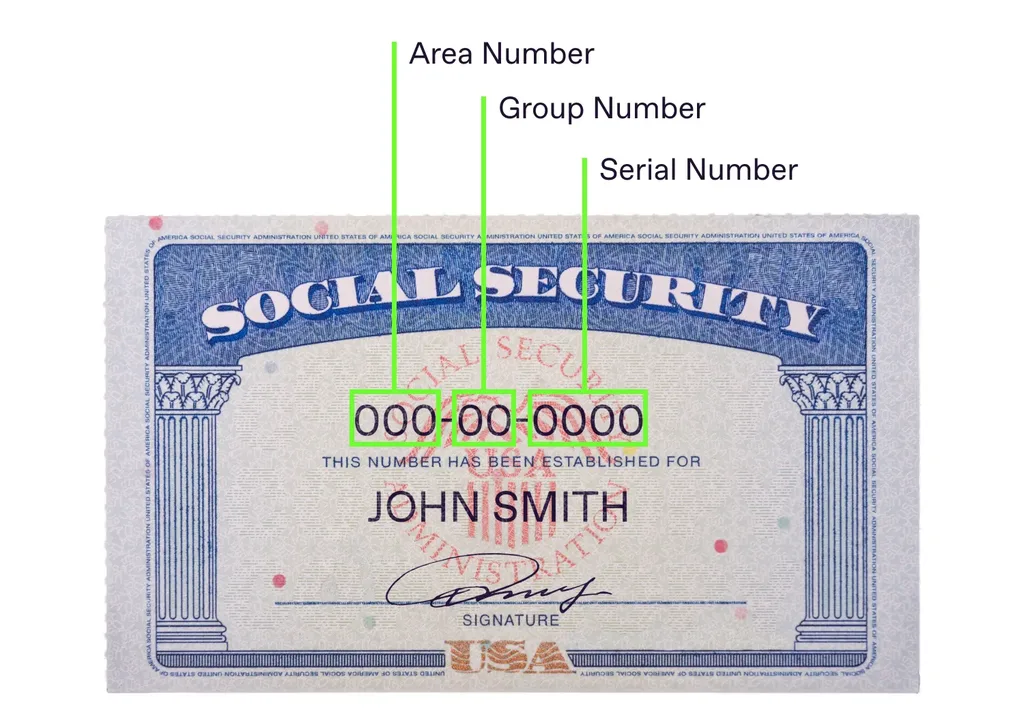
A CPN is a nine-digit string laid out in the classic XXX-XX-XXXX Social Security format. Marketers pitch it as a “private” or “commercial” identifier that you can plug into the SSN box on any credit or rental application without triggering a lookup of your real credit history.
That’s the fantasy. The reality is that no legitimate authority — not the SSA, not the IRS, not the three major credit bureaus, not any consumer-finance regulator — has ever created, issued, or endorsed such a number. The three most common CPN acronyms all point to the same fabricated product:
- Credit Privacy Number
- Credit Profile Number
- Credit Protection Number
Experian, Chase, and TransUnion consumer guides use these interchangeably, and every one of them lands on the same bottom line: the number is fake and using it as an SSN substitute is fraud.
Where Did This “Credit Privacy Number” Myth Come From?
CPN sellers lean hard on the Privacy Act of 1974, claiming the law lets you refuse to hand over your Social Security number to a lender and swap in a “private” number instead. That’s a wildly creative reading of a statute that has nothing to do with private credit.
The Privacy Act only limits how federal agencies collect and disclose records about individuals. It doesn’t govern how a bank, apartment community, or credit-card issuer verifies your identity. It doesn’t authorize a parallel numbering system, and it certainly doesn’t create a class of “commercial SSNs.” The Department of Justice’s overview of the Privacy Act of 1974 makes the scope of the law explicit, and none of it supports the CPN pitch.
You’ll also hear sellers whisper that “celebrities and politicians all use these.” No verifiable example has ever surfaced. When wealthy Americans want to reduce their SSN footprint, they use trusts, LLCs, and — for business use — an Employer Identification Number (EIN) issued free by the IRS. None of those tools substitute for an SSN on a personal credit application.
Is a CPN Legal in 2026? The Direct Answer
Owning a random nine-digit number by itself isn’t illegal. Using that number on a credit, rental, employment, or loan application is where felony charges begin.
Every major U.S. authority converges on the same conclusion:
- The Federal Reserve Bank of St. Louis calls CPN schemes “illegal” and warns that buyers commit “identity theft and making false statements on a loan or credit application.”
- Experian states that using a CPN can be identity theft and is a federal crime, even when the number is randomly generated rather than stolen.
- Chase confirms that CPNs “are not legitimate or legal” and are not recognized by the SSA or any government agency.
- The U.S. Department of Justice has prosecuted rings that used fabricated identifiers on credit applications, including a North Carolina credit-fraud conspiracy that ended in guilty pleas.
Notice the pattern: the crime isn’t in possessing the number, it’s in submitting it. The moment your fingers type it into an “SSN” field, several federal statutes activate at once.

Federal Laws a CPN Actually Violates
| Statute | What It Covers | Typical Maximum Penalty |
|---|---|---|
| 18 U.S.C. § 1028 | Fraud with identification documents | Up to 15 years + fines |
| 18 U.S.C. § 1028A | Aggravated identity theft | Mandatory extra 2 years, consecutive |
| 18 U.S.C. § 1014 | False statements on loan/credit applications | Up to 30 years + up to $1M fine |
| 18 U.S.C. § 1001 | False statements in a federal matter | Up to 5 years |
| 18 U.S.C. § 1343 | Wire fraud (electronic submissions) | Up to 20 years |
| State ID-theft laws | Vary by state | Additional prison + restitution |
Prosecutors don’t need to prove you personally stole the CPN. Under § 1028A, an “aggravated identity theft” conviction only requires that you knowingly used a means of identification that turned out to belong to a real person — and CPNs frequently do, since sellers harvest them from vulnerable populations.
CPN vs SSN vs ITIN vs EIN: Which Numbers Are Real?
Part of the CPN confusion comes from the alphabet soup of legitimate nine-digit identifiers. Here’s the honest side-by-side:
| Identifier | Issued By | Purpose | Legal on a Personal Credit App? |
|---|---|---|---|
| SSN — Social Security Number | Social Security Administration | Personal ID, taxes, credit | ✅ Yes — this is what you must use |
| ITIN — Individual Taxpayer Identification Number | IRS | Tax filing for people ineligible for an SSN | ✅ Yes — many issuers accept it |
| EIN — Employer Identification Number | IRS | Business tax and banking | ✅ For business credit only |
| CPN — Credit Privacy Number | ❌ No agency | ❌ Marketed as SSN replacement | ❌ Never — using it is federal fraud |
The IRS confirms ITINs are the only legal alternative for a person who cannot get an SSN. Nothing in the tax code or the federal register mentions a “credit privacy” number.
How Are CPNs Actually Manufactured? The Ugly Truth
Here’s the part sellers hide in the fine print (if it even exists). When you buy a “clean” nine-digit number, you’re often buying a stolen SSN from someone who won’t discover the theft for years.
Chase explains the source pipeline bluntly: “CPNs are often SSNs obtained illegally from vulnerable populations, like children, seniors and prison inmates.” The consumer-development team at the Federal Reserve Bank of St. Louis reaches the same conclusion in its research.
Why those three groups?
- Children haven’t opened credit yet, so their SSN pulls a blank, clean file.
- Elderly Americans with paid-off homes and no recent credit activity also produce clean pulls.
- Long-term prison inmates have no recent credit history and often can’t monitor their reports from inside.
The consequences ripple for decades:
- A child turns 18, applies for a student loan, and discovers repossessions, evictions, and defaulted accounts they never opened.
- A senior gets denied for a mortgage refinance because of debts strangers ran up in their name.
- An inmate re-enters society and finds their identity in shambles.
Some sellers do generate numbers randomly, but the Social Security Administration continually assigns fresh numbers within existing ranges. That “random” CPN today may collide with a real newborn’s SSN tomorrow. Either way, the road leads to synthetic identity fraud.
Synthetic Identity Fraud: The Bigger Crime Wave
CPN sales don’t operate in a vacuum. They’re the retail edge of synthetic identity fraud (SIF) — a scheme where criminals mix real and fake identifiers to build entirely fabricated “people.”
The scale is staggering:
- The Federal Reserve calls SIF the fastest-growing financial crime in the United States.
- Losses crossed $35 billion in 2023, according to Boston Fed reporting.
- Industry analysts project AI-generated fraud losses could climb from roughly $12 billion in 2023 to $40 billion by 2027.
- TransUnion’s mid-2025 fraud report documented more than 16,000 U.S. data breaches in the first half of 2025 alone, feeding fresh raw material into every synthetic-identity marketplace on the dark web.
When you buy a CPN, you’re not stepping outside this ecosystem — you’re stepping into the middle of it.
The Anatomy of a CPN Sales Pitch
Recognize the pattern once, and you’ll spot it in ten seconds every time afterward. A typical CPN sales funnel looks like this:
- The bait post. A short video promises “how I fixed 500-point credit in 30 days.” No SSN talk yet — just the “life change.”
- The DM invite. Interested viewers are asked to message a burner account for “the process.”
- The pitch. Sales rep introduces the CPN as a “legal SSN alternative” backed by the “Privacy Act.”
- The upsell. The base CPN runs $100–$500. Add-on “seasoned tradelines” and “authorized user spots” push the total to $1,500–$3,500.
- The payment. Payment through Cash App, Zelle, or crypto — never a traceable card.
- The handoff. Buyer receives a Google Doc with a nine-digit number, a fake “letter of authenticity,” and coaching to use a slightly different address and date of birth for consistency.
- The ghosting. The Instagram or TikTok account disappears within weeks, taking the seller’s identity with it.
Every step is engineered to look professional while shedding accountability. The moment the buyer submits that number to a lender, the seller is untouchable and the buyer wears the fraud.
10 Red Flags That Scream “CPN Scam”
You don’t need a law degree to sniff these out. If a service offers any of the following, walk away:
- Promises a “new credit file”, “fresh start”, or “legal SSN alternative”
- Guarantees a specific score (like “720+ in 30 days”) after purchase
- Charges anywhere from $100 to $3,500 for a single number
- Cites the Privacy Act of 1974 as legal authorization
- Bundles the CPN with “seasoned tradelines” or paid authorized-user slots on strangers’ cards
- Instructs you to use the CPN only “for credit,” while keeping your real SSN for taxes and employment
- Provides a fake “letter of authenticity” or claims the number is IRS-verified
- Operates through disposable social accounts with no verifiable business address, EIN, or state license
- Insists on payment through Cash App, Zelle, cryptocurrency, or gift cards
- Coaches you to change your date of birth or address to match the CPN’s “identity profile”
That last one is the giveaway. Any coaching that requires layering additional falsehoods on top of the number is a criminal conspiracy dressed up as credit repair.
What Happens When You Actually Use a CPN?
Best case, you paid for a useless number and never submitted it. Every worse case snowballs from there:
- Immediate application denial. Modern lender fraud engines flag mismatched identifiers within seconds.
- Blacklisting. Lenders share fraud data across a shared industry-wide database. One flagged application can lock you out of major issuers for years.
- Account closure and clawback. If a card or loan was opened before the fraud was detected, the lender can close it, demand full repayment, and report the incident to bureaus.
- Civil suits. Landlords, lenders, and utilities can sue for damages, back rent, and legal fees.
- Criminal referral. Cases routinely turn into federal bank-fraud, wire-fraud, mail-fraud, and identity-theft charges.
- Restitution and a permanent record. A federal fraud conviction throws up walls in future employment, housing, and professional licensing — including nursing, real estate, financial services, and many state contractor licenses.
Ignorance is not a defense under 18 U.S.C. § 1028A. If the number happens to belong to a real person, the buyer becomes the identity thief — regardless of how the number was originally acquired.
CPN Fraud in Real Life: What Enforcement Looks Like
The idea that regulators “don’t really prosecute this stuff” is another myth CPN sellers push. Recent enforcement paints a very different picture:
- DOJ prosecutions. Federal prosecutors in North Carolina secured guilty pleas from a group who defrauded financial institutions and credit issuers through a fabricated-identity scheme.
- FTC enforcement. The Federal Trade Commission won a $10.9 million judgment against a sprawling credit-repair pyramid scheme called Financial Education Services, distributing refunds to victims and permanently banning the operators from the industry.
- State attorneys general. Multiple states have brought parallel enforcement actions against CPN sellers under UDAP (unfair, deceptive, or abusive practices) statutes.
DOJ’s Fraud Section alone charged 265 individuals in 2025, per year-in-review reporting from major law firms — and identity- and credit-fraud cases are a growing slice of that mix. The “won’t happen to me” defense doesn’t survive contact with a fraud-detection engine.
Why CPNs Are Booming on Rental Applications
Landlords across the country are seeing a sharp spike in applicants submitting fabricated identifiers. Law firm Honigman LLP flagged the trend for property owners: “Fueled by social media, this trend is on the rise. Recent reports highlight a large increase in rental applications that involved fraud or identity theft.”
The mechanics are simple:
- An applicant with an eviction or bankruptcy buys a CPN.
- They submit it on the rental application in place of their SSN.
- Automated screeners pull a clean, thin credit file and approve them.
- The landlord doesn’t discover the deception until rent stops.
For applicants, the trade is grim: a lease you can’t afford under an invented identity, plus a federal fraud investigation once the property’s screening company detects the anomaly. For landlords, prevention comes down to matching the SSN on file to a government-issued photo ID and confirming employment and income directly with the employer. If a real applicant with weak credit is trying to strengthen a legitimate application, adding a lease guarantor is the honest path forward.
“How Do I Get a CPN Number?” — The Honest Answer
This is one of the most-searched credit questions in America, so I’ll answer it directly rather than dance around it.
You cannot legally obtain a CPN, because no legitimate agency issues one. Every service offering to sell you one is doing one of two things:
- Randomly generating a nine-digit number — worthless if it doesn’t match a real record, catastrophic if it collides with a real SSN.
- Reselling a stolen SSN — most often lifted from a child, elderly person, deceased individual, or long-term inmate.
Either way, the second you write that number in an “SSN” field, you’ve committed a federal crime. That’s not a gray area, and it’s not a “victimless” workaround.
Now — if your goal is genuine SSN privacy for a legitimate reason, three legal paths exist:
- Business owners can request an EIN free from the IRS to keep their personal SSN off vendor and banking paperwork.
- Individuals ineligible for an SSN can apply for an ITIN to file taxes and, in many cases, open credit accounts.
- Verified victims of severe SSN misuse — including identity theft, family harassment, or life-safety threats — can apply to the SSA for a new SSN under narrow criteria. Approval is discretionary, evidence-heavy, and rare, but it does exist.
None of these paths involve buying a number online.
Legitimate Ways to Rebuild Credit That Actually Work
The Consumer Financial Protection Bureau’s guide to rebuilding credit recommends a small, boring, reliable toolkit that every credit bureau also endorses. It’s slower than a CPN pitch. It’s also legal, permanent, and dramatically cheaper.
1. Open a Secured Credit Card
A secured card requires a refundable cash deposit — usually $200 to $500 — which becomes your credit limit. Use it for small purchases, pay it off in full each month, and the issuer reports on-time payments to all three bureaus. Many secured cards graduate to unsecured status within 6 to 12 months. Choose one with no annual fee and confirmed reporting to Equifax, Experian, and TransUnion.
2. Take Out a Credit-Builder Loan
Credit-builder loans flip the traditional loan on its head. The lender — usually a credit union, community bank, or CDFI — holds the “borrowed” amount in a locked savings account while you make monthly payments. Every payment gets reported to the bureaus. When the loan finishes, you receive the money back minus modest interest. Independent tracking has shown that popular credit-builder programs produce average VantageScore 3.0 gains of roughly 47 points in the first 12 months. Pair the payout with one of the high-yield savings accounts to keep the momentum working for you.
3. Become an Authorized User
Ask a family member or trusted partner with well-managed credit to add you as an authorized user on their card. Their positive history — account age, on-time payments, low utilization — often reports on your credit file too. You don’t have to use the card; many authorized users never take physical possession of it. Just confirm ahead of time that the issuer reports authorized-user activity to the bureaus. Paying strangers to be added as an authorized user on their card is a separate, sketchier practice that most card agreements explicitly prohibit.
4. Report the Bills You’re Already Paying
Services like Experian Boost add utilities, mobile phone, streaming, insurance, and eligible rent payments to your Experian credit file at no cost. eCredable Lift and UltraFICO offer similar functionality with different scoring models. None of these services replace your SSN — they just give you credit for payments you already make on time.
5. Fix Errors on Your Existing Credit Report
The FTC estimates a meaningful share of consumers have inaccuracies on at least one bureau file. Pull all three reports at AnnualCreditReport.com — the only site authorized by federal law to provide free reports — and dispute anything wrong: incorrect balances, accounts that aren’t yours, outdated late payments, or entries past the seven-year window.
6. Address the Root Cause
If overwhelming balances are driving your credit damage, chasing a “new file” solves nothing. Consolidating high-interest debt, negotiating with collectors, or working with a nonprofit credit counselor produces real improvement. Our honest walk-through of when debt consolidation helps versus hurts covers the math without hype.

Credit-Rebuilding Options at a Glance
| Method | Cost | Time to See Impact | Risk Level |
|---|---|---|---|
| Secured credit card | $200–$500 refundable deposit | 1–3 months | Low |
| Credit-builder loan | Modest interest fee | 3–6 months | Low |
| Authorized user (family) | Free | 1–2 billing cycles | Depends on primary user |
| Experian Boost / eCredable | Free | Instant on Experian | Very low |
| Dispute report errors | Free | 30–45 days per dispute | None |
| Debt consolidation | Loan fees + interest | 6–12 months | Moderate |
| CPN | $100–$3,500 | Never legally | Federal crime |
What Lenders Actually See When You Submit a Fake SSN
A lot of CPN buyers imagine their fake number sails through review just because the credit pull looks “clean.” Modern underwriting engines don’t work like that. In real time, a single credit application typically runs through:
- Bureau identity verification — matching the submitted SSN against name, date of birth, address history, and prior file activity.
- Synthetic-identity screening — proprietary models (LexisNexis, SentiLink, Socure, and others) that flag inconsistencies between the applicant’s identity elements.
- Cross-application matching — checking whether the SSN has been used with different names or addresses on prior applications.
- Federal watchlist checks — including OFAC and FinCEN screening.
- Death Master File matching — flagging SSNs of deceased individuals against SSA records.
- Employment and income verification — through The Work Number or direct payroll integrations.
A random CPN fails one or more of those checks almost instantly. A stolen CPN might pass one, then trigger another downstream. And every rejection generates a permanent fraud record on the applicant’s file — a scar that follows the buyer far longer than any bad credit history they were trying to escape.
What to Do If You Already Bought a CPN
If you’ve paid for one but haven’t submitted it, you still have room to get out cleanly. Move fast:
- Do not use the number anywhere. The purchase alone rarely triggers prosecution. Submission is what activates federal statutes.
- Preserve the paper trail. Screenshot the ads, chats, payment receipts, and any “authenticity” letters. This is your evidence.
- Report the scam to the FTC through ReportFraud.ftc.gov, the FBI’s Internet Crime Complaint Center at IC3.gov, and your state attorney general.
- Attempt a chargeback. Credit-card purchases fall under the Fair Credit Billing Act. Cash App, Zelle, and crypto payments are harder to reverse, but worth trying.
- Freeze your credit at all three bureaus. It’s free, and it stops anyone — including the CPN seller who now has your real details — from opening accounts in your name.
- Enable a fraud alert. This lasts one year and forces lenders to verify identity before extending new credit.
- Monitor your SSN. CPN sellers now hold your legitimate personal data. Assume elevated identity-theft risk for at least the next 24 months.
If you already submitted the CPN to a lender, do not try to “explain it away” solo. Retain a consumer-protection or federal-defense attorney before speaking to anyone else. A voluntary, counsel-guided disclosure lands very differently from a fraud that gets uncovered later during an investigation.
How to Protect Your Real SSN Going Forward
Part of what fuels the CPN market is legitimate anxiety about SSN exposure — and given the parade of data breaches, that anxiety is fair. The legal SSN-protection stack looks like this:
- Free credit freeze at Equifax, Experian, and TransUnion. Thaw only when you’re actively applying for credit.
- Fraud alert for one-year cycles. Requires lenders to verify your identity before extending new credit.
- IRS Identity Protection PIN — a six-digit code that blocks anyone else from filing a tax return with your SSN. Free through your IRS online account.
- Annual SSA earnings review at ssa.gov/myaccount to catch fraudulent wages posted under your number.
- Refuse to share your SSN with any organization that can’t articulate a legal basis for collecting it. Doctor’s offices, gyms, and schools often ask out of habit, not necessity.
- Reputable identity-monitoring service plus strong, unique passwords and two-factor authentication on every financial account.
The FTC’s guide to credit freezes and fraud alerts is the clearest, cheapest starting point.
A Realistic 12-Month Credit Rebuild Plan
If you’d rather spend the next year rebuilding legally instead of hiding, here’s what most successful rebuilds look like — and it’s genuinely doable:
- Month 1: Pull all three bureau reports. Dispute every error. Freeze your credit if you’re not actively applying anywhere. Enroll in Experian Boost.
- Month 2: Open a no-annual-fee secured credit card with a $200–$500 deposit. Charge one small recurring bill (like a $10 streaming subscription) and set autopay in full every month.
- Month 3: Open a credit-builder loan through a credit union or CDFI. Keep utilization on the secured card under 10%.
- Months 4–6: Ask a trusted family member to add you as an authorized user on a well-managed card. Continue autopay-in-full on the secured card.
- Months 7–9: Request a credit-limit increase on the secured card (which lowers utilization). Check your reports again for accuracy.
- Months 10–12: Apply for a starter unsecured card or graduate your secured card. Complete the credit-builder loan and pocket the savings.
Nationally, the average American FICO score sits around 714 (as of late 2025) according to Experian’s aggregate data. Roughly 23% of consumers hold a FICO of 800 or higher. Reaching that “good” 670+ band from a subprime start typically takes 12 to 24 months of consistent habits — still faster than a federal sentence, and it doesn’t come with a criminal record.
If your finances are complex enough that you’re weighing multiple debt strategies, insurance decisions, or retirement contributions at once, working with a good financial advisor is one of the highest-ROI moves you can make.
The Bottom Line on CPNs
The CPN industry sells a fantasy: nine digits that erase bad decisions, defaults, or a rocky rental history. The reality is a scam that harvests Social Security numbers from vulnerable Americans, hands buyers a felony, and enriches sellers who vanish before consequences arrive.
Real credit rebuilding is unglamorous. You pull your reports, dispute errors, open a small secured card, pay it on time for six boring months, and add utility and rent payments to your Experian file through Boost. Within a year, most people see genuine, permanent improvement — no arrests, no clawbacks, no case number.
Anyone offering to sell you a “credit privacy number,” “credit profile number,” “legal SSN alternative,” or “clean credit file” is not a credit expert. They’re a fraud broker. Walk away, and put the money toward a real solution.
Frequently Asked Questions About CPN Numbers
1. Is it illegal to just own a CPN, or only to use one?
Owning a random nine-digit number by itself isn’t a crime. However, the moment you write that number in an SSN field on a credit, rental, employment, or loan application, you commit federal fraud under statutes including 18 U.S.C. § 1028 and § 1014. There is no safe “hold onto it just in case” scenario.
2. Can I legally use a CPN for rentals or utilities and keep my real SSN for taxes?
No. Every state and federal jurisdiction treats a rental or utility application as a document where misrepresenting a Social Security number is fraud. Sellers who describe this split-use approach as legal are lying, and the misrepresentation itself — not the tax context — triggers criminal liability.
3. Does the Privacy Act of 1974 actually let me refuse to give my SSN?
The Privacy Act limits how federal agencies collect Social Security numbers, and even then it typically requires those agencies to provide a Privacy Act Statement rather than allowing outright refusal. It doesn’t apply to private lenders, landlords, or credit-card issuers. Any pitch built on the Privacy Act is misusing the statute.
4. Are tradelines the same as a CPN?
They’re not identical, but they overlap in the gray-to-illegal spectrum. Being added as a legitimate authorized user by a family member is legal and useful. Paying a broker to add you as an authorized user on a stranger’s account — a “seasoned tradeline” — is deceptive by most card-issuer standards and often bundled with CPN scams as part of the same synthetic-identity package.
5. How long does credit really take to rebuild legally?
Most consumers see measurable score improvement within 90 to 180 days of adopting the basics: on-time payments, utilization under 30%, and one or two positive new accounts. Moving from subprime into the “good” FICO band (670+) usually takes 12 to 24 months of consistent behavior. That’s still dramatically faster than the multi-year timeline attached to a federal fraud conviction.
6. Will an EIN in place of an SSN build my personal credit?
No. An EIN is for business credit, which operates in a separate ecosystem tied to companies rather than individuals. Business credit can help entrepreneurs finance operations without leveraging personal credit, but it doesn’t move your FICO or VantageScore. And using an EIN in an “SSN” field on a personal credit application is the same misrepresentation problem as using a CPN.
7. Are credit bureaus actively detecting CPN use?
Yes, and their detection has gotten sharper. Equifax, Experian, and TransUnion cross-reference name, date of birth, address history, and issued SSN ranges. Applications with numbers that don’t match a verified identity file, or that trigger synthetic-identity flags, are increasingly rejected or referred for fraud investigation. Third-party fraud engines like LexisNexis, SentiLink, and Socure add further layers.
8. If I got scammed by a CPN seller, can I get my money back?
Sometimes. Credit-card purchases carry chargeback rights under the Fair Credit Billing Act. Payments through Cash App, Zelle, and crypto are harder to reverse but not always impossible — document everything and file complaints with the FTC, IC3, and your state attorney general. In several cases, FTC enforcement actions against credit-repair scammers have produced restitution funds distributed to victims years after the fact.
This article is educational and does not constitute legal or financial advice. If you’re facing a specific legal question about identity documents or a credit application, consult a licensed attorney in your state.



Leave a Reply