
In this article
- Key Takeaways
- What Is the Difference Between Leasing and Renting?
- Lease vs. Rent: Quick Comparison
- What Is a Lease Agreement?
- How Long Does a Lease Usually Last?
- What Is a Rental Agreement?
- What Is Month-to-Month Renting?
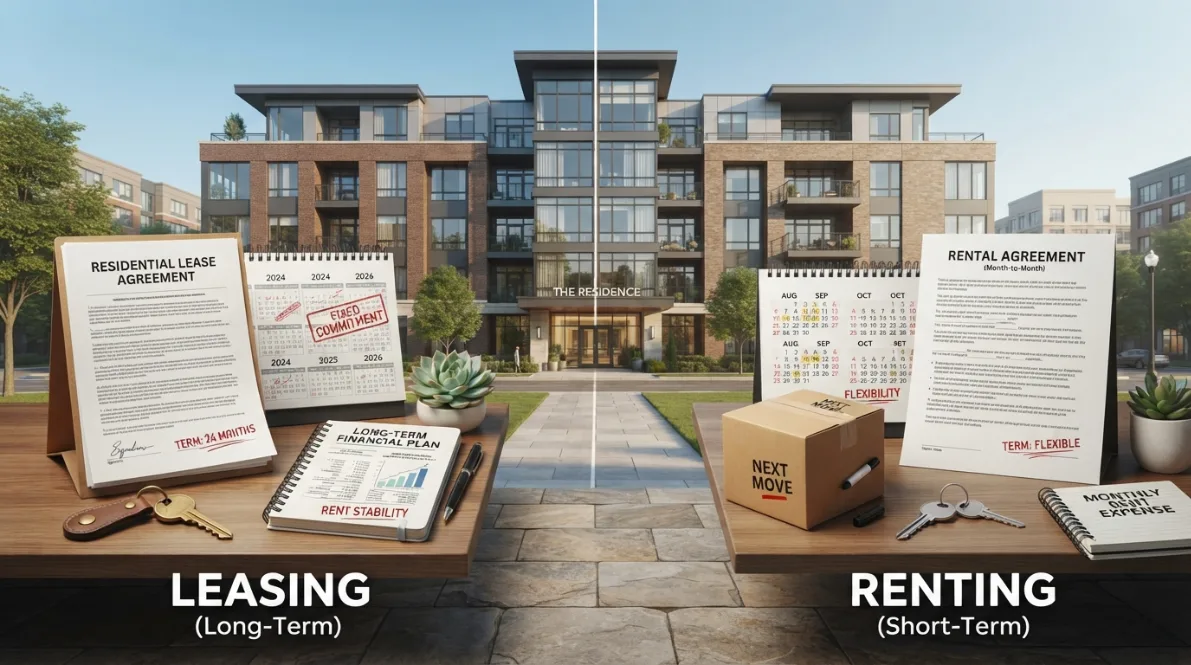
- What Is the Main Difference Between Leasing and Renting?
- Advantages of Leasing
- Disadvantages of Leasing
- Advantages of Renting
- Disadvantages of Renting
- Is Leasing Cheaper Than Renting?
- Which Is More Flexible: Leasing or Renting?
- When Should You Consider Leasing?
- When Should You Consider Renting?
- What Should You Check Before Signing a Lease?
- What Should You Check Before Signing a Rental Agreement?
- Does Leasing or Renting Affect Your Credit?
- How Your Budget Should Influence Your Choice
- Leasing vs. Renting for Different Situations
- Common Misconceptions About Leasing and Renting
- Simple Decision Guide: Lease or Rent?
- Questions to Ask Before Choosing
- Final Thoughts
Key Takeaways
- Leasing and renting both allow you to use a property without owning it.
- A lease commonly covers a specific period, while rental agreements can be fixed-term or periodic.
- Month-to-month renting can offer more flexibility than a fixed-term lease.
- A fixed lease can provide greater stability and make base rent easier to budget.
- Leaving a lease before its scheduled end may create additional costs or obligations.
- Renting is not always cheaper than leasing, and leasing is not always less flexible.
- The actual contract matters more than whether an arrangement is called a lease or rental.
- Before signing, review the rent, deposit, duration, renewal rules, maintenance duties, and termination conditions.
What Is the Difference Between Leasing and Renting?
If you are looking for an apartment or house, you will probably come across the terms leasing and renting. People often use these words interchangeably because both involve paying a property owner for the right to live in or use a property.
However, the agreements behind them can work differently.
So, what is the difference between leasing and renting?
In general, a lease often describes an agreement where a tenant receives the right to occupy a property for a defined period under specific conditions. Residential leases commonly last several months or a year, although other terms are possible.
Renting is a broader term. A rental arrangement can have a fixed duration, but it can also continue on a recurring basis, such as month to month.
The most important differences usually involve commitment, duration, flexibility, payment terms, renewal, and termination.
For example, someone who knows they will remain in the same city for at least a year may prefer a fixed-term lease. Someone who expects to relocate soon may prefer a flexible rental arrangement.
Keep in mind that terminology and tenant protections can vary by location. A contract called a “rental agreement” may still have a fixed term, while a lease can include specific flexibility provisions.
That is why you should always read the actual agreement before signing it.
Lease vs. Rent: Quick Comparison
| Factor | 🟦 Leasing | 🟩 Renting |
|---|---|---|
| Typical Duration | Often a fixed period, such as 6 or 12 months | Can be short-term, periodic, or fixed-term |
| Commitment | Usually involves a stronger commitment for the agreed term | May provide greater flexibility, especially with periodic agreements |
| Payment Stability | Base rent is often established for the lease period | Rent may change when the agreement renews, depending on the terms |
| Flexibility | Generally lower during a fixed lease term | Often higher with month-to-month arrangements |
| Moving Out | Leaving early may involve additional costs or contractual requirements | Usually depends on the required notice and rental agreement |
| Stability | Can provide greater housing stability during the agreed term | Depends on the type of rental agreement and renewal terms |
| Best For | People who expect to stay in one place for an extended period | People who need temporary housing or greater flexibility |
These are general differences rather than universal legal rules. The exact terms depend on the contract, landlord, tenant, property, and local laws.
What Is a Lease Agreement?
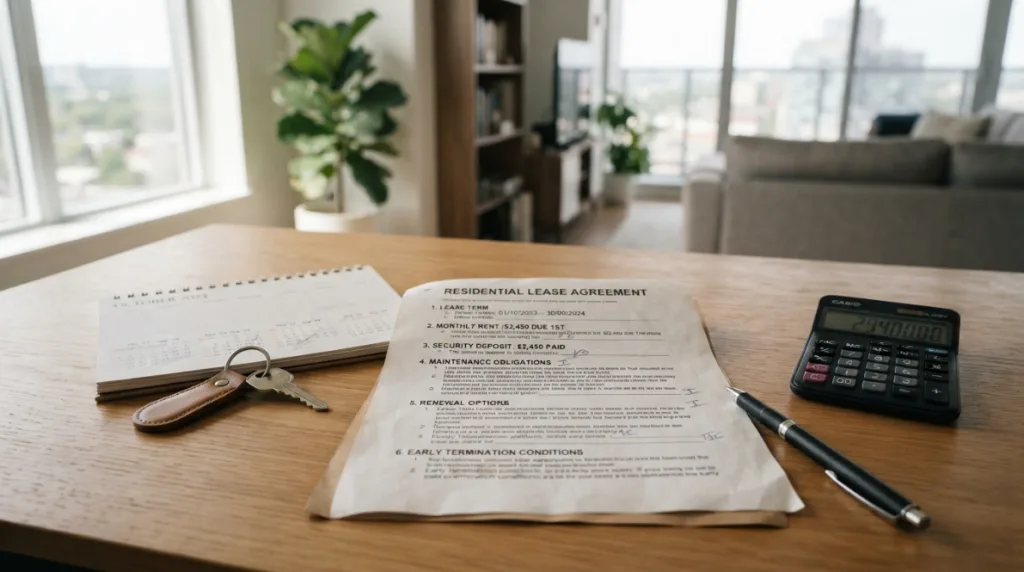
A lease agreement is a contract between a property owner and a tenant that sets the conditions for using a property for an agreed period.
For a residential property, the landlord provides the tenant with the right to occupy the home while the tenant agrees to follow the terms of the contract and pay the required rent.
A lease can contain many details, including:
- Monthly rent
- Payment due date
- Lease start date
- Lease end date
- Security deposit
- Maintenance responsibilities
- Utility arrangements
- Pet policies
- Guest rules
- Parking conditions
- Smoking restrictions
- Subletting rules
- Renewal terms
- Early termination conditions
- Move-out requirements
The purpose of these terms is to establish clear expectations for both parties.
For example, if you sign a 12-month lease, you may agree to pay a specified base rent each month throughout the contractual period. The agreement may also explain what happens if you want to leave before the lease ends.
A lease is therefore more than simply an agreement to pay rent. It establishes a set of rights and responsibilities for the landlord and tenant.
How Long Does a Lease Usually Last?
There is no universal lease length.
Depending on the property and market, a lease could last:
- Three months
- Six months
- Nine months
- Twelve months
- Several years
A one-year lease is common for residential housing, but it is not the only option.
Your ideal lease length depends on how certain you are about your future plans.
If you have a stable job and expect to stay in the same city, a 12-month lease may make sense.
If you are moving temporarily for education or work, a shorter agreement may be more appropriate.
Before signing, check the exact start and end dates. Do not assume that every lease automatically lasts one year.
What Is a Rental Agreement?
A rental agreement is a contract that allows a person to occupy or use a property in exchange for rent.
Rental agreements can take different forms.
One common arrangement is month-to-month renting. Under this type of agreement, the tenant pays rent for each rental period and the arrangement continues until one party properly ends it.
However, renting does not automatically mean month to month.
A rental agreement can also have a fixed term. This is why the actual contract is more important than the label used by the landlord or tenant.
A rental agreement may specify:
- Rent amount
- Payment schedule
- Security deposit
- Rental period
- Notice requirements
- Maintenance responsibilities
- Utility payments
- Pet rules
- Guest policies
- Parking rules
- Renewal procedures
- Termination conditions
Therefore, a rental agreement still creates important responsibilities for both sides.
What Is Month-to-Month Renting?
A month-to-month rental arrangement generally continues one month at a time rather than requiring the tenant to commit to a longer fixed period.
For example, imagine you move into an apartment under a month-to-month agreement. You pay the agreed rent each month and continue living there as long as the agreement remains in effect.
If you decide to move, you may be able to terminate the arrangement by giving the required notice.
This type of arrangement can be useful when your future plans are uncertain.
You might consider month-to-month renting if:
- You recently moved to a new city.
- You have a temporary job assignment.
- You are looking for a permanent home.
- You expect to relocate.
- You plan to purchase a house.
- Your financial situation may change.
- You want greater housing flexibility.
However, flexibility can come with trade-offs. Depending on the contract and local law, rent or other terms may change after proper notice.
What Is the Main Difference Between Leasing and Renting?
The biggest practical difference often comes down to commitment and flexibility.
A fixed-term lease normally establishes an agreement for a specific period. During that period, both parties generally need to follow the agreed terms unless the contract or applicable law provides another option.
A periodic rental arrangement may allow the tenant or landlord to end the agreement more easily after providing the required notice.
Consider two examples.
Person A signs a 12-month lease because they have a stable job and plan to stay in the same city.
Person B chooses month-to-month renting because they may receive a job transfer within the next few months.
Person A may benefit more from stability.
Person B may benefit more from flexibility.
Neither option is automatically better. The right choice depends on the individual’s circumstances.
Advantages of Leasing
A fixed-term lease can provide several advantages for people who expect to remain in the same property for an extended period.
Greater Housing Stability
One of the biggest advantages of leasing is stability.
If you sign a fixed-term agreement, you generally know that your housing arrangement is established for the agreed period as long as you follow the contract.
This can be helpful for families, professionals, students, and anyone who prefers not to move frequently.
Easier Monthly Budgeting
A lease may establish a base rent for the contract period.
That predictability can make it easier to organize your monthly budget.
For example, if you know your base rent will remain at a particular amount during the lease term, you can plan how much money goes toward:
- Savings
- Emergency funds
- Debt payments
- Investments
- Food
- Transportation
- Utilities
Your other housing expenses can still change, so you should consider your complete housing budget.
Less Frequent Searching
Moving from one property to another can be expensive and time-consuming.
You may need to:
- Search for another home
- Pay application fees
- Arrange transportation
- Move furniture
- Set up utilities
- Pay another deposit
A longer lease can reduce the need to repeat this process frequently.
Potentially Better Rental Value
Some landlords may offer better monthly rates to tenants who agree to longer terms.
This depends on the market and property, so it is not guaranteed.
Still, it is worth comparing the monthly price and total cost of different contract lengths.
Disadvantages of Leasing
Leasing can also create challenges.
Lower Flexibility
A fixed-term lease can make moving more complicated.
Suppose you sign a 12-month lease and receive a job offer in another city after four months. You may have to review the lease before deciding how to proceed.
Early Termination Costs
Leaving before the end of a lease may create financial obligations.
The consequences depend on the agreement and applicable law.
Some contracts contain specific early termination provisions. Others may have different requirements.
Always read this section carefully before signing.
Contract Restrictions
A lease can contain rules about:
- Pets
- Roommates
- Guests
- Smoking
- Noise
- Parking
- Subletting
- Property modifications
Make sure these restrictions fit your lifestyle.
Long-Term Commitment
A long-term lease may not be ideal if you are unsure about your future.
If you may change jobs, relocate, buy a home, or need a different type of property soon, carefully consider whether a fixed commitment makes sense.
Advantages of Renting
A flexible rental arrangement can be useful when you want greater freedom to change your housing situation.
Greater Flexibility
Month-to-month renting can make it easier to relocate after providing the required notice.
This can be valuable for people whose work, education, or personal circumstances may change.
Suitable for Temporary Housing
If you only need a home for a short period, a flexible rental may be more practical than committing to a long lease.
For example, temporary housing may suit:
- Students
- Contract workers
- People relocating
- People between homes
- Temporary employees
- People waiting to buy a home
Easier Lifestyle Changes
Your housing needs can change unexpectedly.
You may start a new job, move to another city, get married, need more space, or decide to purchase a home.
A flexible rental arrangement can make some of these transitions easier.
Useful Before Buying a Home
Renting can be useful while preparing to buy.
During this period, you can work on:
- Saving for a down payment
- Building an emergency fund
- Paying down debt
- Reviewing your budget
- Researching neighborhoods
- Comparing mortgage options
- Understanding homeownership costs
This can give you more time to make a thoughtful purchase decision.
Disadvantages of Renting
Flexible renting is not perfect for everyone.
Rent May Increase
With some periodic rental agreements, the landlord may be able to increase rent after providing the required notice.
The rules depend on the contract and local regulations.
A potential rent increase can make long-term budgeting less predictable.
Less Long-Term Certainty
A month-to-month arrangement may provide less certainty than a fixed-term lease.
The exact protections available to tenants vary by location.
Potentially Higher Monthly Price
Some landlords charge a premium for flexible arrangements.
A month-to-month rental can sometimes cost more per month than a comparable longer-term agreement.
This can happen because flexible tenants may create greater turnover and vacancy risk for the property owner.
Changing Terms
Periodic agreements may require you to deal with changes more frequently.
If you prefer predictable long-term housing, a fixed lease may feel more comfortable.
Is Leasing Cheaper Than Renting?
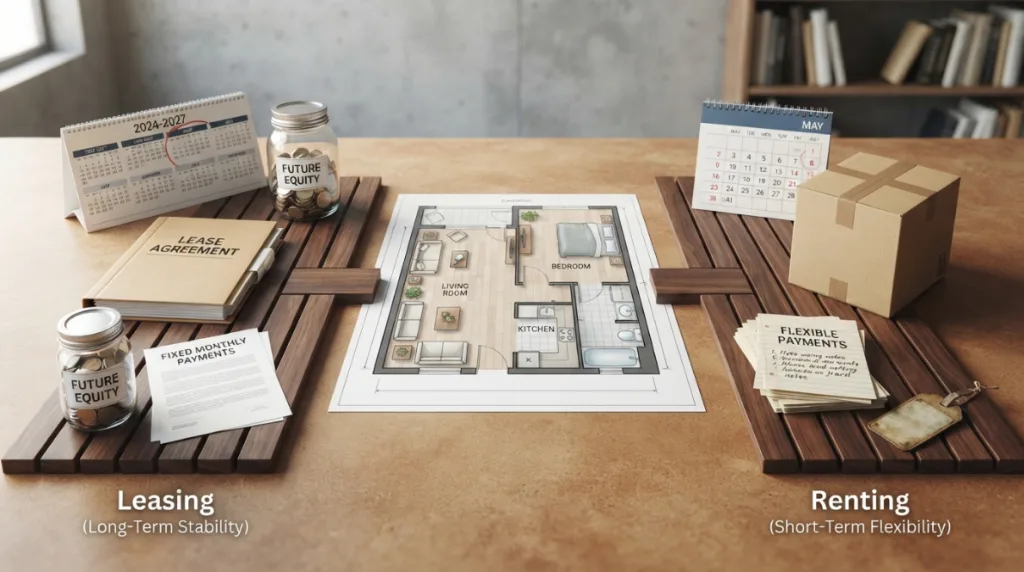
There is no universal answer.
Whether leasing or renting costs less depends on the property and the terms of the agreement.
When comparing options, look at:
- Monthly rent
- Contract duration
- Security deposit
- Utilities
- Insurance
- Parking
- Maintenance
- Application fees
- Administrative fees
- Moving costs
- Early termination costs
For example, imagine two apartments.
Apartment A: $1,400 per month with a 12-month commitment.
Apartment B: $1,500 per month with a flexible rental arrangement.
If you plan to stay for a full year, Apartment A may be financially attractive because of the lower monthly rent.
But if you expect to move after three months, Apartment B could potentially make more sense because you are paying for greater flexibility.
The cheapest monthly payment is not always the cheapest overall option.
Which Is More Flexible: Leasing or Renting?
Generally, a month-to-month rental arrangement provides more flexibility than a fixed-term lease.
However, you should not assume that every rental agreement is flexible or that every lease is restrictive.
The contract determines what you can and cannot do.
If flexibility is important to you, check:
- Notice period
- Early termination rules
- Renewal provisions
- Rent increase rules
- Subletting conditions
- Assignment or transfer rules
- Move-out requirements
Understanding these details before signing can prevent unpleasant surprises later.
When Should You Consider Leasing?
A lease may be a good choice when stability is your main priority.
You Expect to Stay for a Long Time
If you plan to live in the same apartment for a year or longer, a fixed-term agreement may be convenient.
You Want Predictable Base Rent
If the agreement establishes a fixed base rent for the term, it may be easier to plan your monthly expenses.
You Have Stable Employment
A stable job and location can make a longer housing commitment easier to manage.
You Prefer Stability
Some people value having a consistent home and do not want to deal with frequent moves or renewals.
You Find Favorable Long-Term Terms
If the landlord offers attractive terms for a longer commitment, leasing may provide good overall value.
When Should You Consider Renting?
A flexible rental may be a better fit when your future plans are uncertain.
You May Relocate
If you might move for work, school, or personal reasons, flexibility can be valuable.
You Need Temporary Accommodation
If you only need a place for a few months, a long lease may create an unnecessary commitment.
You Plan to Buy a Home Soon
A flexible rental can give you time to search for a property while avoiding a long lease commitment.
You Are New to the Area
If you do not yet know which neighborhood suits you, renting temporarily can give you time to explore.
Your Housing Needs May Change
If you may need a larger home, different location, or additional space soon, flexibility may be more important than long-term stability.
What Should You Check Before Signing a Lease?
Before signing a lease, do not focus only on the monthly rent.
Read the entire agreement and pay attention to the following areas.
Lease Dates
Confirm the exact start and end dates.
Monthly Rent
Verify the amount, due date, and accepted payment methods.
Security Deposit
Understand how much you must pay and the conditions under which it may be returned.
Early Termination
Find out what happens if you need to leave before the agreement expires.
Renewal
Check whether the lease automatically ends, renews, or changes into another arrangement.
Maintenance
Understand which repairs are your responsibility and which belong to the landlord.
Additional Fees
Look for charges related to parking, utilities, administration, applications, or other services.
Property Rules
Review restrictions concerning pets, guests, smoking, roommates, parking, and subletting.
What Should You Check Before Signing a Rental Agreement?
A rental agreement deserves the same level of attention.
Before signing, review:
- Monthly rent
- Rental period
- Security deposit
- Notice requirements
- Rent increase provisions
- Renewal rules
- Maintenance responsibilities
- Utility payments
- Pet restrictions
- Guest policies
- Parking conditions
- Termination requirements
- Additional fees
Do not assume that a month-to-month agreement allows you to leave immediately.
You may still have to provide advance notice according to the agreement and applicable law.
Does Leasing or Renting Affect Your Credit?
Renting a home does not automatically mean that your rent payments will appear on your credit reports.
Whether rental payments are reported can depend on factors such as the landlord, rent-reporting service, credit bureau, and the specific arrangement.
If building credit is important to you, investigate whether your rent payments can be reported through an appropriate service.
You should also understand that missing required payments can potentially create financial or reporting problems depending on the circumstances.
For that reason, credit impact should not be the primary reason you choose between leasing and renting.
How Your Budget Should Influence Your Choice
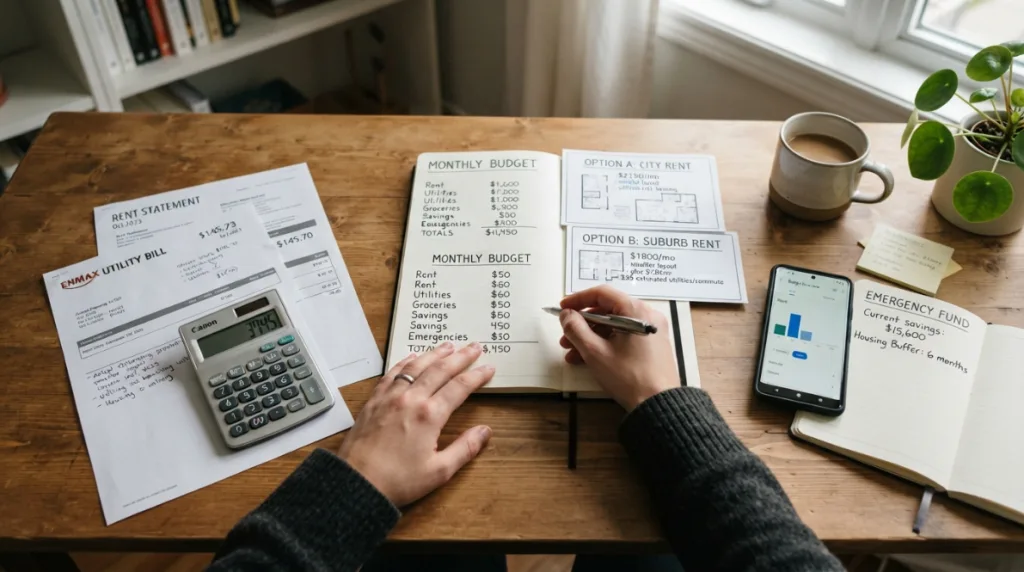
Your housing decision should fit your overall financial situation.
A common mistake is looking only at the advertised monthly rent.
Instead, calculate your broader housing expenses.
Total Housing Cost = Rent + Utilities + Insurance + Parking + Fees + Other Housing Expenses
For example, an apartment advertised at $1,300 per month could cost significantly more after adding utilities, parking, insurance, and other charges.
You should also consider upfront expenses such as:
- Security deposit
- First month’s rent
- Application fees
- Moving costs
- Utility deposits
- Furniture
- Insurance
If a particular agreement requires a large upfront payment, make sure you have enough savings to cover it without damaging your emergency fund.
Leasing vs. Renting for Different Situations

Different housing situations can make different arrangements more appropriate.
Students
Students may prefer flexible housing when their academic schedules or locations change regularly.
Families
Families may place a higher value on stability, particularly when children attend nearby schools.
Temporary Workers
People working on short-term assignments may prefer flexible rental arrangements.
People Relocating
Someone moving to a new city may want to rent temporarily while learning about the local neighborhoods and job market.
Future Homebuyers
People who plan to purchase a house soon may choose flexible renting while saving money and searching for a suitable property.
Long-Term Residents
Someone who expects to stay in the same city and property for a significant period may prefer a fixed-term lease.
Common Misconceptions About Leasing and Renting
Myth 1: Every Lease Lasts One Year
Not true.
One-year leases are common, but lease periods can be shorter or longer.
Myth 2: Renting Always Means Month-to-Month
Not necessarily.
Rental agreements can have different durations and structures.
Myth 3: Leasing and Renting Are Completely Different
Not always.
Both involve paying to use a property. In everyday language, the terms are often used interchangeably.
Myth 4: Breaking a Lease Always Means Paying Every Remaining Month
Not necessarily.
The financial consequences depend on the contract, circumstances, and applicable law.
Myth 5: Renting Is Always More Expensive
Not necessarily.
The cost depends on the property, market conditions, contract duration, and additional expenses.
Myth 6: A Lease Guarantees Every Housing Expense Will Stay Fixed
Not necessarily.
Even if the base rent is fixed, other expenses may change.
Simple Decision Guide: Lease or Rent?
Use your personal circumstances as the starting point.
| Your Situation | Option That May Fit Better |
|---|---|
| You expect to stay for a year or longer | 🟦 Fixed-term lease |
| You may relocate soon | 🟩 Flexible rental |
| You have a stable job and location | 🟦 Lease |
| You need temporary accommodation | 🟩 Rental |
| You plan to buy a home soon | 🟩 Flexible rental |
| Predictable base rent is important | 🟦 Fixed-term lease |
| Maximum mobility is important | 🟩 Periodic rental |
| You are uncertain about your future plans | 🟩 Flexible arrangement |
This is only a general guide. Your actual contract and local housing laws should always take priority.
Questions to Ask Before Choosing
Before you sign a lease or rental agreement, ask yourself:
- How long do I expect to live here?
- Is my income stable?
- Could I need to move?
- Can I comfortably afford the deposit?
- What is my complete monthly housing cost?
- Can the rent increase?
- What happens if I leave early?
- How much notice do I need to provide?
- Who is responsible for repairs?
- What happens when the agreement expires?
- Are there additional fees?
- Do the property rules fit my lifestyle?
These questions can help you choose an arrangement based on your actual needs rather than simply choosing the option with the lowest advertised rent.
Final Thoughts
So, what is the difference between leasing and renting?
Both allow you to use a property without owning it, but the structure of the agreement can be different. A lease often involves a defined fixed term, while renting can include both fixed-term and periodic arrangements.
The most important practical differences usually involve commitment, stability, flexibility, payment terms, renewal, and termination.
A fixed-term lease may be a better fit if you expect to remain in the same home and want greater stability. A flexible rental arrangement may make more sense if you expect your plans to change or only need housing temporarily.
However, there is no universal rule that every lease is long-term or every rental is short-term. The actual agreement and applicable local laws determine the details.
Before signing, compare the complete cost and review the contract carefully. Pay attention to rent, deposits, renewal terms, maintenance responsibilities, notice requirements, and early termination rules.
Ultimately, the best choice is the one that fits your budget, lifestyle, expected timeline, and need for flexibility.



Leave a Reply