
In this article
- Best Crypto Exchanges at a Glance
- Kraken: Strong Choice for Active Traders
- Coinbase: Beginner-Friendly and Advanced Options
- What Should You Look for in the Best Crypto Exchange?
- Best Crypto Exchange for Beginners
- Best Crypto Exchange for Low Fees
- Best Crypto Exchange for Security
- Centralized vs. Decentralized Exchanges
- What Is the Safest Way to Use a Crypto Exchange?
- What About Proof of Reserves?
- Common Crypto Exchange Mistakes
- Crypto Exchange Comparison Checklist
- How to Choose the Right Crypto Exchange
- Frequently Asked Questions
- Final Thoughts
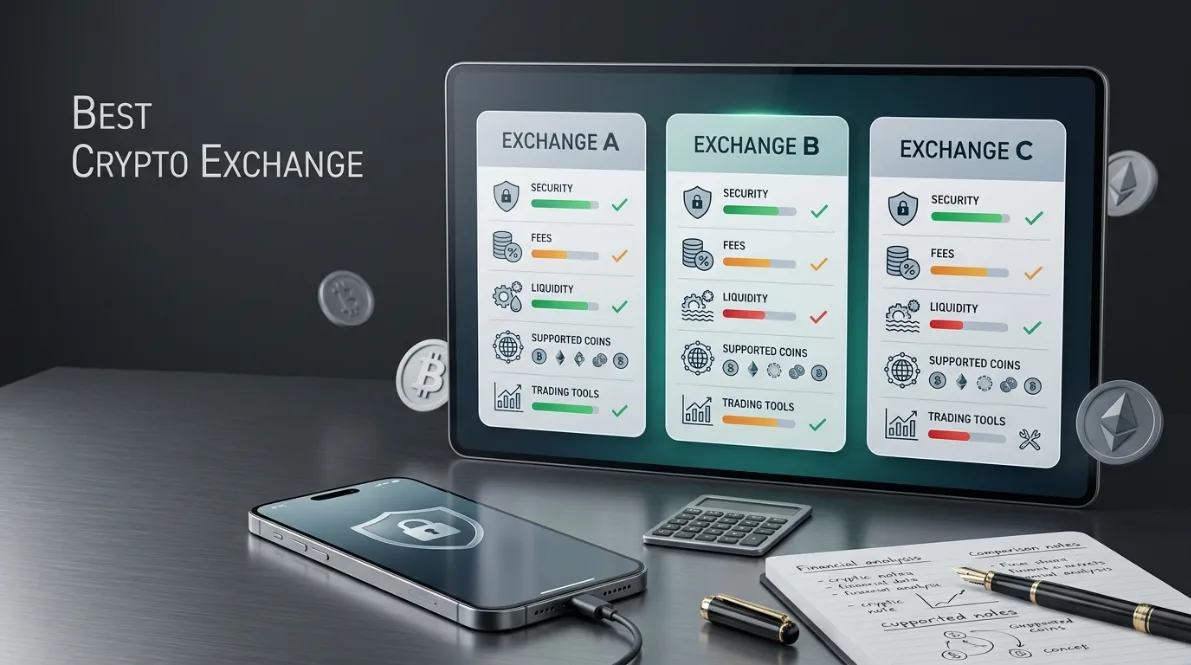
Choosing the best crypto exchange depends on more than low fees or a large coin selection. You also need to consider security, liquidity, trading tools, payment options, supported countries, and how much control you want over your assets.
Popular exchanges such as Kraken and Coinbase serve different types of crypto users. One platform may suit beginners, while another may work better for active traders.
This guide compares the main factors that matter when choosing a crypto exchange and explains which type of platform may fit different trading needs.
Best Crypto Exchanges at a Glance

There is no universal winner because every trader has different priorities. Instead of ranking exchanges based only on popularity, consider what each platform does best.
| Exchange | Best For | Key Strength |
|---|---|---|
| Kraken | Active traders | Trading tools, liquidity, fee tiers |
| Coinbase | Beginners | Simple interface and Advanced trading |
| Decentralized exchanges | Self-custody users | Direct wallet-based trading |
The availability of products, payment methods, and features can vary by country. Always check the exchange’s current terms before opening an account.
Kraken: Strong Choice for Active Traders
Kraken can be a strong option for users who want advanced trading features and a volume-based fee structure.
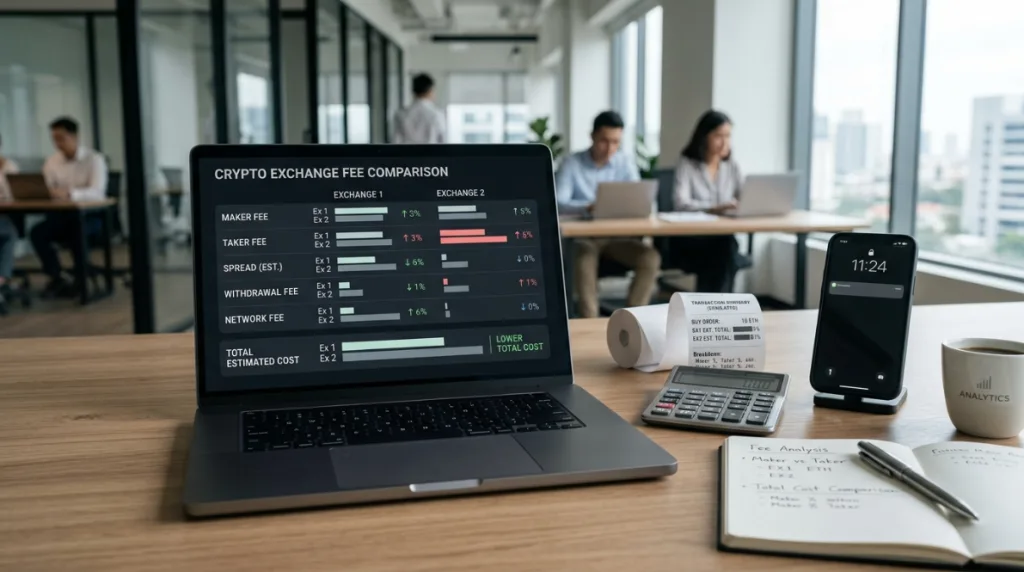
Kraken’s current spot fee schedule uses maker and taker tiers based on qualifying activity. Its published entry tier currently lists a 0.40% maker fee and a 0.80% taker fee, with rates decreasing at higher qualifying tiers.
Kraken also publishes Proof of Reserves information. Its June 30, 2026 snapshot reports reserve ratios above 100% for several covered assets, including BTC, ETH, SOL, XRP, ADA, USDC, USDT, and USDG.
Why Traders May Consider Kraken
- Volume-based trading fees
- Advanced trading features
- Multiple crypto markets
- Published Proof of Reserves
- Security-focused infrastructure
- Support for active tradi
However, fees and product availability can change, so check the current schedule before trading.
Coinbase: Beginner-Friendly and Advanced Options
Coinbase can appeal to beginners who want a straightforward crypto-buying experience while also providing an advanced platform for experienced traders.
For advanced traders, the platform offers order-book trading, advanced order types, interactive charts, and API access. Fees follow a volume-based maker-and-taker model, with the applicable fee tier determined by trading activity.
This creates an important distinction between the standard Coinbase experience and Coinbase Advanced.
The standard experience can be easier for beginners, while Advanced gives traders more control over orders and pricing.that Advanced does not include a spread in the same way as its standard quoted trading experience because users interact directly with the order book.
Why Beginners May Consider Coinbase
- Simple user experience
- Major cryptocurrency support
- Advanced trading option
- Professional charts
- Multiple order types
- Mobile and web access
The exact services and fees depend on the user’s location and product.
What Should You Look for in the Best Crypto Exchange?
Instead of choosing an exchange based on advertising or popularity, compare these factors.
1. Security
Security should come before trading features.
Look for:
- Two-factor authentication
- Withdrawal protection
- Account alerts
- Address controls or whitelisting
- Strong account recovery
- Clear custody policies
- Transparent security information
You should also protect your own account with a unique password and two-factor authentication.
No exchange can eliminate every risk, so never treat a platform’s security features as a guarantee against loss.
2. Trading Fees
Fees can have a significant impact on your results.
Crypto exchanges may charge:
- Maker fees
- Taker fees
- Withdrawal fees
- Deposit fees
- Network fees
- Conversion costs
- Spreads
For example, Kraken uses a tiered maker-taker structure, while Coinbase Advanced also bases fees on trading activity.
This means you should compare the fee structure that actually applies to your trading style instead of searching for a platform with the lowest advertised percentage.
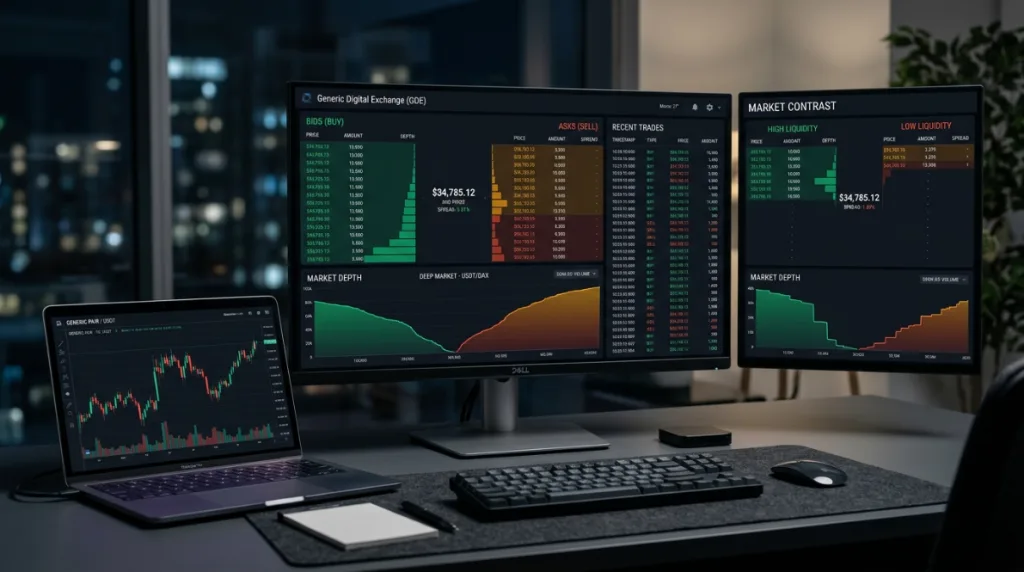
3. Liquidity
Liquidity determines how easily you can buy or sell an asset without significantly moving its market price.
Active traders should pay close attention to liquidity because poor liquidity can increase slippage.
Don’t look only at an exchange’s total trading volume. Check the liquidity of the specific trading pair you plan to use.
4. Supported Cryptocurrencies
A long list of coins does not automatically make an exchange better.
First, decide which assets you need.
Then check whether the platform supports:
- Your preferred cryptocurrency
- Your preferred trading pair
- Deposits
- Withdrawals
- The blockchain network you want to use
Always verify the network before transferring crypto. Sending an asset through an unsupported network can create serious problems.
5. Payment Methods
Payment options vary by country.
Before registering, check whether the exchange supports the funding method you want to use.
Possible options may include:
- Bank transfers
- Debit or credit cards
- Cryptocurrency deposits
- Local payment methods
Also check deposit fees, withdrawal limits, processing times, and identity verification requirements.
Best Crypto Exchange for Beginners
Beginners should usually prioritize simplicity over advanced features.
A suitable platform should make it easy to:
- Create and secure an account
- Deposit money
- Buy major cryptocurrencies
- Understand the transaction cost
- Withdraw crypto
- Review transaction history
- Contact customer support
A beginner does not need futures, leverage, or complicated trading strategies to start learning about crypto.
Start with basic spot trading and learn how fees, orders, wallets, and transfers work before using advanced products.
Best Crypto Exchange for Low Fees
There is no exchange that will always be the cheapest for every user.
Your actual cost depends on:
Trading fee + spread + deposit cost + withdrawal cost + network fee
An active trader may benefit from volume-based discounts. A casual buyer may care more about the total cost of a simple purchase.
For example, Kraken’s current spot fee schedule reduces maker and taker rates as qualifying activity increases. Coinbase Advanced also uses trading-volume-based fees.
Therefore, compare the complete fee structure rather than one headline number.
Best Crypto Exchange for Security
Security should influence your decision more than promotional rewards.
Check whether the exchange provides:
- Two-factor authentication
- Withdrawal controls
- Account activity alerts
- Strong custody practices
- Security documentation
- Transparent asset information
- A clear incident-response process
Kraken, for example, publishes security information and Proof of Reserves documentation. Its June 2026 report allows eligible customers to verify inclusion of covered balances from the snapshot period.
Proof of Reserves can provide useful transparency, but it should not be treated as a complete guarantee of financial safety.
Centralized vs. Decentralized Exchanges
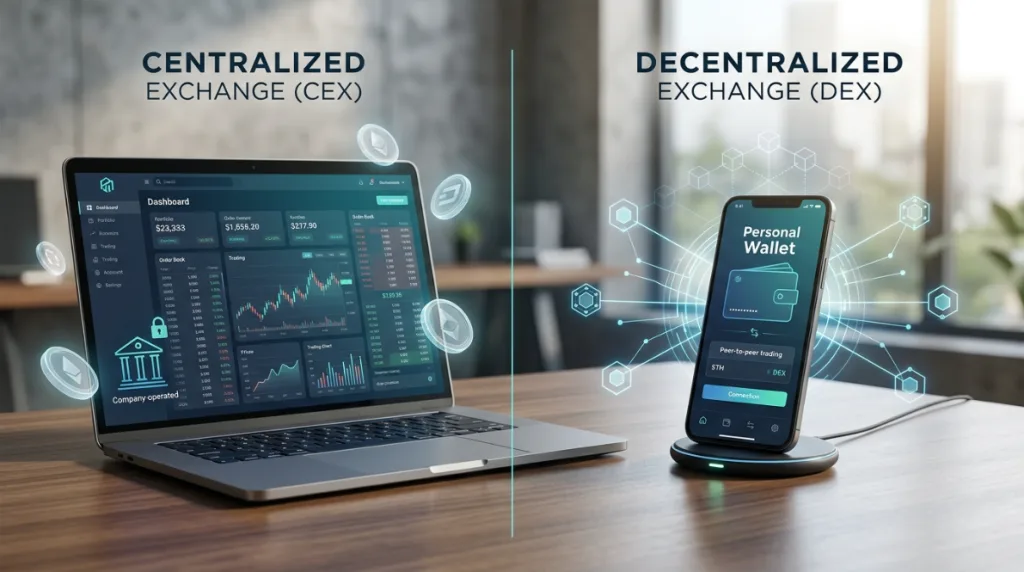
Centralized exchanges operate through a company and normally require users to create accounts.
They often provide:
- Easier interfaces
- Fiat payment options
- Customer support
- Trading charts
- Order books
- Multiple trading products
The main trade-off is custody. You generally rely on the platform to hold or manage your assets while they remain on the exchange.
Decentralized Exchanges
Decentralized exchanges use blockchain-based smart contracts to execute trades.
Users generally connect their own wallets instead of depositing funds into a traditional exchange account.
This model can provide more direct control, but it requires greater technical knowledge.
You need to understand:
- Wallet security
- Network fees
- Slippage
- Smart-contract risks
- Token approvals
- Blockchain transactions
For many beginners, a centralized exchange provides a simpler starting point.
What Is the Safest Way to Use a Crypto Exchange?
Choosing a reputable platform is only one part of crypto security.
You should also:
- Use a unique password
- Enable two-factor authentication
- Avoid suspicious links
- Verify website addresses
- Never share recovery phrases
- Review withdrawal addresses carefully
- Keep software updated
- Avoid keeping unnecessary funds on an exchange
For long-term holdings, some users choose self-custody. However, self-custody means you become responsible for protecting your private keys and recovery information.
What About Proof of Reserves?
Proof of Reserves has become an important transparency feature in the crypto industry.
It can help users understand whether an exchange has reported sufficient assets to cover certain customer balances at a specific snapshot date.
Kraken’s June 30, 2026 report, for example, lists reserve ratios above 100% for several covered assets.
However, you should not use Proof of Reserves as your only measure of safety.
Also check the exchange’s security practices, custody structure, regulatory position, withdrawal policies, and financial disclosures.
Common Crypto Exchange Mistakes
Avoid these mistakes when choosing a platform:
- Selecting an exchange only because it is popular
- Looking at trading fees without checking spreads
- Ignoring withdrawal costs
- Choosing an exchange that does not serve your country
- Keeping all funds on one platform
- Using a weak password
- Skipping two-factor authentication
- Trading leverage without understanding liquidation risk
- Sending crypto without checking the network
- Trusting social-media promotions without verification
A little research before depositing funds can prevent expensive mistakes.
Crypto Exchange Comparison Checklist
Before choosing a platform, compare:
| Factor | What to Check |
|---|---|
| Security | 2FA, withdrawal controls, custody |
| Fees | Maker, taker, spread, withdrawal costs |
| Liquidity | Trading volume and market depth |
| Assets | Coins and trading pairs |
| Payments | Deposit and withdrawal methods |
| Availability | Services in your country |
| Support | Help center and customer service |
| Trading tools | Charts, orders, API |
| Custody | Who controls your assets |
| Transparency | Reserves and company disclosures |
This checklist can help you make a decision based on your actual needs rather than marketing claims.
How to Choose the Right Crypto Exchange
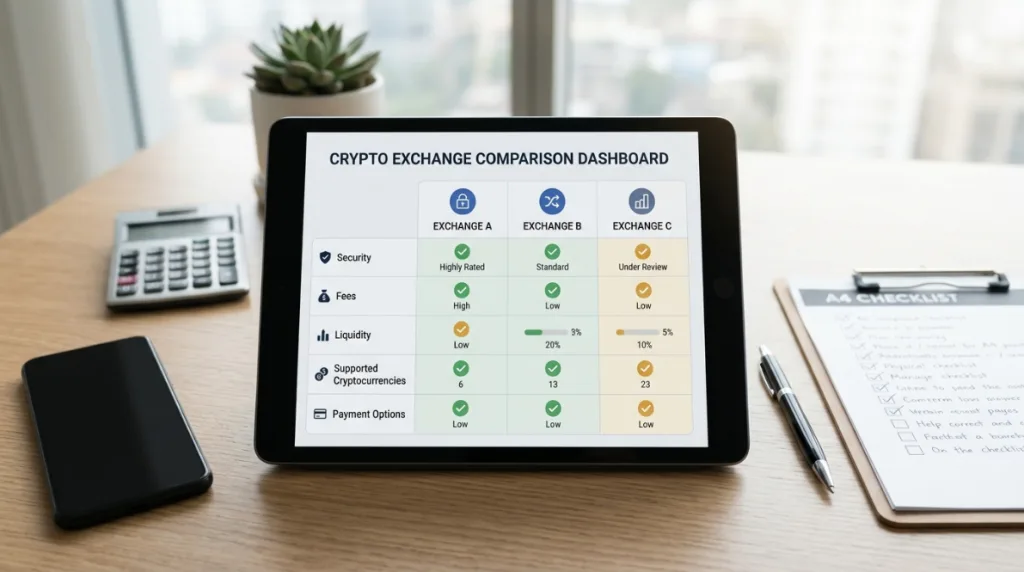
Start by deciding what matters most to you.
Beginners: Look for an exchange with a simple interface, strong security measures, clear fees, and convenient withdrawal options.
Active traders: Compare trading fees, market liquidity, available order types, and charting or trading tools.
A wider selection of assets: Check whether the platform supports the specific cryptocurrencies and trading pairs you plan to use.
Self-custody users: Understand how crypto wallets and decentralized exchanges work before transferring large amounts of funds.
Lower trading costs: Consider the total cost of buying, selling, trading, and withdrawing crypto rather than focusing only on trading fees.
There is no reason to choose an exchange simply because someone calls it the “best.” Choose the platform that best matches your own requirements.
Frequently Asked Questions
What is the best crypto exchange for beginners?
A beginner should look for an exchange with a simple interface, strong account security, transparent fees, major cryptocurrencies, and reliable support. Availability also depends on the user’s country.
Which crypto exchange has the lowest fees?
No single exchange is always the cheapest. Your final cost depends on trading volume, maker or taker status, spread, payment method, and withdrawal costs.
Is Kraken a good crypto exchange?
Kraken can be a strong option for users who want advanced trading features, volume-based fees, and published Proof of Reserves information. Its current fee schedule varies by qualifying tier.
Is Coinbase good for beginners?
Coinbase can suit beginners who prefer a straightforward interface. Users who want advanced order types and order-book trading can use Coinbase Advanced.
Are crypto exchanges safe?
Crypto exchanges use different security measures, but no exchange eliminates every risk. Protect your account, understand custody arrangements, and research withdrawal and security policies before depositing money.
Should I use a centralized or decentralized exchange?
Centralized exchanges usually offer an easier experience for beginners. Decentralized exchanges can provide more direct wallet control but require more technical knowledge and create additional responsibilities for the user.
Final Thoughts
The best crypto exchange depends on what you need from the platform.
Kraken can be attractive to active traders who value advanced trading and a tiered fee structure, while Coinbase can appeal to users who want a simpler experience with an optional advanced trading platform.
But the right choice ultimately comes down to your location, trading frequency, preferred assets, fees, security requirements, and comfort with custody.
Before depositing money, check the exchange’s current fees, supported services, withdrawal rules, security features, and availability in your country.
Crypto remains a high-risk asset class. A good exchange can improve the trading experience, but it cannot remove the risk of losing money when cryptocurrency prices fall.


Leave a Reply