
In this article
- Key Takeaways
- What Are State Stimulus Checks in 2026?
- How Are State Stimulus Programs Different From Federal Payments?
- Are States Sending Stimulus Checks in 2026?
- Which Types of State Payments May Be Available?
- Who May Qualify for State Stimulus Checks?
- How Much Could State Stimulus Payments Be Worth?
- When Will State Stimulus Checks Arrive?
- Are State Stimulus Payments Automatic?
- Do You Need to File a Tax Return?
- How to Check Whether Your State Has a Payment Program
- How to Check Your State Stimulus Payment Status
- What If You Did Not Receive Your Expected Payment?
- State Stimulus Checks and Federal Stimulus Checks Are Not the Same
- Are State Stimulus Checks Taxable?
- How State Stimulus Scams Work
- How to Protect Yourself From Stimulus Scams
- Common Mistakes People Make
- What Should You Do If You Think You Qualify?
- Frequently Asked Questions
- Final Thoughts
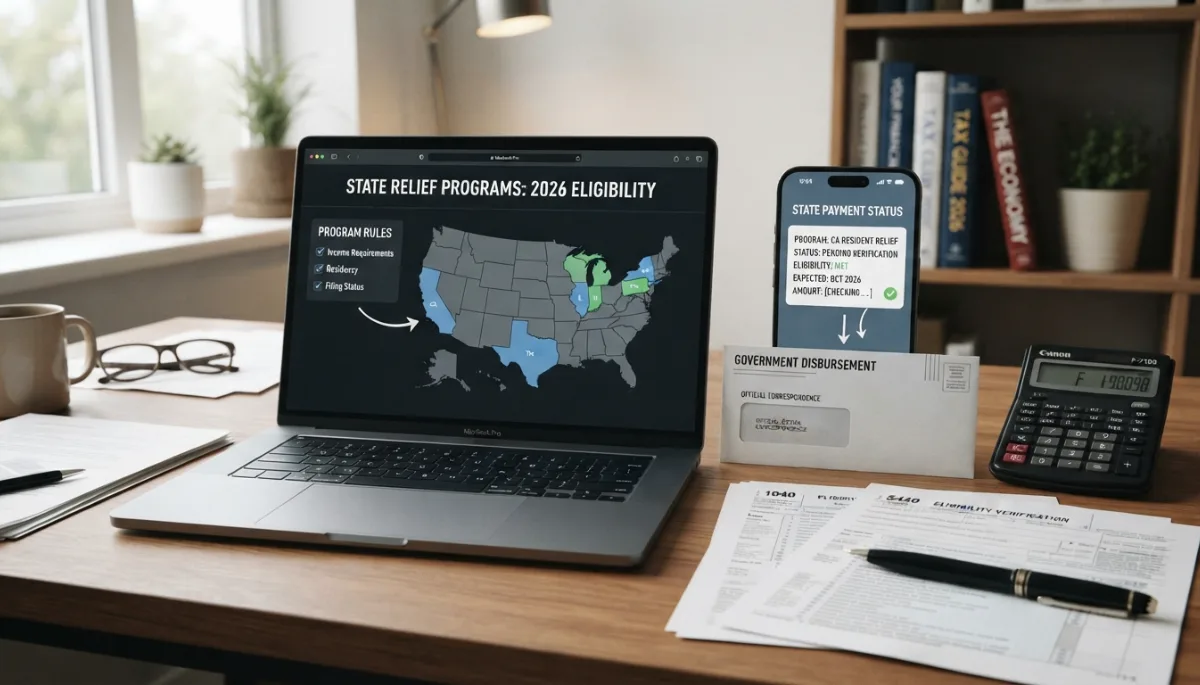
State stimulus checks continue to attract attention as Americans look for ways to reduce their financial pressure in 2026. However, the phrase “stimulus check” can describe several different types of government payments, and not every payment is a traditional stimulus check.
Some states provide tax rebates, surplus refunds, property-tax relief, or targeted financial assistance to eligible residents. These programs can have different eligibility rules, payment amounts, application requirements, and distribution dates.
If you are searching for state stimulus checks in 2026, it is important to understand what type of payment may be available in your state. This guide explains how state relief programs work, who may qualify, how payments are distributed, and how to verify whether you are eligible.
Key Takeaways
- State stimulus checks are not the same as federal stimulus payments.
- States may provide financial relief through tax rebates, refunds, credits, or other assistance programs.
- Eligibility varies by state and can depend on income, residency, filing status, household circumstances, or property ownership.
- Some payments may be automatic, while others require an application.
- Payment amounts and distribution dates are different for each program.
- Filing a state tax return may be necessary for certain rebate programs.
- Not every state offers a traditional stimulus check in 2026.
- Residents should verify current program information through their state’s official government agency.
- Be cautious of websites, texts, and social media posts promising guaranteed stimulus money.
- A state payment may have tax consequences depending on the type of payment and applicable tax rules.
What Are State Stimulus Checks in 2026?
State stimulus checks are generally payments or financial benefits provided by a state government to eligible residents. The purpose can vary from returning excess tax revenue to providing targeted financial assistance to households.
The term “stimulus check” is often used broadly online, but many state programs are technically tax rebates, refunds, credits, or relief payments. Understanding this difference is important because each program follows its own rules.
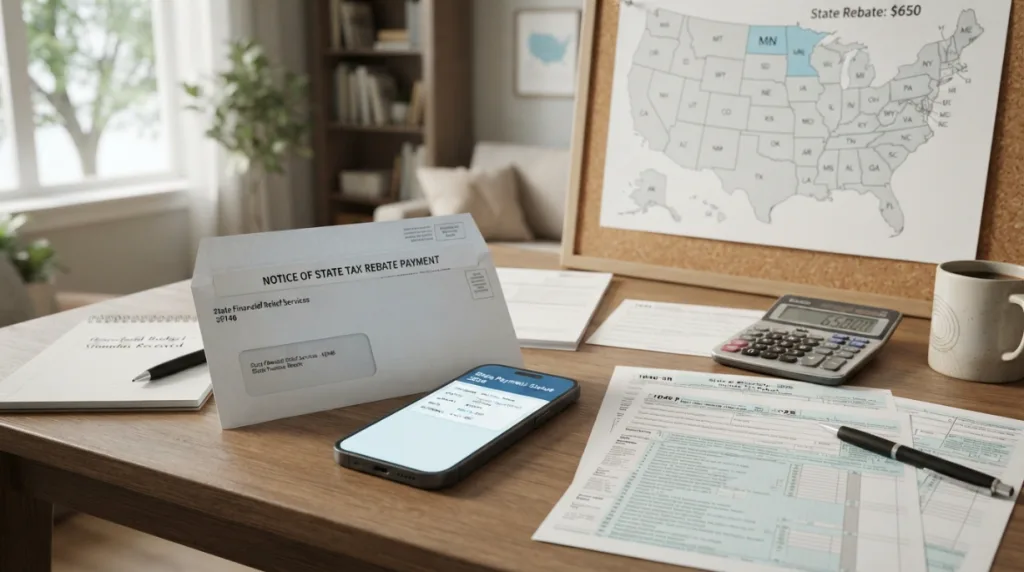
A state may use surplus revenue to provide a one-time rebate to qualifying taxpayers. Another state may provide property-tax assistance to eligible homeowners or renters. A different state could offer a tax credit instead of sending a separate check.
Therefore, there is no single nationwide state stimulus program that automatically applies to everyone. Your eligibility depends primarily on the state where you live and the requirements of the specific program.
How Are State Stimulus Programs Different From Federal Payments?
The biggest difference is who creates and administers the program.
Federal stimulus payments are national programs created under federal law. State rebates and relief programs are established and administered by individual state governments.
This distinction means that residents in different states can have completely different experiences. One state might issue a rebate based on a taxpayer’s income, while another may offer no comparable payment.
The payment method can also differ. A state may send money through direct deposit, issue a paper check, apply a credit to a tax account, or require eligible residents to submit an application.
For this reason, you should not assume that a headline about “stimulus checks” means everyone in the country will receive the same payment.
Are States Sending Stimulus Checks in 2026?
Some states may provide rebates or other forms of financial relief during 2026, but the availability of a payment depends on state legislation and the specific program.
State governments can introduce, extend, modify, or end programs based on their budgets and tax policies. A program that existed in a previous year may not automatically continue under the same rules in 2026.
It is also possible for a state to provide financial relief without calling it a stimulus check. For example, a state may issue a tax rebate, expand a tax credit, or provide property-tax assistance.
Because of these differences, residents should focus on the official name and requirements of a program instead of relying only on the phrase “stimulus check.”
Which Types of State Payments May Be Available?
State financial relief can take several forms. Knowing the difference can help you determine what type of payment you may be eligible to receive.
Tax Rebates
A tax rebate generally returns part of the money collected through state taxes to qualifying residents. A state may establish a rebate program when it has excess revenue or wants to provide temporary financial relief.
Eligibility can depend on factors such as income, residency, filing status, and whether the taxpayer filed a required state return.
Tax Refunds
A tax refund is different from a special stimulus payment. A refund generally occurs when you paid more tax than you owed.
For example, if your state tax liability was lower than the amount withheld from your paycheck, you may receive a regular tax refund. That does not necessarily mean you received a stimulus payment.
Tax Credits
A tax credit reduces the amount of tax you owe. Depending on the program, a credit may be refundable or nonrefundable.
A refundable credit can potentially result in a payment when the credit exceeds the taxpayer’s tax liability, while a nonrefundable credit generally cannot reduce tax below zero.
Property-Tax Relief
Some states provide property-tax relief to qualifying homeowners or renters. These programs can reduce the amount of property tax a household ultimately pays or provide a separate benefit.
Property-tax relief should not automatically be described as a stimulus check because its purpose and eligibility rules may be different.
Targeted Relief Payments
States can also create programs aimed at specific groups or financial circumstances. These may include assistance related to household income, housing costs, energy expenses, or other state-defined needs.
The requirements for targeted programs can be more specific than those for broad tax rebates.
Who May Qualify for State Stimulus Checks?
There is no universal eligibility requirement for state stimulus payments. Each program establishes its own rules.
However, several factors commonly appear in state relief programs.
State Residency
You may need to be a resident of the state for a specified period. Some programs may require full-year residency, while others can have different rules for part-year residents.
Moving between states during the relevant tax year can therefore affect eligibility.
Income
Income limits are common in targeted relief programs. A payment may be available only to residents whose income falls below a specific threshold.
Some programs may also use different limits depending on filing status, household size, or other circumstances.
Tax Filing Status
Your filing status can affect eligibility and payment calculations. Single taxpayers, married couples filing jointly, heads of household, and other filing categories may receive different benefits under certain programs.
State Tax Return
Some rebate programs use information from a state income tax return to determine eligibility. If the program requires a return and you did not file one, you may not automatically receive the payment.
This does not mean every state relief program requires a tax return. Some programs have separate applications or eligibility systems.

Property Ownership or Rental Status
Property-tax relief programs may require you to own a qualifying property or meet specific renter requirements.
These programs can also have income, age, disability, residency, or property-value conditions, depending on state law.
How Much Could State Stimulus Payments Be Worth?
There is no standard payment amount for state stimulus checks in 2026.
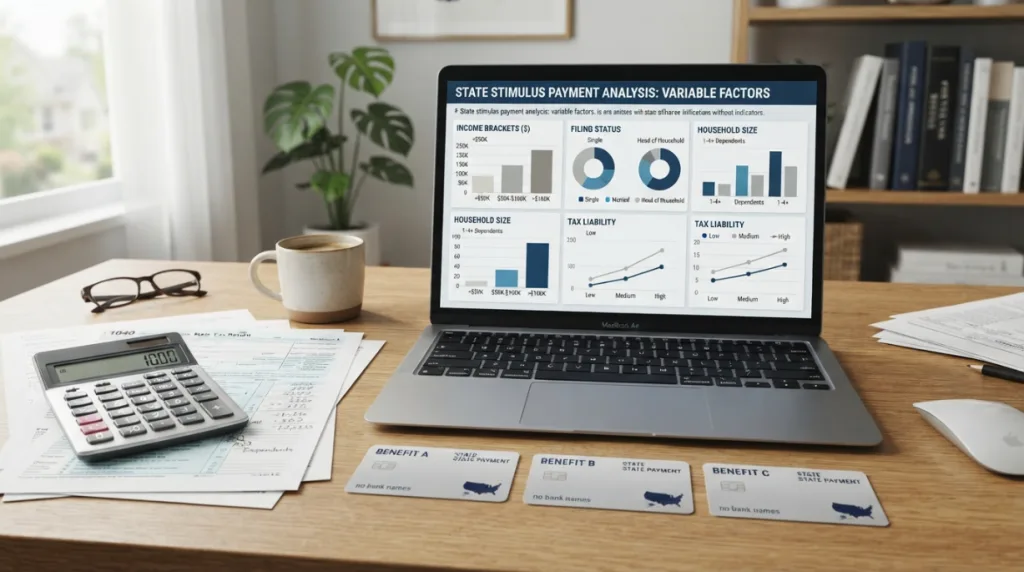
One program might provide a fixed amount to eligible residents. Another might calculate the benefit using income, tax liability, household size, filing status, or another formula.
For example, two residents in the same state could potentially receive different amounts if the program uses income or tax information to calculate the benefit.
This is why you should be careful with online headlines claiming that every resident will receive a specific amount. A payment amount may apply only to a particular program or eligibility group.
Before making financial plans around a possible payment, confirm the exact amount and calculation method for the program that applies to you.
When Will State Stimulus Checks Arrive?
There is no universal payment date for state stimulus checks.
Each state and program can establish its own distribution schedule. Some payments may be sent shortly after a tax return is processed, while others may be distributed in scheduled batches.
Direct deposits may arrive sooner than paper checks, but processing times can vary. Incorrect banking information, address changes, incomplete tax returns, or administrative processing can also delay a payment.
If a state announces a payment date but you do not receive the money immediately, that does not necessarily mean you are ineligible. Payment schedules can involve multiple distribution dates.
Are State Stimulus Payments Automatic?
Some state payments may be automatic for residents who already meet the eligibility requirements.
For example, a state may use information from previously filed tax returns to identify eligible taxpayers. In that situation, the taxpayer may not need to submit a separate application.
Other programs may require residents to apply before receiving assistance. This is especially possible when the program targets a particular group or requires information that the state does not already have.
Never assume that a payment is automatic. Check the requirements of the specific program before waiting for a payment that may require an application.
Do You Need to File a Tax Return?
In many tax-rebate programs, filing a state tax return can be an important requirement because the state uses information from that return to determine eligibility.
However, the exact requirement varies.
Some programs may be available to people who do not normally owe state income tax, while other programs may use a separate application process. Property-tax assistance can also have requirements that are unrelated to a standard income-tax filing.
If you believe you may qualify for a state payment, review the program’s eligibility rules carefully rather than assuming that filing—or not filing—a tax return automatically qualifies you.
How to Check Whether Your State Has a Payment Program
The safest way to verify a state stimulus or rebate program is to check information published by the relevant state government.

Depending on the state, the responsible agency could be called the Department of Revenue, Department of Taxation, Department of Treasury, or another government office.
Look for information about:
- Eligibility requirements
- Income limits
- Residency rules
- Filing requirements
- Application deadlines
- Payment amounts
- Distribution dates
- Direct deposit information
- Payment-status tools
- Contact information
Government agencies can update program information when laws, deadlines, or funding change. Checking current information is therefore more reliable than relying on an old social media post or an article written for a previous year.
How to Check Your State Stimulus Payment Status
If you believe you qualify for a payment, start by confirming that your state has actually approved a program that applies to you.
Next, determine whether the payment is automatic or requires an application. If an official payment-status tool exists, use it to determine whether your payment has been processed.
You may need information from your tax return or other details to verify your identity and payment status.
If the state says your payment was issued but you have not received it, check whether the payment was sent through direct deposit or by mail. You should also make sure your address and banking information were accurate when you filed or applied.
What If You Did Not Receive Your Expected Payment?
Not receiving an expected payment does not always mean that the program rejected your application.
Several issues can cause delays. Your tax return may still be processing, your application may require additional review, or your payment may be scheduled for a later distribution date.
Start by reviewing the eligibility requirements again. Then confirm that you submitted all required information before contacting the relevant state agency.
If the official agency confirms that you were eligible and the payment was issued, follow its instructions for investigating a missing payment.
Avoid paying third-party websites to “recover” a government payment unless you have independently verified that the service is legitimate and necessary.
State Stimulus Checks and Federal Stimulus Checks Are Not the Same
This distinction is especially important because online searches often combine federal and state relief programs.
A federal stimulus payment is a national program. A state stimulus payment, rebate, or relief program is created by a particular state.
Therefore, someone can receive a state tax rebate even when there is no new federal stimulus payment available to everyone.
When reading an online claim, ask three questions:
- Is the payment federal or state-funded?
- Is it a stimulus payment, tax rebate, refund, or tax credit?
- Does the program actually apply to my state and eligibility group?
These questions can help you avoid confusing unrelated programs.
Are State Stimulus Checks Taxable?
The tax treatment of a state payment depends on the nature of the payment and the applicable tax rules.
A state tax refund, rebate, credit, or relief payment may have different federal or state tax consequences. The answer can also depend on whether you previously received a tax benefit for the amount involved.
For that reason, you should not assume that every state payment is automatically taxable or automatically tax-free.
If you receive a significant state payment, review the applicable tax guidance for that specific program before filing your tax return. If the rules are complicated, consider consulting a qualified tax professional.
How State Stimulus Scams Work
Stimulus-related topics attract scammers because many people search for information about government payments.
A scammer may send an email or text claiming that you have an unclaimed stimulus payment. The message may ask you to click a link, provide banking information, pay a processing fee, or confirm sensitive personal information.
These messages can look convincing, especially when they use government-related language.
Be particularly cautious if someone promises a guaranteed payment or asks for money before you can receive a supposed government benefit.
How to Protect Yourself From Stimulus Scams
You can take several simple steps to reduce the risk of becoming a victim.
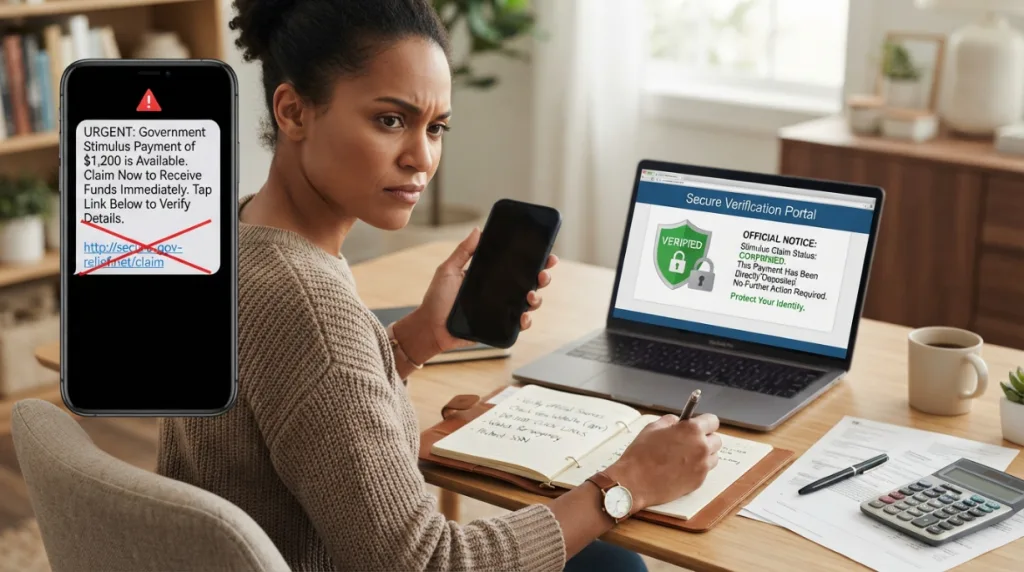
First, verify the program through your state’s official government website. Do not rely solely on a message, social media post, or advertisement.
Second, avoid entering sensitive information into unfamiliar websites. A legitimate government program should provide clear information about the agency responsible for administering it.
Third, be suspicious of urgent messages that claim you must act immediately to avoid losing a payment.
Finally, remember that legitimate government programs have defined eligibility requirements. A message promising money to “everyone” without explaining the actual program should be treated cautiously.
Common Mistakes People Make
People often make mistakes when researching state stimulus checks because several different types of financial relief use similar language.
One common mistake is assuming that a state rebate is the same as a federal stimulus payment. Another is believing that every resident automatically qualifies.
Some people also rely on payment amounts mentioned in old articles. State programs can change, so information from an earlier year may no longer apply.
Another mistake is ignoring application deadlines. Even if a program exists, missing the deadline can prevent an otherwise eligible resident from receiving the benefit.
Finally, some people share unverified payment claims on social media. Always confirm important financial information through an official government source before taking action.
What Should You Do If You Think You Qualify?
Start by identifying the exact program available in your state.
Read the eligibility requirements carefully and determine whether the program is based on state income taxes, property taxes, residency, household income, or another factor.
Next, check whether you need to file a tax return or submit a separate application. If an application is required, pay attention to the deadline and documentation requirements.
After applying, keep records of your submission and any confirmation information. This can make it easier to check your status later if there is a delay.
Most importantly, do not make major financial decisions based on an expected payment until you have confirmed that you qualify and understand when the money should arrive.
Frequently Asked Questions
Are there state stimulus checks in 2026?
Some states may offer rebates, refunds, tax credits, or other forms of financial relief in 2026. However, the availability and requirements depend on the individual state and program.
Will everyone receive a state stimulus check?
No. State programs generally have specific eligibility requirements. Residency, income, tax filing status, property ownership, and other factors can affect eligibility.
How can I find out if I qualify?
Check the current requirements of the program administered by your state. Look at residency rules, income limits, filing requirements, deadlines, and other eligibility conditions.
Do state stimulus payments have the same amount everywhere?
No. Payment amounts vary by state and program. Some benefits may be fixed, while others are calculated using taxpayer or household information.
Are state stimulus checks automatically deposited?
Some payments may be sent automatically to eligible residents, while other programs require an application. The payment method depends on the individual program.
Can I receive a state rebate if I do not owe state income tax?
Possibly. Eligibility depends on the program. Some rebates or credits can be available to people who have little or no state income-tax liability, while other programs may have different requirements.
What should I do if my payment is late?
First, check the official payment schedule and confirm that you meet the eligibility requirements. Then use the state’s payment-status system if available or contact the responsible agency.
Are state stimulus checks the same as tax refunds?
No. A regular tax refund generally results from having paid more tax than you owed. A special state rebate or relief payment is created under a particular program and can have separate eligibility rules.
Can a state stimulus payment affect my taxes?
It can, depending on the type of payment and the applicable tax rules. Review the tax treatment of the specific payment rather than assuming that every state payment has the same treatment.
How can I avoid fake stimulus check websites?
Use official state government websites to verify programs, eligibility, deadlines, and payment status. Be cautious of websites or messages that request fees or sensitive information in exchange for a promised payment.
Final Thoughts
State stimulus checks can provide meaningful financial relief, but the term covers more than one type of government payment. Tax rebates, refunds, tax credits, property-tax assistance, and targeted relief programs can all appear in searches for state stimulus checks.
The most important point is that there is no single set of rules for every state. Eligibility, payment amounts, deadlines, and application requirements can differ significantly.
If you think you may qualify for a payment in 2026, identify the exact program available in your state and review its current requirements. Do not rely on outdated payment amounts or social media claims.
Understanding the difference between a state rebate and a federal stimulus payment can also help you avoid confusion. Before providing personal information or expecting a payment, verify the program through the appropriate official state agency.
By checking the current rules, meeting the required deadlines, and keeping your tax and application information accurate, you can make a more informed decision about any state financial relief that may be available to you.


Leave a Reply