

In this article
- What Is a Shortened Descriptor, in Plain English?
- Why This Tiny Field Is a Revenue Lever
- Shortened Descriptor vs. Full Descriptor vs. Dynamic Suffix
- Soft vs. Hard Descriptors: The Timing Trap Most Merchants Miss
- The Character Rules You Actually Need to Memorize
- How a Good Shortened Descriptor Actually Prevents Chargebacks
- Static Only vs. Prefix Plus Suffix: Which Setup Fits Your Business?
- How to Set Up a Shortened Descriptor in Stripe (Step by Step)
- Best Practices for a High-Performance Shortened Descriptor
- Good vs. Bad Descriptors: Real-World Examples
- Card Network Rules You Cannot Ignore in 2026
- Shortened Descriptors on Non-Stripe Processors
- Testing and Auditing Your Descriptor Every Quarter
- Common Mistakes That Kill Descriptor Performance
- Beyond Descriptors: The Chargeback-Prevention Stack
- Advanced: Descriptors for Multi-Brand and White-Label Businesses
- The Business Case: What a 1% Chargeback Reduction Actually Looks Like
- Descriptors as a Trust Multiplier
- FAQ: Shortened Descriptors Answered
- Final Thoughts
Picture this. It’s Sunday morning, your customer is drinking coffee and scrolling through their banking app, and they spot a charge that reads “SP*XY7T2Q.” They don’t remember buying anything from “SP*XY7T2Q.” They squint. They check with their spouse. Nobody knows. Ten seconds later, they tap “Dispute this transaction,” and the small business that actually shipped them a beautiful $89 candle three weeks ago is now on the hook for the refund, the shipping, the chargeback fee, and a nick to their processor’s risk profile.
The culprit isn’t stolen card data. It isn’t a fraudster. It’s a badly written shortened descriptor — the tiny piece of text that most merchants set once during onboarding and forget about forever.
This guide fixes that. In the next few thousand words, you’ll learn exactly what a shortened descriptor is, how the character math works across Stripe, Square, Braintree and Adyen, what Visa and Mastercard actually enforce in 2026, and how a five-minute Dashboard tweak can quietly recover thousands of dollars a year in avoided disputes.
What Is a Shortened Descriptor, in Plain English?
A shortened descriptor is a short, fixed piece of text — usually between 2 and 10 characters — that always appears at the beginning of your billing descriptor on a customer’s credit or debit card statement. Stripe and most modern processors call it a static prefix, because it never changes, no matter what the customer buys or which of your products they subscribe to.
Think of it as your billing signature. When someone scans their statement, the shortened descriptor is the anchor that whispers, “Yes, this is that brand you like.” Everything after it — an order number, a subscription tier, a product name — flexes on a per-transaction basis to give the customer extra context.
Here’s how the pieces fit together on any card charge processed through Stripe:
- Shortened descriptor (static prefix): 2–10 fixed characters, e.g.,
TOUGHMUD - Separator: An asterisk plus a space, e.g.,
* - Dynamic suffix: Flexible text describing this specific charge, e.g.,
OCT MARATHN - Complete descriptor customers see:
TOUGHMUD* OCT MARATHN
The total string — prefix + asterisk + space + suffix — has to fit within 22 characters, which is where most merchants trip up. If you want the official rulebook straight from the source, the Stripe documentation on statement descriptors is the definitive reference for the exact character math.
Why This Tiny Field Is a Revenue Lever
Most business owners treat descriptors like plumbing — invisible, uninteresting, done. But the numbers tell a very different story.
Chargebacks911’s 2026 Chargeback Field Report shows that 83.4% of enterprise merchants reported an increase in friendly fraud last year, and Chargebacks911 pegs friendly fraud at roughly 43.8% of total chargebacks. Juniper Research goes further, forecasting that friendly fraud will jump from around 22% of global chargebacks in 2026 to 28% by 2031, adding up to a projected $15.9 billion in annual losses.
The financial pain per dispute is just as loud. According to a 2025 Mastercard analysis, the average chargeback costs merchants around $128 when you add third-party fees ($46 on average) to internal labor ($82). Direct processor fees typically land in the $20–$100 per dispute range, and that fee gets charged whether you win or lose the case.
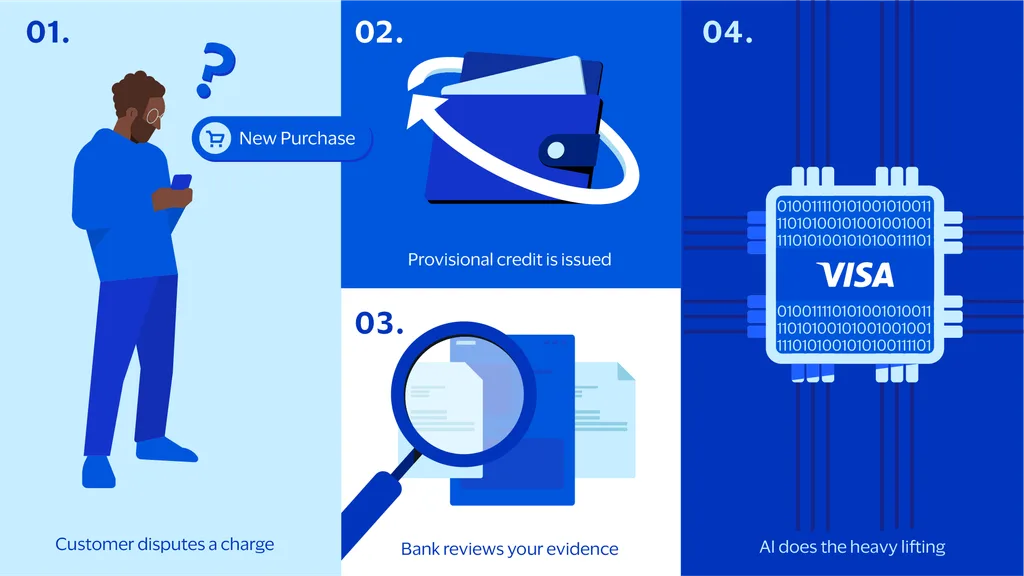
Now overlay one uncomfortable fact from Chargebacks911’s data: roughly 45% of chargebacks are filed because customers simply don’t recognize the charge on their statement. That means nearly half of the disputes hitting your business right now are, in principle, solvable with a clearer descriptor.
For a broader view of how these disputes actually escalate through the card networks, our explainer on what is a chargeback walks through the full mechanics.
Shortened Descriptor vs. Full Descriptor vs. Dynamic Suffix
The vocabulary gets muddy fast, so here’s a clean cheat sheet you can bookmark.
| Term | Length | Changes per transaction? | Example |
|---|---|---|---|
| Shortened descriptor (static prefix) | 2–10 characters | No | TOUGHMUD |
| Dynamic suffix | Remaining characters after the prefix, asterisk and space | Yes | OCT MARATHN |
| Complete / full descriptor | 5–22 characters total | Combination | TOUGHMUD* OCT MARATHN |
| Static descriptor (no suffix) | 5–22 characters | No | TOUGHMUDDER LLC |
The full descriptor is what your customer actually sees. The shortened descriptor is what you configure once at the account level. The dynamic suffix is what your integration passes on a per-charge basis, which is where the real chargeback-prevention magic happens.
Soft vs. Hard Descriptors: The Timing Trap Most Merchants Miss
There’s a second layer that trips up even experienced e-commerce operators.
A soft descriptor is the temporary text that appears the moment a card is charged, while the transaction is still pending in the customer’s account. A hard descriptor is the permanent text that replaces it once the transaction fully settles, usually a business day or two later.
Why does this matter? Because customers are checking their mobile banking apps in real time now. If they open the app right after they buy — while the transaction is still pending — the soft descriptor is the first thing they see. If your soft descriptor says “STRIPE*PAY” and your hard descriptor says “BLMBOT* SEP CANDLE,” you’ve just triggered exactly the confusion you were trying to prevent. Ask your processor to align the two wherever possible, and always test the pending state during your quarterly audit.
The Character Rules You Actually Need to Memorize
Card networks and processors enforce hard formatting rules. Break them and your descriptor gets silently rejected, truncated, or replaced with your legal entity name — which is almost never the name your customer knows.
For any card charge running through Stripe (and, by extension, most modern processors that inherit similar rules), these are the constraints:
- Total length: 5 to 22 characters, including the asterisk and space between prefix and suffix.
- Shortened descriptor (prefix) length: 2 to 10 characters.
- Character set: Latin characters only. No emojis, no accents, no non-ASCII text.
- At least one letter is required. If you use both a prefix and a suffix, each side must contain at least one letter.
- Banned characters:
< > \ ' " *— the asterisk is reserved as the separator. - Must reflect your DBA. Card networks reject descriptors that read like generic terms, unrelated URLs, or spammy keywords.
Different processors set slightly different ceilings on top of the network rules:
- Stripe: 5–22 characters total; 2–10 for the shortened descriptor.
- Adyen: Up to 22 alphanumeric characters for the shopper-facing descriptor.
- Square: Around 20 characters for the merchant-controlled portion of the descriptor.
- Braintree / PayPal: The company/DBA section must be exactly 3, 7, or 12 characters, with a product descriptor of up to 18, 14, or 9 characters respectively.
Then the issuing bank on the customer’s end can truncate again. Chargebacks911 notes that some issuers cut descriptors to as few as 15 characters before display. The takeaway is simple: design for the narrowest window, not the most generous one.
How a Good Shortened Descriptor Actually Prevents Chargebacks
A clean shortened descriptor short-circuits customer confusion in four measurable ways:
- Instant recognition. The brand name lands before the amount, so cognitive load drops to zero.
- Purchase context via the suffix. Detail like
SEP RENEWALorORDR2245jogs memory faster than a raw dollar figure. - Contact discovery. A phone number tucked into the descriptor when characters allow gives the customer a “call you first” option.
- Better outcomes from network tools. Visa’s Order Insight (via Verifi) and Mastercard’s Consumer Clarity (via Ethoca) both pull descriptor data into the customer’s banking app to head off disputes before they’re filed. Garbled descriptors weaken those tools; clean ones supercharge them.
The Order Insight impact is huge. According to industry analysis, Verifi Order Insight deflects 40–45% of confirmed first-party misuse disputes, and some subscription merchants reach up to 90% deflection. On the Mastercard side, Ethoca’s own data shows that 67% of consumers would dispute fewer transactions if more purchase details were available in their banking app, and case studies have documented Consumer Clarity reducing chargebacks by up to 23% across categories.
None of that works without a descriptor the customer can actually read.
Static Only vs. Prefix Plus Suffix: Which Setup Fits Your Business?
Not every business needs a dynamic suffix. Here’s how to decide.
A static-only descriptor works well when:
- You sell a single flagship product or service.
- Your brand name is instantly recognizable on its own.
- You run a small subscription business with one plan.
- You want the simplest possible configuration and reporting.
A shortened descriptor plus dynamic suffix wins when:
- You sell multiple products or SKUs.
- You operate multiple brands or storefronts on one processing account.
- You process subscriptions where the plan tier, renewal month, or billing period matters.
- You need to surface an order ID, event date, or category on each charge.
- You run a marketplace or Connect platform and want each seller identified individually.
The rule of thumb: if a customer might buy from you more than once and not remember which purchase drove which charge, the dynamic suffix is worth setting up.
How to Set Up a Shortened Descriptor in Stripe (Step by Step)
Stripe makes descriptor configuration reasonably painless, though the settings hide in different places depending on how you use the platform.
Dashboard setup (for standard accounts):
- Log in to your Stripe Dashboard and open Settings → Business → Public details.
- Find the Statement descriptor field. Enter your full 5–22 character static descriptor. This value covers non-card charges like ACH.
- Below it, find the Shortened descriptor field. Enter your 2–10 character prefix — this is what anchors every card payment.
- Save. Allow up to 24 hours for card networks to propagate the change.
Per-transaction dynamic suffixes (via API):
If you’re technical, set statement_descriptor_suffix on any PaymentIntent so each charge carries its own suffix. Stripe automatically joins it with your shortened descriptor using the asterisk-and-space separator, then validates the 22-character ceiling. For invoices and subscriptions, you can also set statement_descriptor directly on the Product or Invoice object to override the default.
Connect platforms (marketplaces):
Marketplace operators can push descriptors to each connected account after onboarding using settings.payments.statement_descriptor and settings.card_payments.statement_descriptor_prefix. This is critical because it lets every seller appear with their own brand rather than the platform’s — which is often the single biggest driver of marketplace disputes.
Best Practices for a High-Performance Shortened Descriptor
Configuration is the easy part. Design is where the money is.
- Lead with the name customers know. If your DBA differs from your legal entity, always use the DBA. If your storefront is best known by its URL, use the URL (minus the extension).
- Skip location codes. “NYC” or “CA” burns four characters and rarely helps memory. Reserve the space for product context.
- Add a phone number if the suffix allows. Even a seven-digit fragment gives customers a fallback that isn’t the bank.
- Match your descriptor to your marketing voice. If you advertise as “Bloom Botanicals” but the descriptor reads “BB LLC 4488,” every marketing dollar loses a bit of leverage.
- Ban confusing abbreviations. “SP*ZQ88” tells nobody anything. If you must shorten, use consonant clusters from your brand — “BLMBOT” beats “BB4489” every time.
- Test across major issuers. Open your descriptor on Chase, Capital One, Bank of America and Amex statements. Each one truncates differently.
- Revisit after every rebrand. A rebrand, product-line change, or acquisition should trigger a descriptor audit within 30 days.
Good vs. Bad Descriptors: Real-World Examples
Sometimes the fastest way to learn the rules is to see them applied. Here’s how the same business types look with a weak versus a strong descriptor.
| Business type | Weak descriptor | Strong descriptor | Why the strong one works |
|---|---|---|---|
| Coffee subscription | JVA*3382 | BRWCLUB* SEP BAG | Brand + billing month + product |
| SaaS platform | LLC7742 | NOTELY* PRO PLAN | Brand + tier immediately visible |
| Fitness event | EVT9922*ORDER | TOUGHMUD* 10K OCT | Brand + product + timing |
| E-commerce store | PAY*XYZ | BLMBOT* ORDR2245 | Brand abbrev + order reference |
| Nonprofit fundraising | GB*ORG | RIVERPTA* DUES | Recognizable org + purpose |
| Digital course | TEACH*47882 | MENTRLY* JS COURSE | Brand + specific course line |
The pattern is stable across every category: brand recognition first, context second, mystery never.
Card Network Rules You Cannot Ignore in 2026
Visa and Mastercard both raised the stakes this year. Understanding the enforcement environment matters because a runaway chargeback rate can drop you straight into a monitoring program.
Visa Acquirer Monitoring Program (VAMP): On April 1, 2026, Visa tightened its excessive-merchant threshold from 2.20% to 1.50% in the AP, Canada, EU and U.S. regions. The full enforcement window closes on October 1, 2026, with per-dispute fees around $8 once a merchant crosses the line. VAMP now blends fraud (TC40) reports with disputes, so a fuzzy descriptor that triggers more “I don’t recognize this” claims can push you into monitoring even if the underlying transactions were completely legitimate. For a merchant-side breakdown, the Chargeback Gurus VAMP guide is one of the clearer explainers online.
Mastercard Excessive Chargeback Program (ECP): Mastercard classifies a merchant as an Excessive Chargeback Merchant (ECM) when they receive 100 or more monthly chargebacks and their chargeback-to-transaction ratio exceeds 1.5% for two consecutive months. Fines start around $1,000 in month two and can escalate substantially the longer you stay in the program.
Merchant Category Code (MCC): Your MCC travels alongside the descriptor and shapes how issuers categorize the transaction. A coffee subscription miscoded as MCC 5411 (grocery) will read strangely in the customer’s spending analytics, which compounds descriptor confusion.
American Express and Discover: Both networks apply their own truncation logic and often display less of your descriptor than Visa/Mastercard. Amex in particular is aggressive about cutting characters, so if a large share of your customers pay with Amex, design your descriptor to survive at 12–15 visible characters.
Shortened Descriptors on Non-Stripe Processors
While Stripe popularized the “shortened descriptor” terminology, the same concept lives across every major processor under slightly different names.
- Square: Sets the “statement description” in-Dashboard. The customer-visible portion sits at roughly 20 characters and supports dynamic suffixes.
- Braintree / PayPal: Uses a rigid three-slot structure — the company/DBA field must be exactly 3, 7 or 12 characters, and the product descriptor extends up to 18, 14 or 9 characters respectively. The Braintree descriptors documentation walks through the exact combinations.
- Adyen: Supports a “shopper statement” of up to 22 alphanumeric characters per API call.
- Authorize.net: Configures a merchant descriptor per profile through the merchant interface.
The strategic playbook stays identical everywhere: lock in a static, recognizable prefix; use a dynamic suffix for per-charge context; stay inside the tightest character ceiling in your network.
Testing and Auditing Your Descriptor Every Quarter
Setting the descriptor once is not enough. Real merchants run a quick audit every 90 days.
- Run a $1 test charge on your own card across every issuer your customer base actually uses.
- Screenshot the descriptor twice — once during the pending phase (soft descriptor) and once after settlement (hard descriptor).
- Show the screenshots to someone who doesn’t work at your company. If they can’t identify your brand in five seconds, rewrite the descriptor.
- Focus on subscription renewals. Renewals are the number-one chargeback category, and “SP*RENEW” on a customer’s statement six months after they signed up is a dispute waiting to happen.
- Log dispute reason codes. Repeated “10.4 Fraud – Card Absent Environment” or “13.1 Merchandise/Services Not Received” reason codes tied to legitimate, delivered orders usually point directly at your descriptor.
You should also enroll in Verifi Order Insight (Visa side) and Ethoca Consumer Clarity (Mastercard side) if your acquirer supports them. Both push richer transaction data — including your descriptor plus merchant contact info and, in some cases, product images — into the customer’s mobile banking app the moment they tap “Dispute.” That single feature reroutes a huge share of would-be chargebacks into refund conversations or simple recognitions instead.

Common Mistakes That Kill Descriptor Performance
Even seasoned merchants keep tripping over the same avoidable errors.
- Using your legal LLC name instead of your DBA. “XY7T Holdings LLC” is invisible to your customer. “BrewClub” is not.
- Stuffing SEO keywords into the descriptor. Card networks reject spammy descriptors and issuers block them.
- Copy-pasting a competitor’s descriptor pattern. What works for a category leader may confuse your customers.
- Ignoring the soft descriptor. Configure both temporary and settled descriptors identically wherever possible.
- Publishing a phone number that dumps to voicemail. If the descriptor promises a live line, the line must be live — otherwise the next call goes straight to the bank.
- Forgetting Connect sub-accounts. Platforms often polish the main account and leave connected sellers with default descriptors, driving marketplace-wide disputes.
- Never updating after a rebrand. Your old brand’s descriptor is invisible dead weight burning up disputes every month.
For a related layer of transaction-clarity best practices, our guide to the immedia merchant descriptor shows how banks parse and display the information you provide.
Beyond Descriptors: The Chargeback-Prevention Stack
A great shortened descriptor is table stakes, not a silver bullet. Pair it with the following:
- 3D Secure 2.0 authentication, which shifts liability for most fraud disputes to the issuer. Tools like Verified by Visa are the consumer-facing version of the same protocol.
- Order confirmation emails that visually match your descriptor, so customers see the same brand twice within minutes of purchase.
- Post-purchase SMS receipts with a link back to their account and a support number.
- Recurring billing reminders sent 3–5 days before renewal. Industry data suggests these reminders alone can cut subscription dispute rates by 30–50% because they intercept the “wait, I forgot about this” panic before it hits the bank.
- Refund-first policies for low-ticket items, where the operational cost of fighting the dispute exceeds the product margin.
- Itemized digital receipts stored inside the customer’s account so they can self-verify the charge.
Layered defense wins. A descriptor that reads BLMBOT* ORDR2245, followed by a confirmation email titled “Your Bloom Botanicals Order #2245” and a receipt inside the customer account, makes an accidental dispute nearly impossible.
Advanced: Descriptors for Multi-Brand and White-Label Businesses
If you run several brands under one processor, you have two paths.
The first path is Stripe Connect (or the equivalent on other platforms). Each brand gets its own connected account with a brand-specific static prefix, and every customer sees the brand they actually bought from — no matter how the parent company files its taxes. This is almost always the winner beyond side projects because it keeps chargeback risk isolated per brand and makes accounting significantly cleaner.
The second path is a single neutral prefix (“PARENT*”) paired entirely with dynamic suffixes (“PARENT* BRANDA ORDER”). It’s simpler to set up but less recognizable, and it lets a struggling brand drag down the whole account’s dispute reputation with acquirers.
For platforms operating in the U.S., the descriptor strategy is also worth revisiting whenever you launch a new region — brand recognition varies wildly by geography, and a descriptor that works in New York may bomb in São Paulo.
The Business Case: What a 1% Chargeback Reduction Actually Looks Like
Numbers make the point sharper than adjectives. Assume you process $500,000 a month with a 1.2% chargeback rate, which sits right around the e-commerce industry average.
- Baseline chargebacks: 60 disputes × $75 average value = $4,500 in refunds.
- Baseline processor fees: 60 × $30 = $1,800 in dispute fees.
- Baseline internal cost: 60 × $82 in labor and review time = $4,920.
- Total monthly cost: roughly $11,220.
Now imagine a clean shortened descriptor combined with Order Insight cuts unrecognized-charge disputes by even 30%. That’s roughly $3,366 recovered every month, or about $40,000 a year — from a five-minute Dashboard change plus a network-tool enrollment.
There aren’t many wins in payments that pay back that fast for that little effort.
Descriptors as a Trust Multiplier
Payments researchers increasingly treat the descriptor as a brand touchpoint, not a compliance afterthought. Customers who see a clean, professional descriptor rate the merchant more trustworthy on post-purchase surveys, and enterprise brands like Netflix, Spotify and Amazon have obsessed over descriptor consistency for years — because they know a fuzzy line on a statement can undo months of onboarding polish in a single Sunday morning.
Small businesses can borrow that same playbook without a payments team. Pick a descriptor. Say it out loud. If it sounds like a brand and not a serial number, you’re already ahead of most of your competitors.
FAQ: Shortened Descriptors Answered
Can I change my shortened descriptor after setup?
Yes. Most processors let you update the shortened descriptor anytime through the Dashboard. Changes usually propagate within 24 hours for new transactions, though they do not retroactively rewrite historical charges on customer statements.
What happens if I leave the shortened descriptor blank?
Your processor falls back to your static statement descriptor (the full 5–22 character version). For non-card payments this is fine, but card payments then lose the ability to use dynamic suffixes, and every charge looks identical on statements.
Does the shortened descriptor affect my SEO or online rankings?
No — descriptors appear only on bank statements and issuer apps, not on the public web. Aligning your descriptor with your web brand still helps indirectly, because customers who trust the charge on their statement leave better reviews and repeat-purchase more often.
Why does my descriptor look different on Chase vs. Bank of America?
Issuing banks each parse and truncate descriptors differently. Some strip the asterisk separator, others slice everything after 15 characters. Test across the top issuers your customer base uses and design your descriptor for the narrowest window.
Can I include emojis, symbols, or non-English characters?
No. Card networks require Latin ASCII characters only. Emojis, accented letters and non-Latin scripts either get stripped or cause the transaction to fail validation entirely.
Do shortened descriptors work for ACH transfers?
Shortened descriptors are primarily a card-network feature. ACH transactions use the “static statement descriptor” field instead. Configure both fields in your Dashboard to cover every payment type.
How do I know my descriptor is actually causing chargebacks?
Pull a report of chargebacks by reason code. High volumes of “10.4 Fraud – Card Absent” or “13.1 Not Received” tied to legitimate, delivered orders usually point at a descriptor problem. Enable Verifi Order Insight or Ethoca Consumer Clarity to confirm — both surface the exact deflection data merchants need to prove the diagnosis.
Is a phone number in the descriptor really worth the characters?
For many merchants, yes. Even a seven-digit fragment gives customers a “call you first” option that consistently outperforms adding one more word of product context, because it prevents the dispute from ever reaching the bank in the first place.
Final Thoughts
Your shortened descriptor is the last thing your customer sees from you before they decide whether a charge is real. Treat it like a headline — short, honest, unmistakably yours. Configure it once with care, pair it with the network tools your acquirer offers, revisit it after every rebrand, and audit it every quarter across the issuers your customers actually use. The compounding return on that tiny piece of text — measured in retained revenue, avoided fees, and preserved customer trust — is one of the highest-leverage moves in modern e-commerce.
Get your descriptor right, and you stop paying for chargebacks that never should have happened in the first place.


Leave a Reply