
In this article
- Key Takeaways
- What Are Monthly Expenses?
- 1. Track Every Expense
- 2. Separate Needs From Wants
- 3. Create a Monthly Budget
- 4. Cancel Unused Subscriptions
- 5. Cut Back on Food Delivery
- 6. Plan Your Grocery Shopping
- 7. Review Your Phone and Internet Plans
- 8. Lower Your Utility Bills
- 9. Reduce Transportation Costs
- 10. Wait Before Buying Non-Essential Items
- 11. Compare Recurring Bills
- 12. Set a Shopping Limit
- 13. Manage High-Interest Debt
- 14. Keep Some Money for Fun
- 15. Review Your Budget Every Month
- Cutting Everything at Once
- Ignoring Small Recurring Charges
- Buying Because Something Is on Sale
- Choosing Only the Cheapest Option
- Forgetting Irregular Expenses
- How can I reduce my monthly expenses quickly?
- What expenses should I cut first?
- How can I reduce household expenses?
- How can I save money every month?
- Is it better to cut expenses or increase income?
- How much should I reduce my monthly expenses?
Key Takeaways
- First, track your spending for 30 days.
- Next, separate essential costs from non-essential spending.
- Then, cancel subscriptions you rarely use.
- Reduce food delivery and plan your grocery shopping.
- Review phone, internet, insurance, and other recurring bills.
- Look for practical ways to lower transportation and utility costs.
- Use a waiting period before buying non-essential items.
- Choose a debt repayment method that fits your situation.
- Finally, review your budget every month.
What Are Monthly Expenses?
Monthly expenses are the costs you pay regularly for your household and lifestyle. Some costs stay nearly the same each month, while others change with your spending habits.
Common monthly expenses include:
- Rent or mortgage
- Groceries
- Utilities
- Transportation
- Insurance
- Debt payments
- Phone and internet bills
- Subscriptions
- Dining out
- Entertainment
- Shopping
You cannot remove every expense. However, you can control many flexible costs.
The goal is simple: spend less on things that matter less and keep more money for important financial goals.
1. Track Every Expense
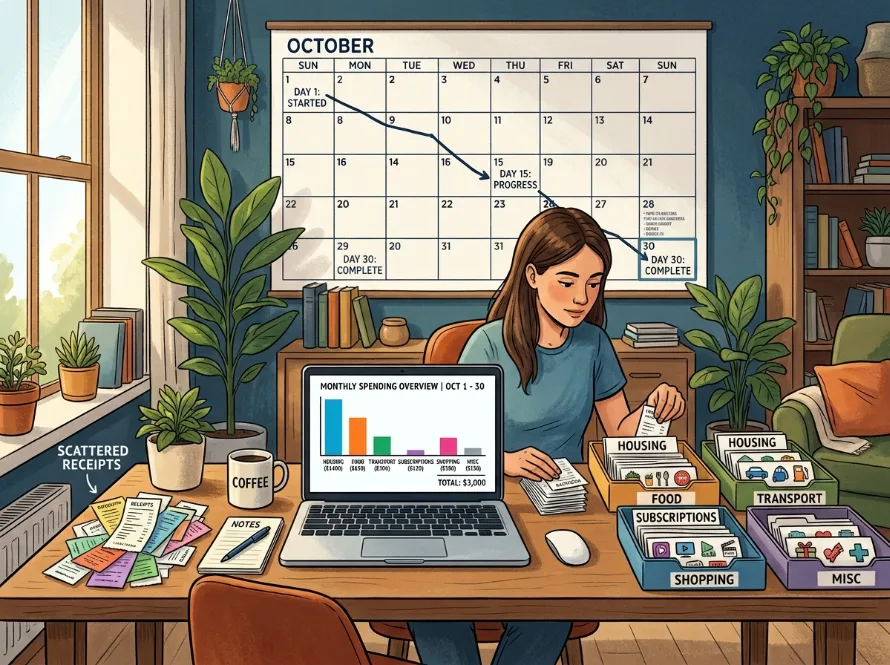
First, find out where your money goes.
Record every purchase and bill for 30 days. Include small purchases because they can add up over time.
Create simple categories such as:
- Housing
- Food
- Transportation
- Utilities
- Debt
- Insurance
- Shopping
- Entertainment
- Subscriptions
At the end of the month, review each category. Look for recurring charges, impulse purchases, and areas that regularly exceed your expectations.
Most importantly, do not try to change everything at once. Understand your spending pattern before making major cuts.
2. Separate Needs From Wants
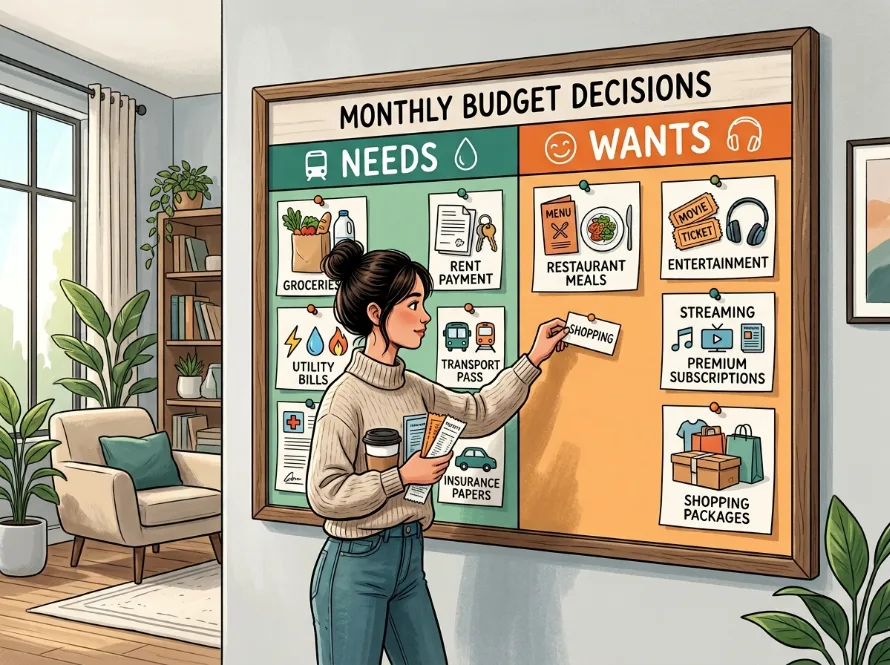
Next, separate essential costs from discretionary spending.
Essential expenses support your basic needs. They may include:
- Housing
- Basic groceries
- Utilities
- Necessary transportation
- Insurance
- Required debt payments
Discretionary expenses improve your lifestyle but are not essential. For example, they may include restaurant meals, entertainment, premium subscriptions, and impulse shopping.
You do not need to remove every discretionary expense. Instead, give each category a reasonable limit.
This approach can help you cut unnecessary expenses without making your budget too restrictive.
3. Create a Monthly Budget
Once you understand your spending, create a monthly budget.
Start with your take-home income. List your essential costs first. Then, add savings, debt payments, and flexible spending.
A simple structure looks like this:
Income → Essential costs → Savings → Debt payments → Flexible spending
Your budget should match your real financial situation. For example, someone with high housing costs may need a different budget from someone with low housing costs.
Therefore, avoid copying another person’s budget without considering your own numbers.
4. Cancel Unused Subscriptions
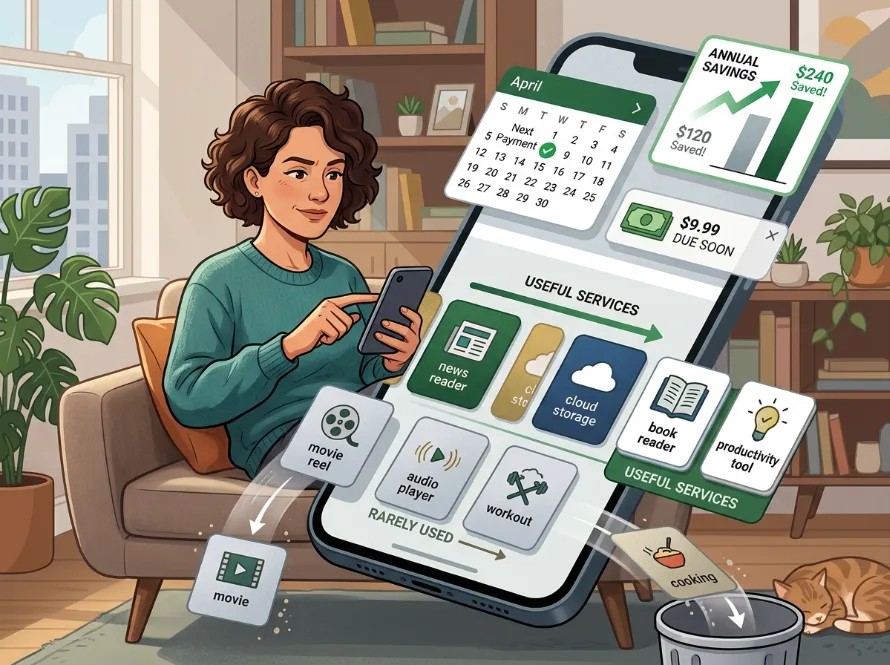
Recurring subscriptions can quietly increase your monthly spending.
For example, check your bank and credit card statements for automatic payments.
Look for:
- Streaming services
- Fitness memberships
- Mobile apps
- Cloud storage
- Software
- Online memberships
- Premium services
Ask yourself whether you use each service enough to justify its cost.
If you rarely use a service, cancel it. Alternatively, choose a cheaper plan if you still need it.
Simple example
Suppose you pay:
- $12 for one subscription
- $10 for another
- $8 for a third
Canceling all three would save $30 per month. Over a year, that equals $360.
Your actual savings will depend on your subscription costs.
5. Cut Back on Food Delivery
Food delivery can become expensive when you order several times each week.
Instead of removing restaurant meals completely, set a monthly limit.
Try these ideas:
- Cook at home more often.
- Prepare lunch before work.
- Plan meals for several days.
- Use leftovers.
- Reduce delivery orders.
- Choose lower-cost meals.
- Set a weekly restaurant budget.
For example, replacing a few delivery orders with home-cooked meals can reduce your monthly food spending.
The right target depends on your current habits. Therefore, choose a limit that you can maintain.
6. Plan Your Grocery Shopping
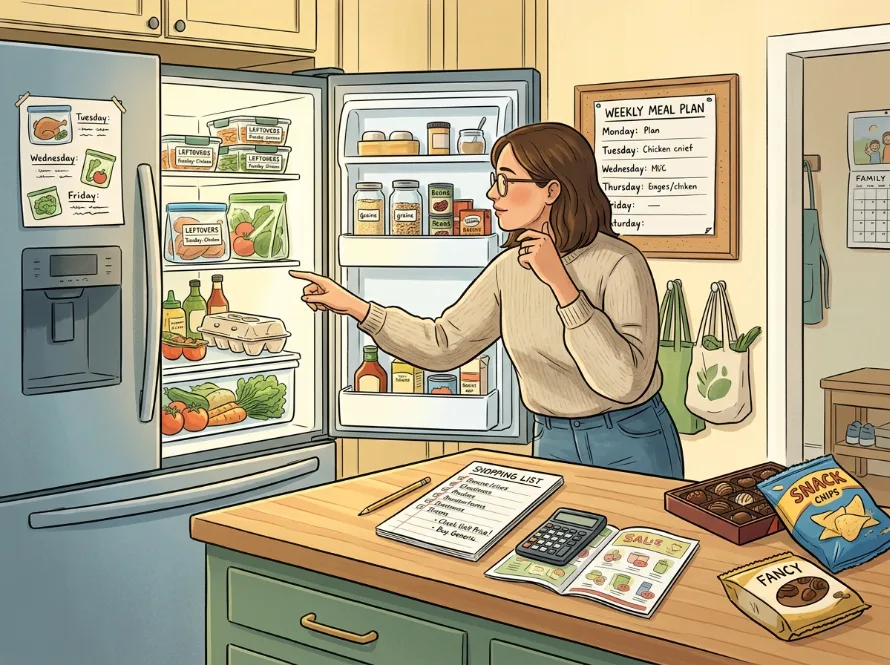
Before shopping, check your pantry, refrigerator, and freezer.
Use food you already have. Then, plan several meals around those ingredients.
Follow this simple process:
- Check what you already have.
- Plan several meals.
- Write a shopping list.
- Set a spending limit.
- Compare unit prices.
- Buy realistic quantities.
- Check expiration dates.
Also, avoid buying something simply because the store advertises a discount.
A $10 item that you never use still costs $10.
7. Review Your Phone and Internet Plans
Your current phone or internet plan may include features you rarely use.
For this reason, review your:
- Data allowance
- Internet speed
- Add-on services
- Equipment charges
- Contract terms
- Promotional pricing
A lower plan may meet your needs.
Before switching, compare the complete monthly cost. Check taxes, equipment fees, contract conditions, and other charges.
As a result, you can avoid choosing a plan that looks cheap but costs more after additional fees.
8. Lower Your Utility Bills
Utility costs can change from month to month. Your daily habits can affect the final bill.
You can try:
- Turning off unused lights
- Using efficient lighting when replacing bulbs
- Avoiding unnecessary appliance use
- Fixing water leaks quickly
- Reducing unnecessary hot-water use
- Running full laundry loads when practical
- Using heating and cooling efficiently
However, your potential savings depend on your home, climate, utility rates, and current habits.
Focus on changes that you can maintain throughout the year.
9. Reduce Transportation Costs
Transportation involves more than fuel. Your total cost may include parking, maintenance, insurance, and vehicle payments.
First, review your regular trips. Then, look for journeys that you can reduce or replace.
You may be able to:
- Use public transportation.
- Carpool with coworkers.
- Walk for short trips.
- Cycle when practical.
- Combine several errands.
- Compare fuel prices.
- Maintain your vehicle regularly.
- Remove unnecessary trips.
For example, combining several errands into one trip can reduce fuel use and save time.
You do not need to change your entire routine. A few cheaper trips each week can still make a difference.
10. Wait Before Buying Non-Essential Items
Impulse purchases can push your spending above your budget.
Instead, create a waiting period before buying something you did not plan to purchase.
Wait 24 hours before buying a smaller item. For expensive purchases, consider waiting several days.
Ask yourself:
- Do I need this?
- Do I already own something similar?
- How often will I use it?
- Can I afford it?
- Can I find a better price?
- Does it support an important financial goal?
As a result, you give yourself time to separate a real need from a temporary desire.
11. Compare Recurring Bills
Recurring bills deserve regular attention.
For example, review your:
- Phone bill
- Internet bill
- Insurance premiums
- Banking fees
- Software subscriptions
- Memberships
- Other monthly services
Compare prices, features, fees, and terms.
However, do not choose the cheapest option automatically. A slightly higher price may provide better value.
Your goal should be to reduce unnecessary costs while keeping services that you genuinely need.
12. Set a Shopping Limit
Online shopping makes spending extremely easy.
To control this habit, set a monthly limit for non-essential purchases.
You can also:
- Remove saved payment details.
- Unsubscribe from promotional emails.
- Avoid browsing shopping apps without a purpose.
- Add expensive items to a wish list.
- Compare prices before buying.
- Use what you already own.
In addition, give yourself time to think before making a purchase.
Remember: a sale does not save money when you did not need the product.
13. Manage High-Interest Debt
High-interest debt can consume a large part of your monthly income.
First, list each debt with its:
- Current balance
- Interest rate
- Minimum payment
- Due date
You can then choose a repayment strategy.
Debt Avalanche
The avalanche method targets the debt with the highest interest rate first. You continue making required payments on your other debts.
As a result, this method can reduce the amount of interest you pay over time.
Debt Snowball
The snowball method targets the smallest balance first. You continue making required payments on the other debts.
For some people, quick balance reductions can provide motivation.
Before refinancing or consolidating debt, compare interest rates, fees, and repayment terms.
14. Keep Some Money for Fun
A budget should not remove everything you enjoy.
Instead, create a reasonable amount for discretionary spending.
You might use it for:
- Hobbies
- Movies
- Restaurants
- Games
- Social activities
- Personal shopping
Set the limit before the month begins.
Once you reach that limit, pause additional discretionary spending until the next budget period.
This system gives you room to enjoy your money while protecting your financial goals.
15. Review Your Budget Every Month
Your spending can change throughout the year.
For that reason, review your budget at the end of every month.
Ask:
- Which category exceeded my limit?
- Which expense can I reduce?
- Did I pay for a service I did not use?
- Did any bill increase?
- How much did I save?
- Did I make progress toward my goals?
A 20-minute review can reveal problems early.
Finally, choose a tracking method that you can maintain. A spreadsheet, notebook, banking app, or budgeting app can all work.
How Much Can You Save by Cutting Expenses?
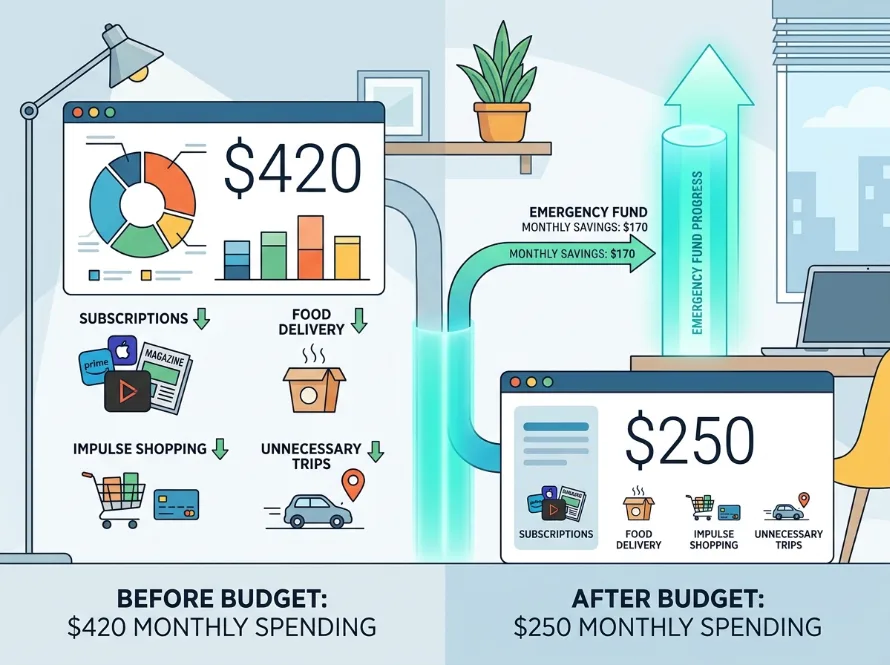
Your savings depend on your current spending.
For example, consider this sample budget:
| Expense | Current | New | Monthly Savings |
|---|---|---|---|
| Subscriptions | $40 | $10 | $30 |
| Food delivery | $160 | $100 | $60 |
| Impulse shopping | $120 | $70 | $50 |
| Avoidable trips | $100 | $70 | $30 |
| Total | $420 | $250 | $170 |
This example shows a potential reduction of $170 per month.
Over 12 months, that would equal:
$170 × 12 = $2,040
This is only an example, not a guaranteed result. Your savings depend on your income, spending habits, and available alternatives.
Which Expenses Should You Cut First?
Generally, start with costs that you can control without affecting essential needs.
Good starting points include:
- Unused subscriptions
- Impulse purchases
- Excessive food delivery
- Unplanned shopping
- Unused memberships
- Avoidable transportation costs
- Expensive services you rarely use
On the other hand, essential expenses require more care.
Do not reduce necessary food, healthcare, housing, or appropriate insurance coverage simply to make your monthly spending look smaller.
Instead, look for lower-cost alternatives that still meet your needs.
How to Reduce Monthly Expenses Without Feeling Restricted
Extreme budgeting can become difficult to maintain.
Instead, choose a few changes that fit your lifestyle.
Start With Three Changes
First: Cancel one or two unused subscriptions.
Next: Reduce food delivery by one or two orders each week.
Finally: Set a monthly limit for non-essential shopping.
Track the results for one month.
If a change works, keep it. If it feels unrealistic, adjust it.
Common Mistakes When Cutting Expenses
Cutting Everything at Once
A strict budget can become difficult to follow.
Instead, start with a few high-impact expenses.
Ignoring Small Recurring Charges
A small monthly payment can become a large annual cost.
Therefore, check your recurring payments regularly.
Buying Because Something Is on Sale
A sale can encourage unnecessary spending.
Instead, buy the product because you need it, not because the store reduced the price.
Choosing Only the Cheapest Option
Price does not tell the whole story.
For example, a cheaper product may have lower quality or require frequent replacement.
Consider quality, durability, fees, and actual usage.
Forgetting Irregular Expenses
Some costs do not appear every month.
Examples include:
- Vehicle repairs
- Annual memberships
- Gifts
- Insurance payments
- Taxes
- Home repairs
Therefore, set aside money for these costs when your budget allows.
Frequently Asked Questions
How can I reduce my monthly expenses quickly?
First, review recurring and discretionary costs. Cancel unused subscriptions, reduce food delivery, control impulse shopping, and compare expensive monthly services.
What expenses should I cut first?
Start with non-essential expenses that provide little value. For example, unused subscriptions, impulse purchases, excessive delivery orders, and unused memberships can provide good starting points.
How can I reduce household expenses?
Review groceries, utilities, transportation, subscriptions, insurance, and recurring services. Then, focus on costs that you can lower without creating larger financial problems.
How can I save money every month?
Track your spending and create a realistic budget. Next, reduce unnecessary costs and set a manageable savings target after covering essential expenses and required payments.
Is it better to cut expenses or increase income?
Both approaches can improve your finances. Cutting unnecessary expenses can free up money immediately. Meanwhile, higher income can create more room for saving, investing, or debt repayment.
How much should I reduce my monthly expenses?
There is no universal target. Instead, choose an amount that fits your income, essential costs, debt, savings goals, and lifestyle.
Final Thoughts
Learning how to reduce monthly expenses starts with understanding your spending.
First, track your expenses for 30 days. Next, review recurring bills and flexible spending. Then, create a budget that matches your real financial situation.
You do not need extreme frugality.
Start with three changes this month. Cancel an unused subscription. Reduce one costly habit. Set a limit for a flexible spending category.
After one month, review the results and keep the changes that work.
The goal is not simply to spend less. Ultimately, the goal is to create more room for savings, debt repayment, emergencies, and long-term financial goals.



Leave a Reply