
In this article
- What Is a Personal Budget?
- Why Is a Personal Budget Important?
- How to Create a Personal Budget
- Personal Budget Example
- Which Budgeting Method Should You Use?
- How to Reduce Expenses With a Personal Budget
- Build an Emergency Fund
- Review Your Budget Every Month
- Common Personal Budget Mistakes
- Personal Budget vs. Financial Plan
- Can a Personal Budget Help You Save More Money?
- How Technology Can Help With Budgeting
- How to Make Your Personal Budget Sustainable
- Frequently Asked Questions About Personal Budgets
- Final Thoughts
Managing money becomes much easier when you have a clear plan. A personal budget helps you understand how much money you earn, where you spend it, and how much you can save each month. Instead of making financial decisions without a plan, you can give every part of your income a specific purpose.
A good personal budget does not mean you have to stop spending money on things you enjoy. It helps you balance essential expenses, personal spending, savings, and debt payments according to your income and goals. Whether you earn a regular salary, work as a freelancer, or have multiple income sources, a practical budget can help you make better financial decisions.
What Is a Personal Budget?
A personal budget is a simple financial plan that organizes your income and expenses over a specific period. Most people create a monthly budget because many bills and income payments follow a monthly schedule.
Your budget shows how much money comes in and how you plan to use it. It can include essential expenses such as housing, food, transportation, utilities, and insurance. It can also include savings, debt payments, entertainment, and other personal expenses.
The main purpose of a personal budget is to help you spend intentionally. When you know where your money should go before you spend it, you can reduce unnecessary purchases and make more room for important financial goals.
Why Is a Personal Budget Important?
Without a spending plan, it can become difficult to understand where your income goes each month. Small purchases may seem insignificant, but several small expenses can add up quickly. A budget helps you identify these patterns and decide which expenses deserve your money.
A personal budget can also help you prepare for unexpected costs. When you regularly save part of your income, you can build an emergency fund instead of depending entirely on credit cards or loans when an unexpected expense appears.
A well-organized budget can help you:
- Track your income and monthly expenses
- Control unnecessary spending
- Build an emergency fund
- Save for short-term goals
- Pay down debt
- Prepare for large future expenses
- Plan regular investments
- Understand your spending habits
- Avoid overspending
- Work toward financial independence
How to Create a Personal Budget
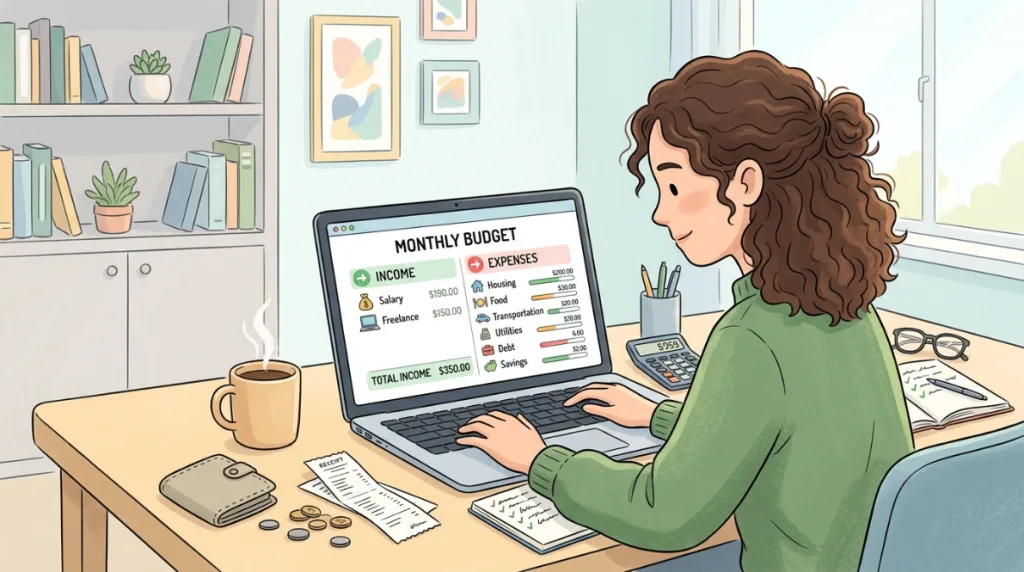
Creating a personal budget does not require complicated financial knowledge. You can start with a notebook, spreadsheet, calculator, or budgeting app. The most important step involves using realistic numbers based on your actual income and spending.
Follow these steps to create a budget that fits your financial situation.
1. Calculate Your Monthly Income
Start by calculating your monthly take-home income. If you receive a regular salary, use the amount that reaches your bank account after taxes and other deductions.
If you earn money from freelancing, a side business, commissions, or other sources, your income may change every month. In that case, use a conservative estimate rather than your highest monthly income.
For example:
| Income Source | Monthly Amount |
|---|---|
| Main salary | $2,800 |
| Freelance income | $400 |
| Other income | $100 |
| Total income | $3,300 |
This $3,300 becomes the starting point for the example monthly budget.
2. List Your Fixed Expenses
Fixed expenses usually remain the same or change very little from month to month. These expenses often include rent, mortgage payments, insurance, loan payments, internet service, and certain subscriptions.
Write down each recurring expense and its monthly cost. This step helps you understand how much of your income you must allocate before you consider flexible spending.
Common fixed expenses include:
- Rent or mortgage
- Insurance
- Loan payments
- Internet
- Phone plans
- Childcare
- Memberships
- Regular subscriptions
Review these expenses from time to time. You may discover services that you no longer use or costs that you can reduce.
3. Track Your Variable Expenses
Variable expenses change depending on your lifestyle and monthly needs. Food, transportation, entertainment, clothing, shopping, and dining out often fall into this category.
Track your actual spending before setting strict limits. Your bank statements and transaction history can help you identify your real spending patterns.
For example, you may think you spend $200 each month on dining out, but your transaction history could show that you regularly spend $350. Accurate information allows you to create a realistic budget instead of an unrealistic one.
4. Separate Needs From Wants
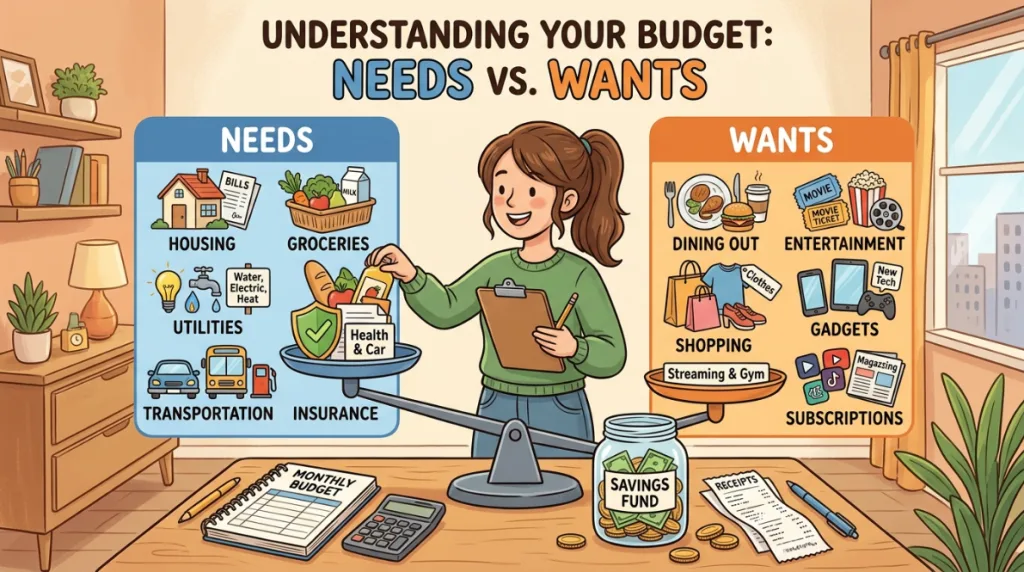
After listing your expenses, separate essential costs from discretionary spending.
Needs include expenses that support your basic living requirements, such as:
- Housing
- Basic food
- Utilities
- Transportation
- Insurance
- Essential debt payments
Wants include expenses that improve your lifestyle but are not essential, such as:
- Restaurant meals
- Entertainment
- New gadgets
- Non-essential shopping
- Streaming services
- Vacations
This distinction does not mean you should eliminate all wants. Instead, it helps you decide how much money you can comfortably spend on them.
5. Set Savings Goals
Include savings in your personal budget instead of waiting to see what money remains at the end of the month.
Set a specific target based on your income and priorities. You might save for an emergency fund, a home, education, a vacation, retirement, or another major goal.
For example, if you want to save $3,600 over one year, you need to set aside approximately $300 each month. Breaking a large goal into monthly amounts makes it easier to monitor your progress.
6. Plan Your Debt Payments
If you have credit card balances, personal loans, student loans, or other debt, include the required payments in your monthly budget.
After covering minimum payments, you can decide whether to allocate additional money toward a particular debt. Paying down expensive debt can reduce the amount of interest you pay over time.
Do not create a debt repayment target that makes your everyday budget impossible to maintain. Choose an amount that fits your income and essential expenses.
Personal Budget Example
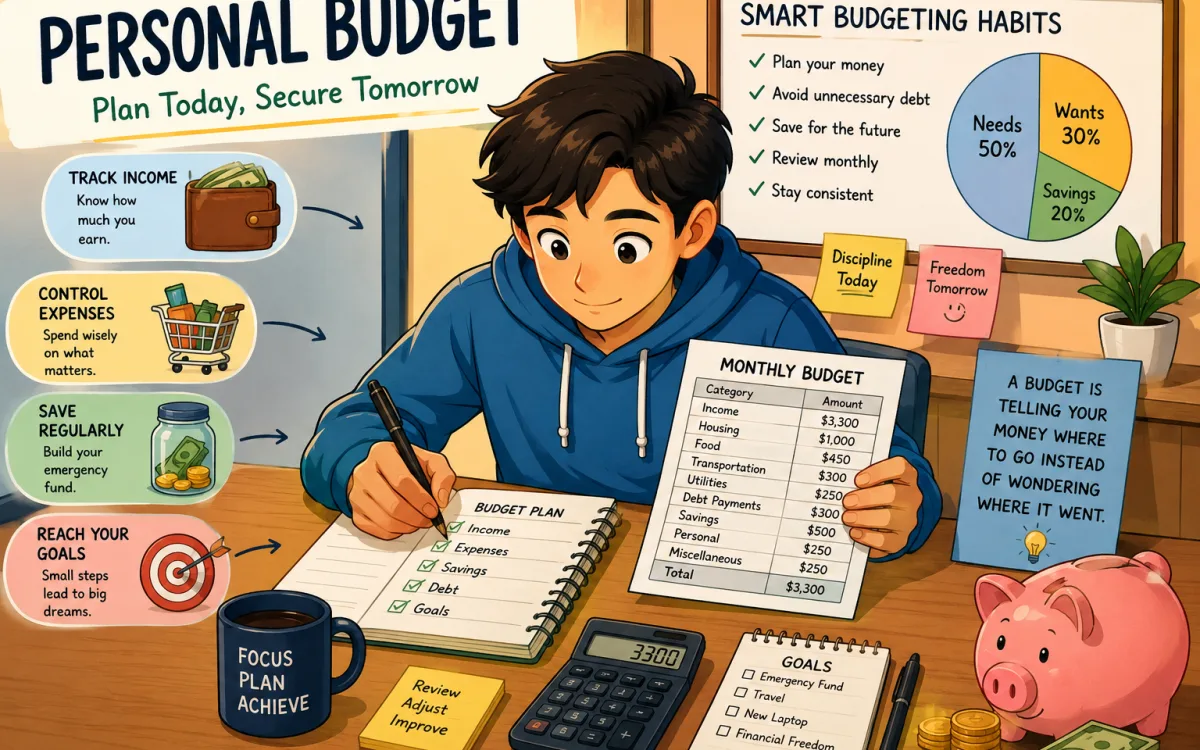
Suppose your monthly take-home income is $3,300. You could organize your money like this:
| Budget Category | Monthly Amount | Percentage |
|---|---|---|
| Housing | $1,000 | 30.3% |
| Food | $450 | 13.6% |
| Transportation | $300 | 9.1% |
| Utilities & Phone | $250 | 7.6% |
| Debt Payments | $300 | 9.1% |
| Savings | $500 | 15.2% |
| Entertainment & Personal | $250 | 7.6% |
| Miscellaneous | $250 | 7.6% |
| Total | $3,300 | 100% |
This example only demonstrates how you can organize a monthly budget. Your ideal percentages may look completely different because housing costs, family responsibilities, debt, income, and financial goals vary from person to person.
Which Budgeting Method Should You Use?
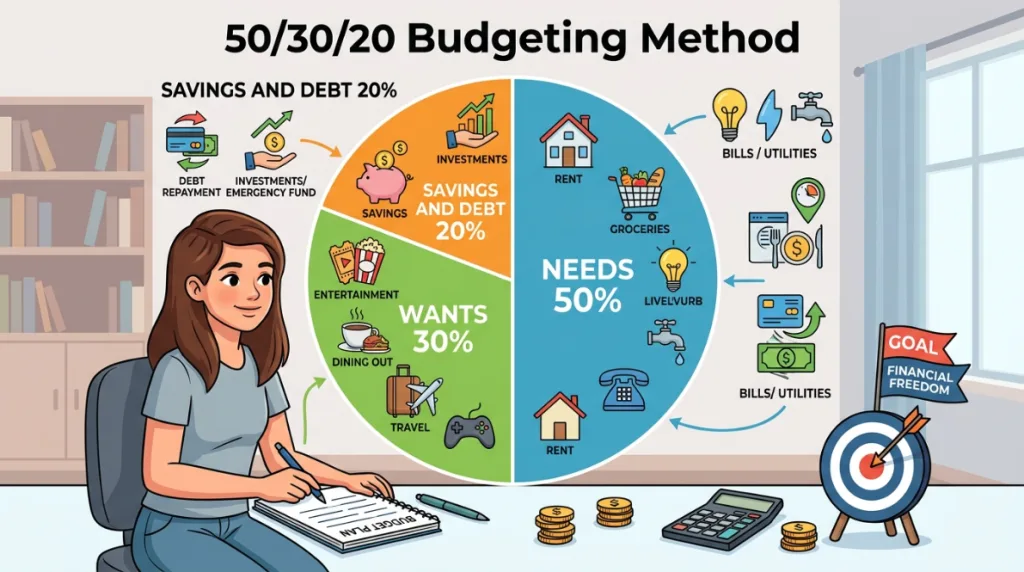
You do not need to follow one budgeting system. Choose a method that matches your income, spending habits, and financial goals.
50/30/20 Budget
The 50/30/20 method provides a simple framework:
- 50% toward needs
- 30% toward wants
- 20% toward savings and debt repayment
These percentages provide a general starting point rather than a strict rule. Someone with high housing costs may need to adjust the categories.
Zero-Based Budget
A zero-based budget gives every dollar a planned purpose. You allocate your income toward expenses, savings, investments, and debt payments until your planned income minus planned allocations equals zero.
This does not mean you spend all your money. Savings and extra debt payments also count as planned uses of your income.
Pay-Yourself-First Method
This method prioritizes savings before discretionary spending. After receiving your income, you move a predetermined amount into savings or investments and then use the remaining money for other expenses.
This approach can work well if you often spend your available money before you get around to saving.
How to Reduce Expenses With a Personal Budget
A budget can reveal expenses that provide little value. Start by reviewing recurring charges, subscriptions, dining expenses, impulse purchases, and convenience costs.
Do not try to remove every enjoyable expense. Instead, identify spending that does not contribute much to your goals. You can then redirect some of that money toward savings or debt repayment.
Try these strategies:
- Cancel subscriptions you rarely use
- Compare prices before major purchases
- Plan meals to reduce unnecessary food spending
- Set limits for entertainment
- Avoid frequent impulse purchases
- Review recurring bills regularly
- Use a shopping list for planned purchases
- Set a monthly limit for discretionary spending
Small changes can make a meaningful difference when you maintain them consistently.
Build an Emergency Fund
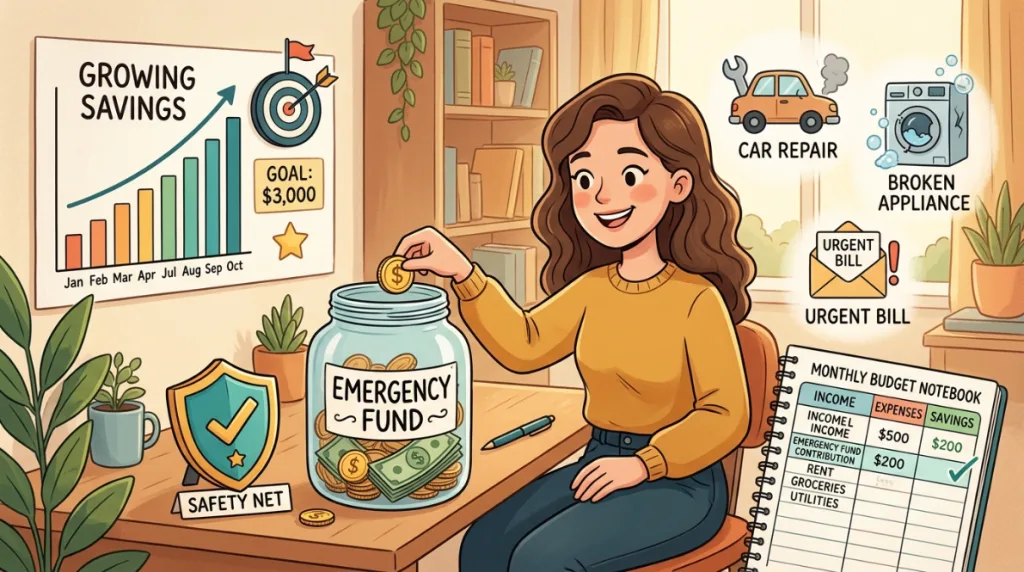
An emergency fund protects your budget when unexpected expenses appear. A sudden repair, temporary loss of income, urgent household expense, or other financial surprise can quickly disrupt your monthly plan.
Start with an amount that feels achievable. You do not need to build a large emergency fund immediately. Consistent contributions can gradually create a useful financial cushion.
Keep emergency savings separate from your everyday spending account when possible. This separation can reduce the temptation to use the money for non-essential purchases.
Review Your Budget Every Month
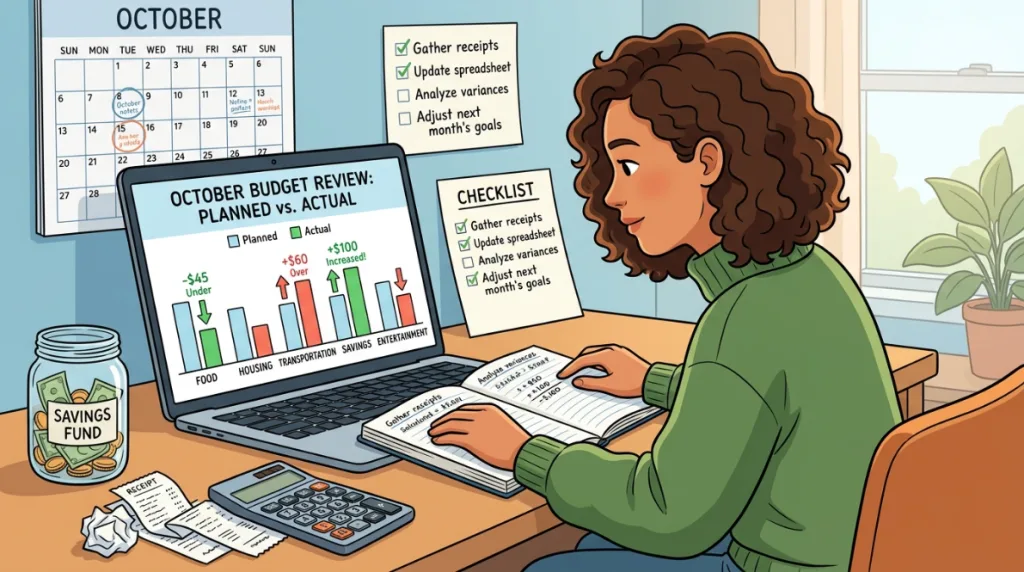
Your personal budget should change when your financial situation changes. Rent can increase, income can change, debt can decrease, or your priorities can shift.
Set aside some time at the end of each month to compare your planned spending with your actual spending. Look for categories where you consistently spend more than expected.
Ask yourself:
- Did I stay within my main spending limits?
- Which category cost more than expected?
- Which expenses can I reduce?
- Did I meet my savings target?
- Did I make progress on my debt?
- Did an unexpected expense affect my plan?
- Does my current budget still match my financial goals?
Use these answers to adjust your next month’s budget instead of abandoning the entire plan.
Common Personal Budget Mistakes
Many people create a budget but struggle to follow it because they make the plan too restrictive or unrealistic. A budget should reflect your actual financial life, not an ideal version of it.
Avoid these common mistakes:
- Setting spending limits without checking past expenses
- Forgetting irregular or annual expenses
- Ignoring small recurring charges
- Leaving savings out of the budget
- Creating an extremely restrictive spending plan
- Using credit to cover regular overspending
- Copying another person’s budget without adjustment
- Failing to review the budget regularly
A realistic budget gives you enough structure to control your money while still allowing reasonable flexibility.
Personal Budget vs. Financial Plan
A personal budget and a financial plan work together, but they do not serve exactly the same purpose.
A personal budget focuses mainly on your income and expenses over a shorter period. A financial plan takes a broader view and may include investing, retirement, insurance, debt management, major purchases, and long-term financial goals.
| Personal Budget | Financial Plan |
|---|---|
| Focuses mainly on monthly money management | Covers broader financial goals |
| Tracks income and expenses | May include investments and retirement |
| Helps control spending | Helps guide long-term financial decisions |
| Supports savings goals | Supports wealth-building goals |
| Usually reviewed monthly | Usually reviewed periodically |
Your monthly budget can act as the foundation for your broader financial plan.
Can a Personal Budget Help You Save More Money?
Yes. A personal budget can make saving easier because it gives savings a specific place in your financial plan.
Instead of saving only when you have leftover money, decide how much you want to save and include that amount in your monthly budget. You can then adjust discretionary spending around that goal.
For example, if you earn $3,300 and want to save $500, treat the $500 as part of your planned allocation. Then manage your remaining $2,800 across housing, food, transportation, debt, and other expenses.
The exact amount will depend on your income and financial responsibilities, but the principle remains simple: give your savings a purpose and a target.
How Technology Can Help With Budgeting
You can manage a personal budget with a simple spreadsheet, but technology can make the process easier. A spreadsheet can calculate totals automatically, while budgeting apps can help you categorize and monitor transactions.
Choose a tool that you can use consistently. A complicated app will not improve your finances if you rarely check it.
You can also automate certain financial tasks. For example, an automatic transfer can move money into a savings account after you receive your income. Automation can reduce the chance that you accidentally spend money intended for savings.
How to Make Your Personal Budget Sustainable
Consistency matters more than perfection. You may spend more than planned in one category during a particular month. Instead of giving up, identify the reason and adjust your next budget.
Leave some flexibility for unexpected costs and reasonable personal spending. A budget that allows no room for normal life can become difficult to maintain.
As your income increases, avoid automatically increasing every expense. Consider directing part of additional income toward savings, investments, or debt repayment. This habit can help you improve your financial position without making your lifestyle increasingly expensive.
Frequently Asked Questions About Personal Budgets
What should a personal budget include?
A personal budget should normally include income, fixed expenses, variable expenses, debt payments, savings, and discretionary spending. You can also include irregular expenses and financial goals.
How do I start a personal budget?
Start by calculating your monthly take-home income and listing your actual expenses. Separate essential costs from discretionary spending, set savings or debt goals, and create spending limits that match your income.
How often should I review my budget?
Review your budget at least once a month. A monthly review helps you compare planned spending with actual spending and make adjustments before small problems become larger ones.
What is the 50/30/20 budgeting rule?
The 50/30/20 rule is a simple budgeting framework that generally allocates 50% of income to needs, 30% to wants, and 20% to savings and debt repayment. You can adjust these percentages to fit your circumstances.
Is a personal budget only for people with low income?
No. People at different income levels can benefit from budgeting. A budget helps you understand spending, increase savings, manage debt, and direct money toward financial goals regardless of income level.
Final Thoughts
A personal budget gives you a practical way to organize your money and make financial decisions with greater confidence. By tracking income, controlling expenses, planning savings, and reviewing your spending regularly, you can create a financial system that fits your lifestyle and goals.
You do not need a complicated budgeting strategy to get started. Begin with your actual numbers, choose a method that feels realistic, and make adjustments as your situation changes. The most effective budget is not necessarily the most detailed one—it is the one you can understand, follow, and maintain consistently.

Leave a Reply