

In this article
- TL;DR: The Quick Answer
- Can You Really Get a Loan With No Income?
- Federal Student Loans: The No-Income, No-Credit-Check Option
- Private Student Loans With No Income: The Cosigner Route
- No-Cosigner Private Student Loans: A Growing Option
- Personal Loans for Students: Last Resort, Not First Choice
- Personal Loan vs Student Loan: Which Is Better?
- Alternatives to Borrowing (Free Money First)
- How to Apply: Step by Step
- What to Avoid
- Frequently Asked Questions
- Final Verdict
TL;DR: The Quick Answer
Yes, you can get a student loan with no income — and your best option is almost always a federal Direct Student Loan, because it requires no income, no credit check, and no cosigner. For the 2026–27 school year, undergraduate federal loans carry a fixed 6.52% rate. If federal loans do not cover your costs, your next move is a private student loan with a creditworthy cosigner (parent, relative, or friend), which can get rates as low as ~2%. If you have no cosigner either, a handful of lenders — Ascent, Funding U, and Earnest among them — approve students based on academic performance, school, and major instead of income. Personal loans are the last resort: most require at least some income, and APRs can reach 36%. Never use payday loans or title loans to pay for college.
Can You Really Get a Loan With No Income?
Yes — but the type of loan matters enormously. Federal student loans are designed specifically for students and do not require a job, income, or credit history. Private student loans usually do require either income or a cosigner, though a growing number of “outcomes-based” lenders approve students based on their school and expected earnings. Personal loans are the hardest to get with no income, because lenders want proof you can repay. The golden rule: borrow in this order — free money first (grants and scholarships), then federal loans, then private loans, and only then personal loans. Each step down costs you more in interest and flexibility.
Federal Student Loans: The No-Income, No-Credit-Check Option
Federal Direct Subsidized and Unsubsidized Loans are the foundation of student borrowing, and for good reason. Per Federal Student Aid’s official rates, loans disbursed between July 1, 2026 and June 30, 2027 carry these fixed rates:
| Loan Type | Borrower | 2026–27 Rate | Origination Fee |
|---|---|---|---|
| Direct Subsidized | Undergraduate | 6.52% | 1.057% |
| Direct Unsubsidized | Undergraduate | 6.52% | 1.057% |
| Direct Unsubsidized | Graduate / Professional | 8.07% | 1.057% |
| Direct PLUS | Parents & Grad students | 9.07% | 4.228% |
Here is what makes them ideal for students with no income:
- No income requirement. The government does not ask for pay stubs or employment.
- No credit check for Direct Subsidized and Unsubsidized Loans. (Parent PLUS does require a basic credit check.)
- Fixed rates that never change for the life of the loan.
- Income-driven repayment plans after graduation that cap payments at a percentage of your income.
- Subsidized loans (need-based) charge 0% interest while you are in school at least half-time and during the six-month grace period.
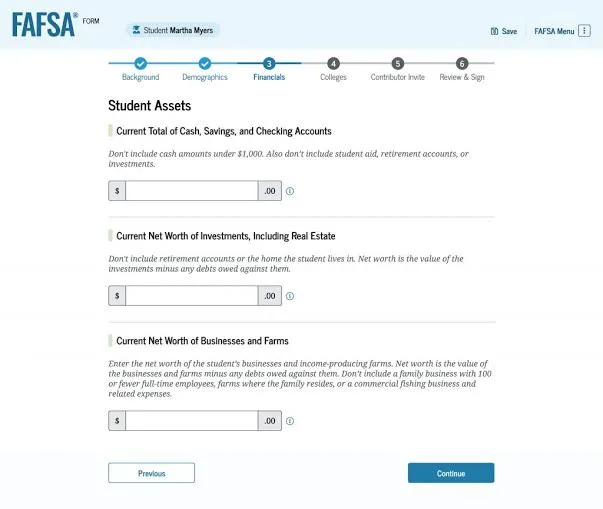
To qualify, you must complete the FAFSA, be a U.S. citizen or eligible noncitizen, be enrolled at least half-time in an eligible program, and maintain satisfactory academic progress. Undergraduates can borrow up to $5,500–$7,500 per year depending on year in school, with lifetime limits of $31,000 for dependent students. If you are an independent student, those limits are higher.
Private Student Loans With No Income: The Cosigner Route
If federal loans fall short — and they often do, because tuition, housing, and living expenses can exceed federal limits — private student loans fill the gap. Most private lenders want to see income or a credit score above 650. If you have neither, the standard solution is adding a creditworthy cosigner: a parent, relative, or friend with good credit and steady income who agrees to repay if you cannot. A cosigner can drop your rate from double digits to as low as ~2–4%, which saves tens of thousands over the life of the loan.
Most lenders offer cosigner release after 12–48 consecutive on-time payments, so your cosigner can be removed from the loan once you prove you can handle it. Earnest’s guide to student loans with no income notes that even without a cosigner, students with strong academic profiles can qualify at some lenders — rates at Earnest currently range from about 1.99% to 16.24% fixed APR, depending on credit and whether you add a cosigner.
No-Cosigner Private Student Loans: A Growing Option
A handful of lenders specialize in approving students without income or a cosigner by underwriting on your future potential instead of your current paycheck. As of late 2026, the leading options are:
- Ascent: Offers non-cosigned “outcomes-based” loans to juniors and seniors, using school, major, GPA, and graduation date to approve. Fixed APRs run roughly 2.08–17.50%, and you get 1% cash back at graduation.
- Funding U: Approves undergraduates with no cosigner and no credit based on academic performance and projected earnings. It does not require income at all.
- Earnest, Sallie Mae, and SoFi: May approve students without a cosigner if they have a thin but positive credit file or a strong earning trajectory.
These loans are harder to qualify for than federal loans, and the rates are usually higher than what a cosigner would unlock. But for students whose parents cannot or will not cosign, they are a legitimate bridge. Always compare offers from at least three lenders — rate-shopping within a 14-day window counts as a single credit inquiry.

Personal Loans for Students: Last Resort, Not First Choice
A personal loan is an unsecured installment loan you can use for any purpose, including living expenses while in school. Forbes Advisor’s ranking of personal loans for students with no income and LendingTree’s guide to personal loans for students both flag the same reality: legitimate personal lenders want some evidence you can repay. Most require at least $12,000–$24,000 in annual income, though a few use alternative underwriting:
| Lender | Typical APR | Loan Amount | Notes |
|---|---|---|---|
| Upstart | 5.35%–35.99% | $1,000–$50,000 | AI underwriting considers college, degree, and job trajectory; no minimum credit score |
| LendingPoint | ~7.99%–35.99% | $2,000–$36,500 | Minimum credit score ~580; accepts part-time income |
| Upgrade | 7.46%–35.97% | $1,000–$50,000 | Minimum credit ~620; joint applications allowed |
| Discover / Best Egg | ~6%–36% | $2,500–$40,000 | Generally require verifiable income |
The honest truth: with truly zero income and no cosigner, you will likely not qualify for a personal loan from a reputable lender. If you do qualify, the APR will probably be high — 20–36% — which is far more expensive than any federal or private student loan. Personal loans also lack the in-school deferment, income-driven repayment, and forgiveness options that student loans carry. Use them only for short-term gaps, and pay them off as fast as possible.
Personal Loan vs Student Loan: Which Is Better?
Broadview Federal Credit Union’s comparison of personal loans vs student loans lays out the key differences clearly:
| Feature | Student Loan | Personal Loan |
|---|---|---|
| Purpose | Education costs only | Anything |
| In-school deferment | Yes (usually) | No — payments start immediately |
| Income-driven repayment | Yes (federal) | No |
| Typical APR | 2%–13% | 6%–36% |
| Income required to qualify | No (federal) | Yes (usually) |
| Cosigner common? | Yes | Sometimes |
| Forgiveness options | Federal: PSLF, IDR forgiveness | None |
For almost every student, a student loan — federal first, then private — beats a personal loan. The only exception is a very short-term need (a few hundred dollars for books or rent) that you can repay within months, where a small personal loan or even a 0% APR credit card (if you can get one) might be simpler.

Alternatives to Borrowing (Free Money First)
Before you take on any debt, exhaust every option that does not need to be repaid:
- Grants and scholarships: Fill out the FAFSA to qualify for Pell Grants (up to ~$7,395/year for 2026–27) and state grants. Spend an hour a week applying for niche scholarships — even $500 awards add up.
- Federal work-study: If your FAFSA shows need, you may qualify for a part-time campus job, often flexible around class schedules.
- Part-time work or a side hustle: Even 10–15 hours a week can cover groceries, gas, and incidentals. Our guide on how to become a freelancer shows how to turn skills like writing, design, or tutoring into income on your own schedule.
- Tuition payment plans: Most colleges let you split tuition into monthly payments with little or no interest, which can reduce how much you need to borrow.
- Employer tuition assistance: If you work even part-time, check whether your employer offers tuition reimbursement — many do.
- Community college first: Two years at a community college then transferring to a four-year school can cut your borrowing in half.
If you do have a small income from work, keep it in a high-yield savings account earning 4–5% while you build a small emergency fund, so an unexpected expense does not force you into a predatory loan. And track every dollar with a budget — our AI budgeting apps comparison can help you pick one that fits student life.
How to Apply: Step by Step
- Fill out the FAFSA as early as possible — it opens in December for the following school year. This unlocks grants, work-study, and federal loans.
- Review your financial aid award letter from your school. Accept subsidized loans first, then unsubsidized.
- Shop private lenders only if federal loans and aid fall short. Get prequalified with at least three lenders (soft credit check, no score impact).
- Add a cosigner if you can — it will dramatically lower your rate. Ask about cosigner release terms.
- Compare APR, fees, and repayment options, not just the advertised rate. Choose the loan with the lowest total cost.
- Borrow only what you need. Every $1,000 you borrow now costs roughly $110–$130 per month for 10 years after graduation.
What to Avoid
- Payday loans, title loans, and cash advances: APRs can exceed 400%. They trap borrowers in cycles of debt and have no place in education financing.
- Borrowing for lifestyle inflation: Loans should cover tuition, fees, books, and basic rent — not spring break or a new laptop you do not need.
- Skipping the FAFSA: Millions of students leave free federal aid on the table every year because they do not apply.
- Variable rates if you cannot afford risk: A variable rate can rise over time; for most students, a fixed rate is safer.

Frequently Asked Questions
Can I get a student loan with no income and no cosigner?
Yes. Federal Direct Subsidized and Unsubsidized Loans require no income, no credit check, and no cosigner. Private no-cosigner lenders like Ascent and Funding U also approve students based on academics and school.
What is the interest rate on federal student loans in 2026–27?
Undergraduate Direct Loans (subsidized and unsubsidized) have a fixed 6.52% rate. Graduate loans are 8.07%, and Parent PLUS loans are 9.07%. Origination fees are 1.057% for Direct Loans and 4.228% for PLUS.
Do private student loans require income?
Most require either income or a creditworthy cosigner. A growing number of lenders (Ascent, Funding U, Earnest) offer no-cosigner, no-income options for students with strong academic profiles in high-earning majors.
Can I use a personal loan to pay for college?
Yes, but it is usually a bad idea. Personal loans start repayment immediately (no in-school deferment), lack income-driven repayment and forgiveness, and carry higher APRs — often 20–36% for borrowers with thin credit.
What is the maximum I can borrow in federal student loans?
Dependent undergraduates can borrow up to $5,500–$7,500 per year (depending on year) with a $31,000 lifetime limit. Independent undergraduates can borrow up to $9,500–$12,500 per year with a $57,500 lifetime limit.
Do student loans require a credit check?
Federal Direct Subsidized and Unsubsidized Loans do not. Federal PLUS loans and almost all private student loans do. A cosigner with good credit offsets a thin or poor credit history.
What happens if I cannot repay my student loans?
Federal loans offer income-driven repayment plans that cap payments at 10–20% of discretionary income, plus forbearance and deferment options. Private loans have fewer protections, which is why federal loans should always come first.
Should I work while in college instead of borrowing?
Working 10–15 hours a week typically does not hurt grades and can reduce borrowing by thousands. Studies show students who work modest hours often perform better academically because they manage time more carefully.
Final Verdict
Having no income does not shut you out of student loans — it just means you must follow the right order. Start with the FAFSA and federal loans, which are designed for exactly your situation. If you need more, add a cosigner to a private student loan to unlock the lowest rates, and only if that is impossible should you consider a no-cosigner private loan or a personal loan. Borrow only what you need, keep your grades up (they can qualify you for better no-cosigner rates), and remember that every dollar you borrow now is a dollar plus interest you will repay after graduation. Smart borrowing now means financial freedom later.
Leave a Reply