
In this article
- The Five-Second Explanation
- Meet the Company Behind Most IMMEDIA Charges
- Exact Descriptor Variants You Might See
- Wait — Could It Be a Different Company?
- What a Merchant Descriptor Actually Is
- The Character-Limit Problem: Why “IMMEDIA” Loses Its Ending
- Soft vs. Hard Descriptors: Why the Same Charge Can Rename Itself
- Static vs. Dynamic Descriptors: A Merchant Design Choice
- Descriptor Prefixes Decoded: The Real Meaning of SP*, SQ*, TST*, and PAYPAL*
- Why 45% of Chargebacks Trace Back to Descriptors Like IMMEDIA
- Real-World Scenarios: What IMMEDIA Usually Turns Out to Be
- A Ten-Minute Verification Workflow
- Your Legal Rights If the Charge Is Genuinely Unauthorized
- For Merchants Reading This: How Descriptors Can Save You Fortunes
- How Payment Descriptors Fit Into the Full Card-Processing Flow
- Building Anti-Mystery Habits for the Long Term
- How Immediate Media Charges Vary by Country
- Cancelling an Immediate Media Subscription
- Frequently Asked Questions
- Final Thought
Quick answer: An IMMEDIA charge on your bank statement almost always comes from Immediate Media Company, a large UK publisher owned by Germany’s Hubert Burda Media. The name usually appears in full as IMMEDIATE MEDIA CO, but many banks truncate it to just IMMEDIA because payment descriptors are strictly capped at around 22 to 25 characters. The charge is typically a magazine or digital subscription — Radio Times, BBC Good Food, Gardeners’ World, HistoryExtra, or one of dozens of other titles in the group.
If that direct answer resolves your worry, you can stop reading. If you want to know exactly how to verify, refund, or dispute the charge — and understand the entire hidden machinery of merchant descriptors along the way — the next few thousand words will walk you through everything.
The Five-Second Explanation
Payment descriptors are the little labels your bank pastes next to every transaction. Card networks force merchants to shrink their business name into roughly 22 characters, then your bank may shorten it even further. The word “IMMEDIA” is not a random string — it is what is left over when the full name “IMMEDIATE MEDIA CO” gets sliced by a database character limit somewhere between the merchant and your banking app.
Once you know that, the mystery evaporates.
Meet the Company Behind Most IMMEDIA Charges
Immediate Media Company Limited is a British publishing house that was formed on 1 November 2011 through the merger of BBC Magazines, Origin Publishing, and Magicalia. Its headquarters sit at Vineyard House in London’s Hammersmith district, and its roster reads like a walk through any British newsagent. According to research compiled by CB Insights, the group publishes more than 70 brands, with roughly 70 million magazines flowing through its printers annually.
The most common titles behind an IMMEDIA descriptor include:
- Radio Times — the UK’s flagship television listings magazine, published continuously since 1923
- BBC Good Food — Britain’s best-selling food magazine, plus the Good Food app and cookery school
- BBC Gardeners’ World Magazine — the print companion to the long-running BBC gardening series
- HistoryExtra — the digital home of BBC History Magazine and BBC History Revealed
- Nutracheck — a subscription calorie-counting and nutrition-tracking app
- BBC Wildlife, BBC Countryfile, BBC Sky at Night, and BBC Music Magazine
- olive, Homes & Antiques, Cross Stitch Crazy, and Simply Knitting
- Cycling Plus, MBUK, Mountain Biking UK, and other Bristol-based enthusiast titles
The company was owned by Exponent Private Equity between 2011 and 2017, and then Munich-based Hubert Burda Media acquired the entire business in 2017 for a reported £275 million, as documented in the Burda corporate press release. One year later, in 2018, Immediate itself acquired the BBC Good Food brand family from BBC Studios for around £32 million, cementing its place as the third-largest consumer magazine publisher in the UK.
Exact Descriptor Variants You Might See
Every issuing bank renders the same merchant slightly differently, so the same underlying charge can appear under any of these shapes:
IMMEDIATE MEDIA COIMMEDIATEMEDIA GW(Gardeners’ World subscription)IMMEDIATE MEDIA FIRST PAYMENT(first billing of a new subscription)IMM*RADIO TIMESIMM*OLIVE MAGIMMEDIA(aggressively truncated by tight-limit banks)IMMEDIATE MEDIA CO LONDONWWW.IMMEDIATE.CO.UK
According to the third-party financial tracker Emma, users have logged every one of these variants against real Immediate Media transactions in their apps.
Wait — Could It Be a Different Company?
Yes, though far less commonly. Two other legitimate businesses can produce an IMMEDIA descriptor:
- Immedia Group Plc / Immedia Broadcasting — a UK company that supplies in-store audio, branded radio, and workplace content to retailers. Charges from this group usually appear on business cards, not personal ones, and typically show as
IMMEDIA GROUPorIMMEDIA BROADCASTING. - Immedia Integrated Technologies (Immedia LLC) — a Scottsdale, Arizona audio-visual and workplace-technology contractor. Their invoices land on corporate cards belonging to office managers and IT teams, not on individual consumer statements.
If your card is a personal debit or credit card, the odds of the Arizona AV company being your culprit are close to zero. If you use a corporate card at work, and your office recently installed conference-room screens or digital signage, that is your explanation.
What a Merchant Descriptor Actually Is
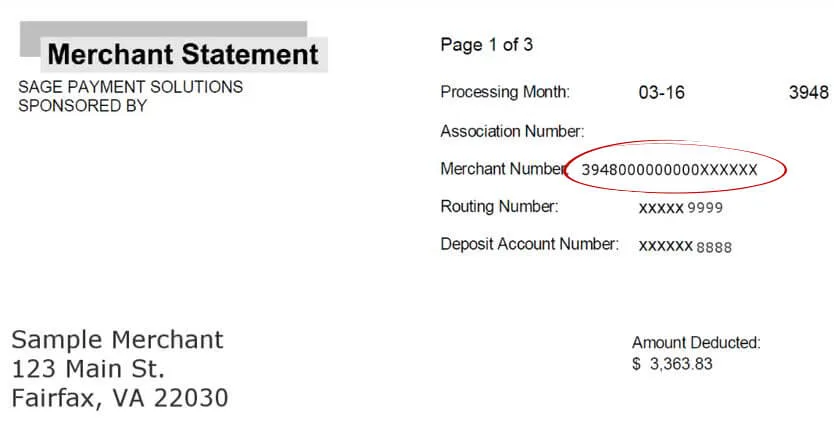
A merchant descriptor — sometimes called a payment descriptor, billing descriptor, or statement descriptor — is the short line of text your bank shows next to each transaction. It exists for one reason: to help you recognize what you paid for without decoding raw transaction data.
The formal definition from Wikipedia’s Billing descriptor entry describes it as “the text displayed on a cardholder’s credit card statement to identify the merchant and the transaction.” That text usually contains:
- The merchant’s trading name (not the legal entity)
- Optionally a product reference or subscription plan
- Sometimes a phone number, website, or city
- Occasionally a wallet or gateway prefix like
PAYPAL *,SQ *, orTST*
Every card network — Visa, Mastercard, American Express, Discover — enforces its own rules for what merchants can send, and every issuing bank decides how to render that data on your statement. Those two independent variables produce most of the confusion.
The Character-Limit Problem: Why “IMMEDIA” Loses Its Ending
Merchant descriptors are painfully short. If a merchant registered “IMMEDIATE MEDIA COMPANY LTD” — twenty-eight characters including spaces — no bank on Earth is going to display all of it. Something gets cut.
Here is how the leading networks and processors actually limit descriptor length, based on public developer documentation:
| Network / Processor | Descriptor Character Limit | Notes |
|---|---|---|
| Visa | 25 characters (typical) | Split across merchant name and city fields |
| Mastercard | 22 alphanumeric characters | Allows spaces and & * ' , - . _ ~ |
| American Express | Up to 30 characters | Historically most generous |
| Discover | Around 25 characters | Similar to Visa formatting |
| Stripe | 5–22 Latin characters, one letter required | Documented on the Stripe statement descriptors page |
| Adyen / Checkout.com | 22 characters standard | Varies by acquiring bank |
| Legacy issuing banks | As few as 15 characters | Older core-banking systems truncate aggressively |
That last row is the reason “IMMEDIA” exists as a statement item. A UK high-street bank running an older core banking platform can chop a 22-character descriptor down to 15 without warning, and the ending disappears.
Digital wallets make the squeeze worse. Apple Pay prefixes purchases with APPLE PAY -, which steals eleven characters right off the top before the merchant’s own name even starts.
Soft vs. Hard Descriptors: Why the Same Charge Can Rename Itself
A single transaction actually generates two descriptors during its lifetime, and they do not always match.
- Soft descriptors appear the instant your bank authorizes the transaction. They are placeholders — dynamic, editable, and often more detailed. A merchant might set a soft descriptor like
IMM*RADIO TIMES 12Mto instantly tell you which subscription you just paid for. - Hard descriptors appear when the transaction fully settles two to five business days later. This is the permanent record that will show up on your printed monthly statement, and it reflects the descriptor the merchant registered with their acquirer.
If you glance at a pending charge on Monday and see IMM*RADIO TIMES, then check your statement two weeks later and see plain IMMEDIA, nothing is wrong. The soft label got replaced by the hard one, and your bank happened to truncate it.
Static vs. Dynamic Descriptors: A Merchant Design Choice
Businesses configure their payment processor to send either a static or a dynamic descriptor.
Static descriptors never change. A neighborhood dry cleaner will send SUNRISE DRY CLEANERS every time, no matter what you bought.
Dynamic descriptors change per transaction. They usually keep a short fixed prefix (three or four letters and an asterisk) and swap out the suffix based on the specific product, plan, or store. For a multi-brand publisher like Immediate Media, dynamic descriptors are the right architecture:
IMM*RADIO TIMES 6MIMM*GDNWORLD ANNIMM*GOODFOOD APPIMM*HISTEXTRA
Industry research summarized by 2Accept suggests that well-configured dynamic descriptors cut friendly-fraud chargebacks by 30 to 40 percent, largely because customers can match the label to the exact product they remember buying.
Descriptor Prefixes Decoded: The Real Meaning of SP*, SQ*, TST*, and PAYPAL*
Prefixes are the little two-to-four-letter tags glued to the front of a descriptor by a payment gateway or wallet. They tell you how the money moved, not who got it, and they are one of the biggest sources of statement confusion. Here is what each of the common ones actually means — including two important corrections most articles get wrong.
| Prefix | What It Really Means | Example |
|---|---|---|
PAYPAL * | Charge processed through PayPal — the name after the asterisk is the actual seller | PAYPAL *IMMEDIATEMED |
SP * | Shop Pay / Shopify Pay (a shopper checked out with the Shopify accelerated wallet) — not Google Pay | SP *SUNSET YOGA |
SP AFF* | Service Provider – Affirm buy-now-pay-later loan | SP AFF*SLEEP CO |
SQ * | Payment collected via Square | SQ *JOE'S PIZZA |
TST* | Payment collected via Toast (a restaurant-focused POS) | TST*THAI ORCHID |
GOOGLE * | Direct purchase from a Google product | GOOGLE *YouTube |
APPLE PAY - | Charge routed through Apple Pay | APPLE PAY - IMMEDIA |
WWW. | Ecommerce charge that carries the merchant’s website | WWW.IMMEDIATE.CO.UK |
AMZN Mktp | Amazon third-party marketplace seller | AMZN Mktp US*Q12345 |
Two corrections worth calling out. First, SP* is widely and incorrectly attributed to Google Pay. The MoneySavingExpert forum, community threads on r/CreditCards, and the Shopify support ecosystem all confirm that SP * on modern statements is the Shop Pay / Shopify prefix. Google itself confirms in its official Google Pay charges reference that Google purchases use GOOGLE * — not SP *. Second, Google Pay actively removed the SP * prefix from customer billing statements in April 2022, so any article still equating the two is out of date.
Why 45% of Chargebacks Trace Back to Descriptors Like IMMEDIA
Cryptic descriptors are not just annoying — they are a multi-billion-dollar problem. Data compiled by Chargebacks911 puts the numbers in stark relief:
- 45% of all chargebacks are filed because a customer simply does not recognize a charge on their statement.
- Poor descriptors can inflate a merchant’s chargeback ratio by up to 25%.
- 35% of all transaction disputes trace back to unclear billing descriptors, according to figures cited by 2Accept.
- 72% of consumers cannot meaningfully distinguish between a chargeback and a refund.
- 84% of shoppers report that filing a chargeback feels easier than requesting a refund directly.
- 83% of enterprise merchants told Chargebacks911’s 2026 Chargeback Field Report that friendly-fraud disputes have risen over the last three years.
Add up those behaviors and the “IMMEDIA” story looks less like a fraud problem and more like a legibility problem. A better label prevents a panicked customer from dialing their bank at 11pm.
Real-World Scenarios: What IMMEDIA Usually Turns Out to Be
Ninety percent of confused IMMEDIA lookups come down to one of these situations. If any of them ring a bell, you have your answer:
- The Christmas gift subscription. Someone gave you a magazine subscription two Decembers ago, it renewed automatically, and now you have forgotten it exists.
- The £5-for-3-issues trial. You bought a limited trial to Radio Times or Cycling Plus, forgot to cancel, and the price rolled to the standard annual rate.
- The Good Food app upgrade. You subscribed to the BBC Good Food premium recipe app on your phone, and the charge appears without any BBC branding.
- The Nutracheck renewal. A calorie-tracking app you tried last January just billed for its second year.
- The gift from a family member. Your spouse or parent gave you a subscription on their own card that draws from the same joint account.
- The business AV invoice. If it is a corporate card in Arizona or Nevada, this is Immedia LLC billing your workplace for AV support.
Only a small minority of IMMEDIA lookups turn out to be actual fraud — usually a card compromise where a criminal is testing a live card number against a legitimate merchant with lenient checkout.
A Ten-Minute Verification Workflow
Before you touch the dispute button, run this fast sequence. Most “mystery” charges disintegrate in under ten minutes.
Step 1 — Note the exact amount and date. Record the charge down to the cent (£19.99, $54.60). Post dates can lag the actual purchase by up to 72 hours, so give yourself a three-day window on either side.
Step 2 — Search your email inbox for the amount. Type the number in quotes ("$54.60") into Gmail, Outlook, or Apple Mail. Automated receipts, renewal reminders, and order confirmations almost always surface within one search.
Step 3 — Search your inbox for related terms. Try Immediate Media, Radio Times, BBC Good Food, Gardeners' World, and subscription. Then try magazine renewal and gift subscription.
Step 4 — Ask everyone who shares the card. Spouses, adult children on an authorized-user card, and household members with access to a shared account are the single most common source of “unknown” charges.
Step 5 — Google the exact descriptor string in quotes. A search for "IMMEDIA" with your charge amount pulls in Reddit threads, forum posts, and consumer databases where other cardholders have already identified the same mystery.
Step 6 — Check for an embedded phone number. If your statement shows something like IMMEDIA 0330 123 XXXX, that number is the merchant’s billing line. A single phone call resolves faster than any bank dispute.
Step 7 — Log in to your Immediate Media account. Visit immediate.co.uk or the specific brand site (radiotimes.com, gardenersworld.com, and so on) and check your active subscriptions.
If none of these steps produce a match, proceed to the dispute section below.
Your Legal Rights If the Charge Is Genuinely Unauthorized
United States cardholders are protected by the Fair Credit Billing Act (FCBA) for credit cards and by Regulation E of the Electronic Fund Transfer Act for debit cards. Both give you a 60-day window from the statement date to dispute a billing error in writing. Guidance from the Federal Trade Commission explains that once a properly filed dispute reaches your issuer, the creditor must acknowledge it within 30 days and resolve it within two billing cycles — no more than 90 days total.
Two nuances worth knowing:
- Fraudulent charges have no time limit under the FCBA. The 60-day rule applies to billing errors like double-billing or wrong amounts. If a criminal made an unauthorized purchase on your card, you can dispute at any time, though sooner is always better.
- UK cardholders enjoy similar protection under Section 75 of the Consumer Credit Act 1974, and additional protection through the Visa and Mastercard chargeback schemes.
The recommended order of operations for any suspicious charge:
- Freeze the card. Nearly every modern banking app now offers a one-tap freeze — use it while you investigate.
- Contact the merchant first. Immediate Media’s UK customer-service teams routinely refund forgotten renewals without a dispute. Their support hub lives at
immediate.co.uk/faqs. - File a formal dispute with your issuer. Do it in writing (bank secure-message center, email, or certified letter) to preserve the paper trail.
- Report identity theft at IdentityTheft.gov if the mystery charge is part of a wider pattern.
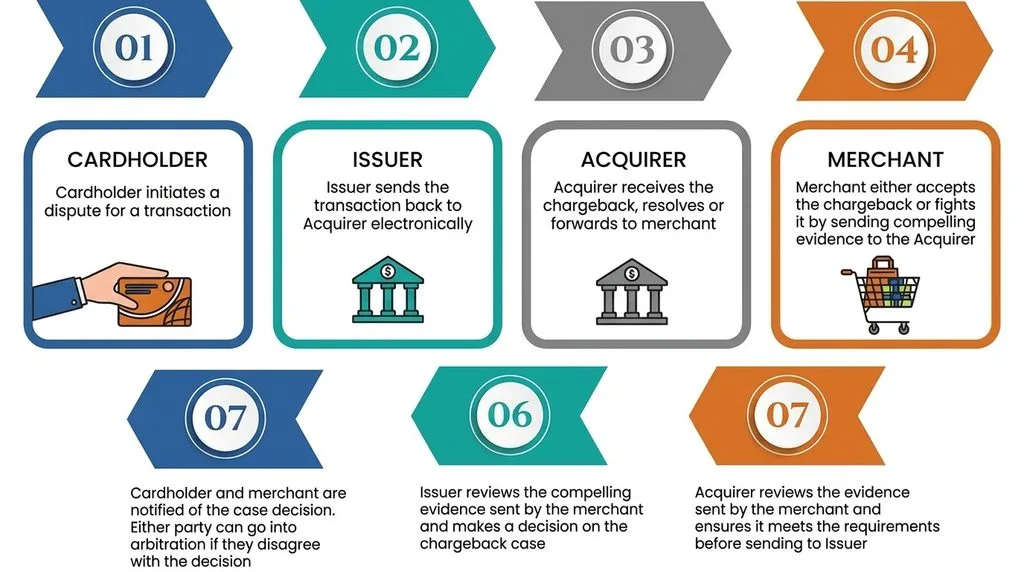
If you want a deeper understanding of the mechanics behind bank-side reversals, our full explainer on what is a chargeback walks through every stage of the process — from representment to arbitration.
For Merchants Reading This: How Descriptors Can Save You Fortunes
If you run an ecommerce store, subscription service, or SaaS product and you found this post while researching your own descriptor problem, tighten the following screws before your next billing cycle.
Use your public brand name, not your legal entity. A shopper who bought “Sunset Yoga” will panic if the statement shows AJK Holdings LLC. Match the label to the checkout screen they saw at the moment of purchase.
Keep the meaningful characters in the first fifteen positions. Every prefix — APPLE PAY -, SP *, PAYPAL * — eats space at the front. Front-load your identity so it survives truncation on older banks.
Choose dynamic descriptors when you sell multiple products. A single merchant account bundling ten brands should never send the same static descriptor for all of them. Add a suffix that names the plan.
Test after every processor change and once a year. Buy something from your own store using cards issued by three different banks (a large national bank, a mid-tier regional, and a credit union) and screenshot how the descriptor renders on each.
Never drop random vowels. ART COF ROAST CO is harder to identify than ART COFFEE. Cardholders read descriptors as words, not as puzzles.
Fit a phone number if your acquirer allows it. A cardholder who can call your billing line rarely files a chargeback.
Under Visa’s revamped Acquirer Monitoring Program (VAMP), which lowered its merchant threshold from 2.2% to 1.5% on 1 April 2026 according to the Merchant Risk Council, and Mastercard’s Excessive Chargeback Program (ECM) at 100 monthly chargebacks and a 1.5% ratio, sloppy descriptors can push a business into monitoring status faster than any other single failure mode.
How Payment Descriptors Fit Into the Full Card-Processing Flow
Zooming out helps the whole thing make sense. When you tap or type a card, the transaction actually travels through six distinct entities before your descriptor appears on your app:
- You enter your card at the merchant’s checkout.
- The merchant’s payment gateway encrypts the data and forwards it.
- The merchant’s acquiring bank submits the transaction to the network.
- The card network (Visa, Mastercard, Amex, Discover) routes it.
- Your issuing bank authorizes or declines.
- Your bank’s core system stores and renders the descriptor for you.
Each hop is capable of transforming, truncating, or reformatting the descriptor. This is why the same merchant looks slightly different on Chase versus Barclays versus HSBC versus Wells Fargo, and why an Apple Pay purchase in London reads differently from the same card’s swipe purchase in New York.
Being financially literate about these pipelines is part of a broader pattern of understanding where your money actually lives and moves. If you are optimizing an emergency fund alongside subscription tracking, a comparison of the best high-yield savings accounts is a natural next step in the same information diet.
Building Anti-Mystery Habits for the Long Term
The bigger lesson of the IMMEDIA puzzle is not really about one publisher. It is that every modern household now runs thirty or forty small recurring charges, and the cost of leaking a few forgotten ones adds up fast. A few habits worth building:
- Turn on push notifications for every card. Real-time alerts turn statement review into a background task instead of a monthly ordeal.
- Review statements weekly. The 60-day dispute clock starts on the statement date, not the day you notice.
- Keep a subscription log. A simple spreadsheet with merchant, plan, amount, renewal date, and cancellation URL beats every fancy app.
- Use virtual card numbers for trials. Bank-issued virtual cards or a service like Privacy.com let you cap or kill a card after one charge.
- Cancel trials on day one. Most services honor the trial through the end date even if you cancel immediately after signing up.
- Freeze cards you rarely use. A one-tap freeze in your app removes the attack surface entirely.
- Reconcile subscriptions during tax season. March and April are natural moments to audit twelve months of small charges.
Small money habits scale. If you are also reviewing whether to consolidate legacy card debt during your subscription audit, our breakdown of whether is debt consolidation a good idea walks through the math for every debt profile.
How Immediate Media Charges Vary by Country
Immediate Media sells subscriptions globally, but the descriptor and currency you see depend on where your card was issued.
- United Kingdom — Charges appear in GBP as
IMMEDIATE MEDIA COor truncated forms. Direct-debit collections through GoCardless show asIMMEDIATE MEDIA DD. - United States — Charges appear in USD, often via the North American subscription fulfillment partner, and can display as
IMMEDIATE MEDIA CO GBRwith the country code appended. - Europe (EEA) — Descriptors appear in EUR, sometimes carrying a
SEPAor Adyen routing prefix. - Australia and New Zealand — Charges may show as
IMMEDIATE MEDIA AUor via a local fulfillment agent handling ANZ subscriptions.
Foreign-transaction fees from your issuing bank sometimes appear as a separate line item a day or two later. That secondary charge is not a duplicate — it is your own bank’s international-processing fee.
Cancelling an Immediate Media Subscription
If verification confirms the charge is a real Immediate Media subscription you no longer want, cancellation is straightforward but slightly different for each brand:
- Radio Times: Log in at
radiotimes.com, open My Account → Subscriptions, and click Cancel. Cancellations must occur at least 24 hours before the renewal date to avoid the next charge. - BBC Good Food, Gardeners’ World, and other print titles: Log in at the relevant brand website or contact
ourmediashop.com, which handles fulfillment for many of the print magazines. - Nutracheck and app-based subscriptions: Manage through the App Store or Google Play subscription settings, not through the Immediate Media website.
- All UK titles: Contact Immediate Media customer service via
immediate.co.uk/faqs— they can pause, refund, or cancel any active subscription during standard business hours.
Refunds are prorated on some annual plans and denied on others, depending on how long you have held the subscription. Reading the specific brand’s terms of service before cancelling prevents surprises.
Frequently Asked Questions
Is an IMMEDIA charge on my bank statement a scam?
Almost never. In the overwhelming majority of cases, IMMEDIA is a truncated form of IMMEDIATE MEDIA CO, referring to Immediate Media Company — the legitimate UK publisher of Radio Times, BBC Good Food, Gardeners’ World, and dozens of other titles. Verify the amount against your email inbox and household subscriptions before disputing.
Why does the same merchant appear with different descriptors on my statement?
Every merchant sends two descriptors during a transaction lifecycle — a soft descriptor at authorization and a hard descriptor at settlement — and dynamic descriptors change per product. Your issuing bank may also truncate them differently across pending and posted views. Two consecutive Immediate Media charges can therefore read IMM*RADIO TIMES and IMMEDIA even though they originate from the same company.
What is the difference between a merchant descriptor and a merchant category code (MCC)?
The descriptor is the visible text label your bank shows you. The MCC is a hidden four-digit number classifying the merchant’s industry — for example, MCC 5192 covers books and periodicals. MCCs drive reward-card multipliers and fraud filtering but do not usually appear directly on your statement.
How do I cancel an Immediate Media Company subscription cleanly?
Log in to the specific brand’s website (Radio Times, BBC Good Food, HistoryExtra) and cancel through My Account → Subscriptions. For app-based products like Nutracheck, manage the cancellation through the App Store or Google Play subscription settings instead. For anything unclear, the group’s customer-service hub at immediate.co.uk/faqs handles pauses, refunds, and cancellations.
Can I refund an IMMEDIA charge that I did not authorize?
Yes. Contact Immediate Media’s customer service first — the team routinely refunds forgotten renewals without escalation. If the merchant refuses or you cannot reach them, file a chargeback with your card issuer within 60 days of the statement date under the Fair Credit Billing Act (US) or Section 75 of the Consumer Credit Act 1974 (UK).
Why do merchant descriptors have such tight character limits?
Card networks inherited their descriptor standards from legacy magnetic-stripe systems designed in the 1980s. Mastercard caps descriptors at 22 alphanumeric characters, Visa allows around 25, and some issuing banks running older core-banking software truncate the display to just 15 characters. Modernization moves slowly across the entire payment ecosystem because thousands of banks would need to update in lockstep.
Do merchant descriptors show up on debit-card statements as well as credit-card statements?
Yes. Descriptors attach to the payment authorization itself, so they render identically on both debit and credit statements. Your legal protections differ slightly — debit disputes fall under Regulation E rather than the FCBA — but the descriptor mechanics are the same.
What should I do if I still cannot identify an IMMEDIA charge after all these steps?
Call your issuing bank and ask them to pull the full raw descriptor, the merchant ID, and any embedded phone number from their internal transaction record. Banks have access to more transaction metadata than what appears on your app, and a single call to the fraud desk usually identifies the merchant precisely within a few minutes.
Final Thought
An IMMEDIA charge is one of the small mysteries that unravels the moment you understand the machinery behind it. Ninety percent of the time, it is a Radio Times or BBC Good Food renewal you set up ages ago and forgot. The remaining ten percent splits between household members using shared cards, corporate AV invoices from a similarly named vendor, and the rare genuine fraud case that responds well to a fast dispute.
The bigger takeaway is that every line on your bank statement is a compressed message from a merchant, filtered through five or six systems that each get a chance to shorten it. Learning to read those little strings — soft versus hard, static versus dynamic, prefixed versus raw — turns a source of monthly anxiety into a small superpower. Combine that literacy with weekly reviews, transaction alerts, and a running subscription log, and mystery charges lose their bite for good.

Leave a Reply