

In this article
- TL;DR: The Quick Answer
- What Is a CD Ladder?
- Why a CD Ladder Makes Sense in 2026
- CD Rates in 2026: What the Market Looks Like Right Now
- How to Build a CD Ladder: Step-by-Step
- CD Ladder Examples (Tables You Can Copy)
- CD Ladder Strategy Variations
- Bank CDs vs Brokered CDs
- Where No-Penalty CDs Fit
- CD Ladder vs HYSA: Which Should You Use?
- Pros and Cons of a CD Ladder
- Early Withdrawal Penalties, Taxes, and Fine Print
- Is Your Money Safe? FDIC and NCUA Insurance
- Common CD Ladder Mistakes
- Who Should (and Shouldn't) Build a CD Ladder
- Your CD Ladder Checklist
- Final Thoughts
- FAQ: How to Build a CD Ladder
TL;DR: The Quick Answer
How to build a CD ladder: split your savings into equal chunks and put each chunk into a certificate of deposit (CD) with a different maturity date. A classic version uses five CDs that mature in 1, 2, 3, 4, and 5 years. Each time a CD matures, you either spend that money or roll it into a new 5-year CD. After the first few years, one CD matures every year, and every CD in the ladder earns a longer-term rate.
Why bother in 2026? Top online CDs pay roughly 4.2% to 4.95% APY in early October 2026, while the FDIC’s national average 12-month CD pays about 1.73%. The Federal Reserve also raised its benchmark rate in September 2026, so rates could keep moving. A ladder lets you lock in today’s yields on part of your cash while keeping a slice of it coming due on a regular schedule.
Do this first:
- Keep your emergency fund in a liquid account. A ladder holds money you can leave alone for months or years.
- Decide how much to ladder and how often you want access (every 3 months, 6 months, or every year).
- Compare rates at online banks, credit unions, and brokerages, not just your current bank.
- Split the money into equal rungs, buy the CDs, and set calendar reminders for every maturity date.
- When a rung matures, reinvest at the longest term in your ladder or use the cash for its planned job.
Rates in this guide are examples from early October 2026. They change often, so confirm the current APY, minimum deposit, and early withdrawal penalty before you open any CD.

What Is a CD Ladder?
A certificate of deposit ladder is a savings plan that uses several CDs with staggered maturity dates instead of one big CD. Picture a ladder: each CD is a rung, and the rungs sit at different heights (terms). Money comes off the ladder at regular intervals, so you never have all of your cash locked up until one distant date.
A single CD forces a trade-off: a 5-year CD usually pays more but ties up your money for five years, while a 1-year CD gives access sooner at a lower rate. A ladder blends the two. You get longer-term rates on most of the money and a predictable maturity on a regular schedule.
How the rungs work
Here is the simplest CD ladder strategy:
- You start with $25,000.
- You split it into five $5,000 rungs.
- You buy a 1-year, 2-year, 3-year, 4-year, and 5-year CD.
- In year one, the 1-year CD matures. You roll it into a new 5-year CD.
- In year two, the original 2-year CD matures. You roll it into another 5-year CD.
- By year five, you own five 5-year CDs, and one of them matures every 12 months.
That last point is the whole trick. Once the ladder is “built,” you earn 5-year rates on everything, yet one-fifth of the money becomes available each year.
Quick CD vocabulary
- APY (annual percentage yield): the yearly return including compounding. Compare CDs by APY, not by “interest rate.”
- Term: how long the money stays locked, such as 6 months or 5 years.
- Maturity date: the day the term ends and you can withdraw penalty-free.
- Grace period: a short window after maturity, often 7 to 10 days, when you can withdraw or move the money before the CD renews.
- Early withdrawal penalty: the interest you forfeit if you pull money out before maturity.
- No-penalty CD: a CD that lets you withdraw early without a fee, usually after the first week.
- Brokered CD: a bank-issued CD bought through a brokerage account.
Why a CD Ladder Makes Sense in 2026
Interest rates did not follow the script many savers expected. After three rate cuts in late 2025, the Fed held steady for most of 2026. Then, on September 16, 2026, the Federal Reserve raised the federal funds target range by a quarter point to 3.75%–4.00%, citing inflation that “remains elevated.” Fed officials’ projections pointed to the possibility of more tightening.
That creates a real dilemma for cash savers:
- If rates keep rising, locking everything into a 5-year CD today means you miss higher yields later.
- If rates fall again, keeping everything in short-term accounts means your yield drops with them.
A ladder sidesteps the guessing game. Part of your money locks in today’s longer-term yields. Part of it matures soon, so you can reinvest at higher rates if they show up.
Ladders also help with three everyday problems:
- Planned expenses. Line up maturities with known costs, such as tuition each August.
- Behavior. Money in a CD is harder to spend on impulse.
- Retirement income. Yearly rungs can cover spending without selling stocks in a downturn.

CD Rates in 2026: What the Market Looks Like Right Now
To build a good ladder, you need to know what each rung can earn. Bankrate’s October 2026 CD rate tracker listed a top nationally available yield of 4.95% APY on a 5-year CD, with most of the best offers clustered between about 4.2% and 4.8%. NerdWallet’s October 2026 lists showed similar ranges, and Fidelity’s brokered CD inventory tends to land in the same neighborhood.
Example top-tier CD rates by term (early October 2026)
| Term | Example top APYs | Example institutions | Typical minimum |
|---|---|---|---|
| 6 months | 4.20%–4.40% | Quorum FCU, Popular Direct, E*TRADE | $0–$10,000 |
| 1 year | 4.35%–4.50% | Quorum FCU, E*TRADE, Marcus, BTG Pactual | $0–$1,000 |
| 18 months | 4.40%–4.55% | Popular Direct, Bread Savings, Marcus | $500–$10,000 |
| 2 years | 4.40%–4.65% | Popular Direct, Marcus, Happen Bank | $500–$10,000 |
| 3 years | 4.40%–4.80% | Popular Direct, Sallie Mae, Synchrony | $0–$10,000 |
| 4 years | 4.40%–4.85% | Popular Direct, E*TRADE | $0–$10,000 |
| 5 years | 4.50%–4.95% | Popular Direct, NASA FCU, Synchrony, Bread | $0–$10,000 |
Source: Bankrate and NerdWallet rate tables published Sept. 30–Oct. 4, 2026. These are examples, not recommendations, and they change frequently. Some top rates require $10,000 or more.
National averages tell a very different story. The FDIC’s September 2026 national rates show a 12-month CD averaging 1.73% APY and a 60-month CD averaging just 1.38%. Regular savings accounts average 0.37%. In other words, the best online CDs pay two to three times what a typical bank pays. Shopping around matters more than any ladder design choice.
What the 2026 yield curve means for your ladder
In a “normal” market, longer CDs pay noticeably more than shorter ones. In 2026 the curve is fairly flat: a top 1-year CD pays about 4.4%, and a top 5-year CD pays about 4.5% to 4.95%. The reward for going long is small, so 2-year and 3-year ladders capture most of the yield with less lock-up. If the curve steepens later, you can lengthen new rungs as you roll them.

How to Build a CD Ladder: Step-by-Step
Step 1: Confirm the money can sit still
A CD ladder is not an emergency fund. Before you build one, keep at least a few months of essential expenses in a liquid savings account. Ladder the money beyond that, such as a down payment fund or a retirement cash reserve.
Ask one question for each dollar: “Could I need this before its CD matures?” If the honest answer is “maybe,” keep it liquid or use a no-penalty CD.
Step 2: Pick your ladder length
Your ladder length is the longest term in the ladder. Common choices:
- 1-year ladder: four rungs of 3, 6, 9, and 12 months. Money comes due every quarter.
- 2-year ladder: four rungs of 6, 12, 18, and 24 months. Money comes due every six months.
- 3-year ladder: three or six rungs. A good middle ground in a flat-curve year like 2026.
- 5-year ladder: five rungs of 1 to 5 years. Highest long-run yield, but each new rung locks for five years.
Match the length to your goal. Saving for a home in 24 months? A 2-year ladder fits. Building a retirement cash reserve? A 5-year ladder may fit better.
Step 3: Choose the number of rungs and the spacing
Three to six rungs is a sweet spot for most people. Keep the spacing even (every 6 or 12 months) so the ladder stays simple.
Step 4: Decide how much goes in each rung
Divide your ladder money evenly across the rungs. With $20,000 and four rungs, each rung gets $5,000. Equal rungs make rolling and tracking easy. If you have a known expense, you can make one rung bigger so it matures right when you need it.
Check minimum deposits. Some of the highest 2026 rates require $10,000 per CD, while many online banks accept $500 to $1,000, and some have no minimum.
Step 5: Shop for the best CD at each term
You do not need to buy every rung at the same bank. Compare by term:
- Online banks often lead on yield and have low minimums.
- Credit unions sometimes beat banks on specific terms. Membership rules vary.
- Brokerages sell brokered CDs from many banks in one account, which simplifies tracking and FDIC planning.
Write down each CD’s APY, minimum, penalty, and maturity rules.
Step 6: Open the CDs and fund them
Open each CD, fund it from checking or savings, and save the confirmation. Brokered CD orders go through your brokerage account and usually settle in a day or two.
Step 7: Track maturities and roll each rung
This step makes or breaks a ladder. Many banks automatically renew a maturing CD into a new CD of the same term, often at an uncompetitive rate. To stay in control:
- Put every maturity date and grace period in your calendar with a reminder one week before.
- At maturity, decide: spend the money for its planned purpose, or roll it into a new CD at the longest term in your ladder.
- Shop again each time. The best bank for a 5-year CD today may not lead next year.

A simple tracking table
Keep a spreadsheet or notebook page like this:
| Rung | Bank | Term | APY | Amount | Opened | Matures | Penalty | Action at maturity |
|---|---|---|---|---|---|---|---|---|
| 1 | Bank A | 1 yr | 4.40% | $5,000 | Oct 2026 | Oct 2027 | 3 months’ interest | Roll to 5 yr |
| 2 | Bank B | 2 yr | 4.45% | $5,000 | Oct 2026 | Oct 2028 | 6 months’ interest | Roll to 5 yr |
| 3 | Bank B | 3 yr | 4.50% | $5,000 | Oct 2026 | Oct 2029 | 12 months’ interest | Roll to 5 yr |
| 4 | Credit union C | 4 yr | 4.55% | $5,000 | Oct 2026 | Oct 2030 | 12 months’ interest | Roll to 5 yr |
| 5 | Bank D | 5 yr | 4.60% | $5,000 | Oct 2026 | Oct 2031 | 12 months’ interest | Roll to 5 yr |

CD Ladder Examples (Tables You Can Copy)
The tables below use illustrative rates close to the top of the market in early October 2026. Your real numbers will differ. Interest assumes annual compounding and no withdrawals.
Example 1: Classic 5-year ladder with $25,000
| Rung | CD term | Example APY | Deposit | Interest earned over term | Value at maturity |
|---|---|---|---|---|---|
| 1 | 1 year | 4.40% | $5,000 | $220 | $5,220 |
| 2 | 2 years | 4.45% | $5,000 | $455 | $5,455 |
| 3 | 3 years | 4.50% | $5,000 | $706 | $5,706 |
| 4 | 4 years | 4.55% | $5,000 | $974 | $5,974 |
| 5 | 5 years | 4.60% | $5,000 | $1,261 | $6,261 |
| Total | — | 4.50% avg | $25,000 | $3,616 | $28,616 |
In the first year, this ladder earns about $1,125 in interest. For comparison, $25,000 at the 1.73% national average 1-year CD rate would earn about $433.
Example 2: How the 5-year ladder rolls over time
| Year | What matures | What you do | Ladder status |
|---|---|---|---|
| Year 0 (Oct 2026) | Nothing | Buy 1-, 2-, 3-, 4-, and 5-year CDs | Building |
| Year 1 (Oct 2027) | 1-year CD | Roll $5,220 into a new 5-year CD | Building |
| Year 2 (Oct 2028) | 2-year CD | Roll $5,455 into a new 5-year CD | Building |
| Year 3 (Oct 2029) | 3-year CD | Roll $5,706 into a new 5-year CD | Building |
| Year 4 (Oct 2030) | 4-year CD | Roll $5,974 into a new 5-year CD | Fully built |
| Year 5 (Oct 2031) onward | One 5-year CD each year | Spend it or roll it again | Steady state |
Once fully built, every rung earns a 5-year rate, and about 20% of the ladder matures every year.
Example 3: 1-year “quarterly” ladder with $10,000
This version suits short-term goals or anyone who wants access every three months.
| Rung | CD term | Example APY | Deposit | Interest over term |
|---|---|---|---|---|
| 1 | 3 months | 4.15% | $2,500 | ~$26 |
| 2 | 6 months | 4.25% | $2,500 | ~$53 |
| 3 | 9 months | 4.30% | $2,500 | ~$80 |
| 4 | 12 months | 4.40% | $2,500 | $110 |
Each time a rung matures, roll it into a new 12-month CD. After the first year, a CD comes due every quarter.
Example 4: 2-year ladder with $20,000
| Rung | CD term | Example APY | Deposit | Interest over term |
|---|---|---|---|---|
| 1 | 6 months | 4.25% | $5,000 | ~$105 |
| 2 | 12 months | 4.40% | $5,000 | $220 |
| 3 | 18 months | 4.50% | $5,000 | ~$341 |
| 4 | 24 months | 4.55% | $5,000 | ~$465 |
Roll each maturing rung into a new 24-month CD. You get access every six months and a yield close to the 2-year rate.

CD Ladder Strategy Variations
The classic ladder is not the only option. Here are three common twists, plus a no-penalty option covered below.
Mini ladder
A mini ladder uses only short terms, such as 3, 6, 9, and 12 months. It works well if you expect rates to rise or you need the money within a year or two. You give up a little yield in exchange for frequent access.
Barbell
A barbell puts money only at the short and long ends, for example half in 6-month CDs and half in 5-year CDs, with nothing in the middle. The short side gives liquidity and lets you react to rising rates. The long side locks in yield. It takes more attention than a standard ladder.
Bullet
A bullet strategy times every CD to mature on the same date. You buy CDs at different points over time, all aimed at one target, such as a down payment in June 2029. It is ideal for one big known expense.
Bank CDs vs Brokered CDs
You can build a ladder with CDs bought directly from banks and credit unions, or with brokered CDs bought through an investment account. Brokerages also make building easy: Fidelity’s Model CD Ladders let you pick a 1-year, 2-year, or 5-year model, enter an amount, and review a ready-made set of new-issue CDs, with an optional Auto Roll service to reinvest maturing rungs.
| Feature | Bank or credit union CD | Brokered CD |
|---|---|---|
| Where you buy | Directly from the bank or credit union | Through a brokerage account — Fidelity, Schwab, Vanguard, E*TRADE, and others |
| Getting money out early | Pay the early withdrawal penalty | Sell on the secondary market at the current market price |
| Interest | Usually compounds inside the CD | Usually paid out as simple interest to your cash balance |
| Price risk | None; principal stays fixed | If rates rise, selling early may mean a loss |
| Call risk | Rare | Some brokered CDs are callable by the issuing bank |
| Insurance | FDIC or NCUA, up to limits | FDIC through the issuing bank, up to limits |
| Convenience | One login per bank | Many banks in one account |
Which is better? Bank CDs suit savers who want simplicity and fixed principal. Brokered CDs suit people who already use a brokerage or want to spread large balances across banks. Check whether each brokered CD is callable: the bank can redeem it early if rates fall, cutting off your yield when you most want it.

Where No-Penalty CDs Fit
A no-penalty CD lets you withdraw your full balance before maturity without paying a fee. In exchange, it usually pays a bit less than a standard CD of similar length. NerdWallet’s October 2026 no-penalty CD list showed examples from about 3.75% to 4.33% APY, with terms from 6 to 13 months and minimums around $500 to $1,000.
A few rules to know:
- Most require a short wait. Federal rules generally mean you cannot withdraw in the first six or seven days without a penalty.
- Withdrawals are usually all-or-nothing. Many banks close the CD when you withdraw. A few allow partial withdrawals.
- The rate is fixed for the term. That protects you if savings rates fall, unlike a variable-rate account.
No-penalty CDs work well as the first rung of a ladder, as a holding spot while you shop for longer CDs, or as a place for money you probably won’t need but want to reach just in case.
CD Ladder vs HYSA: Which Should You Use?
High-yield savings accounts and CD ladders both pay far more than a typical big-bank savings account. In early October 2026, many top HYSAs advertised around 4.2% to 4.3% APY, close to many 1-year CDs. If you want to compare savings accounts in detail, see our guide to the best high-yield savings accounts.
The key difference is control versus certainty:
| Factor | CD ladder | High-yield savings account |
|---|---|---|
| Rate type | Fixed for each CD’s term | Variable; the bank can change it any time |
| Access | Scheduled; early access costs a penalty | Anytime (transfers usually take 1–3 business days) |
| Best for | Money you won’t need for months or years | Emergency fund and short-term cash |
| If rates fall | Your locked rates stay put | Your yield drops |
| If rates rise | Only maturing rungs benefit | Your yield usually rises over time |
| Effort | Moderate: track dates and roll rungs | Low |
| Insurance | FDIC/NCUA up to limits | FDIC/NCUA up to limits |
A practical split for many households: keep the emergency fund in a HYSA, then ladder extra cash you can set aside for a defined period. You do not have to choose one or the other. The HYSA handles surprises; the ladder handles planned goals and locks in yield.
In the $25,000 example above, a HYSA at 4.20% would earn about $1,050 in the first year if the rate held, versus about $1,125 for the ladder. The gap is modest in year one. The bigger benefit of the ladder shows up if rates drop, because your CD yields stay locked.

Pros and Cons of a CD Ladder
| Pros | Cons |
|---|---|
| Locks in fixed rates on part of your savings | Money is tied up until each rung matures |
| Gives regular access to cash without penalties | Early withdrawal penalties can wipe out months of interest |
| Reduces the risk of guessing wrong on interest rates | Returns usually trail stocks over long periods |
| Principal is protected (FDIC or NCUA insured up to limits) | Fixed rates may not keep up with high inflation |
| Predictable income for retirees and planned goals | Requires tracking several maturity dates |
| Discourages impulse spending | Interest is taxed as ordinary income each year |
Bottom line: the ladder’s strengths are rate protection, planned access, and insured principal. Its weaknesses are lock-up, inflation risk, and a bit of admin. For short- and medium-term money, the trade usually works. For long-term growth, diversified investments have historically beaten cash.

Early Withdrawal Penalties, Taxes, and Fine Print
How early withdrawal penalties work
Most banks charge a penalty equal to a set amount of interest. Common structures:
| CD term | Typical penalty range | Example on a $5,000 CD at 4.60% |
|---|---|---|
| Under 1 year | 60–90 days of interest | About $38–$57 |
| 1–2 years | 3–6 months of interest | About $58–$115 |
| 3–5 years | 6–12 months of interest | About $115–$230 |
| Some 5-year CDs | Up to 18–24 months of interest | About $345–$460 |
Penalties vary widely by bank. For example, one high-yield bank in 2026 charged 24 months of interest on its 5-year CD. If you withdraw early in the first months of a CD, the penalty can eat into your principal. Always read the penalty before you open a long-term rung.
Taxes on CD interest
- CD interest counts as ordinary income for federal and state taxes. It is not taxed at lower capital gains rates.
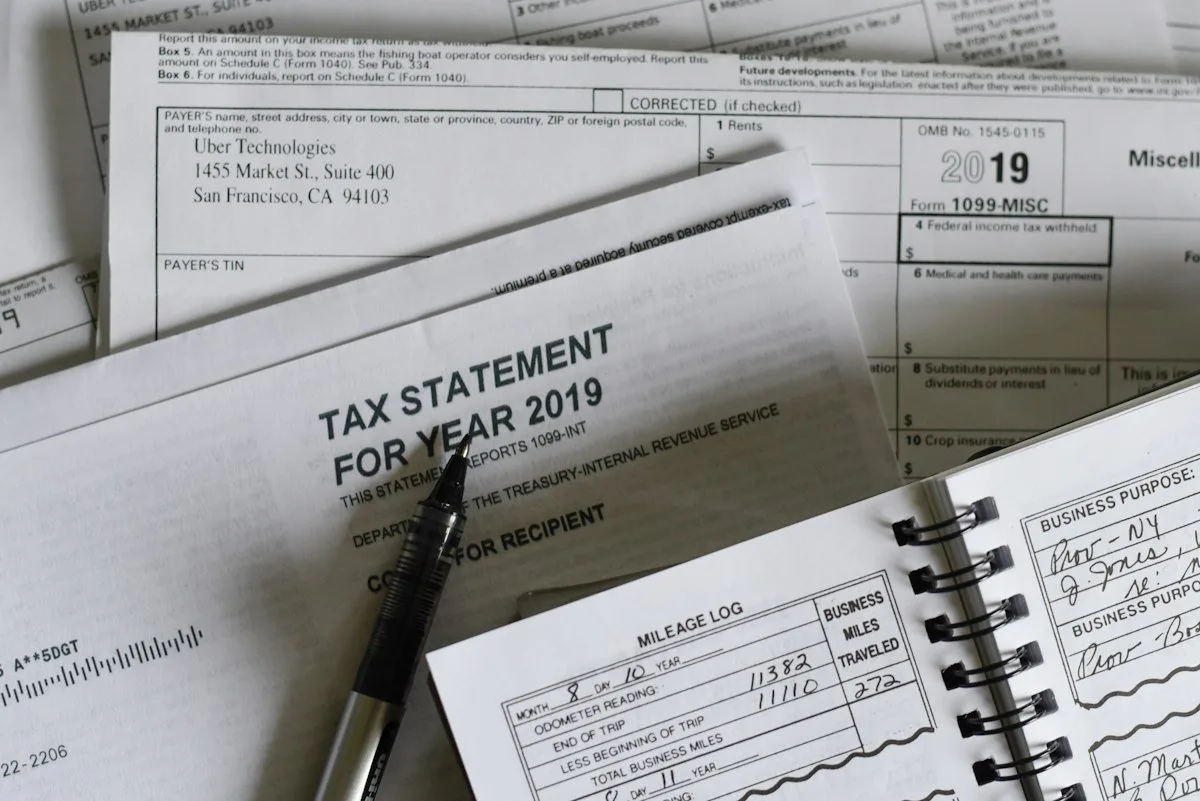
- You generally owe tax as interest accrues, even on a multi-year CD that pays everything at maturity. Banks report interest on Form 1099-INT.
- Early withdrawal penalties are deductible. You can usually deduct the penalty as an adjustment to income on your federal return.
- Retirement accounts change the math. CDs held inside an IRA grow tax-deferred (traditional) or potentially tax-free (Roth), subject to IRA rules.
Other fine print to check
Read the automatic renewal terms, grace period length, compounding frequency, and any bump-up, add-on, or call features before you commit.
Is Your Money Safe? FDIC and NCUA Insurance
CDs from banks are protected by the FDIC, and share certificates from federally insured credit unions are protected by the NCUA. Under FDIC deposit insurance rules, coverage is $250,000 per depositor, per insured bank, for each account ownership category. NCUA coverage at credit unions works the same way.
What that means for a ladder:
- All of your deposits at one bank count together in the same ownership category, including savings, checking, and CDs.
- Large ladders can spread across banks. If your total at one bank would exceed $250,000, split rungs among several institutions.
- Joint accounts get separate coverage from individual accounts, and certain retirement accounts have their own category.
- Brokered CDs are covered by the issuing bank’s FDIC insurance, not the broker’s. Any premium paid above face value on the secondary market is not insured.
Before you open a CD, confirm the institution is FDIC- or NCUA-insured, and make sure fintech apps name their partner bank.

Common CD Ladder Mistakes
Using your emergency fund
If every dollar sits in CDs, a surprise car repair can force you to break a rung and pay a penalty. Keep emergency money liquid and ladder only what you can leave alone.
Accepting your bank’s default rate
The gap between average and top CD rates is huge. The FDIC’s national rate data showed a 12-month CD average of 1.73% in September 2026, while top online CDs paid about 4.4%. Letting a CD renew automatically at a big bank can cut your earnings by more than half.
Forgetting maturity dates
Missing a grace period usually means your money rolls into a new CD at whatever rate the bank sets. Calendar reminders solve this.
Ignoring the penalty fine print
A higher APY with a harsh penalty may be the wrong pick for a rung you might need early. Compare APY and penalty together.
Laddering money meant for long-term growth
Retirement money decades away usually belongs in diversified investments, not a CD ladder. CDs protect principal; they don’t build long-term wealth as quickly.
Buying callable CDs without realizing it
A callable brokered CD can disappear just when rates drop. Read the call schedule before you buy.
Who Should (and Shouldn’t) Build a CD Ladder
A CD ladder is a strong fit if you:
- Have a fully funded emergency fund and extra cash on top.
- Are saving for a goal one to five years away, such as a home, car, wedding, or tuition.
- Are retired or near retirement and want predictable cash flow.
- Want to lock in today’s yields without betting everything on one term.
- Prefer guaranteed returns over market ups and downs for part of your money.
A ladder may not fit if you are still building your emergency fund, carry high-interest credit card debt — paying it off “earns†far more than any CD — or want long-term growth for goals more than five to ten years out.
Your CD Ladder Checklist
Use this list to build your ladder in one afternoon:
- [ ] Emergency fund in place and liquid.
- [ ] Ladder amount decided (money you won’t need early).
- [ ] Ladder length chosen (1, 2, 3, or 5 years).
- [ ] Number of rungs and spacing picked.
- [ ] Rates compared at online banks, credit unions, and brokerages.
- [ ] APY, minimum deposit, penalty, and renewal terms recorded for each CD.
- [ ] Insurance confirmed and totals checked against the $250,000 limit per bank.
- [ ] CDs opened and funded.
- [ ] Maturity dates added to your calendar with reminders.
- [ ] Rollover rule written down — for example, “roll to the longest term unless the money has a planned useâ€.

Final Thoughts
Learning how to build a CD ladder comes down to a few simple moves: split your cash into equal rungs, stagger the maturities, shop hard for rates, and roll each rung when it comes due. In 2026, with top CDs paying well above 4% and the Fed signaling that rates could keep shifting, a ladder gives you a sensible middle path. You lock in part of today’s yields and keep regular access to the rest.
Keep your emergency fund liquid, keep your calendar updated, and re-check rates every time a rung matures.
FAQ: How to Build a CD Ladder
1) How much money do I need to build a CD ladder?
You can start with as little as a few hundred dollars per rung at banks with low minimums, so $1,000 to $2,500 can build a basic ladder. Some of the highest 2026 rates require $10,000 per CD, so larger balances open more options.
2) What are the best CD rates in 2026?
In early October 2026, top nationally available CDs paid roughly 4.4% to 4.5% APY for 1 year and up to about 4.95% APY for 5 years, according to Bankrate and NerdWallet. National averages were much lower, near 1.7% for 1 year. Rates change often, so check current offers.
3) Is a CD ladder better than a high-yield savings account?
It depends on the job of the money. A HYSA is better for emergency savings because you can withdraw anytime. A CD ladder is better for money you can lock away, because it fixes your rates and protects you if savings yields fall.
4) What happens when a CD in my ladder matures?
You get a grace period, often 7 to 10 days, to withdraw the money or move it. If you do nothing, most banks renew it into a new CD of the same term at the current rate. In a standard ladder, you roll it into a new CD at your longest term.
5) Can I lose money in a CD ladder?
Not if you hold insured CDs to maturity and stay within FDIC or NCUA limits. You can lose interest, and sometimes principal, by paying an early withdrawal penalty. Brokered CDs sold before maturity can also lose value if rates have risen.
6) How many rungs should a CD ladder have?
Most people do well with three to six rungs. Four or five rungs is the classic setup. More rungs give more frequent access but mean more accounts to track.
7) Should I use a no-penalty CD in my ladder?
It can make a good first rung or parking spot for cash you might need. It pays a little less than a standard CD but lets you withdraw without a fee after the first week.
8) Are CD ladders a good idea if the Fed is raising rates?
Yes, especially shorter ladders. When rates rise, your shortest rungs mature soon and can be reinvested at higher yields. Meanwhile, longer rungs lock in today’s rates in case the Fed reverses course later.



Leave a Reply