

In this article
- 🔑 TL;DR — Key Takeaways (Read This First)
- Why This Decision Matters More Than You Think
- What Is a Financial Advisor, Really?
- Do You Actually Need a Financial Advisor?
- Types of Financial Advisors: Which One Fits Your Life?
- Fiduciary vs. Suitability: The Single Most Important Rule
- How Much Does a Financial Advisor Cost in 2026?
- Credentials That Actually Matter (and Ones That Don’t)
- How to Verify a Financial Advisor in 10 Minutes (Free)
- 🚩 8 Red Flags That Should Send You Running
- Step-by-Step: How to Choose the Right Financial Advisor
- 12 Questions to Ask a Financial Advisor Before You Hire One
- What Actually Happens in Your First Meeting with a Financial Advisor?
- Robo-Advisor vs. Human Advisor: Which Should You Pick?
- How Much Money Do You Need to Hire an Advisor?
- Financial Advisor by Life Stage: A Quick-Match Guide
- Real-World Example: The Cost of a Bad Advisor
- Common Mistakes to Avoid
- When Should You Fire Your Financial Advisor?
- The Coming Advisor Shortage (and Why It Matters for You)
- Frequently Asked Questions
- Final Thoughts: Your Money Deserves a Real Partner
🔑 TL;DR — Key Takeaways (Read This First)
- A financial advisor is a professional who helps you make smart decisions about your money — from investing and taxes to retirement, insurance, and estate planning.
- Always hire a fiduciary. A fiduciary is legally required to put your interests first — the CFP® designation is the gold standard.
- The typical fee is 1% of assets under management (AUM) per year — about $5,000 on a $500,000 portfolio — but flat-fee, hourly, and subscription options can save you thousands.
- A skilled advisor can add up to ~4.92% in annual value, according to the 2026 Russell Investments Value of an Advisor study — mostly from behavior coaching and tax planning, not stock picking.
- Verify every candidate on FINRA BrokerCheck and the SEC’s Investment Adviser Public Disclosure database — it takes 10 minutes and can save you a lifetime of regret.
- Interview at least three advisors before signing anything. In fact, 97% of Americans now contact two or more advisors before hiring one.
Why This Decision Matters More Than You Think
Picture this. It’s a Sunday night. You’re staring at a 401(k) balance you can’t quite make sense of, a spreadsheet full of bills, and a nagging voice asking, “Am I actually going to be okay?” You’re not alone. A recent YouGov survey found only about one in three American investors currently uses a financial advisor, yet the majority say they’d feel more secure if they did. According to the 2026 Northwestern Mutual Planning & Progress Study, 71% of Americans who work with an advisor feel financially secure — compared to a far smaller share of DIY investors.
Choosing the right financial advisor isn’t just a checkbox on your adulting list. It’s the difference between confidently retiring at 60 and quietly panicking at 70. This guide will walk you through the entire process — the right way, in plain English, without the industry jargon.
What Is a Financial Advisor, Really?
A financial advisor is a professional who helps individuals and families make informed decisions about money — including investing, tax strategy, retirement, insurance, education savings, and estate planning. In practice, the label covers everyone from independent Certified Financial Planners® to bank-branch salespeople, so the title alone tells you almost nothing about quality.
Here’s what a good advisor actually does day-to-day:
- Builds a written financial plan matched to your goals and risk tolerance
- Manages your investment portfolio and rebalances when needed
- Coordinates tax-smart strategies (Roth conversions, tax-loss harvesting, RMDs)
- Reviews life, disability, and long-term care insurance gaps
- Helps you avoid panic-selling in downturns (arguably the biggest value-add)
- Coordinates with your CPA and estate attorney so nothing falls through the cracks
If you’re still building your financial foundation, layer good advice with strong protection — check our guides on best car insurance and term life insurance so your plan isn’t built on a shaky base.
Do You Actually Need a Financial Advisor?
Not everyone does. Ask yourself these five questions:
- Are you within 10 years of retirement or already retired?
- Have you recently received an inheritance, sold a business, or exercised stock options?
- Do you have complex tax situations (RSUs, rental properties, multiple states, K-1s)?
- Are you going through a major life transition — marriage, divorce, widowhood, new baby, or a big career jump?
- Do you constantly feel anxious or stuck when making money decisions?
If you answered “yes” to two or more, professional advice will likely pay for itself many times over. The 2026 Russell Investments study estimates a good advisor adds roughly 4.92% per year in value, broken down as:
| Value Driver | Annual Value Added |
|---|---|
| Behavioral coaching (avoiding panic-selling and chasing returns) | 2.30% |
| Tax-smart planning and investing | 1.23% |
| Customized family wealth planning | 1.13% |
| Optimized asset allocation | 0.26% |
| Total value | ≈ 4.92% |
That’s a big number. On a $500,000 portfolio, it’s roughly $24,000 in annual value versus a 1% fee of $5,000 — nearly 5x return on the advisor’s cost.
But if you’re a 26-year-old just starting out with a $12,000 Roth IRA, hiring a full-service advisor probably isn’t worth it yet. A low-cost robo-advisor or a one-time flat-fee plan will do the job.

Types of Financial Advisors: Which One Fits Your Life?
The financial advice world is fragmented on purpose — it makes fees hard to compare. Here’s the plain-English breakdown.
1. Certified Financial Planner (CFP®)
A Certified Financial Planner is a financial professional who has passed a rigorous board exam, completed 6,000 hours of qualifying experience (or 4,000 apprenticeship hours), and committed to fiduciary duty when providing advice, according to the CFP Board. CFPs are best for comprehensive life planning.
2. Registered Investment Advisor (RIA)
An RIA is a firm (or an individual advisor within one) registered with the SEC or a state regulator, held to a fiduciary duty of care and loyalty under the Investment Advisers Act of 1940. There are more than 15,000 SEC-registered RIAs today, per the Investment Adviser Industry Snapshot, collectively managing over $144 trillion in assets.
3. Broker-Dealer / Registered Representative
Broker-dealers are individuals or firms licensed to buy and sell securities on behalf of clients, typically earning commissions on trades. Since 2020, they’ve been held to Regulation Best Interest (Reg BI) — which requires acting in the client’s best interest at the time of a recommendation, but not the ongoing fiduciary duty an RIA owes.
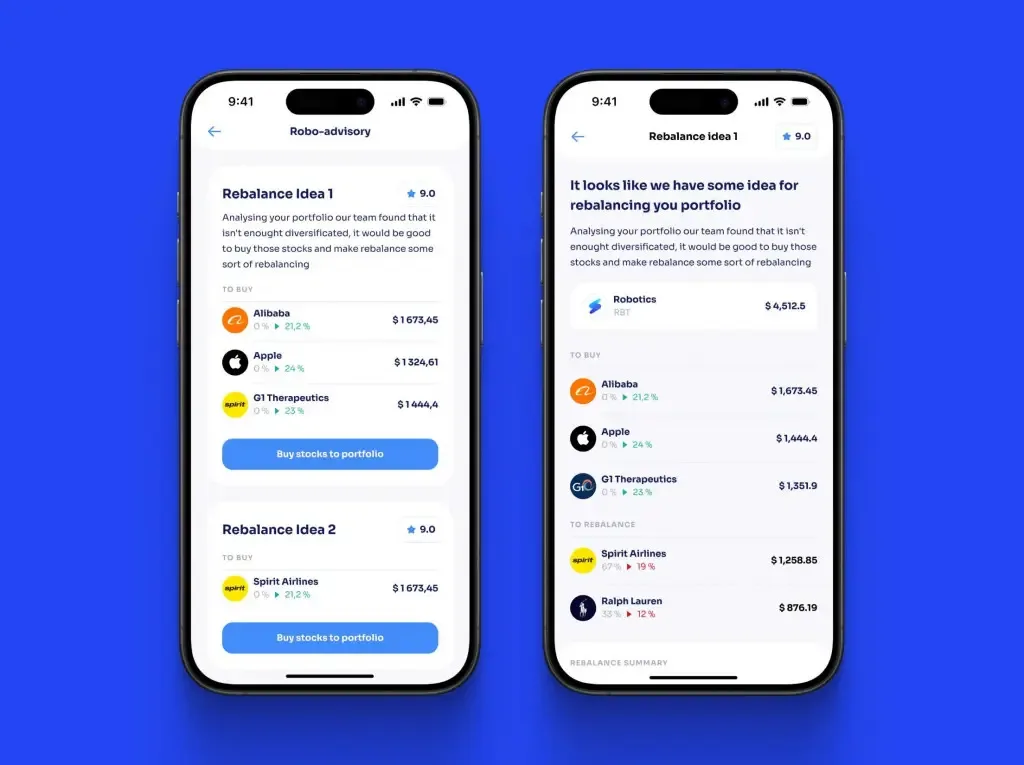
4. Robo-Advisor
A robo-advisor is an automated online platform that builds and rebalances a portfolio using algorithms based on your goals and risk tolerance. Costs typically range 0.25%–0.50% — a fraction of a human advisor’s fee. Popular options include Betterment, Wealthfront, Vanguard Digital Advisor, and Fidelity Go.
5. Hybrid Advisor
A hybrid advisor combines algorithm-driven investing with limited human-CFP access. Vanguard Personal Advisor Services and Schwab Intelligent Portfolios Premium are two large examples — perfect for “mostly hands-off but sometimes need a human” investors.
6. Wealth Manager / Private Client Advisor
A wealth manager typically serves high-net-worth clients ($1M+) and coordinates investing, estate, tax, philanthropy, insurance, and family governance under one roof.
Fiduciary vs. Suitability: The Single Most Important Rule
If you remember only one thing from this entire guide, remember this: hire a fiduciary — and get the promise in writing.
A fiduciary is a financial professional legally required to place a client’s interests above their own at all times when providing financial advice, per the CFP Board’s Code of Ethics and Standards of Conduct. Non-fiduciary salespeople, by contrast, may recommend a higher-fee product when a nearly identical low-cost version exists — as long as it’s technically “suitable” or “in your best interest at the moment of recommendation.”
Over 30 years, that gap can quietly cost you six figures.
The 3-Second Fiduciary Test
Ask any advisor, verbatim:
“Will you act as a fiduciary in all of our engagements, and are you willing to put that in writing?”
If the answer isn’t a clear, immediate “yes,” politely thank them and walk out. That single question filters out the majority of conflicted salespeople.

How Much Does a Financial Advisor Cost in 2026?
The typical financial advisor charges around 1% of assets under management per year, though fees vary widely based on the model, your account size, and services offered. Here’s a clean comparison.
The Five Common Fee Models
| Fee Model | Typical 2026 Cost | Best For |
|---|---|---|
| AUM (percentage) | 0.50%–1.50% per year; median ~1% up to $1M | Investors who want ongoing management |
| Flat annual fee | $3,000–$12,000 (average $2,926) | Comprehensive planning without asset minimums |
| Hourly rate | $200–$500 per hour (average $307) | One-off questions or second opinions |
| Project / one-time plan | $2,000–$10,000 | New investors who want a roadmap |
| Subscription / retainer | ~$595 / month or $6,815 / year | Younger, high-income savers with smaller balances |
Sources: Envestnet 2026 fee study, NerdWallet.
Fee-Only vs. Fee-Based vs. Commission
These three words sound alike but mean very different things:
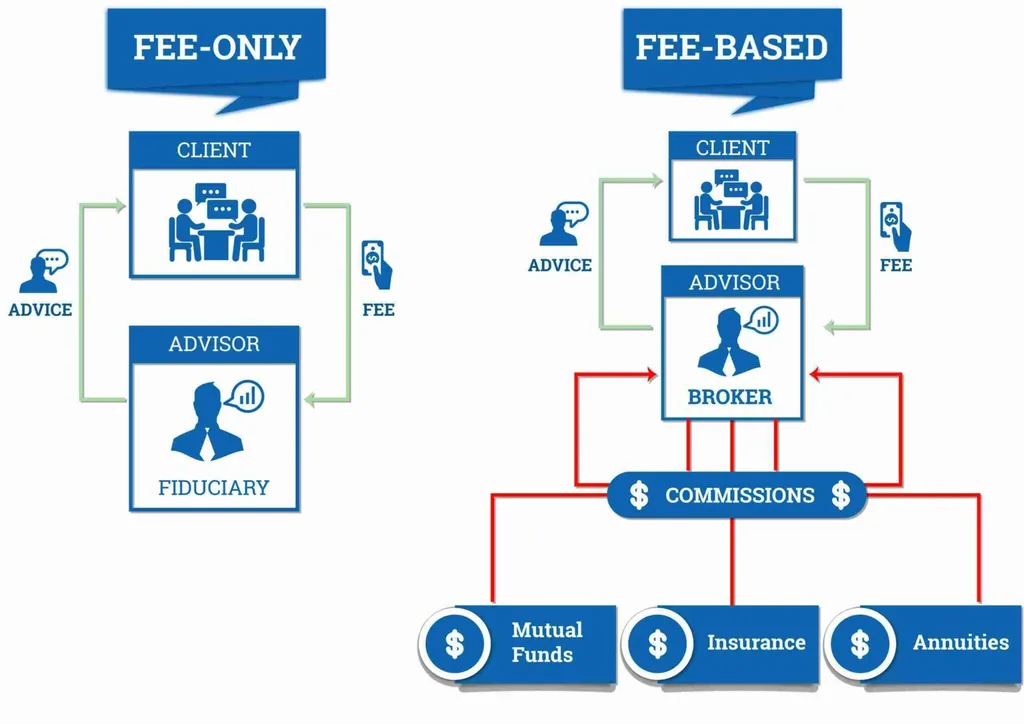
- Fee-only: The advisor earns only from client fees — no product commissions. This is the cleanest, most conflict-free model. Find one via the NAPFA directory.
- Fee-based: Client fees plus commissions from products sold. Not the same as fee-only, despite the marketing.
- Commission: Paid entirely by product sales (annuities, mutual funds, insurance). Not automatically bad, but the conflicts are baked in.
According to Cerulli Associates, asset-based fees now represent 72.4% of advisor compensation — but subscription and flat-fee models are the fastest-growing segment, especially among Millennial-focused firms.
Credentials That Actually Matter (and Ones That Don’t)
A “financial advisor” business card can mean almost anything. Certifications reveal what training and ethics standards someone is truly held to. Here are the ones worth paying attention to.
- CFP® (Certified Financial Planner): The broadest planning credential; fiduciary when giving advice.
- CFA® (Chartered Financial Analyst): Deep expertise in investment analysis — great for portfolio management.
- ChFC® (Chartered Financial Consultant): Similar to CFP with more insurance emphasis.
- CPA/PFS (Personal Financial Specialist): A CPA with a personal-finance credential — ideal if taxes dominate your plan.
- EA (Enrolled Agent): IRS-authorized tax professional — great if you have IRS-facing tax issues.
- CDFA®: Certified Divorce Financial Analyst — specialist for asset splits and alimony math.
- CLU®: Chartered Life Underwriter — insurance-focused.
- AIF® / AIFA®: Accredited Investment Fiduciary — signals fiduciary training.
⚠️ Skip credentials that are basically marketing badges (like “senior specialist” titles that only require a weekend course). The FINRA professional-designations database lets you look up the real requirements behind any acronym.
How to Verify a Financial Advisor in 10 Minutes (Free)
Before you shake anyone’s hand — or share a single account number — run these free checks.
- FINRA BrokerCheck — Shows employment history, licenses, exams, and any customer complaints or regulatory actions.
- SEC Investment Adviser Public Disclosure (IAPD) — Pulls up an advisor’s Form ADV. Read Part 2A (“the brochure”) for services, fees, and conflicts of interest; read Part 2B for the individual advisor.
- CFP Board verification — Confirms current CFP® status and shows any disciplinary history.
- Your state’s insurance department — Verifies life-and-annuity licenses if the advisor sells insurance products.
- Google + LinkedIn + Reddit’s r/PersonalFinance — Real client stories often surface issues regulators haven’t caught yet.
A single old disclosure isn’t automatically disqualifying. But multiple customer complaints, arbitrations, or terminations for cause are a hard stop. Move on.
🚩 8 Red Flags That Should Send You Running
Bad advisors don’t announce themselves. Watch for these warning signs before you sign anything.
- They refuse to sign a fiduciary oath or dodge the question with vague reassurance.
- Fees are vague, layered, or hidden — if you can’t explain how they get paid in one sentence, that’s the point.
- Pressure to buy annuities on the first meeting. Real annuities exist; strangers pushing them are rarely acting in your interest.
- Guaranteed “market-beating” returns. Legally impossible for anyone honest to promise.
- No written investment policy or plan. Professionals document their process.
- They discourage questions or dismiss your desire to “run this by my CPA/attorney.”
- They hold your money in their own name rather than at a third-party custodian like Schwab, Fidelity, or Vanguard. This is the exact structure Bernie Madoff used.
- Manufactured urgency (“This offer expires Friday!”). A real advisor never rushes a life decision.

Step-by-Step: How to Choose the Right Financial Advisor
Here’s the exact 7-step process to follow — from “I have no idea where to start” to “I hired the right person.”
Step 1: Clarify What You Actually Need
Write down your three biggest money worries. Debt? Retirement? Taxes? Kids’ college? This one exercise filters 80% of the market before you even start looking.
Step 2: Match Your Situation to a Service Model
- Under $100K to invest → robo-advisor or flat-fee planner
- $100K–$500K → hybrid platform or fee-only CFP®
- $500K+ → dedicated wealth manager or full-service RIA
Step 3: Build a Shortlist of 5–7 Candidates
Use vetted directories rather than random Google ads:
- NAPFA (fee-only advisors)
- XY Planning Network — subscription-based, no asset minimums, great for Gen X, Millennials, and Gen Z
- Garrett Planning Network — hourly fees, no minimums
- Let’s Make a Plan (CFP Board) — searchable directory of active CFPs
Step 4: Verify Every Candidate
BrokerCheck. SEC IAPD. CFP Board search. Ten minutes total.
Step 5: Read Their Form ADV, Part 2A
This SEC-required plain-English “brochure” spells out services, fees, conflicts of interest, and disciplinary events. It is arguably the most under-read document in personal finance — and reading it separates informed clients from easy targets.
Step 6: Interview at Least Three
Free intro calls are standard. Ask the same core questions to each so you can compare apples to apples.
Step 7: Trust the Chemistry
Even the most credentialed advisor is wrong if you dread their calls. A good relationship survives market downturns; a bad one collapses at the first sign of trouble.

12 Questions to Ask a Financial Advisor Before You Hire One
Copy these into your phone before the first meeting. Any advisor worth hiring answers all 12 clearly — and is happy to put the answers in writing.
- Are you a fiduciary 100% of the time, and will you sign a fiduciary oath?
- How exactly are you paid? Are there any third-party commissions or referral fees?
- What licenses, certifications, and continuing education do you maintain?
- Who is your typical client (age, assets, life stage, profession)?
- What is your investment philosophy — passive, active, factor-based, tactical?
- How often will we communicate, through what channels?
- Who else on your team will touch my accounts, and can I meet them?
- What happens if you retire, sell your firm, or pass away — is there a written succession plan?
- What technology and reporting tools will I have access to?
- Have you ever had a customer complaint, arbitration, or regulatory disclosure?
- Can I see a sample financial plan and a redacted client review?
- What is the total all-in cost — advisor fee plus fund expenses, custodial fees, and trading costs?
For a printable checklist to bring to the meeting, the CFP Board’s Let’s Make a Plan first-visit checklist is excellent.
What Actually Happens in Your First Meeting with a Financial Advisor?
Most first meetings are free and last 45–60 minutes. Here’s what a good one looks like from start to finish.
- They ask about you first. Family, career, health, values, worries — not your account balances.
- They map your goals to a rough timeline (5, 10, 20, 30 years).
- They review any documents you brought — recent statements, tax returns, insurance policies, pay stubs.
- They explain how they work, how they’re paid, and what a typical engagement looks like — in plain English.
- They set expectations for the next step (a written proposal, a formal plan, or a follow-up call).
- They do not ask you to sign account paperwork or write a check the same day.
Bring: recent brokerage and 401(k) statements, last year’s tax return, insurance declaration pages, a rough monthly budget, and a written list of your top three financial goals.
Robo-Advisor vs. Human Advisor: Which Should You Pick?
The right answer depends on the complexity of your life — not the size of your wallet.
| Feature | Robo-Advisor | Human Advisor |
|---|---|---|
| Typical annual cost | 0.25%–0.50% | 0.75%–1.25% AUM or flat fee |
| Minimum to start | $0–$500 | Often $100K–$500K+ |
| Personalization | Rule-based, algorithmic | Fully tailored to your life |
| Behavioral coaching | Very limited | The biggest value driver in downturns |
| Tax planning | Basic tax-loss harvesting | Advanced Roth conversions, gifting, harvesting |
| Estate & insurance help | Rare | Standard |
| Best for | Simple portfolios, hands-off investors | Complex lives, retirees, business owners |
If you’re just starting out, the sweet spot is often a low-cost robo-advisor plus one annual hourly session with a fee-only CFP® — the best of both worlds for a few hundred dollars a year.
How Much Money Do You Need to Hire an Advisor?
There’s no single answer — but here are realistic 2026 thresholds:
- $0–$25,000: Robo-advisors, XY Planning Network subscription advisors, or one-time flat-fee plans ($1,500–$3,000).
- $25K–$250K: Fee-only CFP®s or hybrid platforms. Expect flat fees or a lower AUM tier.
- $250K–$1M: Full-service RIAs, dedicated CFP®s, and mid-tier private-client offerings.
- $1M+: Wealth managers with integrated tax, estate, and concierge services.
If a traditional advisor turns you down for having “too little,” that’s a signal — not a rejection. Advisors on the XYPN or Garrett Network are built specifically for your stage of life.
Financial Advisor by Life Stage: A Quick-Match Guide
| Life Stage | Priority Focus | Best Fit |
|---|---|---|
| 20s — building foundation | Debt payoff, emergency fund, 401(k) basics | Robo-advisor + one-time flat-fee plan |
| 30s — growing family | Life insurance, 529 plans, home buying | Fee-only CFP® (subscription or flat fee) |
| 40s — peak earning | Tax strategy, catch-up saving, RSU planning | Fee-only CFP® or hybrid RIA |
| 50s — nearing retirement | Roth conversions, Social Security timing, healthcare | CFP® with retirement specialization |
| 60s+ — retirement & legacy | Income planning, estate, gifting, RMDs | Wealth manager + estate attorney |
| Divorce or windfall | Asset division, tax impact | CFP® + CDFA® |
| Business owner | Succession, S-Corp taxes, retirement plans | CFP® + CPA |
Real-World Example: The Cost of a Bad Advisor
Meet “Sarah” — a made-up but painfully realistic composite of clients we’ve heard from.
At age 35, Sarah rolled her old 401(k) into an IRA managed by a family friend. He was warm, personable, and put her into a suite of variable annuities and expensive actively-managed mutual funds that generated hidden commissions of roughly 6% upfront plus 1.75% in ongoing expenses — none of it disclosed clearly.
By age 55, Sarah’s IRA had grown to $410,000. Had those same contributions gone into a low-cost, well-diversified portfolio charging just 0.30% in total fees, she’d have had an estimated $625,000+ — a difference of more than $200,000, all lost to layered fees and mediocre products.
The moral: it’s not the fee you see. It’s the fee you don’t.
Common Mistakes to Avoid
- Hiring “your friend’s guy” without doing background checks.
- Focusing only on returns rather than fees, taxes, and behavior.
- Confusing “fee-based” with “fee-only.” They are not the same.
- Signing anything on the first meeting. Sleep on it. Read the ADV.
- Skipping the annual review. Life changes; your plan should too.
- Trusting the title alone. A “vice president of wealth management” at a bank may be a commissioned salesperson with two months of training.
When Should You Fire Your Financial Advisor?
Sometimes the best financial decision is walking away. Consider changing advisors if:
- Returns consistently trail comparable benchmarks after adjusting for fees.
- Calls, emails, or texts go unanswered for more than a few business days.
- Communication feels condescending or dismissive of your questions.
- Recommendations increasingly steer you into proprietary or high-commission products.
- Your life has changed dramatically (retirement, inheritance, divorce) and your advisor can’t scale with you.
Switching is far easier than most people fear. Your new advisor handles nearly all of the paperwork through an ACATS transfer (Automated Customer Account Transfer Service), and existing assets typically move in-kind within 3 to 6 business days — usually without triggering any capital-gains taxes.
The Coming Advisor Shortage (and Why It Matters for You)
Here’s a fact that rarely makes headlines: nearly 40% of financial advisors — managing about 42% of industry assets — are expected to retire in the next decade, according to McKinsey and Cerulli research cited by Forbes.
For consumers, this means two things:
- Ask every candidate about their succession plan. Who takes over your account if they retire, sell, or pass away? This should be documented.
- Consider a firm, not just a person. A well-run RIA outlives any single advisor.
Frequently Asked Questions
1. Is a financial advisor worth the cost?
For most people with even mildly complex finances — retirees, business owners, high-income households — yes. According to the 2026 Russell Investments study, a skilled advisor can add roughly 4.92% in annual value, mostly from behavior coaching and tax-smart planning — far more than the typical 1% fee.
2. What’s the difference between a financial advisor and a financial planner?
A financial planner focuses on comprehensive long-term planning (retirement, taxes, estate). A financial advisor is a broader term that also includes investment-only professionals and brokers. Every CFP® is a planner; not every “advisor” is a planner.
3. Can I trust a bank financial advisor?
Sometimes — but read the fine print. Many bank-branch advisors are commissioned representatives who can only sell in-house products. Always ask for a written disclosure of every product’s compensation before you agree to anything.
4. How do I know if my financial advisor is a fiduciary?
Ask them to sign a written fiduciary oath, verify RIA status on the SEC’s IAPD site, and confirm CFP® status on the CFP Board site. CFPs commit to fiduciary duty whenever they provide financial advice.
5. What’s the average cost of a financial advisor in 2026?
The industry median is roughly 1% of assets under management per year on portfolios up to $1 million. Flat-fee planning typically runs $3,000–$12,000, and hourly rates average around $307.
6. How often should I meet with my financial advisor?
Expect at least one comprehensive annual review, one mid-year check-in, and additional meetings after major life events — job changes, births, inheritances, home purchases, or retirement.
7. Can I switch financial advisors easily?
Yes. Your new advisor initiates an ACATS transfer, and existing assets typically move in-kind within 3–6 business days. In-kind transfers usually avoid triggering capital gains taxes.
8. Are online (robo) financial advisors safe?
Reputable robo-advisors are SEC-registered RIAs, use third-party custodians like Apex or Fidelity, and carry SIPC insurance on securities. The bigger risk isn’t fraud — it’s over-simplified advice for a complex financial life.
Final Thoughts: Your Money Deserves a Real Partner
Choosing a financial advisor in 2026 isn’t about finding a genius stock-picker. It’s about finding a trustworthy partner — someone who is legally required to act in your interest, communicates in plain English, charges fees you can see and understand, and stays with you through both market storms and life transitions.
Start with clarity about what you need. Insist on fiduciary duty. Verify everything through FINRA and the SEC. Interview at least three candidates. And never — under any circumstance — hire someone who pressures you into a decision.
The best time to pick a good advisor was ten years ago. The second-best time is today. Your future self will thank you.



Leave a Reply