

In this article
- Key Takeaways (TL;DR)
- How We Ranked the Best Car Insurance Companies for 2026
- What Is Car Insurance? (Featured Definition)
- The Best Car Insurance Companies of 2026: The Short List
- Best Car Insurance Companies 2026: Side-by-Side Comparison
- How Much Does Car Insurance Cost in 2026?
- Cheapest Car Insurance by Driver Type in 2026
- State Minimum Car Insurance Requirements in 2026
- Understanding Car Insurance Coverage Types (What You Actually Need)
- When Is GAP Insurance Worth It?
- Car Insurance Discounts That Actually Move the Needle in 2026
- Usage-Based Insurance (Telematics): The Fastest Way to Save in 2026
- Best Car Insurance for Teens and Young Drivers
- Best Car Insurance for High-Risk Drivers (DUI, Tickets, Bad Credit)
- Rideshare and Gig Worker Insurance: The $2,500 Gap Most Drivers Miss
- What About Electric Vehicles and Hybrids?
- What J.D. Power’s 2025 Study Reveals About the Industry
- Common Mistakes to Avoid When Buying Car Insurance
- How to Lower Your Car Insurance in 2026: 10 Proven Steps
- How to Switch Car Insurance Companies (Without Losing Coverage)
- Auto Insurance Trends to Watch in 2026
- Frequently Asked Questions (FAQs)
- Final Word: How to Pick the Right Auto Insurance in 2026
The best car insurance companies in 2026 are Amica (best overall service), USAA (best for military households), Travelers (best affordable full coverage), GEICO (best discount stack), Erie Insurance (best claims experience — J.D. Power’s 2025 #1), State Farm (best local agent network), Progressive (best for high-risk drivers), Nationwide (best usage-based program), Auto-Owners (best regional value), and Acuity (fewest complaints per dollar sold). Full-coverage rates now average roughly $2,237 a year nationally, with wide variation by ZIP code, age, and credit tier.
Key Takeaways (TL;DR)
- Amica Mutual was ranked Best Overall Auto Insurance by Money.com for 2026 and won J.D. Power’s New England regional title for the second consecutive year.
- USAA remains cheapest overall at roughly $1,335 a year on average, but coverage is restricted to military-affiliated households.
- Erie Insurance claimed the top spot in J.D. Power’s 2025 U.S. Auto Claims Satisfaction Study with a score of 743 out of 1,000.
- The 2026 national average for full-coverage car insurance is approximately $2,237/year, while state-minimum liability averages about $900/year.
- Rate hikes are decelerating in 2026 (roughly +1%) after 2024’s double-digit spike, but repair costs are still up 45% over five years, per Insurify.
- Roughly 1 in 7 U.S. drivers is uninsured, according to the Insurance Research Council, so uninsured motorist coverage is one of the highest-value line items in your policy.
- Every driver should verify three things before signing: an AM Best rating of A or higher, a NAIC Complaint Index below 1.0, and an available no-penalty telematics program for extra savings.
How We Ranked the Best Car Insurance Companies for 2026
Rankings are only useful when the criteria are transparent. Every carrier in this guide was scored on five objective pillars, and no carrier is featured because of a paid placement.
- Financial strength. Only carriers rated A or higher by AM Best were considered. AM Best is the industry benchmark for claims-paying ability, and its rating scale is used by state regulators worldwide. Verify any insurer’s live rating at the AM Best Rating Center.
- Consumer complaints. Each carrier was checked against the NAIC Complaint Index, which normalizes complaint volume by market share — a critical adjustment that stops small insurers from being unfairly compared to national giants.
- Claims satisfaction. J.D. Power’s 2025 U.S. Auto Claims Satisfaction Study served as third-party validation of how carriers actually behave during a real claim.
- Real 2026 pricing. Sample premiums were drawn from Insurify, NerdWallet, Money.com, and U.S. News rate studies published between April and August 2026.
- Digital and telematics experience. Modern shopping is app-driven, so mobile experience, telematics options, and instant-quote friction were weighed.
This is a Your Money or Your Life (YMYL) topic, so accuracy matters. Every number below traces back to a verifiable source published within the past 12 months.
What Is Car Insurance? (Featured Definition)
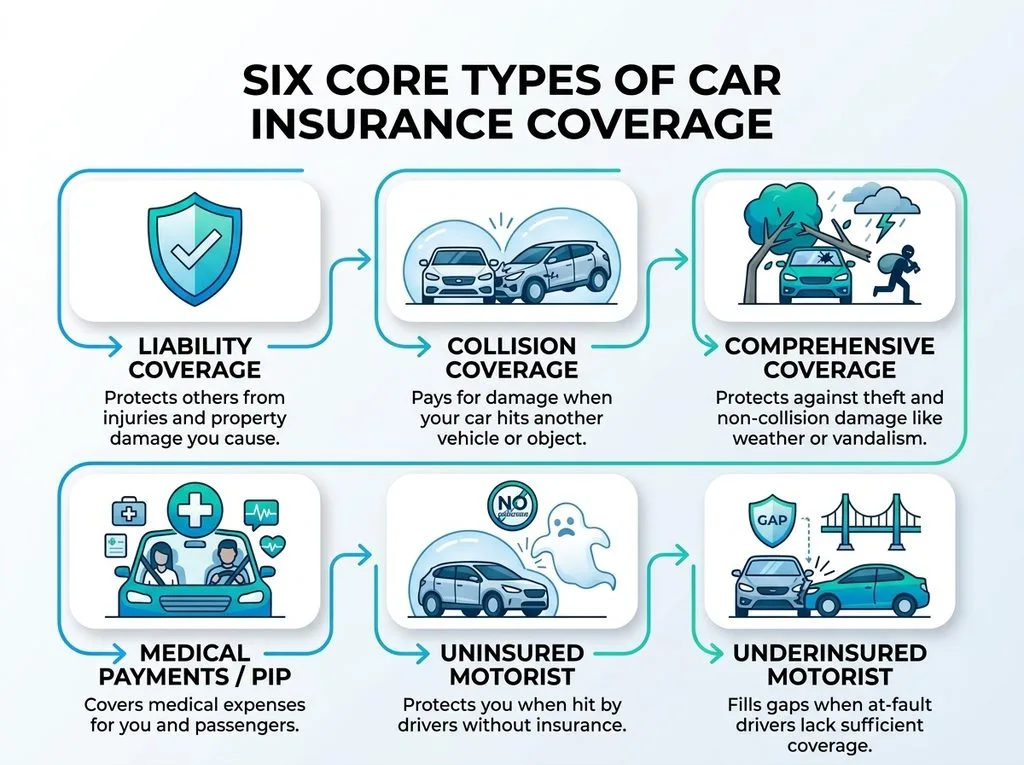
Car insurance is a legal contract that transfers the financial risk of an accident, theft, or vehicle damage from you to an insurer in exchange for a monthly premium. A standard 2026 U.S. policy typically blends six coverages: bodily injury liability, property damage liability, collision, comprehensive, uninsured/underinsured motorist, and either medical payments (MedPay) or personal injury protection (PIP).
Almost every state legally requires liability coverage, but most industry experts recommend full coverage — liability plus collision and comprehensive — which pays out regardless of who caused the damage. Full coverage is also mandatory if you finance or lease your car.
The Best Car Insurance Companies of 2026: The Short List
The ten carriers below dominate 2026’s independent rankings across Money.com, NerdWallet, U.S. News, WSJ Buyside, and J.D. Power. Each leads a different category, so match your situation to the carrier — don’t just chase the lowest quote.
1. Amica Mutual — Best Overall
Amica sits at the top of Money.com’s 2026 rankings for one reason: it consistently posts the fewest customer complaints per dollar of coverage sold, and its claims service is among the most acclaimed in the industry. Amica is a mutual company, meaning eligible policyholders get an annual dividend of up to 20% of premium on its participating policies — effectively a rebate on top of the base rate.
- AM Best: A+ (Superior).
- Average full-coverage rate: roughly $231/month for a 40-year-old driver, per Insure.com’s 2026 survey.
- J.D. Power 2025: New England regional winner with a score of 735 (second consecutive year).
- Bottom line: if service quality matters more than rock-bottom pricing, start here.
2. USAA — Best for Military Families
USAA holds the highest customer-satisfaction and claims scores in the entire industry, and its rates undercut nearly every national competitor. Its average annual premium of ~$1,335 is the lowest among major carriers in U.S. News’s 2026 analysis.
- AM Best: A++ (Superior).
- Eligibility: active military, veterans, and their immediate family members.
- Bottom line: if you qualify for USAA, no other carrier gives you a better combination of price, service, and claims handling.
3. Travelers — Best for Affordable Full Coverage
Travelers has quietly become the value leader among national carriers. Its base full-coverage rates land well below the national average in most states, and its IntelliDrive telematics program adds up to a 30% safe-driver discount. Travelers also ranked #1 in MarketWatch’s 2026 auto analysis with a 4.9/5 rating.
- AM Best: A++ (Superior).
- Average national rate: roughly $1,632/year for standard full coverage.
- Bottom line: the best “big brand” pick if you want national reach with regional-carrier-level pricing.
4. GEICO — Best for Discounts
GEICO’s discount menu is the deepest in the industry: federal employee, military, good student, multi-vehicle, defensive driving, and vehicle-safety-feature discounts can compound into meaningful savings. GEICO holds roughly 12% of the U.S. market per ValuePenguin’s 2026 data and consistently prices near the market floor for clean records.
- AM Best: A++ (Superior).
- Money.com 2026: Best Mobile App.
- Bottom line: the strongest instant-quote experience in the market, especially for tech-comfortable shoppers.
5. Erie Insurance — Best Claims Experience
Erie Insurance was the overall #1 winner in J.D. Power’s 2025 U.S. Auto Claims Satisfaction Study with a score of 743, ahead of NJM Insurance (731) and Liberty Mutual (730). Erie also took the North Central regional customer-satisfaction title for a fifth straight year. Its Rate Lock feature freezes your premium regardless of claims — a rarity in the industry.
- AM Best: A+ (Superior).
- Where it sells: 12 states plus D.C. — Illinois, Indiana, Kentucky, Maryland, New York, North Carolina, Ohio, Pennsylvania, Tennessee, Virginia, West Virginia, and Wisconsin.
- Bottom line: if Erie writes policies in your state, it belongs in your top three quotes.
6. State Farm — Best Local Agent Network
State Farm is the largest U.S. auto insurer by policies in force, and its 19,000-plus local agents remain the largest field force in the industry. Its Drive Safe & Save telematics program can shave up to 30% off premium and — critically — will not raise your rate for poor driving. Money.com named State Farm the Best for Young Drivers pick of 2026.
- AM Best: A++ (Superior).
- Approximate market share: ~19% (though Progressive is closing the gap fast).
- Bottom line: the top pick for anyone who wants a real human they can visit locally.
7. Progressive — Best for High-Risk Drivers
Progressive is the second-largest U.S. auto insurer at roughly 17% market share and gaining ground fast on State Farm, according to a 2025 S&P Global Market Intelligence analysis. It’s well known for accepting drivers other carriers reject — those with DUIs, tickets, at-fault accidents, or lapses in coverage.
- AM Best: A+ (Superior).
- Money.com 2026: Best Quote Customization.
- Bottom line: if your record is messy or your credit is thin, quote Progressive first — its underwriting is the most forgiving among the big five.
8. Nationwide — Best Usage-Based Program
Nationwide’s SmartRide telematics program won J.D. Power’s 2025 UBI Study for the second consecutive year, with average safe-driving discounts of 10–40%. Nationwide also offers vanishing deductibles, which shrink by $100 for every claim-free year up to $500 total.
- AM Best: A+ (Superior).
- Bottom line: the strongest safe-driver payoff among national carriers, and the best pick for low-mileage drivers.
9. Auto-Owners — Best Regional Value
Auto-Owners is a low-key giant of the Midwest that ranked #2 overall in U.S. News’s 2026 analysis on the strength of low complaint volume, competitive pricing, and generous discount stacking. Its ~$1,619 average annual rate beats most household names.
- AM Best: A++ (Superior).
- Bottom line: if Auto-Owners sells in your state (26 states via independent agents), get a quote — it regularly beats national brands by 10–20%.
10. Acuity — Fewest Complaints
Acuity is a smaller Midwestern mutual that NerdWallet flagged in August 2026 as receiving the fewest customer complaints per dollar of coverage sold in its analysis. Where it competes, it wins on service quality.
- AM Best: A+ (Superior).
- Where it sells: roughly 30 states, primarily in the Midwest and Great Plains.
- Bottom line: the boutique pick for drivers who prioritize a low-friction claims experience above all else.
Best Car Insurance Companies 2026: Side-by-Side Comparison
Sample premiums below reflect full-coverage rates for a typical adult driver with a clean record. Actual quotes vary widely by state, age, credit tier, deductible, and driving record.
| Company | AM Best | Best For | Approx. Annual Rate | Standout Feature |
|---|---|---|---|---|
| Amica | A+ | Service quality | ~$2,767 | Dividends up to 20% |
| USAA | A++ | Military families | ~$1,335 | Cheapest for eligible drivers |
| Travelers | A++ | Affordable full coverage | ~$1,632 | IntelliDrive 30% telematics |
| GEICO | A++ | Discounts | ~$1,778 | Deepest discount menu |
| Erie | A+ | Claims service | ~$1,780 | Rate Lock, J.D. Power #1 |
| State Farm | A++ | Local agents | ~$2,150 | 19,000+ local agents |
| Progressive | A+ | High-risk drivers | ~$1,960 | Name Your Price tool |
| Nationwide | A+ | Telematics savings | ~$1,621 | SmartRide, vanishing deductible |
| Auto-Owners | A++ | Regional value | ~$1,619 | Beats national brands 10-20% |
| Acuity | A+ | Low complaints | Varies | Lowest complaint index |
Averages compiled from 2026 NerdWallet, U.S. News, Insurify, and Insure.com studies.
How Much Does Car Insurance Cost in 2026?
The national average full-coverage premium climbed to $2,237 a year in the first half of 2026, up just 1% from 2025, according to Insurify’s mid-year report. Money.com’s parallel analysis places the figure closer to $2,500 depending on driver profile, while state-minimum liability coverage averages around $900/year.
Three forces continue pressuring rates upward:
- Repair costs have risen roughly 45% over five years — nearly double the general inflation rate.
- Bodily injury claim severity rose 36% between 2020 and 2024, per Insurify.
- Collision claim severity climbed 42% over the same period.
Where you live matters more than most drivers realize. The 2026 state extremes:
| Most Expensive States (annual, full coverage) | Cheapest States |
|---|---|
| Washington, D.C. — $3,880 | New Hampshire — $1,019 |
| Maryland — $3,646 | Vermont — ~$1,050 |
| Rhode Island — $3,611 | Idaho — ~$1,120 |
| Michigan — $3,229 | Maine — ~$1,180 |
| Georgia — $3,109 | Ohio — ~$1,240 |
The Insurify state data shows D.C. drivers pay nearly four times what New Hampshire drivers pay for equivalent coverage. If you move across a state line, expect your rate to change immediately.
Cheapest Car Insurance by Driver Type in 2026
National averages hide huge differences. Here’s who tends to price best for each shopper profile, based on 2026 rate studies.
- Clean-record drivers. GEICO, Travelers, and USAA usually beat the market by 20% or more.
- Teens and young drivers. Erie, USAA, Auto-Owners, and GEICO consistently price the lowest. Adding a 16-year-old to a parent’s policy typically costs an extra $2,500–$3,000 per year.
- Seniors. State Farm, Hartford (through AARP), and Auto-Owners deliver the strongest senior discounts.
- Drivers with a DUI. Progressive averages roughly $208/month for post-DUI drivers, per LendingTree’s 2026 analysis.
- Drivers with poor credit. Country Financial, USAA, and Auto-Owners keep rates lowest; Dairyland is the industry go-to for non-standard placements.
- Low-mileage drivers. Lemonade’s pay-per-mile product (formerly Metromile) and Nationwide’s SmartMiles reward drivers logging under 10,000 miles a year.
- Rideshare and gig workers. GEICO, State Farm, and Allstate all sell legitimate rideshare endorsements that plug the coverage gap Uber and Lyft’s own policies leave open.
If you’re doing an all-in household insurance audit, the same rate-variation logic applies to your life policy — our companion guide to the best term life insurance companies walks through carrier-by-carrier pricing.
State Minimum Car Insurance Requirements in 2026
Every state except New Hampshire and Virginia legally requires drivers to carry liability car insurance. Requirements are written as three numbers — for example, 25/50/25 — representing:
- First number: bodily injury per person, in thousands ($25,000)
- Second number: bodily injury per accident, in thousands ($50,000)
- Third number: property damage per accident, in thousands ($25,000)
Notable 2026 changes:
- California raised its minimum from 15/30/5 to 30/60/15, effective January 1, 2025.
- Hawaii is increasing its minimum from 20/40/10 as part of 2026 legislation.
- Utah, Virginia, and Illinois all raised minimums within the past 24 months.
State minimums are the legal floor, not a recommended limit. Most insurance experts — including the Insurance Information Institute — recommend at least 100/300/100 liability coverage, because a single serious injury lawsuit routinely exceeds a state’s minimum limit.
Understanding Car Insurance Coverage Types (What You Actually Need)
A typical 2026 policy blends six coverages. Here’s what each one does in plain English.
- Bodily injury liability. Pays for injuries you cause to other people. Recommended: 100/300 minimum.
- Property damage liability. Pays for damage you cause to other people’s cars or property. Recommended: $100,000.
- Collision. Pays to repair or replace your car after a crash, regardless of fault.
- Comprehensive. Covers non-collision events — theft, vandalism, hail, floods, animal strikes, falling objects.
- Uninsured/underinsured motorist (UM/UIM). Pays your bills when the at-fault driver has no insurance or too little. With 1 in 7 U.S. drivers uninsured as of 2022, UM/UIM is arguably the highest-value line item in your policy.
- Medical payments (MedPay) or personal injury protection (PIP). Pays medical bills for you and your passengers regardless of fault. PIP is mandatory in no-fault states.
Optional add-ons worth considering: rental reimbursement, roadside assistance, gap insurance, rideshare endorsement, and new-car replacement coverage. Each usually costs $5–$15/month but can save thousands after a claim.
When Is GAP Insurance Worth It?
GAP (Guaranteed Asset Protection) insurance pays the difference between your car’s actual cash value and what you still owe on your loan or lease if the car is totaled or stolen.
You should consider GAP if any of the following apply:
- Your down payment was less than 20% of the purchase price.
- Your loan term is 60 months or longer.
- You lease your vehicle (most leases require it).
- Your car depreciates quickly (luxury cars, EVs, or new models).
- You rolled negative equity from a previous loan into the new one.
GAP typically costs $20–$40/year from your insurer, versus $500–$700 as a one-time fee from the dealership — always buy it from the insurer, never from the dealer.
Car Insurance Discounts That Actually Move the Needle in 2026
Every insurer advertises “up to 40% in discounts,” but only a handful truly matter. Focus on these.
- Multi-policy (bundling) discount. Bundling home or renters with auto typically saves 10–25% — the single highest-value discount available.
- Multi-vehicle discount. Insuring two or more cars on one policy trims another 10–15%.
- Safe-driver / clean-record discount. Worth up to 25% off after 3–5 years of accident- and violation-free driving.
- Telematics / usage-based discount. Programs like State Farm’s Drive Safe & Save and Nationwide’s SmartRide can save 30–40% for safe drivers.
- Good student discount. Available to full-time students under 25 with a B average — usually 10–15% off.
- Defensive driving course. Completing an approved course drops premiums 5–10%, especially valuable for drivers over 55.
- Paid-in-full and paperless discounts. Small individually, but stack to 5–10% together.
- Vehicle safety features. ABS, forward-collision warning, blind-spot monitoring, and passive restraints all trigger discounts.
- Loyalty and renewal discounts. Available at Amica, Auto-Owners, and Allstate after 3+ years.
- Affinity discounts. GEICO, Liberty Mutual, and Farmers give price breaks to specific employers, alumni groups, and professional associations.
Ask for a full discount audit at every renewal — insurers rarely apply new discounts automatically after you become eligible.
Usage-Based Insurance (Telematics): The Fastest Way to Save in 2026
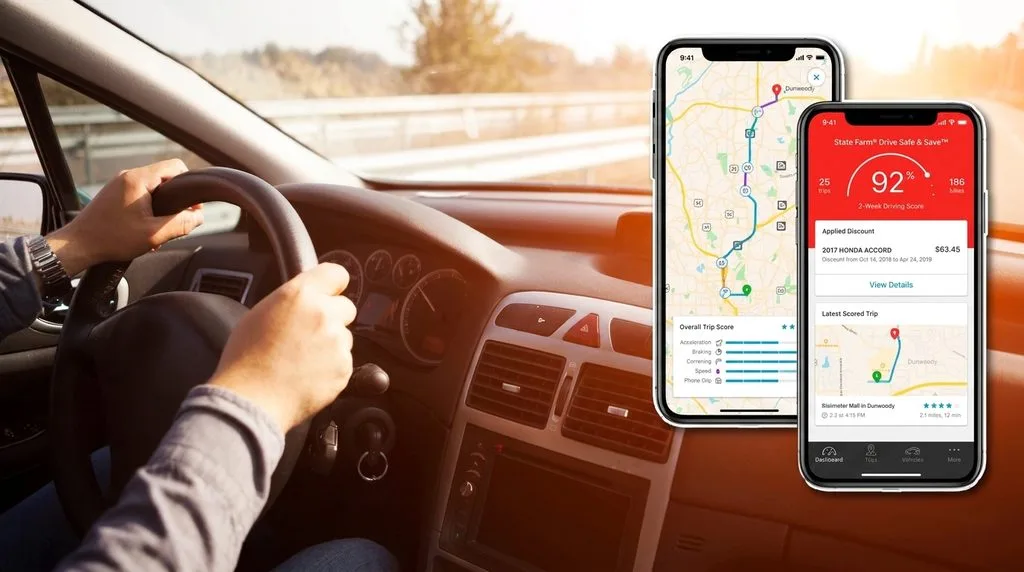
Telematics programs use a smartphone app or plug-in device to track how you actually drive — mileage, braking, cornering, phone use, and time of day. Safe drivers earn 20–40% off premium; unsafe drivers may see rates rise (with some carriers).
Here’s how the major 2026 telematics programs compare.
| Program | Carrier | Max Discount | Rate Increase Risk? |
|---|---|---|---|
| Drive Safe & Save | State Farm | Up to 30% | No |
| SmartRide | Nationwide | Up to 40% | No |
| Snapshot | Progressive | Up to 30% | Yes |
| DriveEasy | GEICO | Up to 25% | Yes |
| Drivewise | Allstate | Up to 25% | No |
| IntelliDrive | Travelers | Up to 30% | Yes (limited) |
| SafePilot | USAA | Up to 30% | No |
| Signal | Farmers | Up to 15% | No |
| RightTrack | Liberty Mutual | Up to 30% | No |
Two rules of thumb:
- If you’re a safe daytime driver, any telematics program is a near-guaranteed win.
- If you drive late at night, use your phone while driving, or brake hard often, stick to no-penalty programs like State Farm’s Drive Safe & Save, Nationwide’s SmartRide, or Allstate’s Drivewise.
Best Car Insurance for Teens and Young Drivers
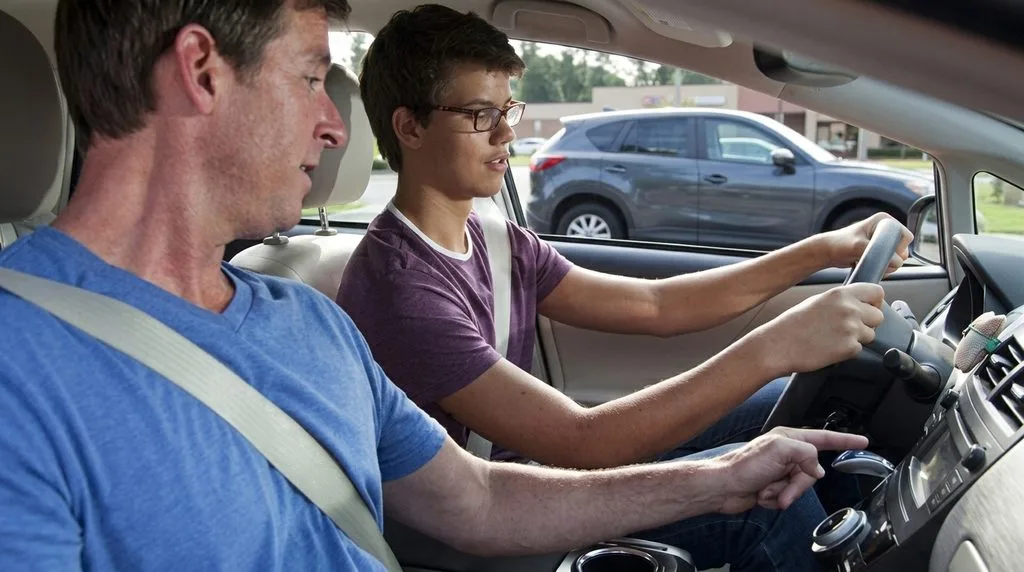
Adding a teen to your policy is the single most expensive change a family can make. On a typical policy, adding a 16-year-old bumps the annual premium by $2,500–$3,000. These carriers minimize the pain.
- Erie Insurance. Forbes rated Erie the best overall car insurance for teens in 2026 thanks to low rates, strong claims service, and Rate Lock.
- USAA. Cheapest option nationally for military-connected teens at roughly $4,993/year.
- Auto-Owners. Second-cheapest at around $4,826/year with the strongest good-student discount.
- GEICO. Best national option — around $5,087/year with a stackable discount menu.
- State Farm. Money.com’s Best for Young Drivers pick with the Steer Clear program for drivers under 25.
Three habits that meaningfully lower teen premiums:
- Enroll them in a certified driver’s education course — every major insurer offers a discount.
- Maintain a B average or better for the good-student discount worth 10–15%.
- Enroll in a telematics app from day one — young drivers usually earn the largest safe-driving discounts because their baseline risk is highest.
Best Car Insurance for High-Risk Drivers (DUI, Tickets, Bad Credit)
If you’ve had a DUI, at-fault accident, SR-22 filing, or credit trouble, standard carriers can decline you or double your rate. These insurers specialize in the non-standard market.
- Progressive. Cheapest DUI coverage nationally at about $208/month on average, per LendingTree data.
- Dairyland. Purpose-built for high-risk drivers; offers SR-22 filings in most states.
- The General. Fast SR-22 filings, minimum-coverage focus; high complaint volume but easy underwriting.
- State Farm. More willing to keep existing customers post-DUI than most competitors.
- GEICO. Competitive rates for drivers with one DUI, though rates climb significantly for repeat offenses.
Two truths about high-risk shopping. First, rates fall dramatically after three years of clean driving — re-shop annually. Second, an SR-22 is just a filing your insurer submits to the state; it isn’t a separate policy, so refuse any agent who tries to sell it as one.
Rideshare and Gig Worker Insurance: The $2,500 Gap Most Drivers Miss
If you drive for Uber, Lyft, DoorDash, or Instacart, your personal auto policy likely does not cover you while the driving app is on. Uber and Lyft provide only contingent liability coverage during Period 1 (app on, waiting for a request), typically at low limits of $50K/$100K/$25K. That’s the biggest coverage gap in the rideshare industry.
A rideshare endorsement on your personal policy closes that gap for $15–$30 per month at GEICO, State Farm, Allstate, Progressive, and Farmers. Without it, a single Period 1 accident could leave you personally liable for tens of thousands in damages.
If you drive for delivery-only apps (DoorDash, Uber Eats, Instacart), you’ll need a business-use endorsement — a slightly different add-on that most standard policies specifically exclude.
What About Electric Vehicles and Hybrids?
EV insurance now averages $3,159 per year for full coverage — about 42% more expensive than the $2,218 average for gas-powered vehicles, per Insurify’s 2026 EV report. The reasons: expensive battery packs, specialized labor, and higher total-loss frequency after moderate collisions.
The most expensive EVs to insure in 2026 include the Mercedes-Benz EQS ($4,703/year), Tesla Model S ($4,558/year), and BMW i5 ($4,554/year). The carriers with the most competitive EV rates are Travelers, Progressive, and USAA. Tesla-branded insurance is available in a growing list of states but has drawn increasing complaint volume for claims disputes.
If you drive a newer car with advanced driver-assistance features (ADAS), ask your insurer for the vehicle-safety-feature discount — it can offset 3–8% of premium and is often applied incorrectly at renewal.
What J.D. Power’s 2025 Study Reveals About the Industry
The J.D. Power 2025 U.S. Auto Insurance Study surveyed 48,121 auto insurance customers and paints a stark picture. Overall customer satisfaction sits at just 644 out of 1,000, and 38% of customers fall into the lowest satisfaction segment — meaning they’re unlikely to renew and actively shopping around.
Regional J.D. Power winners for 2025:
- California: Auto Club of Southern California (AAA) — 676
- Central: Shelter Insurance — 673 (fifth consecutive year)
- Florida: Allstate and GEICO — 660 (tie)
- Mid-Atlantic: NJM Insurance Co. — 721
- New England: Amica — 735 (second consecutive year)
- New York: New York Central Mutual — 652
- North Central: Erie Insurance — 684 (fifth consecutive year)
- Northwest: State Farm — 648
- Southeast: Erie Insurance — 718
- Southwest: CSAA Insurance Group (AAA) — 676
- Texas: Nationwide — 657
- Usage-Based Insurance: Nationwide — 698 (second consecutive year)
If a regional carrier appears in your ZIP code and holds a J.D. Power win, it deserves a quote — regional insurers regularly outperform national brands on both price and service.
Common Mistakes to Avoid When Buying Car Insurance
The drivers who overpay almost always fall into one of these traps:
- Underinsuring liability to save $20/month. A single serious injury lawsuit can top $500,000; state-minimum limits collapse instantly.
- Skipping uninsured motorist coverage. With roughly 1 in 7 U.S. drivers uninsured — and more than 25% in D.C. and New Mexico — UM/UIM is often the single most valuable coverage in your policy.
- Letting policies auto-renew for years. Loyalty is punished, not rewarded — most carriers price new customers cheaper than long-time customers.
- Filing minor claims. A single at-fault claim can raise your premium 20–40% for three years. If the damage is under your deductible plus $500, pay out of pocket.
- Ignoring credit. In 46 states, credit-based insurance scores influence premiums; improving your credit can drop rates 10–20%. (California, Hawaii, Massachusetts, and Michigan ban the practice.)
- Bundling blindly. Bundling usually saves money — but not always. Get standalone quotes before assuming the bundle is best.
- Choosing a low deductible you can’t actually afford. A $250 deductible costs 20–30% more than a $1,000 deductible; if your emergency fund can absorb $1,000, choose the higher deductible.
An independent broker who represents 10+ carriers is often cheaper than any single-carrier agent because they can shop the same case across the market.
How to Lower Your Car Insurance in 2026: 10 Proven Steps
If your renewal came back higher than last year (which it likely did), these steps are the most reliable ways to bring it back down.
- Shop three quotes every 12 months with identical coverage limits.
- Raise your deductible from $500 to $1,000 — saves 15–20% on collision and comprehensive.
- Bundle home or renters insurance with the same carrier.
- Enroll in a no-penalty telematics program if you drive safely.
- Improve your credit score by 50 points — worth 10–20% off in most states.
- Ask for an occupation or affiliation discount — many go unclaimed.
- Drop collision and comprehensive on cars worth less than $4,000.
- Reduce mileage if you’ve moved closer to work — call to update your annual miles.
- Pay in full each term to lock in the paid-in-full discount.
- Take an approved defensive driving course — quick 5–10% cut, especially for over-55 drivers.
Consumer Reports estimates that a diligent driver executing all ten steps can shave $400–$700 off an average annual premium.
How to Switch Car Insurance Companies (Without Losing Coverage)
Switching insurers is easier than most drivers assume. The proper sequence:
- Step 1. Pull your current policy and note coverage limits, deductibles, and renewal date.
- Step 2. Get at least three quotes using identical coverage limits so you’re comparing apples to apples.
- Step 3. Ask about available discounts at each carrier — some are opt-in.
- Step 4. Buy the new policy with a start date one day before your old policy ends to guarantee zero gap.
- Step 5. Cancel your old policy in writing and request confirmation of any refund owed.
- Step 6. Update your vehicle registration and any loan or lease documentation with the new insurer’s information.
Mid-term switching is allowed at every carrier and typically triggers a prorated refund of unused premium — you rarely lose money by changing before renewal.
Auto Insurance Trends to Watch in 2026
Several structural shifts are reshaping the market this year:
- AI-assisted claims are mainstream. Progressive, State Farm, and Liberty Mutual now use computer-vision AI to estimate vehicle damage from photos, dropping typical settlement time to 3–7 days.
- Telematics is becoming default. More than half of new policies at Progressive, State Farm, and Nationwide now include a telematics component.
- Progressive is closing on State Farm. After a decade in second place, Progressive gained 210 basis points of market share in 2024 and could take the #1 spot within two years.
- Regional carriers keep outperforming. Amica, Erie, Auto-Owners, and NJM continue to beat national brands on both price and satisfaction where they operate.
- EV insurance rising faster than ICE. Battery replacement costs and specialized labor are widening the gap.
- Credit-scoring reform is spreading. California, Hawaii, Massachusetts, and Michigan already ban credit-based insurance scoring; several other states are studying similar rules.
- Rate increases are slowing. The 2024–2025 surge moderated to a projected 1% national increase in 2026, per Insurify.
The one trend that hasn’t changed: shopping around still saves money. NerdWallet’s 2026 data shows comparison-shopping drivers save an average of $600/year versus renewing without checking.
Frequently Asked Questions (FAQs)
What is the best car insurance company overall in 2026?
Amica Mutual was named Best Overall by Money.com for 2026 on the strength of its low complaints, mutual-company dividends, and top-tier claims experience. USAA ranks #1 for military households, Travelers wins on price, and Erie Insurance wins on claims service, per J.D. Power’s 2025 study. The single best carrier for you depends on your ZIP code, driving history, and eligibility.
How much does car insurance cost per month in 2026?
The average U.S. driver now pays about $186/month for full coverage and roughly $60–$85/month for state-minimum liability, per Insurify and WalletHub. Rates vary from about $85/month in New Hampshire to $323/month in Washington, D.C. — your ZIP code alone can triple the price.
Which car insurance company is cheapest for good drivers?
USAA, Travelers, GEICO, and Auto-Owners consistently price cheapest for clean records. On the mass market, GEICO’s average clean-record rate lands roughly 20–30% below the national average. USAA is cheapest overall but limited to military families.
Is it worth switching car insurance every year?
Yes, in most cases. Insurers price new customers more aggressively than renewing ones, and loyalty discounts rarely offset the price gap. NerdWallet’s 2026 data shows the average shopper saves around $600/year by comparing three quotes annually. Set a calendar reminder 30 days before your renewal date.
What’s the difference between full coverage and liability-only?
Liability-only meets your state’s legal minimum but pays only for damage you cause to others — not your own car. Full coverage adds collision (crash damage) and comprehensive (theft, weather, animals). If your car is worth more than ~$4,000 or you have a loan or lease, full coverage is almost always worth the extra premium.
Do telematics apps really save money?
Yes, for most safe drivers. State Farm’s Drive Safe & Save, Nationwide’s SmartRide, and Allstate’s Drivewise all deliver 20–40% discounts without raising rates for occasional missteps. Programs that can raise your rate (Progressive Snapshot, GEICO DriveEasy) are riskier if you drive late at night or use your phone frequently.
Which car insurance company has the best claims process?
Erie Insurance topped J.D. Power’s 2025 U.S. Auto Claims Satisfaction Study with a score of 743, followed by NJM Insurance (731) and Liberty Mutual (730). Among national brands, USAA, Amica, and State Farm consistently score above the industry average on claims satisfaction.
Is car insurance mandatory in every U.S. state?
Almost. 48 states plus D.C. legally require liability car insurance. New Hampshire and Virginia are the exceptions, though both require drivers to prove financial responsibility after an at-fault crash. Driving without insurance where required carries fines, license suspension, and vehicle impoundment.
Final Word: How to Pick the Right Auto Insurance in 2026
Buying car insurance in 2026 is less about finding the best company and more about finding the best company for your specific situation. Match the carrier to your profile: USAA if you qualify, Amica or Erie if service matters most, Travelers or GEICO for price, Progressive if your record is complicated, or State Farm if you want a local agent.
Then execute the three habits that separate savers from overpayers:
- Shop three quotes every 12 months with identical coverage limits.
- Enroll in a no-penalty telematics program if you drive safely.
- Audit your discounts at every renewal — insurers rarely add them automatically.
The average U.S. driver overpays by hundreds of dollars a year simply because they never re-shop. The best time to compare car insurance is 30 days before your renewal date. The second-best time is today.


Leave a Reply