
In this article
- What Does It Mean to Reduce Monthly Expenses?
- 1. Track Every Expense
- 2. Create a Realistic Monthly Budget
- 3. Review Your Subscriptions
- 4. Reduce Restaurant and Food Delivery Spending
- 5. Reduce Impulse Purchases
- 6. Lower Your Utility Bills
- 7. Review Your Insurance Costs
- 8. Find Ways to Reduce Transportation Costs
- 9. Shop With a List
- 10. Compare Prices Before Major Purchases
- 11. Use Cash or Spending Limits for Problem Categories
- 12. Reduce High-Interest Debt
- 13. Avoid Lifestyle Inflation
- 14. Have a “No-Spend” Period
- 15. Automate Your Savings
- How Much Can You Save by Reducing Monthly Expenses?
- What Expenses Should You Cut First?
- How to Reduce Expenses Without Feeling Miserable
- Common Mistakes When Trying to Save Money
- Frequently Asked Questions
- Final Thoughts
Reducing monthly expenses does not always mean giving up everything you enjoy. In many cases, small changes to everyday spending can make a noticeable difference in your finances.
Whether you are trying to build an emergency fund, pay off debt, save for a major purchase, or simply have more money left at the end of the month, controlling your expenses is an important part of financial planning.
The good news is that you do not need a huge income to start. You can begin by understanding where your money goes, identifying unnecessary costs, and making realistic changes that you can maintain over time.
This guide explains how to reduce monthly expenses with practical strategies that can work for different budgets and lifestyles.
What Does It Mean to Reduce Monthly Expenses?
Reducing monthly expenses means lowering the amount of money you spend each month without unnecessarily reducing your quality of life.
Some expenses are essential, such as housing, food, transportation, utilities, and debt payments. Others are flexible, including entertainment, subscriptions, dining out, shopping, and convenience purchases.
The goal is not necessarily to eliminate every non-essential expense. Instead, the goal is to spend your money intentionally and remove costs that provide little value.
For example, canceling a subscription you rarely use may save money without affecting your daily life. Cooking at home a few additional times each month can also reduce food expenses without requiring extreme changes.
1. Track Every Expense
The first step to reducing expenses is understanding your current spending.
For one month, record everything you spend. Include large bills as well as small purchases such as coffee, snacks, delivery fees, and digital subscriptions.
You can use a spreadsheet, budgeting app, notebook, or simple spending tracker.
Divide your expenses into categories such as:
- Housing
- Food
- Transportation
- Utilities
- Insurance
- Debt payments
- Shopping
- Entertainment
- Subscriptions
- Savings
Once you see where your money is going, it becomes easier to identify areas where you can make changes.
2. Create a Realistic Monthly Budget
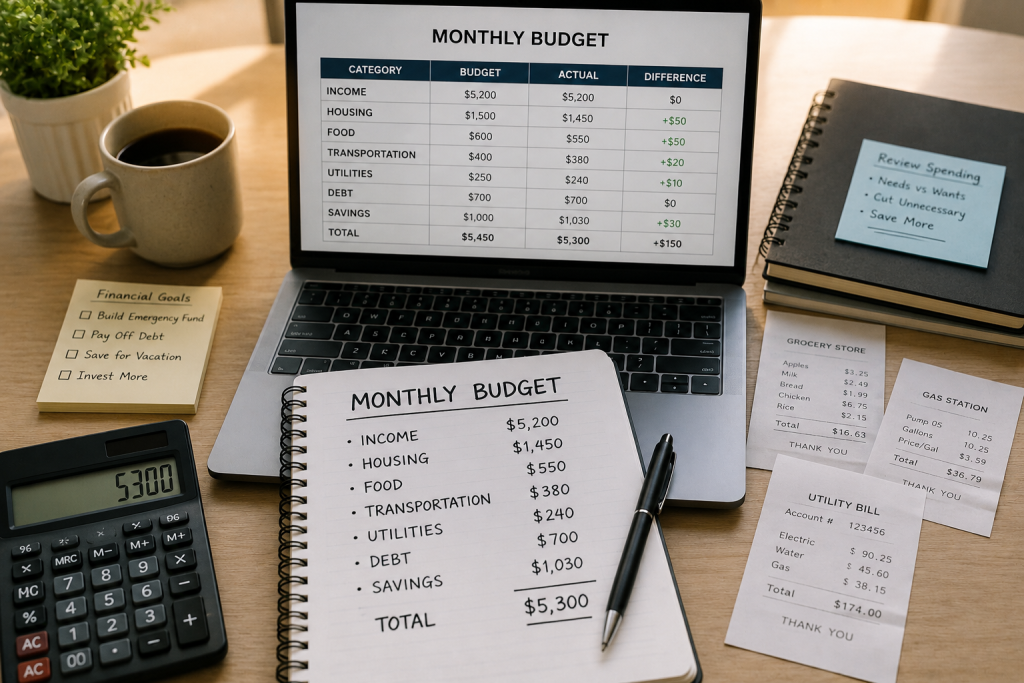
A budget gives every part of your income a purpose.
Start with your monthly take-home income and subtract your essential expenses. Then decide how much you want to allocate toward savings, debt repayment, and discretionary spending.
A simple budget might look like this:
| Category | Monthly Amount |
|---|---|
| Housing | $800 |
| Food | $300 |
| Transportation | $150 |
| Utilities | $150 |
| Debt Payments | $200 |
| Savings | $200 |
| Entertainment | $100 |
| Other Expenses | $100 |
The numbers will vary from person to person. What matters is creating a budget that reflects your actual financial situation.
3. Review Your Subscriptions
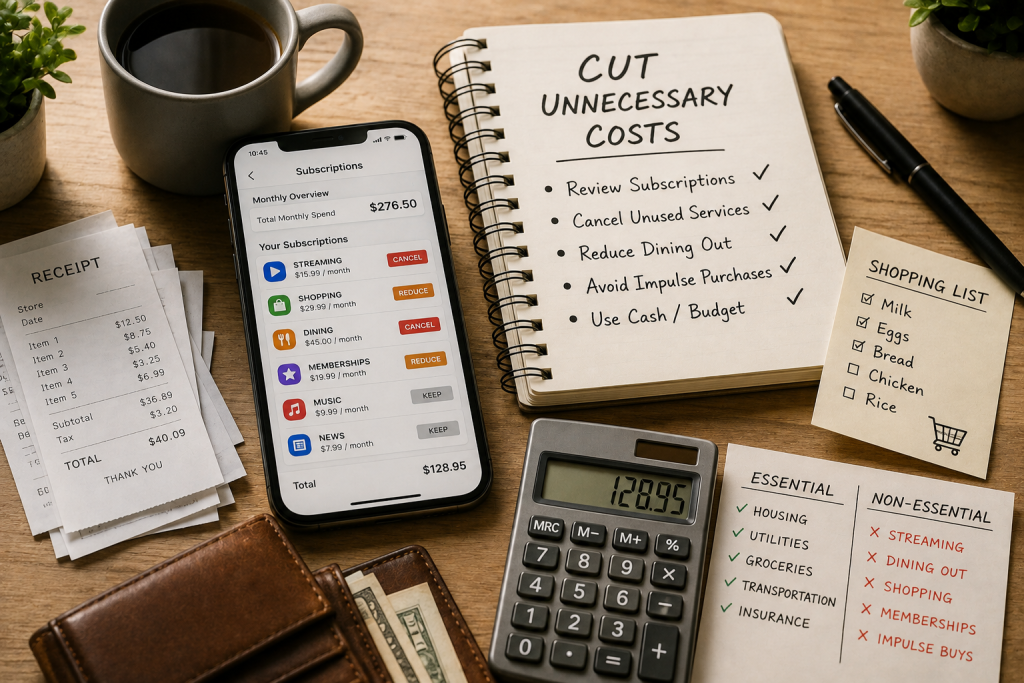
Monthly subscriptions can quietly consume a significant portion of your budget.
Check your bank and card statements for recurring payments. Look for streaming services, apps, memberships, cloud storage, gaming services, fitness programs, and other subscriptions.
Ask yourself:
- Do I use this service regularly?
- Do I need more than one similar service?
- Is there a cheaper plan?
- Can I cancel it temporarily?
Even a few small cancellations can create recurring monthly savings.
4. Reduce Restaurant and Food Delivery Spending
Eating out and ordering delivery can cost considerably more than preparing meals at home.
You do not have to stop eating at restaurants completely. Instead, set a monthly limit for dining out and delivery.
You can also:
- Plan meals before grocery shopping
- Cook larger portions
- Use leftovers for another meal
- Prepare lunch at home
- Compare grocery prices
- Avoid shopping when you are hungry
- Limit unnecessary delivery fees
The objective is to make food spending more predictable rather than eliminating occasional treats.
5. Reduce Impulse Purchases
Impulse spending can make a budget difficult to maintain.
Before buying something that was not planned, wait for a set period, such as 24 hours. For more expensive purchases, consider waiting several days.
During that time, ask:
Do I actually need this, or do I simply want it right now?
This simple pause can prevent many unnecessary purchases.
6. Lower Your Utility Bills
Utility costs can often be reduced through small changes.
Depending on where you live, consider:
- Turning off unused lights
- Unplugging devices that are not needed
- Using energy-efficient appliances
- Adjusting heating or cooling settings
- Reducing unnecessary water usage
- Comparing electricity or internet plans when alternatives are available
You should also review your bills regularly. Unexpected increases can sometimes go unnoticed if you automatically pay them every month.
7. Review Your Insurance Costs
Insurance is an important financial protection, but it is still worth reviewing periodically.
Compare available plans and check whether your current coverage still matches your needs.
Depending on your circumstances and location, you may be able to reduce costs by changing coverage options, increasing a deductible where appropriate, or qualifying for available discounts.
Do not reduce important coverage simply to save a small amount of money. The goal is to find a reasonable balance between protection and cost.
8. Find Ways to Reduce Transportation Costs
Transportation can be one of the largest monthly expenses.
If practical, consider alternatives such as public transportation, carpooling, walking, cycling, or combining multiple errands into one trip.
If you drive regularly, maintaining your vehicle properly can also help avoid expensive repairs and improve efficiency.
For households with multiple vehicles, reviewing whether every vehicle is necessary can sometimes produce significant savings.
9. Shop With a List
A shopping list can help prevent unnecessary purchases.
Before going to a store or placing an online order, write down what you actually need.
Try to avoid adding items simply because they are discounted. A discount does not create savings if you would not have purchased the item otherwise.
A useful rule is:
If you were not planning to buy it before seeing the discount, think twice before purchasing it.
10. Compare Prices Before Major Purchases
For expensive purchases, do not automatically choose the first option you find.
Compare prices, warranties, features, maintenance costs, and customer reviews.
Sometimes the cheapest product is not the best value. A slightly more expensive item that lasts much longer may cost less over time.
Think about the total cost of ownership, not just the initial price.
11. Use Cash or Spending Limits for Problem Categories
If you frequently overspend in certain categories, create a specific spending limit.
For example, you could set a monthly limit for:
- Dining out
- Entertainment
- Clothing
- Shopping
- Hobbies
Once you reach the limit, wait until the next budget period before spending more.
This can make discretionary spending easier to control.
12. Reduce High-Interest Debt
Debt payments can consume a large portion of monthly income, especially when interest rates are high.
Review your outstanding debts and identify which balances carry the highest interest rates.
Paying down expensive debt can reduce future interest costs and free up money for other financial goals.
Two commonly discussed debt repayment approaches are the debt avalanche and debt snowball methods.
The debt avalanche method generally prioritizes the debt with the highest interest rate first, while the debt snowball method focuses on paying off the smallest balance first.
Choose an approach that fits your financial situation and helps you stay consistent.
13. Avoid Lifestyle Inflation
Lifestyle inflation happens when spending increases as income increases.
For example, someone may receive a raise and immediately upgrade their car, apartment, dining habits, and entertainment.
Higher income does not automatically create financial security if expenses rise at the same pace.
Instead, consider directing part of every income increase toward:
- Emergency savings
- Debt repayment
- Retirement
- Investments
- Other financial goals
This can help you improve your financial position without feeling deprived.
14. Have a “No-Spend” Period
A short no-spend period can help you identify unnecessary spending habits.
During a no-spend week, for example, you might avoid non-essential purchases while continuing to pay for necessary expenses.
The purpose is not to stop spending forever. It is to become more aware of your purchasing habits.
After the period ends, review what you missed and what you did not miss. This can reveal expenses that may be easier to eliminate permanently.
15. Automate Your Savings
Reducing expenses is only useful if the money you save has a purpose.
Consider automatically transferring a portion of your income into a savings account after receiving your paycheck.
For example, if reducing your expenses frees up $150 per month, you could automatically move that amount toward your emergency fund or another financial goal.
Automation reduces the temptation to spend money simply because it remains available in your checking account.
How Much Can You Save by Reducing Monthly Expenses?
Your potential savings depend on your income, current spending habits, location, household size, and financial obligations.
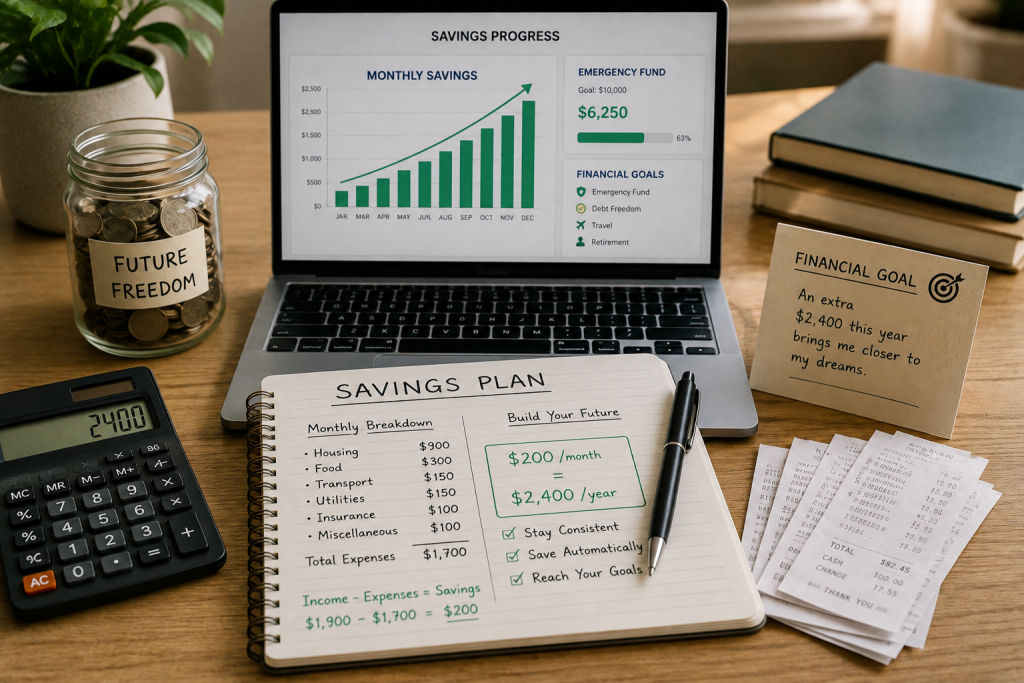
For example, imagine someone reduces their monthly spending by:
- $30 from subscriptions
- $50 from dining out
- $40 from impulse shopping
- $30 from transportation
- $50 from other discretionary expenses
That would create $200 in monthly savings.
Over one year:
$200 × 12 = $2,400
The important lesson is that small recurring reductions can become meaningful over time.
What Expenses Should You Cut First?
Start with expenses that are both unnecessary and easy to reduce.
A useful order is:
- Unused subscriptions
- Impulse purchases
- Excessive dining and delivery
- Unnecessary shopping
- Expensive entertainment
- Services you rarely use
- Other flexible expenses
Be more careful with essential expenses such as housing, insurance, healthcare, and transportation. Cutting these costs may save more money, but doing so can also have larger consequences.
How to Reduce Expenses Without Feeling Miserable
An extremely restrictive budget can be difficult to maintain.
Instead of eliminating everything you enjoy, choose the expenses that matter most to you.
For example, you might decide to:
- Eat at restaurants once a week instead of three times
- Keep one or two entertainment subscriptions
- Set a fixed shopping budget
- Choose affordable activities for weekends
- Save first and spend the remaining discretionary amount
A sustainable financial plan should fit your lifestyle rather than making you feel like every purchase is a mistake.
Common Mistakes When Trying to Save Money
Some people make the process harder than necessary.
Cutting Everything at Once
Removing every enjoyable expense can lead to frustration and eventually overspending.
Ignoring Small Purchases
Small purchases may seem insignificant individually, but repeated expenses can add up.
Setting an Unrealistic Budget
A budget that does not match your actual lifestyle is unlikely to last.
Focusing Only on Cutting Costs
Reducing expenses is helpful, but increasing income can also improve your financial situation.
Not Tracking Progress
If you never review your spending, it is difficult to know whether your changes are working.
Frequently Asked Questions
What is the easiest way to reduce monthly expenses?
Start by tracking your spending and reviewing recurring expenses. Cancel unused subscriptions, reduce unnecessary dining and shopping, and create realistic spending limits.
How can I reduce expenses on a low income?
Focus on essential costs first. Compare recurring bills, reduce unnecessary subscriptions, plan meals, avoid impulse purchases, and create a simple budget based on your actual income.
Should I stop spending money on entertainment?
Not necessarily. A better approach is to set a reasonable entertainment budget and prioritize the activities you value most.
Is it better to save money or pay off debt?
It depends on your financial circumstances. Many people benefit from maintaining some emergency savings while also paying down high-interest debt. The right balance depends on interest rates, income stability, and personal financial goals.
How quickly can I reduce my monthly expenses?
You can often identify some immediate savings by reviewing subscriptions, dining, shopping, and other discretionary spending. Larger reductions may require more time and changes to major expenses.
Final Thoughts
Learning how to reduce monthly expenses is less about extreme frugality and more about making intentional decisions with your money.
Start by tracking your spending, build a realistic budget, remove unnecessary recurring costs, control impulse purchases, and redirect the money you save toward meaningful financial goals.
You do not need to change everything at once. Even saving a small amount every month can make a meaningful difference when the habit continues over time.
The most effective strategy is one you can maintain consistently. When your spending reflects your priorities, reducing expenses becomes a practical part of building stronger financial habits.



Leave a Reply